INPEX Starts Blue Hydrogen and Ammonia Demonstration at Japan’s Kashiwazaki Hydrogen Park




INPEX has announced the start of ammonia production and supply under its integrated blue hydrogen and ammonia demonstration project at Kashiwazaki Hydrogen Park in Niigata Prefecture, Japan. The event date is not specified in the supplied information. The announcement describes an operational milestone without identifying a new regulation, certification requirement or trade rule. From an industry perspective, its relevance lies in the potential implications for how buyers, equipment suppliers and storage service providers assess production claims, carbon management evidence and delivery readiness as the supply chain undergoes commercial validation.
Ammonia Supply Begins Within an Integrated Demonstration
According to the supplied summary, INPEX has formally begun producing and supplying ammonia as part of its integrated blue hydrogen and ammonia production and utilization demonstration project at Kashiwazaki Hydrogen Park.
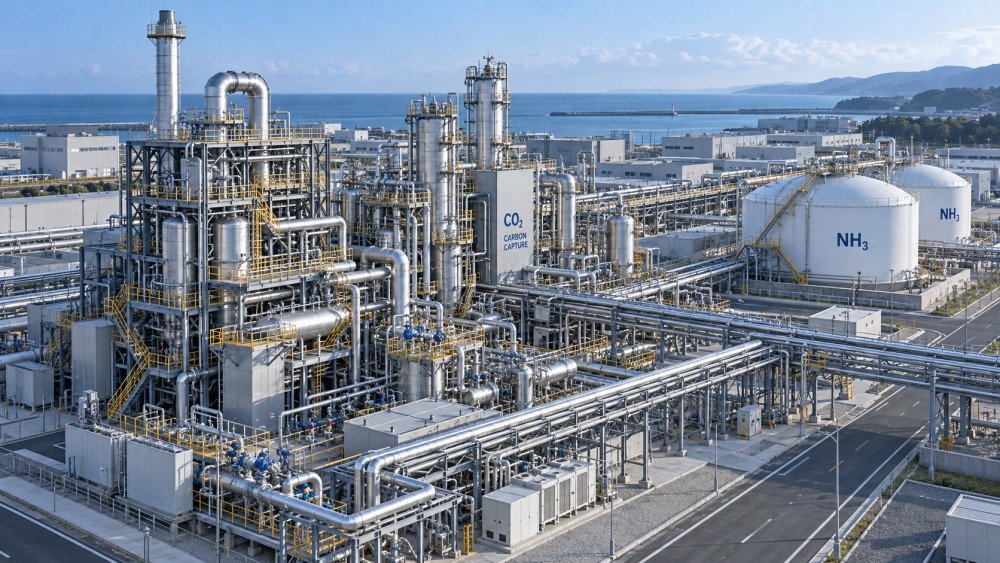
The project produces hydrogen through natural gas reforming and incorporates carbon capture, utilization and storage, or CCUS, technology. Captured carbon dioxide is injected into a depleted gas field. The supplied information describes the facility as Japan’s first demonstration of this kind for blue hydrogen and ammonia, marking a step toward commercial validation of the country’s blue hydrogen supply chain and carbon storage infrastructure.
Carbon Management Evidence Could Shape Supply-Chain Decisions
Buyers May Need More Than a Product Description
Analysis suggests that prospective hydrogen and ammonia buyers may need to examine the evidence supporting the project’s blue hydrogen designation alongside product specifications. Because the process connects natural gas reforming with carbon capture and underground injection, procurement assessments could consider how production and carbon management records are linked. The supplied information does not establish a certified emissions level, a recognized certification status or eligibility under any particular purchasing framework.
Equipment and Engineering Work May Require Closer Interface Review
From an industry perspective, equipment suppliers, engineering contractors and system integrators could face closer scrutiny of the connections between hydrogen production, ammonia production, carbon capture and injection. Potential implications concern technical specifications, operating documentation and acceptance criteria. These are areas for project-specific review; the announcement does not establish new mandatory equipment standards or qualification requirements.
Storage Documentation Could Become Relevant to Commercial Claims
Analysis suggests that carbon storage service providers and verification businesses may see greater attention paid to documentation linking captured carbon dioxide with injection activity. Such evidence could inform a buyer’s assessment of a supplier’s carbon management claims. However, the supplied information does not identify an approved monitoring methodology, an independent verification arrangement or a certification outcome.
Procurement Reviews Should Separate Demonstrated Activity From Unconfirmed Terms
Check the Basis of Any Certification Claim
As a practical recommendation, companies considering procurement could request clarification of any certification claimed for the hydrogen or ammonia, including its scope and supporting documentation. The announcement alone does not demonstrate compliance with a particular low-carbon product definition or purchasing criterion. Any applicable requirement would need to be checked against the rules relevant to the intended transaction.
Confirm Supply Conditions Before Committing Delivery Plans
From a procurement planning perspective, the start of ammonia supply may justify discussions about product availability, specifications and delivery arrangements. The supplied information does not state production capacity, supply volumes, delivery frequency or contract terms. Buyers could therefore confirm these points before treating the demonstration facility as a source for committed procurement schedules.
Align Technical Records With Contractual Representations
Analysis suggests that prospective suppliers and purchasers could review whether technical documents and proposed contract language describe the same production and carbon management boundaries. Relevant questions may include which activities a carbon-related claim covers and what records would support it. These are suggested due diligence steps, rather than requirements announced by INPEX or a regulator.
Verify Any Proposed Trade or Market Eligibility
For businesses assessing possible cross-border transactions, a prudent next step would be to verify destination-specific product, certification and documentation requirements if a transaction is proposed. The supplied information does not identify exports, destination markets or trade preferences. It therefore provides no basis for concluding that the ammonia has secured market access or preferential treatment.
An Operational Signal With Regulatory Questions Still Open
At this stage, it is more appropriate to understand the announcement as evidence that an integrated demonstration has reached ammonia production and supply. It does not, on the information provided, establish a change in law, a new certification pathway or a generally applicable compliance precedent.
Editorial analysis suggests that its wider significance will depend partly on whether subsequent disclosures clarify the evidence available to purchasers and other supply-chain participants. Information about emissions assessment, carbon storage verification, applicable approvals and procurement acceptance could affect how businesses evaluate the project. These matters remain subjects for follow-up rather than confirmed outcomes.
Any later policy, standard or certification announcement would need to be examined separately to determine its scope and effective requirements. Treating the project’s operational progress as automatic regulatory acceptance would go beyond the supplied facts.
A Basis for Targeted Due Diligence
From an industry perspective, the project offers a concrete development to monitor in the commercial validation of blue hydrogen, ammonia production and carbon storage infrastructure. Its immediate practical value is as a basis for focused supplier discussions and evidence requests. Companies assessing its relevance could distinguish confirmed production and supply activity from unresolved questions about certification, emissions performance, delivery commitments and market eligibility.
Basis of Reporting and Matters for Follow-Up
This article is based solely on the user-provided news title, event-time information and event summary. The event date was not specified, and no specific official source link was provided in the input. The underlying announcement and any subsequent disclosures therefore remain subject to verification.
Relevant follow-up source types could include company announcements, regulatory publications and standards or certification documents, where available. Further observation should focus on any disclosed policy details, certification interpretations, tender requirements, trade implementation, company execution and industry feedback. No particular document, approval or rule change in these areas is confirmed by the supplied information.
Related News
- INPEX Starts Blue Hydrogen and Ammonia Demonstration at Japan’s Kashiwazaki Hydrogen ParkOct 23, 2026INPEX begins blue hydrogen and ammonia demonstration supply at Japan’s Kashiwazaki Hydrogen Park. Explore what this milestone means for buyers, CCUS evidence and supply-chain readiness.
- CNPC Injects Over 13 Million Tonnes of CO2 to Advance CCUS CommercializationOct 22, 2026CNPC has injected over 13 million tonnes of CO2 into CCUS and EOR projects. Explore how planned cluster expansion could shape commercialization and supplier opportunities.
- How to size gear reducers for subsurface injection gate actuatorsOct 19, 2026Size gear reducers for subsurface injection gate actuators with confidence. Learn how to verify breakaway loads, torque, stroke time, and overload protection for reliable valve operation.
- SLB CCS Permitting: What Operators Need for a Class VI Well ApplicationOct 13, 2026Explore slb ccs permitting requirements for Class VI wells, from site characterization to monitoring and financial assurance. Build a stronger application with this guide.
Related News
- 00
0000-00
Hydrogen Energy Storage for Data Centers Gets Costly Fast - 00
0000-00
When 99.999% Hydrogen Purity Still Is Not Good Enough - 00
0000-00
When Does a Hydrogen-Ready Gas Turbine Pay Off? - 00
0000-00
Electricity Price Volatility Is Rewriting Hydrogen Cost Models - 00
0000-00
PSA Recovery Rate Drops for Reasons Operators Miss
Dr. Elena Carbon
Weekly Insights
Stay ahead with our curated technology reports delivered every Monday.