Double Wall Cryogenic Vessels: Key Design Checks for Safer LH2 Storage




Why do double wall cryogenic vessels deserve closer scrutiny in LH2 projects?
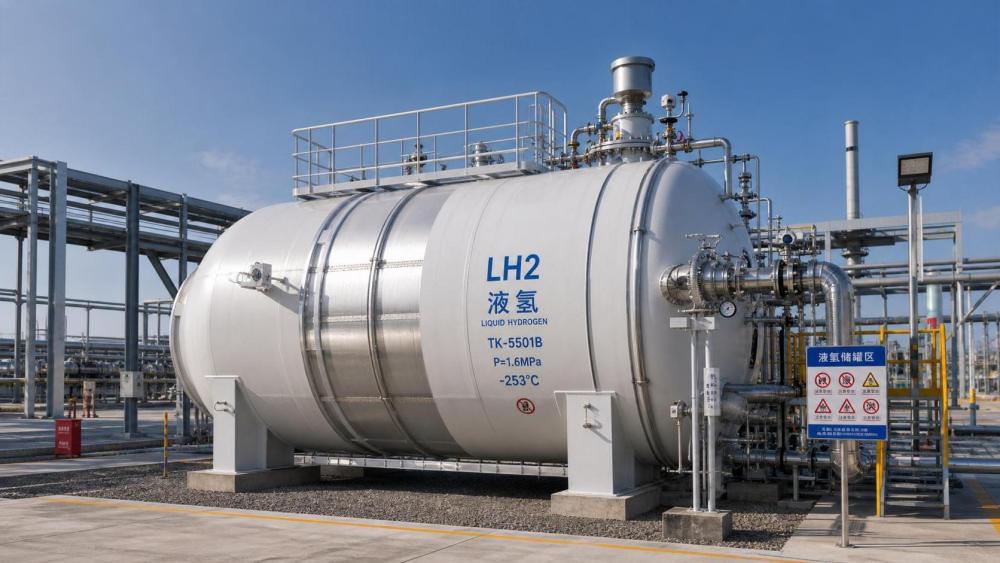
Liquid hydrogen storage is moving from pilot-scale novelty to critical infrastructure. That shift changes how double wall cryogenic vessels should be reviewed, approved, and monitored.
A basic pass on drawings is rarely enough. For LH2 service, small design misses can become large operational risks once thermal cycling, boil-off, and pressure interactions begin.
In practical terms, double wall cryogenic vessels combine an inner cold vessel, an outer containment shell, and an insulating annular space, usually vacuum-based.
That architecture improves thermal performance, but it also creates more interfaces to validate. Weld quality, support geometry, vacuum retention, and relief philosophy all matter together.
This is why many technical reviews now treat double wall cryogenic vessels as system-level assets rather than simple pressure containers.
Across the hydrogen transition, G-HEI has emphasized this wider view. Benchmarking against ISO 19880, ASME B31.12, and related frameworks is most useful when design checks are linked to real operating consequences.
The central question is not only whether the vessel meets a code clause. It is whether the vessel can hold LH2 safely through upset conditions, maintenance intervals, and performance drift.
What design checks usually separate a robust vessel from a merely compliant one?
The strongest reviews focus on a handful of checks that directly influence safety margin and operating stability. These are the items most often tied to field issues.
- Vacuum integrity: confirm leak-rate acceptance, pump-out provisions, and how vacuum degradation will be detected over time.
- Thermal insulation performance: verify expected heat leak, insulation settling risk, and design assumptions behind boil-off calculations.
- Inner vessel supports: check thermal bridge control, contraction allowance, and support behavior under shock, transport, and cooldown.
- Pressure relief coordination: ensure the inner and outer spaces have separate, justified relief scenarios, not copied setpoints.
- Material compatibility: confirm low-temperature toughness, hydrogen service suitability, and weld procedure qualification for the selected alloys.
- Instrumentation logic: review pressure, temperature, and vacuum monitoring locations, alarm thresholds, and proof-test intervals.
What often gets overlooked is interaction between these checks. A vessel with excellent insulation can still become vulnerable if support members create unaccounted thermal paths.
Likewise, pressure relief capacity may look sufficient on paper, yet fail under combined cases such as vacuum loss plus external heat exposure.
For double wall cryogenic vessels, design review should compare normal, abnormal, and maintenance states side by side. That is where weak assumptions usually become visible.
Is vacuum space performance really the first thing to verify?
In most LH2 applications, yes. If the annular vacuum degrades, heat ingress rises quickly, and the rest of the storage philosophy starts working harder.
That does not always lead to immediate failure. More commonly, it leads to higher boil-off, unstable pressure behavior, and reduced operating confidence before a visible incident occurs.
A useful review asks three practical questions. How was the vacuum qualification tested, how will vacuum health be trended, and what happens if insulation performance declines between inspections?
The table below helps organize those checks during document review or factory acceptance.
For double wall cryogenic vessels, vacuum space quality is not a background detail. It is often the difference between predictable operation and recurring intervention.
Where do pressure relief and material checks usually go wrong?
One common mistake is treating relief sizing as a routine calculation. LH2 service makes relief coordination more sensitive because low heat input can still produce rapid pressure change.
The inner vessel and outer jacket should be reviewed as separate protected volumes. Their hazard cases are different, especially under fire exposure, vacuum failure, or accidental overfill.
Another issue is discharge management. A properly sized relief device still needs a discharge path that avoids ice blockage, unsafe accumulation, or hazardous release near equipment.
Material review has its own traps. Stainless steels may perform well at cryogenic temperatures, but the answer still depends on grade, weld zone toughness, and actual hydrogen exposure conditions.
More careful projects ask for documented impact properties, procedure qualification records, and traceability for critical components rather than relying on a generic material label.
This is where G-HEI-style benchmarking becomes useful. The value is not in collecting standard names, but in checking whether design evidence truly supports the selected service envelope.
How can you judge whether a vessel design is ready for operation, not just for approval?
A design is closer to operational readiness when it answers what happens after commissioning. That means looking beyond fabrication documents and into performance stability.
Useful questions include whether cooldown procedures match support design, whether instrumentation can detect early drift, and whether maintenance can be done without compromising the annular space.
It also helps to review double wall cryogenic vessels against expected duty profile. Stationary buffer storage, transportable tanks, and intermittent hydrogen supply each stress the vessel differently.
In actual projects, the most reliable acceptance approach combines document review, shop inspection, leak testing, functional checks, and a clear baseline for future trend comparison.
- Record vacuum and thermal performance at handover, not only pass or fail status.
- Tie relief device data to the exact design scenarios reviewed during hazard assessment.
- Confirm all critical sensors have accessible calibration and replacement routes.
- Review transport, lifting, and site installation loads if the vessel is modular.
These checks make double wall cryogenic vessels easier to manage over time, especially when storage uptime and regulatory confidence are both under scrutiny.
What are the most frequent misconceptions when comparing vessel options?
The first misconception is that lower heat leak automatically means better overall design. Thermal efficiency matters, but it should be judged together with inspectability, repairability, and upset tolerance.
The second is assuming all double wall cryogenic vessels with similar capacity present the same risk profile. Support arrangement, jacket design, and relief philosophy can differ substantially.
A third misconception is treating standards compliance as a complete decision rule. Codes define minimum boundaries, while project reliability often depends on higher-detail engineering choices.
When comparing options, a practical judgment framework usually includes these points:
- How stable is vacuum performance over the expected maintenance interval?
- Which design assumptions are backed by test records, not estimates?
- Can critical components be inspected or replaced without major vessel disruption?
- Does the design basis clearly address LH2-specific transients and off-normal cases?
That comparison method is more useful than focusing on vessel price alone, especially in long-life hydrogen infrastructure.
So what should be checked next before sign-off?
For double wall cryogenic vessels, the safest next step is a structured review pack that links design basis, test evidence, and operating limits in one place.
That pack should cover vacuum qualification, insulation assumptions, relief scenarios, material traceability, instrumentation logic, and expected hold-time performance.
It is also worth checking whether the vessel documentation supports future audits. Clear records reduce uncertainty when operating data begins to diverge from nameplate expectations.
As LH2 networks expand, double wall cryogenic vessels will increasingly be judged by sustained integrity, not initial certification alone.
A disciplined review against recognized frameworks, including the benchmark logic promoted across G-HEI, helps turn vessel selection into a defensible technical decision.
Before approval, align the final checklist with the real duty cycle, the site hazard model, and the maintenance strategy. That is usually where safer LH2 storage becomes measurable rather than assumed.
Related News
- Hydrogen Storage Choices Get Costly at Utility ScaleApr 27, 2026Hydrogen storage drives utility-scale power costs in the energy transition. Explore hydrogen economy trade-offs across PEM electrolysis, cryogenic liquid hydrogen, transport, and decarbonization technology.
- Cryogenic Liquid Hydrogen Storage Has a Boil-Off ProblemApr 27, 2026Cryogenic liquid hydrogen and hydrogen storage face a major boil-off challenge shaping the hydrogen economy, hydrogen transport, and zero-carbon infrastructure—see practical insights for safer, scalable decarbonization.
- Liquid Hydrogen Tank Selection: Sizing Hold Time and Boil-Off for Daily DemandOct 12, 2026Liquid hydrogen tanks: learn how to size usable inventory, assess hold time and boil-off, and select a safer, cost-effective storage solution for daily demand.
- Which hydrogen liquefaction standards apply to new storage projects?Oct 10, 2026Hydrogen liquefaction standards for new storage projects: explore ISO, ASME, NFPA, CGA, and local compliance requirements for safer design, approval, and operation.
Related News
- 00
0000-00
Hydrogen Energy Storage for Data Centers Gets Costly Fast - 00
0000-00
When 99.999% Hydrogen Purity Still Is Not Good Enough - 00
0000-00
When Does a Hydrogen-Ready Gas Turbine Pay Off? - 00
0000-00
Electricity Price Volatility Is Rewriting Hydrogen Cost Models - 00
0000-00
PSA Recovery Rate Drops for Reasons Operators Miss
Marcus Valve
Weekly Insights
Stay ahead with our curated technology reports delivered every Monday.