



Vacuum insulated cryogenic vessels for liquefaction are not selected successfully by comparing insulation ratings alone. For technical evaluators, the decisive question is whether a vessel controls hydrogen losses reliably across loading, storage, transfer, pressure cycling, and abnormal operating conditions.
In large liquefaction projects, boil-off gas affects product yield, operating cost, safety systems, compression demand, and long-term asset value. A technically strong vessel therefore combines low heat ingress with controlled pressure management and verifiable material integrity.
This evaluation should begin with the complete operating profile rather than a catalog specification. Design pressure, working volume, filling frequency, ambient conditions, hold time, transfer rates, and recovery infrastructure all influence the best vessel configuration.
What Are Evaluators Really Assessing?
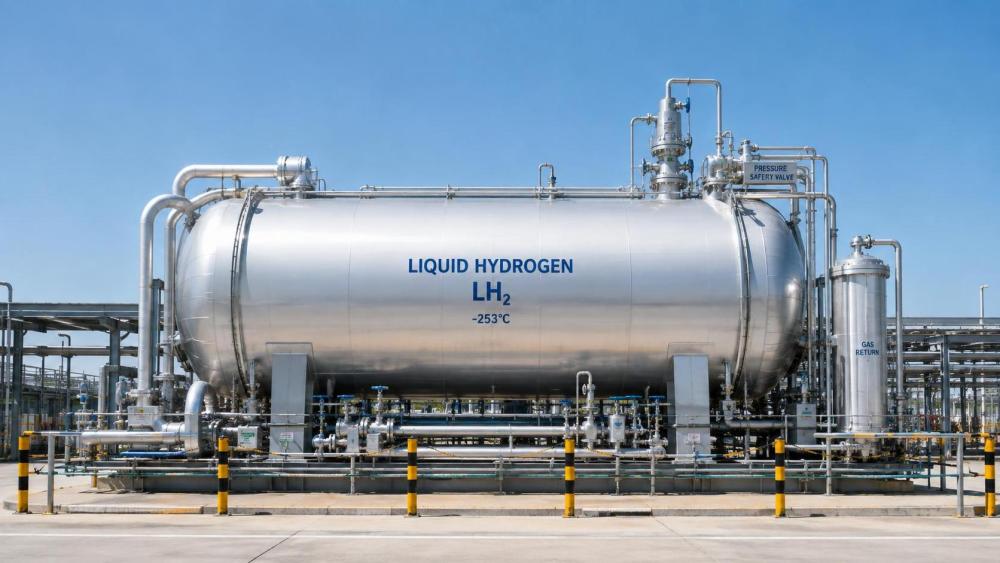
The core search intent behind vacuum insulated cryogenic vessels for liquefaction is practical and comparative. Readers want to understand how vessels manage boil-off and which performance indicators justify investment in hydrogen logistics infrastructure.
They are usually evaluating equipment for liquid hydrogen storage, transport, buffering, or terminal operations. Their decisions must connect thermal performance with safety compliance, maintainability, availability, and total ownership cost.
A vessel with an excellent initial heat-leak figure may still perform poorly if vacuum degradation is difficult to detect, pressure controls are undersized, or transfer losses are ignored during project modeling.
Technical evaluators should therefore review the vessel as part of an operating system. That system includes liquefaction, storage, vent handling, compression, loading arms, safety valves, instrumentation, and downstream consumption.
The most valuable supplier evidence includes tested heat ingress, vacuum stability, relief-system sizing, material certificates, cycle-life data, inspection procedures, and documented performance under representative hydrogen service conditions.
Why Boil-Off Matters in Liquid Hydrogen Projects
Liquid hydrogen remains at extremely low temperatures, typically near 20 kelvin at atmospheric pressure. Even small heat leaks can vaporize measurable quantities during extended storage.
Boil-off is not simply a product-loss issue. Accumulated hydrogen gas increases vessel pressure and may require venting, recovery, recompression, flaring alternatives, or controlled use in another process.
For a large facility, repeated losses can reduce the effective output of an expensive liquefaction train. They can also increase electrical consumption when boil-off gas must be compressed or reliquefied.
Unmanaged gas generation creates additional operational complexity. Pressure rises may trigger relief devices, interrupt loading operations, or force conservative inventory limits that reduce usable storage capacity.
Boil-off economics should be modeled across the full duty cycle. A daily loss rate that appears modest in isolation can become significant when multiplied by tank volume, product value, operating days, and replacement energy.
Evaluators should request both percentage-based and absolute boil-off data. Percentage loss can hide the impact of a very large inventory, while absolute mass flow clarifies equipment and recovery requirements.
How Vacuum Insulation Reduces Heat Ingress
Vacuum insulation reduces gaseous conduction between the cold inner vessel and the warmer outer jacket. Removing most gas molecules limits one of the principal paths through which heat reaches liquid hydrogen.
However, vacuum performance depends on more than achieving a low pressure during factory testing. The annular space must remain stable throughout service, transportation, thermal cycling, vibration, and maintenance intervals.
Multilayer insulation can further reduce radiative heat transfer. It normally uses reflective layers separated by low-conductivity spacers, but its effectiveness depends heavily on installation quality and compression control.
Excessive contact, poor layer spacing, damaged insulation, or moisture contamination can increase thermal performance losses. Supplier manufacturing controls are therefore as important as the insulation material specification.
Structural supports and pipe penetrations are unavoidable thermal bridges. Their geometry, material selection, load path, and connection design should be reviewed because localized conduction may dominate the total heat leak.
Evaluators should examine the declared thermal boundary conditions. Ambient temperature, solar exposure, wind, support loads, vacuum level, liquid fill percentage, and measurement uncertainty should all be stated clearly.
A credible performance guarantee identifies the test method, stabilization period, instrument accuracy, acceptance threshold, and remedies available if field performance differs from factory results.
Which Vessel Design Features Control Boil-Off?
The inner vessel contains the cryogenic liquid and must retain mechanical strength at low temperature. Austenitic stainless steels are widely considered because they maintain suitable toughness in cryogenic service.
Material selection must address hydrogen compatibility, weldability, fatigue, fracture resistance, cleanliness, and inspection requirements. Certificates alone do not replace a complete materials and fabrication qualification program.
The outer jacket protects insulation and supports the pressure boundary indirectly. It must resist external loads, weather exposure, handling forces, and vacuum-related structural effects without compromising the annular space.
Support assemblies require particular attention. They must carry the inner vessel safely while minimizing conductive heat transfer, accommodating thermal contraction, and preventing excessive stress at attachment points.
Pipe penetrations should be minimized where practical and designed for thermal isolation. Every penetration can create a heat path, leak risk, instrumentation challenge, and additional inspection requirement.
Internal geometry influences liquid circulation, stratification, filling behavior, and withdrawal performance. Poor arrangements can create local warming or pressure variation that increases operational losses.
For large vessels, modular fabrication may affect quality control and transportation risk. Evaluators should understand how factory assembly, field welding, vacuum restoration, and commissioning tests will be managed.
How Should Pressure Management Be Evaluated?
Pressure management converts unavoidable vapor generation into a controlled operating function. The objective is to keep pressure within an approved range while preserving hydrogen and maintaining safe access to the process.
Normal pressure control may use vapor withdrawal, pressure-building circuits, regulated gas return, refrigeration, or boil-off gas compression. The suitable arrangement depends on throughput and downstream demand.
A storage vessel connected to a hydrogen turbine or fuel system may use boil-off gas productively. A remote storage site may instead require compression, recondenser capacity, or dedicated recovery storage.
Relief devices remain essential even when normal controls are reliable. Their sizing should consider heat leak, external fire exposure, blocked outlets, rapid filling, vacuum loss, and credible control-system failures.
Relief discharge routing must prevent hazardous accumulation around personnel areas, electrical equipment, air intakes, and ignition sources. Dispersion analysis should reflect actual site geometry and prevailing conditions.
Instrumentation should provide dependable pressure, temperature, level, vacuum, and valve-position information. Redundancy is valuable where a single sensor failure could cause unnecessary venting or unsafe isolation.
Control logic should distinguish normal vapor management from emergency protection. A relief valve is not a routine pressure-control device, and frequent activation can damage equipment and increase operational risk.
What Testing and Standards Evidence Is Needed?
Project specifications should identify applicable pressure-vessel, piping, cryogenic, hydrogen, electrical, and site safety requirements before procurement begins. Jurisdictional acceptance can affect design choices significantly.
ASME pressure-vessel requirements may govern construction, while hydrogen piping and facility standards address connected systems. ISO frameworks can support hydrogen equipment consistency, testing, and operational safety.
Standards should be treated as a baseline rather than a substitute for project-specific engineering. A compliant design may still be unsuitable if its duty cycle, transfer rate, or environmental exposure differs materially.
Factory acceptance testing should cover pressure integrity, leak tightness, vacuum performance, relief-device function, instrumentation calibration, and control-system integration where applicable.
Vacuum testing should include documented measurement locations and stabilization criteria. A single reading taken immediately after evacuation provides limited evidence about long-term vacuum retention.
Weld examination may include visual inspection, radiography, ultrasonic testing, dye penetrant testing, or other methods selected according to the pressure boundary and governing code.
Commissioning should establish a baseline for vacuum, heat ingress, pressure rise, level indication, and transfer behavior. This baseline supports future maintenance and helps identify performance deterioration.
Independent inspection can improve confidence when the vessel is strategically important or supplied across international borders. The inspection plan should define hold points, records, nonconformance handling, and final documentation.
How Do You Compare Total Ownership Cost?
Purchase price is only one component of cryogenic vessel economics. Technical evaluators should calculate product losses, electricity demand, maintenance, inspection, downtime, recovery equipment, and eventual replacement costs.
A lower-cost vessel may become expensive if its boil-off rate requires larger compressors or frequent venting. Conversely, advanced insulation may justify its premium when storage duration and inventory value are high.
The model should use realistic operating scenarios rather than one idealized duty point. Include partial filling, frequent transfers, extended standby, warm-up, cooldown, vacuum recovery, and abnormal but credible events.
Boil-off value should reflect the actual hydrogen pathway. Lost liquid may represent lost production energy, purchased replacement product, missed export volume, or reduced availability for a critical power system.
Maintenance cost depends on access, component standardization, valve reliability, vacuum monitoring, inspection intervals, and supplier support. Specialized parts can create long outages even when failure frequency is low.
Availability deserves a financial value. A vessel that maintains stable pressure and supports predictable transfers can reduce production interruptions and improve utilization of upstream liquefaction assets.
Suppliers should provide assumptions behind all guarantees. Evaluators should reject comparisons that use different ambient conditions, fill levels, holding periods, or definitions of acceptable boil-off.
What Operational Risks Should Be Investigated?
Vacuum loss is one of the most important failure scenarios. It can sharply increase heat ingress, accelerate pressure rise, and force the operator toward emergency transfer or controlled venting.
Potential causes include jacket damage, seal deterioration, valve leakage, manufacturing defects, moisture ingress, and thermal-cycle fatigue. The design should provide detection, isolation, and recovery procedures.
Hydrogen service also requires disciplined control of ignition sources and material contamination. Electrical classification, grounding, ventilation, gas detection, and maintenance permits must align with the site hazard assessment.
Rapid filling can produce pressure and temperature transients. Transfer procedures should define maximum flow rates, cooldown requirements, valve sequencing, communication protocols, and shutdown conditions.
Overfilling reduces vapor space and can compromise pressure control. Reliable level measurement, independent high-level protection, and clear operator response procedures are essential for high-consequence facilities.
Hydrogen permeation and embrittlement risks should be addressed through material selection, stress control, weld qualification, and inspection planning. The relevant risk depends on temperature, pressure, material, and exposure conditions.
Emergency planning should account for loss of power, instrument failure, blocked vent paths, external fire, vehicle impact, and simultaneous operation of adjacent equipment.
When Is a Vacuum-Insulated Vessel the Right Choice?
Vacuum-insulated construction is especially valuable when liquid hydrogen must remain stored for meaningful periods or when inventory value makes vapor loss financially material.
It is also attractive for terminals requiring compact equipment, predictable thermal performance, and controlled integration with liquefaction, loading, transport, or utilization systems.
Short-duration buffer service may tolerate a different optimization. If liquid is transferred rapidly and continuously, capital cost, transfer rate, and pressure response may matter more than maximum holding time.
Remote sites require a broader assessment because maintenance access, spare parts, specialist labor, and emergency response may dominate the operating risk.
Large export or import terminals should evaluate vessel grouping and redundancy. Multiple vessels can improve operational flexibility, but they also increase valves, instrumentation, isolation points, and control complexity.
Technical evaluators should define the intended operating envelope before requesting bids. This prevents suppliers from optimizing for incompatible assumptions and makes lifecycle comparisons more transparent.
A Practical Procurement Checklist
Start by documenting liquid hydrogen properties, design pressure, operating pressure, usable volume, fill range, turnover rate, hold time, ambient conditions, and expected thermal cycles.
Request a heat-leak guarantee with defined test conditions, measurement uncertainty, stabilization time, and field verification requirements. Confirm whether piping and supports are included in the stated result.
Review the vacuum system architecture, monitoring instruments, isolation valves, evacuation connections, recovery method, and estimated time required to restore performance after maintenance.
Check materials, weld procedures, nondestructive examination, cleanliness controls, hydrogen compatibility evidence, pressure testing, and traceability of critical components.
Assess normal and emergency pressure control together. Confirm relief capacity, vent routing, gas recovery interfaces, control-system independence, and response to power or instrument failure.
Compare suppliers using the same lifecycle model. Include energy consumption, hydrogen losses, inspection costs, downtime, spare parts, warranty terms, training, and decommissioning obligations.
Finally, evaluate the supplier's project execution capability. Engineering coordination, documentation quality, commissioning support, and long-term service capacity can materially influence real-world performance.
Conclusion: The Best Vessel Controls Losses Across the Lifecycle
Vacuum insulated cryogenic vessels for liquefaction should be judged by delivered performance, not insulation claims alone. The strongest solution maintains vacuum stability, limits heat ingress, and controls pressure predictably.
For technical evaluators, the decision should connect thermal data with material integrity, standards evidence, operational scenarios, recovery infrastructure, and total ownership cost.
Boil-off cannot be eliminated completely in liquid hydrogen storage. It can, however, be reduced, measured, recovered, and incorporated into a resilient operating strategy.
Projects that define these requirements early are better positioned to protect product yield, improve asset availability, reduce avoidable energy use, and support secure expansion of zero-carbon hydrogen logistics.