
Material Integrity Standards for Hydrogen: What to Check Before System Approval




Material Integrity Standards for Hydrogen: What to Check Before System Approval
Before any hydrogen asset moves toward approval, reviewers need deeper evidence than a checklist can provide.
Material integrity standards for hydrogen define whether metals, polymers, seals, and welds remain stable under real operating stress.
That matters because hydrogen behaves differently from methane, nitrogen, or compressed air.
It diffuses quickly, promotes embrittlement in vulnerable alloys, and exposes design weaknesses during pressure cycling and thermal swings.
For sovereign-scale infrastructure, approval decisions must connect standards, material data, fabrication quality, and lifecycle inspection strategy.
That is where material integrity standards for hydrogen become a technical gate, not just a paperwork requirement.
Why material integrity standards for hydrogen are approval-critical
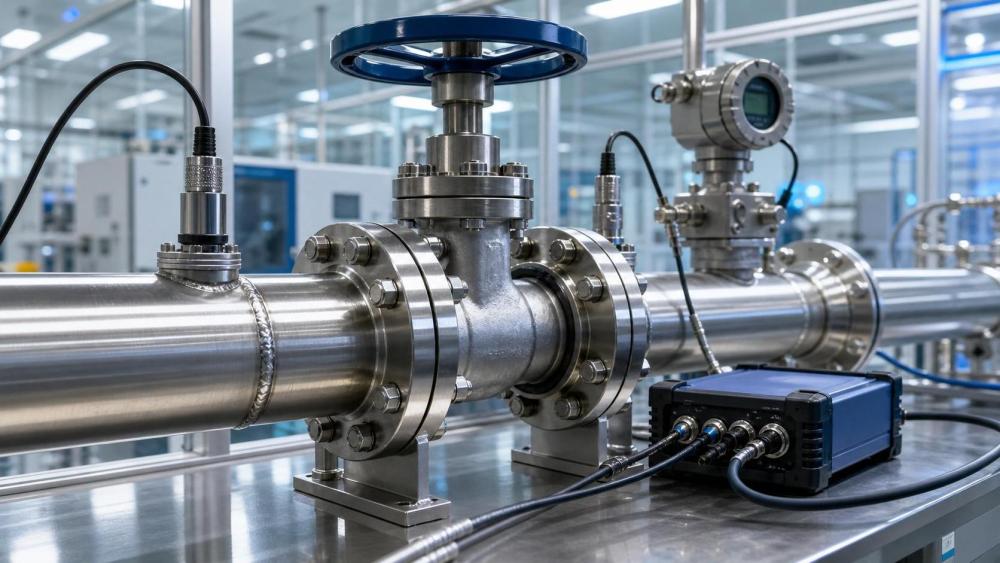
Hydrogen approval is rarely blocked by a single dramatic defect.
More often, the issue is weak alignment between material selection, service conditions, and the governing code framework.
A pipe may satisfy general pressure design rules, yet still fail hydrogen-specific toughness expectations.
A valve body may pass hydrostatic testing, yet remain vulnerable to leak growth after repeated pressurization.
This is why material integrity standards for hydrogen must be read alongside process duty, temperature envelope, purity profile, and maintenance intervals.
In practice, reviewers should confirm four things early.
- Whether the base material is proven for the intended hydrogen service.
- Whether fabrication methods preserve that resistance after welding or forming.
- Whether operating pressures and temperatures match tested qualification limits.
- Whether inspection plans can detect degradation before loss of containment.
If one of these links is missing, approval confidence drops fast.
Start with the governing code and service definition
Before checking coupons, certificates, or drawings, define which standards actually control the asset.
For hydrogen pipelines, ASME B31.12 often becomes the center of the review.
For refueling stations, ISO 19880 influences system safety and component acceptance.
For fueling protocols, SAE J2601 may shape pressure, temperature, and duty-cycle expectations.
If cryogenic storage is involved, low-temperature material behavior becomes equally important.
This first step sounds obvious, but it is where many reviews lose precision.
The same steel grade may be acceptable in one hydrogen application and questionable in another.
That difference usually comes from service definition, not from the nameplate alone.
Clarify these service inputs first
- Hydrogen purity and likely contaminants, including moisture, oxygen, sulfur, or residual process gases.
- Pressure range, peak excursions, and expected cycling frequency.
- Normal and upset temperatures, including cooldown, startup, and emergency depressurization.
- Static or dynamic loading from vibration, pulsation, and thermal expansion.
- Planned asset life, inspection intervals, and repair philosophy.
Once these inputs are fixed, material integrity standards for hydrogen become much easier to apply correctly.
Check base materials for embrittlement, toughness, and permeability risk
The next review layer is material behavior under hydrogen exposure.
This is where material integrity standards for hydrogen move from general engineering into asset survival.
High-strength steels deserve special attention because hydrogen can reduce ductility and accelerate crack initiation.
A material that performs well in non-hydrogen gas service may degrade sooner when atomic hydrogen enters the lattice.
A practical review should examine more than the grade name.
Key evidence to verify
- Heat treatment condition and final hardness level.
- Fracture toughness data relevant to gaseous or liquid hydrogen service.
- Hydrogen compatibility test results from recognized methods or qualified databases.
- Permeation resistance for liners, seals, gaskets, and polymeric barriers.
- Traceability from mill certificates to installed components.
Stainless steels, nickel alloys, aluminum alloys, and titanium may offer advantages in specific environments.
Still, none should be accepted on reputation alone.
Reviewers should ask whether the exact product form was qualified.
Plate, forging, tubing, and additive parts can behave differently under hydrogen exposure.
That nuance often separates a robust approval from a risky assumption.
Review welding, joining, and cold-work effects
Even when base materials look acceptable, fabrication can reintroduce vulnerability.
This is one of the most overlooked parts of material integrity standards for hydrogen.
Weld metal, heat-affected zones, and cold-worked sections may show different crack resistance than the parent material.
A strong approval package should therefore connect procedure qualification with hydrogen duty.
Questions worth asking
- Were welding procedures qualified for the same material family and thickness range?
- Was post-weld heat treatment required, performed, and documented?
- Did forming operations raise hardness beyond hydrogen service limits?
- Are threaded or mechanically joined areas protected from stress concentration?
- Was non-destructive examination sized to detect small crack-like flaws?
From recent project reviews, this is often where a compliant design becomes a delayed approval.
The material was technically correct, but the fabricated condition was never fully validated for hydrogen.
That gap can be expensive once the system is already installed.
Match pressure cycling and temperature extremes to real operating duty
Hydrogen systems rarely fail under calm, steady-state assumptions.
They fail at transitions, peaks, repeated fills, rapid decompression, and low-temperature excursions.
That is why material integrity standards for hydrogen must be checked against actual duty profiles.
For 70 MPa refueling systems, pressure cycling can dominate life expectations.
For liquid hydrogen logistics, thermal contraction and brittle response become more prominent.
For electrolyzer balance-of-plant, purity changes and startup frequency may shift the risk picture.
Practical approval checks
- Compare design assumptions with recorded operating scenarios, not nominal datasheets only.
- Confirm fatigue assessment includes hydrogen environment effects where required.
- Review decompression and cooldown cases for elastomers, seals, and composite interfaces.
- Verify relief, venting, and purge events do not expose materials to unqualified extremes.
When reviewers make this comparison early, they usually identify risk before it becomes a field issue.
Validate seals, polymers, and non-metallic components with equal rigor
Many approval packages focus heavily on metals and under-review the softer parts.
Yet sealing materials often determine whether a hydrogen asset stays tight over time.
Permeation, swelling, rapid gas decompression, and low-temperature stiffness can all reduce sealing performance.
In real projects, small polymer decisions can trigger major maintenance burdens.
This also falls under material integrity standards for hydrogen, even if it receives less boardroom attention.
If non-metallic data is missing, the approval review is not complete.
Demand traceability, inspection strategy, and lifecycle evidence
A final approval decision should not rest on design intent alone.
It should show that the installed system can remain within material integrity standards for hydrogen over time.
That means clear traceability, inspection methods, acceptance criteria, and retirement rules.
A strong lifecycle package usually includes both initial evidence and forward-looking controls.
Approval-ready documentation should include
- Material certificates linked to tag numbers and installation records.
- Welding and inspection reports tied to exact spool, vessel, or component locations.
- Leak testing, pressure testing, and functional test evidence under relevant conditions.
- In-service inspection intervals based on failure mode, not generic calendar practice.
- Repair or replacement criteria for degraded seals, cracked welds, or hardness excursions.
This is also where strategic benchmarking becomes valuable.
Facilities that align with leading hydrogen codes and proven asset data tend to move through approval with fewer surprises.
They also perform better when regulators ask for evidence beyond minimum compliance.
A practical pre-approval checklist for hydrogen material integrity
To bring everything together, use a short decision framework before system approval.
- Confirm the governing hydrogen code set and service definition.
- Verify base material compatibility with actual hydrogen pressure and temperature ranges.
- Check welds, joints, and formed areas for hydrogen-sensitive hardness or flaw growth risk.
- Match fatigue, cycling, and decompression cases to real operational duty.
- Review seals, liners, and polymers with the same rigor as pressure boundaries.
- Require traceability and in-service inspection plans before granting approval.
That sequence keeps the review grounded in evidence rather than assumption.
It also reflects how mature hydrogen projects are now being judged.
The more visible signal today is simple.
Approval is no longer about proving that a system can operate once.
It is about proving that it can operate safely, repeatedly, and transparently across its intended life.
For that reason, material integrity standards for hydrogen should sit at the center of every technical approval workflow.
When reviewers check materials, fabrication, duty, and lifecycle evidence as one system, approval decisions become faster, stronger, and far more defensible.
Related News
- How cryogenic testing exposes leaks in hydrogen infrastructureOct 13, 2026Cryogenic testing for hydrogen infrastructure reveals hidden leaks, seal failures, and insulation defects under real cold conditions—improving safety, uptime, and asset confidence.
- How vacuum insulated piping reduces hydrogen transport lossesOct 02, 2026Hydrogen transport infrastructure benefits from vacuum insulated piping by reducing heat leak, boil-off, pressure instability, and costly transfer losses.
- How to load following hydrogen systems without exceeding pipe pressure limitsSep 30, 2026Load following hydrogen systems safely with staged pressure control, trapped-volume protection, and proven steps to prevent pipe overpressure.
- Which logistics packaging best protects vacuum insulated piping in transit?Sep 03, 2026Logistics packaging for vacuum insulated piping: discover engineered transport frames, moisture barriers, and monitoring controls that reduce transit damage and protect cryogenic project schedules.
Related News
- 00
0000-00
Hydrogen Energy Storage for Data Centers Gets Costly Fast - 00
0000-00
When 99.999% Hydrogen Purity Still Is Not Good Enough - 00
0000-00
When Does a Hydrogen-Ready Gas Turbine Pay Off? - 00
0000-00
Electricity Price Volatility Is Rewriting Hydrogen Cost Models - 00
0000-00
PSA Recovery Rate Drops for Reasons Operators Miss
Marcus Valve
Weekly Insights
Stay ahead with our curated technology reports delivered every Monday.