Low Cost Hydrogen Pathways: Which Route Scales Best?




Low cost hydrogen pathways are moving from theory to portfolio decisions
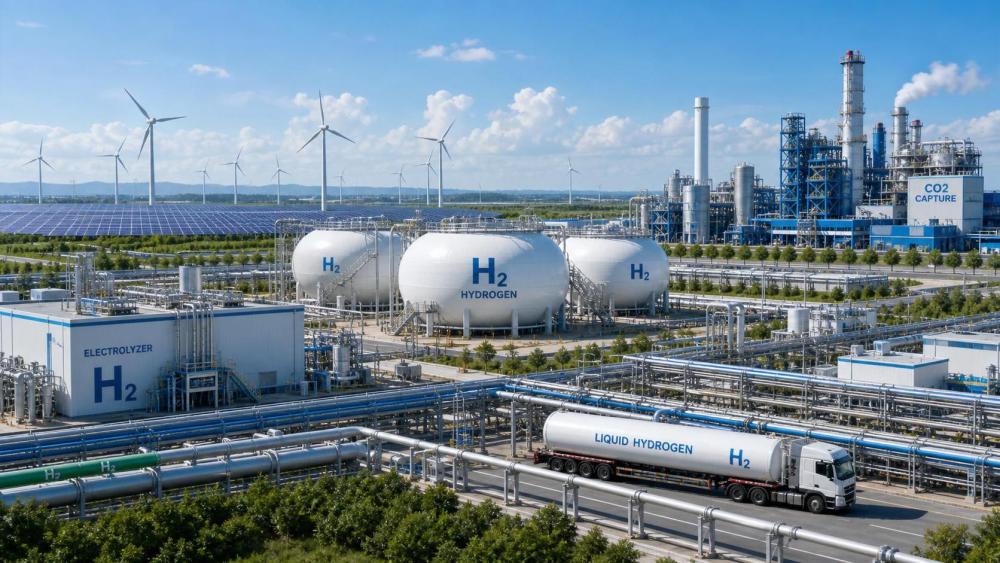
Low cost hydrogen pathways now sit at the center of industrial decarbonization strategy, not at its edge.
The shift is visible across power, transport, refining, chemicals, and heavy industry.
What changed is not only the urgency to cut emissions.
The bigger change is that capital markets, grid operators, and sovereign planners now expect hydrogen projects to prove scale economics early.
That makes the debate around low cost hydrogen pathways more practical than ideological.
Decision quality depends on understanding which route stays competitive after compression, storage, transport, and safety compliance are included.
By 2026, this is where many strategies are being reset.
A pathway that looks cheap at the electrolyzer gate can become expensive once material integrity, cryogenic handling, or refueling standards enter the picture.
That is why benchmarking platforms such as G-HEI are gaining influence.
They connect production economics with infrastructure realities, from PEM and ALK systems to liquid hydrogen logistics, hydrogen-ready turbines, CCUS links, and 70MPa refueling systems.
The market signal is getting clearer: cost alone no longer decides the winner
Several low cost hydrogen pathways are advancing at the same time, but not under the same conditions.
Green hydrogen from large-scale electrolysis remains the long-term anchor for zero-carbon positioning.
Blue hydrogen retains momentum where gas supply, CO2 storage, and industrial clusters already exist.
Turquoise and waste-linked routes are attracting attention, though mostly in selective geographies.
The visible pattern is convergence around total system cost.
Developers are moving away from single-metric comparisons and toward questions of utilization, bankability, transport distance, and standards exposure.
This matters because hydrogen is unusually sensitive to upstream and downstream design choices.
A low electricity tariff helps, but it does not offset weak load factors or expensive storage conversion.
Likewise, a low natural gas cost helps blue hydrogen, but methane management and capture performance can quickly reshape economics and policy risk.
Where current pathways are gaining practical advantage
The table shows why no single answer fits every market.
The best low cost hydrogen pathways are usually those that match local infrastructure rather than those with the lowest headline production number.
Why this shift is accelerating now
Three forces are pushing the market toward sharper pathway selection.
- Electrolyzer scale is improving, but balance-of-plant and power integration still dominate project economics.
- Transport and storage bottlenecks are becoming visible earlier in project design.
- Standards compliance is moving from engineering detail to investment filter.
That last point is more important than it looks.
Hydrogen scale-up is not only a production challenge.
It is a materials, safety, and operating discipline challenge.
Projects tied to ISO 19880, ASME B31.12, and SAE J2601 are finding that route selection affects compliance cost from the beginning.
For example, low cost hydrogen pathways that rely on long-distance movement may require expensive choices around compression, liquefaction, vessel design, and boil-off management.
In practice, this is why cryogenic logistics and hydrogen-ready gas turbine compatibility are no longer treated as separate discussions.
They shape which pathway remains bankable beyond the pilot phase.
The real competition is between integrated systems, not isolated molecules
From recent project screening, a more useful question has emerged.
Which low cost hydrogen pathways scale without creating a second infrastructure problem?
This changes how pathways should be compared.
A coastal export hub may favor green hydrogen linked to liquefaction and shipping.
An inland industrial basin may favor blue hydrogen or cluster-based electrolysis tied to pipeline reuse.
A power system balancing strategy may value hydrogen-ready turbines more than lowest-cost molecule production.
That is why integrated benchmarking matters.
G-HEI’s focus on electrolysis, liquid hydrogen logistics, CCUS, turbine readiness, and refueling infrastructure reflects how the market is actually making decisions.
The winning route increasingly depends on whether adjacent assets can scale with equal reliability.
This also explains why some announced megaprojects are being redesigned instead of simply expanded.
The issue is rarely hydrogen demand alone.
More often, it is the cost of moving, storing, certifying, and consuming hydrogen under real operating conditions.
Where impacts are showing up first
- Project finance: lenders want pathway resilience against power, gas, and carbon price swings.
- Asset design: material selection and pressure management are now early-stage economic variables.
- Operations: load profile matching matters as much as nominal plant capacity.
- Market access: certification credibility affects off-take quality and export value.
The most scalable route may differ by time horizon
There is a tendency to search for one permanent answer.
The market is pointing to a staged answer instead.
In the near term, low cost hydrogen pathways with existing feedstock and infrastructure support often move faster.
That gives blue hydrogen and integrated industrial routes a practical advantage in some regions.
Over a longer horizon, green hydrogen is better aligned with sovereign energy security and deep decarbonization goals.
Its scalability improves as electrolyzer efficiency rises, renewable portfolios deepen, and storage networks mature.
This does not mean one route replaces the others immediately.
It means pathway choice should be sequenced.
A portfolio can use transitional low cost hydrogen pathways for volume while building long-duration competitiveness around zero-carbon infrastructure.
That sequencing is becoming a defining feature of serious hydrogen strategy.
What deserves closer attention before committing capital
A useful assessment starts with five questions.
- Can the pathway keep a cost advantage after storage, transport, and conversion losses are added?
- Does the route depend on policy support that may narrow or change?
- Are material integrity and safety requirements already priced into the asset plan?
- Is there credible demand matched to purity, pressure, and delivery format?
- Can the pathway expand from project scale to network scale without redesigning core infrastructure?
These questions help separate durable low cost hydrogen pathways from temporary cost stories.
They also prevent a common mistake.
Many projects optimize for production economics while underestimating downstream friction.
In hydrogen, downstream friction usually returns as lost utilization, delayed approvals, or expensive retrofits.
A practical reading of what scales best
The strongest conclusion is not that one route wins everywhere.
It is that low cost hydrogen pathways scale best when they are matched to infrastructure readiness, standards discipline, and end-use certainty.
In markets with established gas, CO2, and industrial networks, transitional pathways can still scale quickly.
In markets building for long-term energy sovereignty, electrolysis-centered pathways look stronger with each improvement in power integration and logistics design.
The sensible next step is not a generic hydrogen commitment.
It is a disciplined comparison of pathway economics across production, transport, storage, turbine use, refueling, and compliance exposure.
That kind of phased benchmark will reveal which low cost hydrogen pathways are truly scalable, and which only appear cheap before the full system is counted.
From here, the most valuable move is to track pathway performance against real asset conditions, update assumptions quarterly, and build expansion plans around verified operating data rather than headline cost claims.
Related News
- How to size an alkaline electrolyzer for hydrogen-based steelmakingOct 13, 2026Size an alkaline electrolyzer for steelmaking with practical guidance on hydrogen demand, power capacity, storage and redundancy. Discover how to avoid costly sizing mistakes.
- How operating pressure affects energy use in ALK electrolysisOct 12, 2026ALK electrolysis pressure affects stack voltage, compression demand, gas purity, safety, and total hydrogen cost. Discover how to select the right pressure for efficient delivery.
- Scaling Electrolysis Beyond 100 MW: Grid, Water, and Balance-of-Plant PrioritiesOct 10, 2026Large scale electrolysis beyond 100 MW: explore grid integration, water treatment, and balance-of-plant priorities for reliable, bankable hydrogen production.
- How current density affects efficiency in alkaline water electrolysisOct 06, 2026Alkaline water electrolysis current density shapes hydrogen output, power use, heat control, gas purity, and stack life. Explore key trade-offs for smarter project decisions.
Related News
- 00
0000-00
Hydrogen Energy Storage for Data Centers Gets Costly Fast - 00
0000-00
When 99.999% Hydrogen Purity Still Is Not Good Enough - 00
0000-00
When Does a Hydrogen-Ready Gas Turbine Pay Off? - 00
0000-00
Electricity Price Volatility Is Rewriting Hydrogen Cost Models - 00
0000-00
PSA Recovery Rate Drops for Reasons Operators Miss
Dr. Aris Aero
Weekly Insights
Stay ahead with our curated technology reports delivered every Monday.