Automation Equipment Selection Guide for Throughput, Safety, and ROI




Choosing automation equipment has become a board-level decision in hydrogen and zero-carbon infrastructure. It affects plant throughput, incident exposure, compliance readiness, maintenance economics, and the pace at which capital turns into dependable output.
That shift is especially visible in electrolysis, cryogenic logistics, CCUS, hydrogen-ready power, and 70MPa+ refueling. In these environments, automation equipment is not just a control layer. It is part of the asset integrity strategy.
As the hydrogen economy moves from pilots to sovereign-scale deployment, selection criteria are tightening. G-HEI’s benchmarking perspective matters here because technical performance now has to stand beside standards alignment, material compatibility, and long-term ROI.
Why automation equipment now carries strategic weight
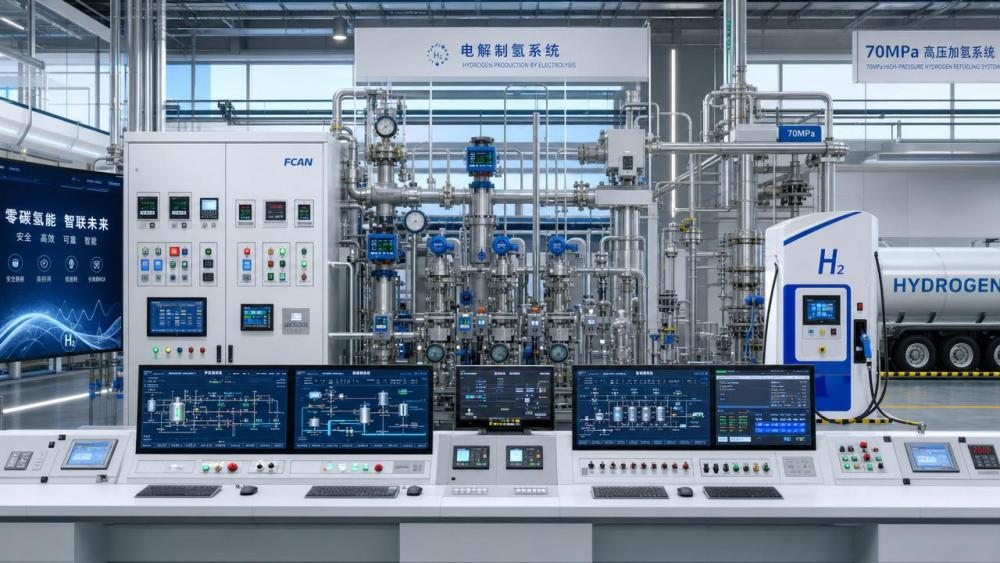
A hydrogen facility can only scale when process control remains stable under pressure, temperature variation, and changing load profiles. That is why automation equipment selection now sits close to financing, insurance, and permitting decisions.
In earlier industrial upgrades, decision makers often separated throughput from safety. In hydrogen systems, that separation is risky. Faster cycle times, tighter purity targets, and higher compression duty can amplify small control failures into major operating losses.
There is also a timing issue. By 2026, many large projects are moving beyond demonstration logic. Investors and operators want automation equipment that can support repeatable commissioning, predictable uptime, and a clear path to standards compliance.
What counts as automation equipment in this context
In zero-carbon infrastructure, automation equipment covers more than PLCs and basic sensors. It includes control systems, analyzers, shutdown logic, valve actuation, condition monitoring, data acquisition, and supervisory software.
The practical question is not whether these elements exist. It is whether they work together under real operating stress. A technically advanced skid still underperforms if instrumentation response, control logic, and safety interlocks are poorly coordinated.
For hydrogen-facing assets, the selection process should also consider material behavior, hazardous area requirements, leak detection sensitivity, and integration with enterprise maintenance systems. Reliable automation equipment turns operational data into faster, safer decisions.
Three outcomes that matter most
- Throughput stability: consistent output without frequent derating, trips, or manual intervention.
- Safety assurance: controlled shutdowns, rapid fault detection, and better alignment with site protection philosophy.
- Economic clarity: lower lifecycle cost, stronger uptime, and fewer hidden integration expenses.
Where selection decisions become more difficult
Not all hydrogen and decarbonization assets fail in the same way, so automation equipment cannot be chosen from a generic checklist. The risk profile changes significantly by process segment.
Electrolysis systems
PEM and alkaline plants need tight control of current density, water quality, temperature, and gas purity. Automation equipment here must support dynamic load following without accelerating stack stress or reducing output efficiency.
Cryogenic hydrogen logistics
Cryogenic applications depend on accurate thermal monitoring, boil-off management, and dependable insulation performance signals. Weak instrumentation can distort inventory planning and raise transfer losses before anyone notices.
CCUS and gas handling
CCUS infrastructure introduces corrosion, compression, and composition variability concerns. Automation equipment needs to handle process drift early, especially where capture systems interact with transport and storage assets.
High-pressure refueling
At 70MPa+, speed alone is not a success metric. Control accuracy, thermal compensation, metering confidence, and compliance with protocols such as SAE J2601 define whether station utilization remains profitable and safe.
A practical framework for comparing options
The most useful comparisons combine technical and commercial judgment. Looking only at capex usually hides the real cost of poor control stability, delayed integration, or excessive manual workarounds.
This is where benchmarking adds value. G-HEI’s approach is useful because it compares automation equipment against real performance expectations, not just brochure claims or isolated test conditions.
How throughput, safety, and ROI connect in practice
Higher throughput sounds attractive, but it only creates value when it is repeatable. If automation equipment causes unstable ramping, nuisance shutdowns, or purity deviations, nominal capacity quickly becomes a misleading number.
Safety performance is equally tied to economics. One poorly managed overpressure event, one unreliable detector, or one weak emergency sequence can erase years of margin through downtime, retrofit cost, and reputational damage.
ROI therefore needs a wider lens. It should include commissioning speed, labor intensity, spare parts exposure, software maintainability, and the financial effect of compliance confidence. Strong automation equipment shortens the distance between design intent and actual returns.
Common sources of hidden cost
- Custom integration work that was not visible during procurement.
- Manual monitoring because diagnostics are incomplete or unreliable.
- Frequent calibration and replacement under harsh process conditions.
- Deferred compliance upgrades after standards interpretation changes.
What stronger selection discipline looks like
A better process starts with operating intent. The question is not which automation equipment is most advanced on paper. The question is which package matches the site’s pressure regime, duty cycle, safety philosophy, and expansion plan.
That usually means testing vendors against scenarios, not just specifications. For example, how does the system behave during rapid ramping, power fluctuation, cryogenic transfer loss, analyzer drift, or partial sensor failure?
It also means requiring evidence. Proven references, standards documentation, material compatibility records, and maintainability data often reveal more than a low initial price ever will.
Useful questions before approval
- Can the automation equipment sustain stable performance across expected load swings?
- Does the safety layer reflect actual hydrogen hazards, not generic industrial assumptions?
- Will data outputs support maintenance planning and board-level reporting?
- How much future retrofit risk is built into the current architecture?
The next step is a sharper comparison standard
In hydrogen and zero-carbon infrastructure, automation equipment should be judged as a strategic asset class. It sits at the intersection of output reliability, technical safety, and capital discipline.
The most effective next move is to build a selection matrix around throughput stability, safety case integrity, integration effort, and lifecycle economics. Then compare each option against the realities of the intended process, not a generic industrial average.
Where assets must perform under sovereign-scale expectations, a benchmark-led review offers a stronger basis for decision making. That approach helps separate automation equipment that merely functions from automation equipment that protects long-term value.
Related News
- Electricity Price Volatility Is Rewriting Hydrogen Cost ModelsApr 27, 2026Impact of electricity price on hydrogen cost is transforming industrial decarbonization and large-scale electrolysis. Explore LCOH trends, PPA strategies, and resilient hydrogen infrastructure planning.
- Energy Transition Plans Often Fail at the Grid Connection StageApr 27, 2026Sustainable energy and energy transition projects often fail at grid connection. Learn how hydrogen infrastructure, PEM electrolysis, and industrial decarbonization can avoid delays and protect investment value.
- What Is Slowing Industrial Decarbonization Projects in 2026?Apr 27, 2026Industrial decarbonization faces delays in 2026 as hydrogen infrastructure, sustainable energy access, grid limits, safety standards, and project bankability challenge the energy transition.
- Are G-HEI’s PEM Electrolyzer Benchmarks Reliable?Oct 13, 2026Assess G-HEI PEM electrolyzer benchmarking reliability through test boundaries, hydrogen measurement, and durability evidence. Discover what makes a benchmark worth trusting.
Related News
- 00
0000-00
Hydrogen Energy Storage for Data Centers Gets Costly Fast - 00
0000-00
When 99.999% Hydrogen Purity Still Is Not Good Enough - 00
0000-00
When Does a Hydrogen-Ready Gas Turbine Pay Off? - 00
0000-00
Electricity Price Volatility Is Rewriting Hydrogen Cost Models - 00
0000-00
PSA Recovery Rate Drops for Reasons Operators Miss
Dr. Aris Aero
Weekly Insights
Stay ahead with our curated technology reports delivered every Monday.