
Electronics Sourcing Checklist: Price, Lead Time, Compliance




Electronics sourcing: what should be checked before price even enters the discussion?
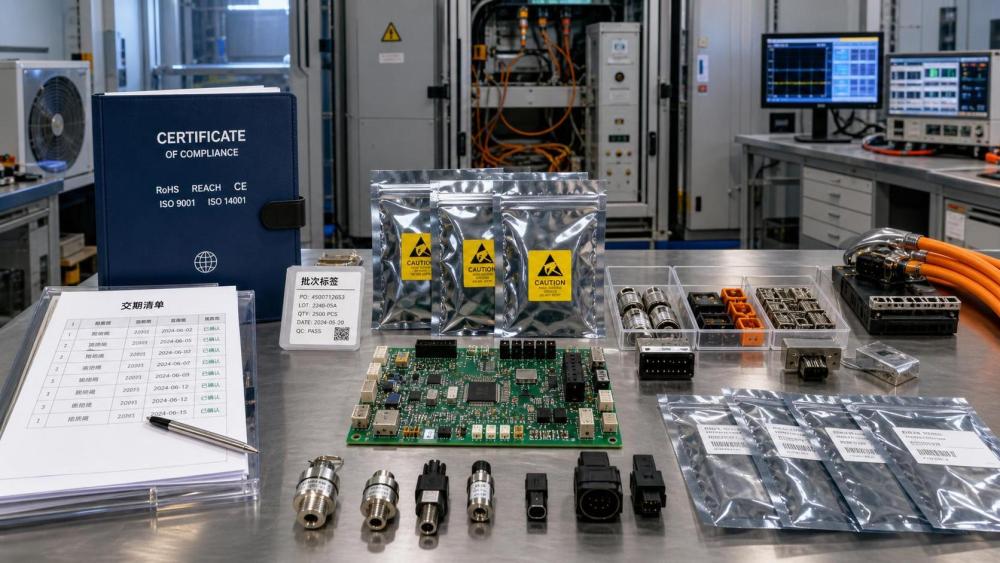
Electronics sourcing looks simple until one delayed component stops an entire project.
That risk is sharper in zero-carbon infrastructure, where control boards, sensors, connectors, and power electronics support safety-critical systems.
In hydrogen applications, a low quote means little if traceability is weak or delivery slips by twelve weeks.
A useful electronics checklist starts with function, operating environment, and regulatory exposure.
For projects linked to electrolysis, cryogenic logistics, hydrogen-ready turbines, CCUS, or 70MPa refueling, electronics often sit inside broader compliance frameworks.
That is why sourcing decisions increasingly combine commercial review with engineering and documentation checks.
A practical rule is to ask three early questions.
- Is the part technically suitable for the real operating conditions?
- Can the supplier support the required lead time without allocation risk?
- Does the documentation stand up to compliance and audit review?
If one answer is unclear, the sourcing decision is not ready.
How do you judge whether an electronics quote is actually competitive?
The cheapest electronics offer is often the most expensive after qualification, expediting, and replacement costs appear.
A better comparison uses total landed cost and project impact.
That includes unit price, tooling, freight, customs exposure, buffer stock, testing fees, and warranty response.
In actual buying decisions, three price gaps deserve extra attention.
When a lower price hides sourcing risk
A surprisingly low quote may indicate non-authorized channels, mixed date codes, uncertain origin, or downgraded materials.
For electronics used near hydrogen processing equipment, such shortcuts create technical and legal exposure.
When a higher price is justified
Sometimes the premium covers stronger quality systems, cleaner documentation, better packaging, and more stable allocation priority.
That can be worth paying if outage costs are high.
What should be compared line by line?
This type of comparison gives the electronics price real context instead of letting one number dominate the decision.
Lead time keeps moving, so what is the most reliable way to assess it?
Published lead time is only a starting signal.
More useful signals are allocation status, wafer capacity, alternate sources, and the supplier’s history of schedule changes.
For electronics tied to large infrastructure programs, a two-week variance can ripple into commissioning delays.
The stronger method is to separate quoted lead time from reliable lead time.
Quoted lead time is what appears in the offer.
Reliable lead time is what can be supported by inventory visibility, production slot commitment, and logistics planning.
Need to judge it quickly? Ask for evidence instead of reassurance.
- Current stock by location and batch
- Open purchase orders with factory dates
- Historic on-time delivery performance
- Approved alternates for critical electronics
- Recovery plan if one shipment slips
In hydrogen and energy projects, supply continuity matters almost as much as specification fit.
G-HEI’s benchmarking logic is relevant here.
High-performance assets are evaluated against strict safety and material-integrity standards, not optimistic assumptions.
Electronics sourcing should follow the same discipline.
Which compliance documents matter most for electronics in regulated projects?
Compliance is where many sourcing decisions become unexpectedly slow.
Not because the part is wrong, but because the paperwork is incomplete, outdated, or inconsistent.
For electronics used in industrial control, sensing, power conversion, or refueling systems, document quality can be a bid gate.
The required file set varies by market and application, yet several items appear again and again.
- RoHS and REACH declarations for material compliance
- Country of origin and traceability records
- Certificate of conformity and lot identification
- UL, CE, or other market-entry evidence where relevant
- Test reports for temperature, vibration, ingress, or EMC
For hydrogen-linked infrastructure, compliance review often extends beyond generic electronics standards.
Interfaces with ISO 19880, ASME B31.12, or SAE J2601 can influence enclosure, wiring, connector, and control-system choices.
That does not mean every electronic component needs those labels directly.
It means the sourced electronics must support equipment that is being validated under those frameworks.
A common mistake is reviewing datasheets without checking revision dates or declaration ownership.
If the document cannot be tied clearly to the shipped batch, compliance remains uncertain.
How can electronics suppliers be compared without relying on sales promises?
A supplier comparison works best when each candidate is scored against the same operating questions.
This prevents one polished presentation from outweighing weak execution history.
The table below is useful when several electronics sources look similar on paper.
In practice, the best electronics supplier is not always the largest one.
It is usually the source that combines technical clarity, stable lead time, and clean compliance support.
What mistakes usually create avoidable cost, delay, or requalification work?
Most avoidable problems begin before the purchase order is issued.
One frequent error is buying electronics against a generic part description instead of the approved revision.
Another is assuming all compliant parts perform equally in harsh environments.
Cryogenic exposure, vibration, humidity, and electromagnetic stress can expose hidden weaknesses quickly.
There is also the timing problem.
If compliance review starts after award, lead time often expands because missing declarations and alternate approvals appear too late.
A shorter, safer checklist usually covers these points:
- Lock the exact part number and revision
- Confirm environmental and lifecycle fit
- Check compliance documents before commercial approval
- Verify source authorization and traceability
- Build alternates for critical electronics early
This is especially relevant where electronics support strategic energy assets and downtime is costly.
So what does a smart electronics checklist look like at decision time?
A smart decision rarely comes from price comparison alone.
It comes from balancing commercial value, schedule confidence, and compliance readiness.
For electronics tied to modern energy and industrial programs, that balance is now essential.
The broader lesson from G-HEI is clear.
High-consequence infrastructure demands evidence-based sourcing, not assumption-based buying.
Before final selection, review five points together: technical fit, lifecycle status, reliable lead time, compliance completeness, and recovery options.
If one area remains weak, the electronics decision is still exposed.
The next useful step is to turn this checklist into a scored supplier comparison.
That makes trade-offs visible, supports internal alignment, and reduces the chance of expensive surprises after award.
Related News
- Electricity Price Volatility Is Rewriting Hydrogen Cost ModelsApr 27, 2026Impact of electricity price on hydrogen cost is transforming industrial decarbonization and large-scale electrolysis. Explore LCOH trends, PPA strategies, and resilient hydrogen infrastructure planning.
- Energy Transition Plans Often Fail at the Grid Connection StageApr 27, 2026Sustainable energy and energy transition projects often fail at grid connection. Learn how hydrogen infrastructure, PEM electrolysis, and industrial decarbonization can avoid delays and protect investment value.
- What Is Slowing Industrial Decarbonization Projects in 2026?Apr 27, 2026Industrial decarbonization faces delays in 2026 as hydrogen infrastructure, sustainable energy access, grid limits, safety standards, and project bankability challenge the energy transition.
- How PEM electrolyzers support the energy transition in EuropeNov 10, 2026Discover how PEM electrolyzers support the energy transition in Europe, from renewable hydrogen and industrial applications to project costs and infrastructure.
Related News
- 00
0000-00
Hydrogen Energy Storage for Data Centers Gets Costly Fast - 00
0000-00
When 99.999% Hydrogen Purity Still Is Not Good Enough - 00
0000-00
When Does a Hydrogen-Ready Gas Turbine Pay Off? - 00
0000-00
Electricity Price Volatility Is Rewriting Hydrogen Cost Models - 00
0000-00
PSA Recovery Rate Drops for Reasons Operators Miss
Dr. Aris Aero
Weekly Insights
Stay ahead with our curated technology reports delivered every Monday.