Heavy Machinery Logistics Solutions: Cost, Risk, and Delivery Planning Basics




Why do international logistics solutions for heavy machinery matter so much in zero-carbon projects?
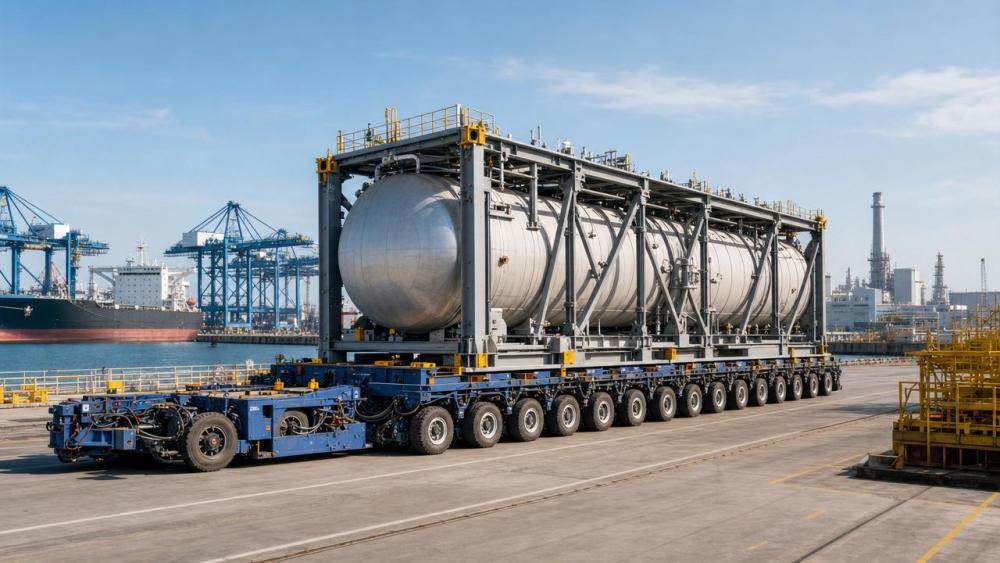
For large equipment moves, transport is never a side task. It shapes total landed cost, schedule confidence, and downstream installation risk.
That is especially true in hydrogen and zero-carbon infrastructure, where assets are heavy, oversized, and often sensitive to handling conditions.
International logistics solutions for heavy machinery usually cover route engineering, export packing, permits, multimodal transport, customs coordination, and final delivery planning.
In practical terms, the logistics plan affects crane windows, civil works, storage exposure, and commissioning readiness.
A delayed electrolyzer skid or cryogenic vessel can hold up an entire project sequence, even when fabrication is already complete.
This is why many teams now treat international logistics solutions for heavy machinery as an early-stage investment decision, not a late-stage freight purchase.
The shift described by G-HEI makes that approach even more relevant. As hydrogen systems scale, transport and storage networks must meet stricter technical and sovereign-level reliability expectations.
When assets align with standards such as ISO 19880, ASME B31.12, and SAE J2601, logistics planning also has to protect compliance during transit, lifting, and handover.
What equipment typically needs specialized transport planning?
Not every cargo move needs a complex engineering review. Heavy, high-value, and dimensionally irregular assets usually do.
In hydrogen-related projects, the list often includes PEM and ALK electrolysis modules, compression packages, vacuum-insulated cryogenic tanks, gas turbine components, and refueling station assemblies.
CCUS projects add absorbers, pressure vessels, modular pipe racks, and rotating equipment that can be difficult to secure or route.
The more important question is not only weight. It is whether the cargo has transport-sensitive interfaces, coatings, insulation, pressure boundaries, or center-of-gravity challenges.
A component may fit a standard trailer but still require tailored international logistics solutions for heavy machinery because vibration, tilt, humidity, or shock could affect integrity.
That is common with titanium-based PEM stacks, preassembled skids, and cryogenic systems where sealing performance matters long after delivery.
A useful screening rule is simple: if replacement lead time is long and site delay costs are high, transport planning deserves technical review.
How should cost be evaluated beyond the freight quote?
The freight line item rarely tells the whole story. Good cost analysis looks at the full delivery chain.
International logistics solutions for heavy machinery should be compared using total delivered cost, not just ocean rate or trucking rate.
Typical hidden costs appear before loading and after arrival, where delays create knock-on spending across site teams and contractors.
In many cases, a slightly higher logistics quote produces a lower project cost because it removes costly uncertainty.
That tradeoff matters when the cargo supports grid integration, refueling availability, or commissioning of a hydrogen-ready power block.
Where do the biggest delivery risks usually appear?
Most transport failures do not begin at sea. They start with incomplete assumptions on dimensions, permits, interfaces, or site readiness.
For international logistics solutions for heavy machinery, risk usually concentrates in five areas.
- Incorrect cargo data, including lifting points, axle loads, or center of gravity.
- Late permit discovery, especially on inland bridges, tunnels, or cross-border corridors.
- Weak packing controls for corrosion-sensitive or insulated equipment.
- Customs document mismatch between commercial, technical, and shipping records.
- Poor synchronization between arrival date and installation or storage capability.
Hydrogen infrastructure raises the stakes because some assets carry strict material-integrity and cleanliness expectations.
For example, contamination, impact stress, or insulation damage may not be obvious at discharge, yet can affect later performance.
A sound plan therefore combines marine liability, cargo-specific inspection points, and documented handover conditions.
That is one reason G-HEI’s benchmarking mindset is useful. It encourages transport choices that preserve technical compliance, not just delivery completion.
How can one compare logistics options without oversimplifying the decision?
A common mistake is comparing only air, sea, or road. The better comparison is option quality across the full route.
International logistics solutions for heavy machinery are often multimodal, so each handoff point deserves attention.
A practical evaluation framework can help keep the review grounded.
In real projects, the strongest option is often not the cheapest or fastest on paper. It is the one with fewer fragile assumptions.
That is particularly relevant for cross-border delivery of electrolyzer systems, turbine modules, and high-pressure fueling assemblies.
What should be confirmed before approving a heavy equipment shipment?
Before approval, it helps to turn broad logistics discussion into a short decision checklist.
This stage is where international logistics solutions for heavy machinery move from concept to accountable execution.
- Verify final cargo dimensions, weights, lifting drawings, and packing specifications.
- Confirm route constraints from factory gate to final foundation, not just port to port.
- Check permit lead times against fabrication completion and site acceptance windows.
- Review insurance scope for delay, damage, and special cargo handling exposure.
- Align customs codes and technical descriptions across all shipment documents.
- Make sure storage conditions at destination protect performance-critical components.
Where hydrogen assets are involved, it is wise to ask one extra question: does the transport plan preserve the standards basis the equipment was built to meet?
That link between logistics and compliance is easy to miss, yet it matters for long-term asset security.
In short, international logistics solutions for heavy machinery should be judged as part of delivery assurance, not only freight execution.
A clear next step is to map each shipment against cost drivers, route risks, standards sensitivity, and installation timing before comparing providers.
That kind of structured review supports better procurement choices, especially for capital-intensive hydrogen and zero-carbon infrastructure programs.
Related News
- Electricity Price Volatility Is Rewriting Hydrogen Cost ModelsApr 27, 2026Impact of electricity price on hydrogen cost is transforming industrial decarbonization and large-scale electrolysis. Explore LCOH trends, PPA strategies, and resilient hydrogen infrastructure planning.
- Energy Transition Plans Often Fail at the Grid Connection StageApr 27, 2026Sustainable energy and energy transition projects often fail at grid connection. Learn how hydrogen infrastructure, PEM electrolysis, and industrial decarbonization can avoid delays and protect investment value.
- What Is Slowing Industrial Decarbonization Projects in 2026?Apr 27, 2026Industrial decarbonization faces delays in 2026 as hydrogen infrastructure, sustainable energy access, grid limits, safety standards, and project bankability challenge the energy transition.
- Are G-HEI’s PEM Electrolyzer Benchmarks Reliable?Oct 13, 2026Assess G-HEI PEM electrolyzer benchmarking reliability through test boundaries, hydrogen measurement, and durability evidence. Discover what makes a benchmark worth trusting.
Related News
- 00
0000-00
Hydrogen Energy Storage for Data Centers Gets Costly Fast - 00
0000-00
When 99.999% Hydrogen Purity Still Is Not Good Enough - 00
0000-00
When Does a Hydrogen-Ready Gas Turbine Pay Off? - 00
0000-00
Electricity Price Volatility Is Rewriting Hydrogen Cost Models - 00
0000-00
PSA Recovery Rate Drops for Reasons Operators Miss
Dr. Aris Aero
Weekly Insights
Stay ahead with our curated technology reports delivered every Monday.