How to Evaluate PEM Electrolysis Distributors for Project Risk




How to Evaluate PEM Electrolysis Distributors for Project Risk
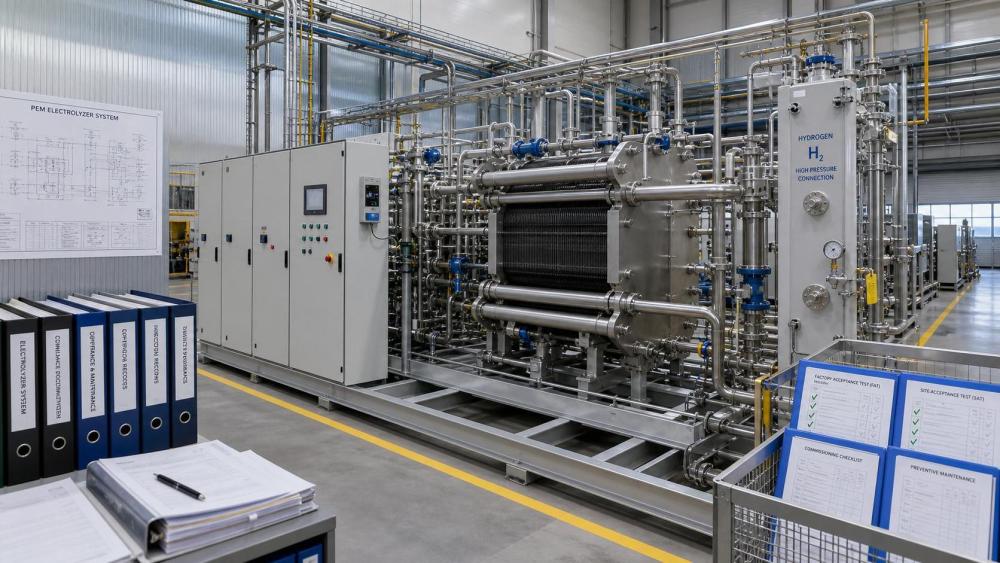
Selecting PEM electrolysis distributors has moved far beyond price comparison. In current hydrogen projects, distributor quality directly shapes execution risk, financing confidence, and long-term operating stability.
That shift is easy to understand. PEM systems sit at the center of a capital-intensive asset chain. If the distributor underperforms, the impact reaches procurement, commissioning, compliance, and service response.
For business evaluation teams, the real question is not simply who can supply equipment. It is which PEM electrolysis distributors can reduce project uncertainty across the full asset lifecycle.
This is especially relevant in large hydrogen programs tied to sovereign decarbonization goals, industrial fuel switching, and zero-carbon infrastructure expansion. Weak distribution channels can quietly become major risk points.
A strong distributor does more than arrange delivery. It aligns technical documentation, certification pathways, spare parts, training, and field support with project milestones and safety frameworks.
In practical terms, evaluating PEM electrolysis distributors means examining capability, accountability, and resilience. The strongest candidates make risk visible early, instead of leaving issues to surface during startup.
Why Distributor Evaluation Matters More in PEM Projects
PEM electrolysis projects are sensitive to engineering detail. Stack design, water purity, power integration, cooling conditions, and control logic all influence performance and reliability.
Because of that, the distributor is not a neutral middle layer. The distributor often becomes the operating link between the manufacturer, EPC teams, utilities, regulators, and site operators.
When PEM electrolysis distributors lack technical depth, evaluation teams usually see three problems. Specifications become vague, timelines become optimistic, and after-sales obligations become difficult to enforce.
Recent market changes make this more urgent. Hydrogen investment is growing, but buyers also face tighter scrutiny around safety, local compliance, and asset bankability.
That also means distributor selection now affects more than procurement efficiency. It influences insurance review, financing discussions, performance guarantees, and long-term replacement planning.
Core Criteria for Evaluating PEM Electrolysis Distributors
A disciplined review starts with structured criteria. The goal is to compare PEM electrolysis distributors on measurable risk factors, not on sales language or broad claims.
1. Technical Competence and Product Understanding
Ask whether the distributor can explain stack configuration, balance-of-plant interfaces, expected degradation behavior, and operating constraints without deferring every answer to the OEM.
The better PEM electrolysis distributors usually provide detailed technical submittals, site condition guidance, utility requirement lists, and commissioning support maps early in the process.
2. Certification and Standards Alignment
Hydrogen assets must fit demanding frameworks. Review how the distributor supports documentation linked to ISO 19880, ASME B31.12, pressure system rules, and local electrical codes.
A credible distributor can show traceable certificates, material records, testing reports, and document control processes. Missing paperwork is often an early warning of future delays.
3. Delivery and Supply Chain Reliability
Lead times in hydrogen equipment can shift quickly. Evaluation teams should test whether PEM electrolysis distributors hold realistic schedules for stacks, power modules, controls, valves, and spares.
It helps to ask for past delivery performance, escalation procedures, and alternate sourcing plans for critical components. Good distributors discuss constraints openly rather than smoothing them over.
4. Lifecycle Service Capability
Support quality matters after handover. Strong PEM electrolysis distributors can define spare parts strategy, preventive maintenance scope, remote diagnostics, warranty workflow, and response times.
This becomes even more important when projects operate in remote industrial sites, utility corridors, or export-oriented hydrogen hubs where downtime can quickly erode project economics.
Red Flags That Increase Project Risk
Some warning signs appear early if the review is rigorous enough. These issues do not always eliminate a distributor, but they demand deeper scrutiny and stronger contractual protection.
- Performance claims without clear operating assumptions or degradation data.
- Unclear distinction between OEM obligations and distributor obligations.
- Incomplete certification records or slow access to compliance documents.
- Weak local service presence for installation, startup, or emergency troubleshooting.
- Aggressive lead time promises unsupported by manufacturing visibility.
- No transparent spare parts plan for stacks, membranes, sensors, and control units.
In real projects, these gaps tend to cluster. A distributor with weak documentation often also struggles with service coordination and change management once installation begins.
A Practical Due Diligence Framework
To compare PEM electrolysis distributors objectively, use a structured review model. This keeps commercial discussions grounded in project risk rather than vendor confidence alone.
Step 1: Verify Market Position
Check authorization status, project references, geographic coverage, and years handling PEM systems. Look for evidence in similar sectors such as ammonia, refining, steel, or grid-linked hydrogen plants.
Step 2: Score Technical Responsiveness
Issue a detailed question set. Measure response speed, document quality, engineering accuracy, and willingness to identify limitations. Reliable PEM electrolysis distributors usually answer with precision, not slogans.
Step 3: Test Execution Readiness
Review logistics planning, commissioning roles, local inventory, and training resources. If possible, ask for a sample project timeline with hold points and responsibilities clearly assigned.
Step 4: Review Risk Transfer Terms
Contract language matters. Assess warranty boundaries, liquidated damages exposure, acceptance criteria, spare parts commitments, and service-level terms before the final vendor shortlist is locked.
Questions Worth Asking Before Final Selection
The best evaluation questions are specific enough to expose weak preparation. They also help separate capable PEM electrolysis distributors from general industrial resellers.
- Which project references match this scale, duty cycle, and regulatory environment?
- What documents are available now for certification, safety, and materials review?
- Who owns commissioning support, performance validation, and operator training?
- What spare parts are critical in the first two years of operation?
- How are stack replacement timing and degradation assumptions communicated?
- What is the escalation path during startup failure or delayed delivery?
These questions sound simple, but the answers usually reveal whether the distributor understands project risk in operational terms or only in commercial terms.
How Strong Distributors Support Long-Term Asset Value
The strongest PEM electrolysis distributors help protect value after procurement. They support the full transition from purchase decision to stable production, maintenance planning, and future system expansion.
This matters in zero-carbon infrastructure where electrolyzers connect to broader systems such as hydrogen storage, refueling, turbine fuel blending, or export logistics.
At that level, distributor capability contributes to sovereign-scale reliability. It affects technical assurance, asset integrity, and confidence that the hydrogen system can perform under demanding real-world conditions.
For organizations benchmarking critical hydrogen assets, this is the practical standard: choose PEM electrolysis distributors that can support compliance, uptime, and transparent lifecycle economics from day one.
Final Decision Guidance
A sound decision rarely comes from price alone. It comes from matching distributor capability to the technical, regulatory, and operational realities of the hydrogen project.
When evaluating PEM electrolysis distributors, focus on evidence over claims. Look for technical depth, standards alignment, delivery realism, and lifecycle support that stands up under scrutiny.
That approach helps reduce hidden exposure before contracts are signed. More importantly, it improves the odds that the project will meet performance, safety, and long-term value expectations.
In today’s hydrogen economy, distributor assessment is not a background task. It is a frontline decision for managing project risk with discipline and clarity.
Related News
- Electricity Price Volatility Is Rewriting Hydrogen Cost ModelsApr 27, 2026Impact of electricity price on hydrogen cost is transforming industrial decarbonization and large-scale electrolysis. Explore LCOH trends, PPA strategies, and resilient hydrogen infrastructure planning.
- Energy Transition Plans Often Fail at the Grid Connection StageApr 27, 2026Sustainable energy and energy transition projects often fail at grid connection. Learn how hydrogen infrastructure, PEM electrolysis, and industrial decarbonization can avoid delays and protect investment value.
- What Is Slowing Industrial Decarbonization Projects in 2026?Apr 27, 2026Industrial decarbonization faces delays in 2026 as hydrogen infrastructure, sustainable energy access, grid limits, safety standards, and project bankability challenge the energy transition.
- Are G-HEI’s PEM Electrolyzer Benchmarks Reliable?Oct 13, 2026Assess G-HEI PEM electrolyzer benchmarking reliability through test boundaries, hydrogen measurement, and durability evidence. Discover what makes a benchmark worth trusting.
Related News
- 00
0000-00
Hydrogen Energy Storage for Data Centers Gets Costly Fast - 00
0000-00
When 99.999% Hydrogen Purity Still Is Not Good Enough - 00
0000-00
When Does a Hydrogen-Ready Gas Turbine Pay Off? - 00
0000-00
Electricity Price Volatility Is Rewriting Hydrogen Cost Models - 00
0000-00
PSA Recovery Rate Drops for Reasons Operators Miss
Dr. Aris Aero
Weekly Insights
Stay ahead with our curated technology reports delivered every Monday.