Hydrogen Industry Knowledge Base Materials That Improve Technical Reviews




Reliable hydrogen industry knowledge base materials have become central to technical review work because hydrogen projects now move faster than many review frameworks. Decisions on electrolyzers, storage, logistics, turbines, and refueling systems increasingly depend on evidence that is current, comparable, and tied to standards rather than vendor claims alone.
That shift matters across the wider industrial landscape. Energy networks, transport infrastructure, heavy industry, and public investment programs are all being reshaped by the move toward sovereign zero-carbon capacity. In that setting, technical review quality influences not only project viability, but also asset integrity, regulatory acceptance, financing confidence, and long-term operational resilience.
Why the knowledge base now matters more
Hydrogen is not a single equipment category. It is an integrated chain of production, storage, transport, conversion, and dispensing technologies, each carrying distinct material, safety, and performance constraints.
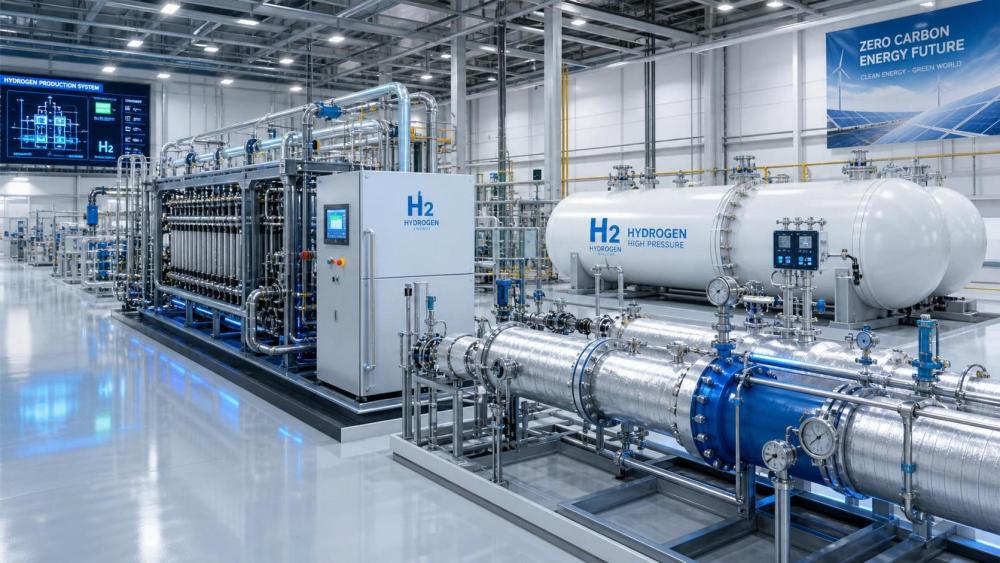
A review that treats one link in isolation can miss the real risk. A high-performing electrolyzer may still create downstream issues if purity, compression, boil-off, embrittlement, or fueling protocol requirements are weakly understood.
This is where hydrogen industry knowledge base materials become useful. They organize technical facts into a form that supports comparison across asset classes, operating conditions, standards references, and lifecycle requirements.
In practice, the strongest repositories do more than collect documents. They connect benchmark data, failure modes, material compatibility findings, code requirements, and performance thresholds into a defensible review structure.
What should be inside hydrogen industry knowledge base materials
Good reference materials are not just broad. They are selective, traceable, and engineered for decision-making. The most useful sets usually combine technical depth with cross-sector relevance.
Core elements that improve review quality
- Material compatibility data for hydrogen exposure, pressure cycling, cryogenic service, and corrosion behavior.
- Benchmark performance ranges for PEM and ALK systems, liquefaction, compression, storage, and turbine blending.
- Mappings to standards such as ISO 19880, ASME B31.12, and SAE J2601.
- Safety case references covering leak detection, venting, ignition risk, insulation, and emergency shutdown logic.
- Lifecycle indicators including efficiency decay, maintenance intervals, asset durability, and replacement thresholds.
- Operational context, including climate, duty cycle, grid profile, purity requirements, and throughput variation.
Without these layers, reviewers often end up with fragmented evidence. One team sees nameplate efficiency, another sees standards compliance, and neither sees the full technical picture.
How G-HEI fits the current review environment
The Global Hydrogen-Economy & Zero-Carbon Infrastructure, or G-HEI, reflects a more mature approach to this problem. Its value is not simply that it covers hydrogen infrastructure. Its value lies in how it benchmarks high-performance assets against demanding international frameworks.
That matters in 2026 because the hydrogen transition has reached a system-level inflection point. Large-scale electrolysis alone is no longer enough. Projects now require coherent evaluation across storage, transport, power conversion, and safety governance.
G-HEI’s structure also aligns with the way complex projects are actually reviewed. Its five pillars cover megawatt-scale electrolysis, cryogenic liquid hydrogen logistics, hydrogen-ready gas turbine power, CCUS infrastructure, and 70MPa-plus refueling systems.
For technical reviews, this breadth helps prevent false confidence. A project may look strong inside one workstream while carrying unresolved exposure in another. A repository built around the full value chain makes those dependencies easier to see.
Where technical reviews typically succeed or fail
Most review failures are not caused by missing data alone. They arise because available data is difficult to normalize across technologies, vendors, standards, and operating assumptions.
A common example is material integrity. Titanium-based PEM stacks, vacuum-insulated cryogenic vessels, and hydrogen-blending gas turbines each involve different degradation pathways. Reviewing them with a generic checklist produces weak conclusions.
Another issue is standards interpretation. Compliance language can appear complete while leaving open questions around test conditions, duty profile, interface compatibility, or field maintenance assumptions.
The practical role of hydrogen industry knowledge base materials is to close that gap. They help turn isolated compliance statements into a broader assessment of readiness, durability, and operational fit.
Typical review lenses by asset type
Using reference materials in real business decisions
Hydrogen industry knowledge base materials are most useful when they shape actual review workflow. That usually means moving beyond document collection and into structured decision criteria.
One effective approach is to separate review inputs into four layers: standards alignment, material integrity, operational performance, and infrastructure compatibility. Each layer should contain measurable checks rather than general impressions.
This helps when comparing proposals that appear similar on paper. Two assets may both meet baseline certification, yet differ sharply in degradation rate, maintenance burden, or fit with local storage and transport conditions.
It also improves cross-functional alignment. Capital planning, engineering review, safety assurance, and long-term operations often use different vocabularies. A common technical knowledge base reduces interpretation drift between them.
Practical checks worth building into the review process
- Ask whether benchmark data reflects realistic duty cycles rather than ideal laboratory conditions.
- Confirm that material data covers the actual pressure, temperature, and purity envelope of the project.
- Check whether standards references are current and directly applicable to the asset configuration.
- Review interface assumptions between production, storage, transport, and end-use systems.
- Track unresolved risks that move across package boundaries, especially in integrated projects.
What to watch as the sector matures
The next phase of hydrogen deployment will reward better evidence discipline. Projects are becoming larger, more interconnected, and more visible to regulators, financiers, and public infrastructure planners.
That means hydrogen industry knowledge base materials should not stay static. They need regular updates on codes, incident learnings, component performance, and the interaction between hydrogen systems and broader zero-carbon infrastructure.
It is also worth watching the boundary between hydrogen and adjacent systems. CCUS, grid balancing, industrial heat, maritime logistics, and heavy mobility increasingly shape review outcomes even when hydrogen is the headline technology.
The strongest review posture comes from treating the knowledge base as a living benchmark environment. That is especially relevant for organizations using platforms such as G-HEI to compare technologies against sovereign-scale reliability and safety expectations.
A grounded next step
A useful next step is to audit the current review framework against the actual hydrogen value chain involved in the project. Many gaps appear not in headline specifications, but in material behavior, standards interpretation, or interface assumptions.
From there, prioritize hydrogen industry knowledge base materials that combine benchmark performance, material-integrity evidence, and standard-linked technical references. That creates a more credible basis for comparing options, challenging assumptions, and advancing only the assets that can perform safely at scale.
- zero-carbon infrastructure
- large-scale electrolysis
- ALK electrolysis
- cryogenic liquid hydrogen
- hydrogen-ready gas turbine
- CCUS infrastructure
- hydrogen infrastructure
- Hydrogen logistics
- hydrogen industry knowledge base
- liquid hydrogen logistics
- hydrogen industry knowledge
- hydrogen industry knowledge base materials
Related News
- Electricity Price Volatility Is Rewriting Hydrogen Cost ModelsApr 27, 2026Impact of electricity price on hydrogen cost is transforming industrial decarbonization and large-scale electrolysis. Explore LCOH trends, PPA strategies, and resilient hydrogen infrastructure planning.
- Energy Transition Plans Often Fail at the Grid Connection StageApr 27, 2026Sustainable energy and energy transition projects often fail at grid connection. Learn how hydrogen infrastructure, PEM electrolysis, and industrial decarbonization can avoid delays and protect investment value.
- What Is Slowing Industrial Decarbonization Projects in 2026?Apr 27, 2026Industrial decarbonization faces delays in 2026 as hydrogen infrastructure, sustainable energy access, grid limits, safety standards, and project bankability challenge the energy transition.
- Are G-HEI’s PEM Electrolyzer Benchmarks Reliable?Oct 13, 2026Assess G-HEI PEM electrolyzer benchmarking reliability through test boundaries, hydrogen measurement, and durability evidence. Discover what makes a benchmark worth trusting.
Related News
- 00
0000-00
Hydrogen Energy Storage for Data Centers Gets Costly Fast - 00
0000-00
When 99.999% Hydrogen Purity Still Is Not Good Enough - 00
0000-00
When Does a Hydrogen-Ready Gas Turbine Pay Off? - 00
0000-00
Electricity Price Volatility Is Rewriting Hydrogen Cost Models - 00
0000-00
PSA Recovery Rate Drops for Reasons Operators Miss
Dr. Aris Aero
Weekly Insights
Stay ahead with our curated technology reports delivered every Monday.