
Italy’s UFI Hydrogen Unveils Seven-Layer PEM Assembly to Reduce Iridium Use




Italy’s UFI Hydrogen, part of the UFI Group, unveiled its NEXT GEN membrane electrode assembly platform for PEM electrolyzers at the Hydrogen Technology World Expo in Hamburg on October 20–22, 2026, according to the supplied information. The platform integrates seven functional layers into a single assembly to reduce iridium consumption and simplify the supply chain. The announcement identifies a product development rather than a confirmed change in policy, regulation or certification requirements. From an industry perspective, its potential relevance lies in how electrolyzer manufacturers, component suppliers and buyers may assess procurement specifications, qualification evidence and delivery responsibilities for a different assembly design.
NEXT GEN Integrates Seven Functional Layers
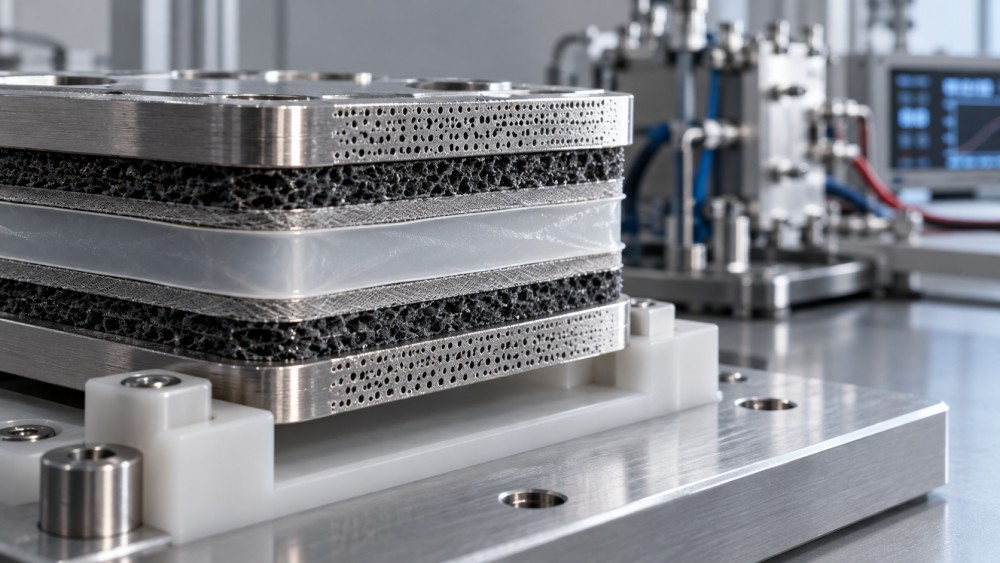
UFI Hydrogen’s new platform replaces the existing three-layer design with seven functional layers integrated into one assembly. Its stated objectives are to significantly reduce consumption of the precious metal iridium and simplify the supply chain, providing a potential route to lower costs for large-scale PEM electrolyzers.
The supplied account places the introduction at the Hamburg exhibition on October 20–22, 2026. It provides no quantified iridium reduction, cost comparison, certification outcome or commercial delivery schedule. It also identifies no new regulation, standard, trade rule or mandatory implementation date associated with the announcement.
Procurement Specifications May Need Closer Review
Electrolyzer manufacturers: assessing assembly compatibility
Analysis suggests that manufacturers considering NEXT GEN may need to examine whether their existing technical specifications and acceptance procedures adequately cover the seven-layer configuration. The relevant questions could include compatibility with the intended electrolyzer design, supporting performance evidence and how the integrated assembly would be accepted during procurement. These are possible qualification considerations; the announcement does not establish new mandatory requirements.
Component and material suppliers: examining purchasing boundaries
From a supply-chain perspective, integrating more functions into one assembly could change which items manufacturers purchase separately and which responsibilities sit with an assembly supplier. Material buyers and component suppliers may therefore wish to clarify the proposed scope of supply, material traceability and responsibility for nonconforming components. The stated aim of simplifying the supply chain does not establish that supplier numbers, contractual arrangements or delivery times have already changed.
Equipment buyers and integrators: distinguishing objectives from commitments
For equipment buyers and system integrators, the potential issue is how the platform’s stated cost and material objectives translate into an assessable offer. Analysis suggests that technical bids and purchase agreements could benefit from clearly defined assembly specifications, acceptance evidence and delivery commitments. The supplied information does not demonstrate lower project costs, certification acceptance or a change in market access conditions.
Evidence to Request Before Revising a Purchase Specification
Quantify the proposed reduction in iridium
As a procurement recommendation, buyers could request documented iridium consumption figures and a clearly identified comparison baseline. Any assessment should distinguish the platform’s stated objective from demonstrated results. The supplied account gives no numerical basis for calculating material savings or their contribution to overall electrolyzer costs.
Check the scope of qualification and certification evidence
As a qualification recommendation, manufacturers and buyers could ask which technical documents and test reports cover the proposed seven-layer assembly. Where a purchasing project has applicable certification or compliance requirements, they could verify whether the available evidence addresses that configuration. No specific certification scheme, approval or revised assessment procedure is identified in the input.
Clarify delivery, replacement and traceability arrangements
As a contractual recommendation, prospective customers could establish what the integrated assembly includes, how it is identified in supply documents and who handles quality issues or replacement. These questions follow from the proposed integration of functions into one component. They should be evaluated during supplier discussions rather than treated as evidence of an established change in delivery or service arrangements.
Keep tender language aligned with verified information
As a specification recommendation, buyers considering changes to tender documents could distinguish required performance from assumptions about layer count, iridium use or cost. Any proposed alternative design could then be assessed against the project’s documented needs. The announcement alone provides no basis for making seven-layer construction a compulsory purchasing condition.
A Product Announcement, With Purchasing Implications Still to Be Tested
Editorial assessment: this development is best understood as a technical and supply-chain signal. The supplied information does not support describing it as a regulatory change, a new industry standard or an implemented certification requirement. Its potential significance for industry rules lies in whether subsequent qualification practices, purchasing specifications or contractual expectations evolve around the integrated design.
Further evidence could change that assessment. Documented material savings, qualification results, certification statements where relevant, and customer procurement feedback would help establish whether the platform’s objectives translate into repeatable commercial benefits. Until such evidence is available, neither reduced compliance costs nor easier market access can be inferred from the product introduction.
A Basis for Evaluation Before Procurement Changes
Analysis suggests that NEXT GEN offers a reason to review assembly sourcing and the evidence used to compare PEM electrolyzer components. Its seven-layer configuration and stated aim of reducing iridium consumption make technical validation and supplier qualification relevant next steps. The current information supports evaluating a potential purchasing option; it does not establish a change in legal obligations, trade treatment or industry-wide acceptance criteria.
Basis of This Report and Points for Follow-Up
This article is based exclusively on the user-provided news title, event dates and event summary. Specific official source links were not supplied, so the announcement and any subsequent implementation claims require continued verification. Company announcements, product documentation, relevant certification records and industry reporting would be appropriate source types for follow-up; none is represented here as having been independently reviewed.
Further monitoring should focus on technical specifications, evidence of iridium reduction, qualification and certification statements, tender requirements, delivery arrangements and industry feedback. Any later policy, standards or trade implications should be assessed against the relevant published documents before being treated as an applicable rule change.
Related News
- Electricity Price Volatility Is Rewriting Hydrogen Cost ModelsApr 27, 2026Impact of electricity price on hydrogen cost is transforming industrial decarbonization and large-scale electrolysis. Explore LCOH trends, PPA strategies, and resilient hydrogen infrastructure planning.
- Energy Transition Plans Often Fail at the Grid Connection StageApr 27, 2026Sustainable energy and energy transition projects often fail at grid connection. Learn how hydrogen infrastructure, PEM electrolysis, and industrial decarbonization can avoid delays and protect investment value.
- What Is Slowing Industrial Decarbonization Projects in 2026?Apr 27, 2026Industrial decarbonization faces delays in 2026 as hydrogen infrastructure, sustainable energy access, grid limits, safety standards, and project bankability challenge the energy transition.
- How PEM electrolyzers support the energy transition in EuropeNov 10, 2026Discover how PEM electrolyzers support the energy transition in Europe, from renewable hydrogen and industrial applications to project costs and infrastructure.
Related News
- 00
0000-00
Hydrogen Energy Storage for Data Centers Gets Costly Fast - 00
0000-00
When 99.999% Hydrogen Purity Still Is Not Good Enough - 00
0000-00
When Does a Hydrogen-Ready Gas Turbine Pay Off? - 00
0000-00
Electricity Price Volatility Is Rewriting Hydrogen Cost Models - 00
0000-00
PSA Recovery Rate Drops for Reasons Operators Miss
Dr. Aris Aero
Weekly Insights
Stay ahead with our curated technology reports delivered every Monday.