Sourcing Insights: 7 Hidden Cost Risks in Cross-Border Industrial Orders




Cross-border industrial buying often looks efficient in a spreadsheet. The trouble appears later, when freight swings, testing gaps, and contract blind spots start adding cost.
These sourcing insights focus on hidden cost risks that matter in complex infrastructure orders, especially where hydrogen, power, storage, and safety-critical systems intersect.
In projects tied to electrolysis, cryogenic transport, CCUS, or hydrogen refueling, the cheapest quotation rarely delivers the lowest total cost. Material integrity, certification, and delivery precision carry real financial weight.
Why do cross-border orders become more expensive after the quote is approved?
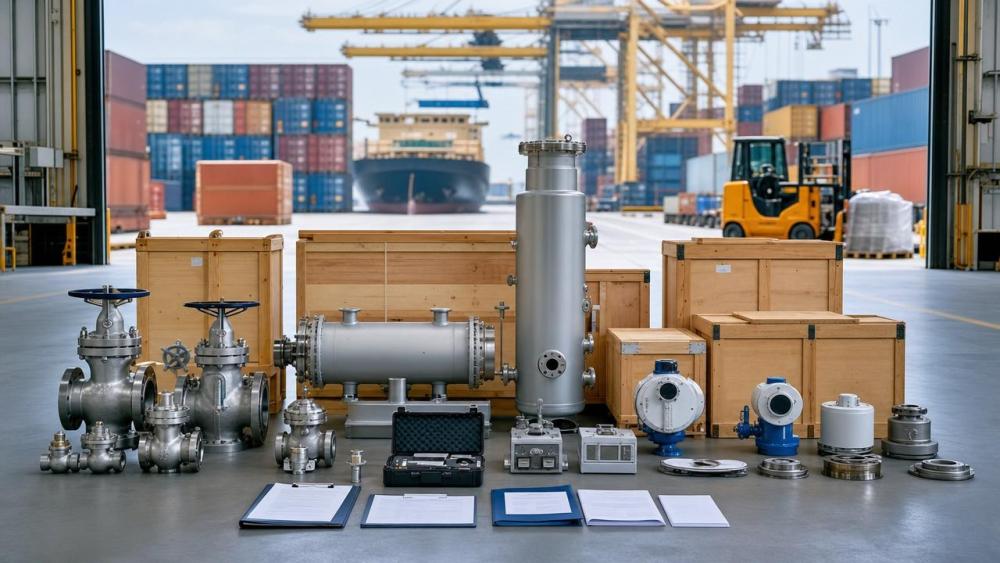
The short answer is that quoted price and landed cost are not the same thing. Many industrial orders absorb risk through assumptions that are never priced clearly.
This is common in long-cycle equipment, fabricated assemblies, and regulated components. A supplier may price the product correctly, yet the project still overruns because the surrounding obligations were underestimated.
In hydrogen-related infrastructure, that gap becomes wider. A vessel, valve train, PEM stack component, or gas turbine accessory may need extra traceability, pressure testing, insulation validation, or code documentation.
That is why better sourcing insights start with one discipline: separate visible unit price from total delivered, compliant, usable cost.
The seven hidden cost risks usually sit in these areas
- Logistics volatility and special handling charges
- Incomplete technical specifications before order release
- Certification or code mismatches across jurisdictions
- Material substitution that triggers rework or rejection
- Inspection, FAT, and witness testing not fully scoped
- Currency, duties, and tax structure surprises
- Warranty limits that shift downstream failure costs
Which hidden costs damage industrial orders most in practice?
Freight is the obvious one, but not always the largest. In many cases, the most expensive issue is a compliance or specification gap discovered late.
For example, cryogenic hydrogen logistics equipment may require different insulation performance records than standard low-temperature equipment. If those records are missing, retesting can delay shipment and installation.
The same pattern appears in high-pressure systems. A component intended for hydrogen service may look interchangeable on paper, yet fail the expected standard pathway under ISO 19880 or ASME B31.12 review.
These sourcing insights are especially relevant when buying advanced assets, because engineering risk and commercial risk move together.
A quick risk screen before placing the order
This kind of table does not replace technical review. It helps identify where a low quote may hide a high operational burden.
How can you tell whether a low bid is truly competitive?
A low bid is credible only when scope boundaries are precise. If documentation, testing, packaging, and interface duties are thin, the price may be incomplete rather than efficient.
One useful approach is to compare bids through a total-cost checklist instead of a unit-price table. That changes the conversation from “Who is cheapest?” to “Who is least likely to create downstream spend?”
In sectors covered by G-HEI benchmark practices, technical equivalence matters as much as commercial variance. A cheaper cryogenic vessel or hydrogen-ready component can become expensive if lifecycle integrity evidence is weak.
Questions worth asking before treating a quote as comparable
- Does the quote include destination-specific certification and document packs?
- Are FAT procedures, witness points, and retest rules defined?
- Is export packaging designed for moisture, shock, and long-port exposure?
- Are approved materials aligned with hydrogen, pressure, or cryogenic duty?
- Who pays when design clarifications change fabrication after release?
Good sourcing insights often come from what a supplier clarifies voluntarily. Detailed answers usually signal maturity. Evasive answers usually signal future variation orders.
Why do certification and standards gaps create such large cost surprises?
Because standards are not only technical documents. They shape testing scope, approved materials, welding records, inspection timing, and legal acceptance.
In cross-border energy infrastructure, one missing requirement can trigger repacking, retesting, engineer review, or even local modification after arrival. That costs time and money at the most expensive stage.
Hydrogen projects are especially exposed. Differences between general industrial compliance and hydrogen-service compliance can be substantial, particularly around leakage control, embrittlement resistance, fueling protocols, and pressure system validation.
This is where sourcing insights benefit from technical benchmarking sources like G-HEI. They help check whether a quoted asset is merely available, or actually suitable for sovereign-grade zero-carbon infrastructure.
The common mistake is assuming “equivalent” means “accepted” everywhere
A supplier may reference familiar standards, yet the receiving project may require tighter evidence. That difference often appears late, after fabrication has already consumed schedule contingency.
Needle-moving savings usually come from validating compliance pathways early, not from pushing unit price down after technical alignment is already weak.
Are logistics and packaging still major risks for high-value industrial equipment?
Very much so, especially for oversized, sensitive, or safety-rated equipment. Freight cost is only one part of the logistics equation.
The larger issue is condition on arrival. Vacuum-insulated vessels, coated internals, instrumentation skids, and precision assemblies can suffer hidden damage from poor blocking, humidity, vibration, or customs-side opening.
When that happens, replacement is not the only cost. Site labor idles, cranes get rescheduled, commissioning slips, and warranty responsibility becomes harder to assign.
Among all sourcing insights, this one is often underestimated because packaging details are treated as administrative rather than engineering-critical.
What should be locked before shipment?
- Preservation method, desiccant plan, and storage window
- Lifting points, crate orientation, and shock restrictions
- Customs inspection reclosure instructions
- Digital photo records before dispatch and at loading
- Clear claim responsibility across supplier, forwarder, and insurer
What is the most practical way to control total cost before signing?
The most practical method is to combine commercial review with technical acceptance gates. That means no quote moves forward unless scope, standards, and handover evidence are equally clear.
A concise pre-award checklist often works better than a longer contract added too late. It forces unresolved assumptions into the open while the supplier still has room to price them honestly.
Useful sourcing insights also come from comparing orders by failure mode. Ask where this purchase is most likely to lose money: at customs, during FAT, after site receipt, or during approval review.
For complex zero-carbon infrastructure, the answer is rarely one issue alone. Cost risk usually compounds across compliance, logistics, and lifecycle suitability.
A stronger pre-award routine usually includes
- A landed-cost model with freight, duty, testing, and document costs
- A standards matrix for destination acceptance requirements
- A material approval list tied to service conditions
- Named responsibility for FAT, inspection, and shipment release
- A warranty review covering consequential failure exposure
If the order supports hydrogen production, storage, transport, or fueling, it is worth checking benchmark references against recognized frameworks before final award.
The real value of sourcing insights is not spotting one cheap offer. It is avoiding the kind of hidden cost chain that only becomes visible when schedule pressure is already high.
A sensible next step is to map every major order against the seven risks above, then verify which items need deeper standards review, packaging control, or total-cost comparison before release.
Related News
- Electricity Price Volatility Is Rewriting Hydrogen Cost ModelsApr 27, 2026Impact of electricity price on hydrogen cost is transforming industrial decarbonization and large-scale electrolysis. Explore LCOH trends, PPA strategies, and resilient hydrogen infrastructure planning.
- Energy Transition Plans Often Fail at the Grid Connection StageApr 27, 2026Sustainable energy and energy transition projects often fail at grid connection. Learn how hydrogen infrastructure, PEM electrolysis, and industrial decarbonization can avoid delays and protect investment value.
- What Is Slowing Industrial Decarbonization Projects in 2026?Apr 27, 2026Industrial decarbonization faces delays in 2026 as hydrogen infrastructure, sustainable energy access, grid limits, safety standards, and project bankability challenge the energy transition.
- Are G-HEI’s PEM Electrolyzer Benchmarks Reliable?Oct 13, 2026Assess G-HEI PEM electrolyzer benchmarking reliability through test boundaries, hydrogen measurement, and durability evidence. Discover what makes a benchmark worth trusting.
Related News
- 00
0000-00
Hydrogen Energy Storage for Data Centers Gets Costly Fast - 00
0000-00
When 99.999% Hydrogen Purity Still Is Not Good Enough - 00
0000-00
When Does a Hydrogen-Ready Gas Turbine Pay Off? - 00
0000-00
Electricity Price Volatility Is Rewriting Hydrogen Cost Models - 00
0000-00
PSA Recovery Rate Drops for Reasons Operators Miss
Dr. Aris Aero
Weekly Insights
Stay ahead with our curated technology reports delivered every Monday.