
Steel Products: How to Compare Price, Grade, and Lead Time




Steel products sit at the center of zero-carbon infrastructure, but comparison is rarely as simple as lining up three quotations. In hydrogen, CCUS, and related energy systems, price, grade, and lead time shape safety margins, compliance exposure, installation sequencing, and long-term asset value. A lower unit cost can become expensive if the material grade is misaligned with service conditions or if delivery delays disrupt a tightly staged project.
That is why steel sourcing now carries strategic weight. As the hydrogen economy expands, technical hubs such as G-HEI are pushing decision-makers to evaluate steel products against performance frameworks, material integrity requirements, and sovereign-scale infrastructure timelines rather than headline price alone.
Why steel comparison has become more demanding
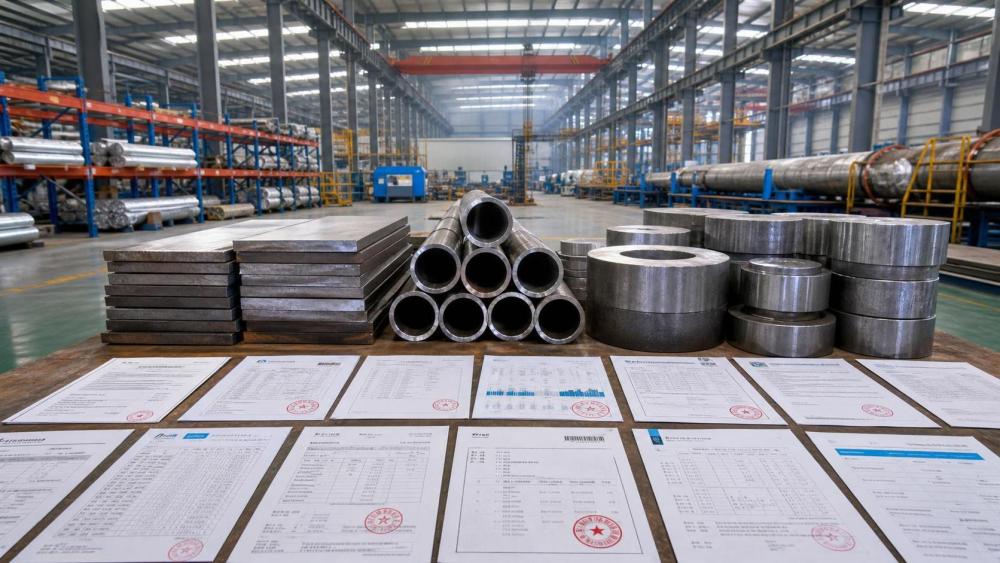
The shift toward hydrogen-ready networks changes the context for buying steel products. Pipelines, pressure vessels, storage skids, refueling stations, turbine balance-of-plant systems, and cryogenic logistics all depend on materials that can hold performance under severe operating conditions.
In conventional procurement, steel may be treated as a commodity category. In hydrogen and CCUS infrastructure, that assumption becomes risky. Material selection is tied to embrittlement concerns, pressure cycling, low-temperature toughness, corrosion behavior, weldability, and traceable certification.
This is especially relevant in projects benchmarked against standards such as ASME B31.12, ISO 19880, and other internationally recognized specifications. Steel products that appear equivalent on a quote sheet may differ sharply in test documentation, chemistry tolerances, or manufacturing route.
Price is only useful when the basis is clear
A steel price without context can distort procurement decisions. The first question is not whether one offer is cheaper, but whether each offer is quoting the same basis of comparison.
For steel products, quoted price can include or exclude testing, heat treatment, surface condition, machining allowance, export packing, inspection agency witnessing, or mill traceability. Small differences here can produce large commercial gaps later.
What should be normalized before comparing quotes
- Grade designation and applicable standard
- Form of supply, such as plate, pipe, tube, forging, or bar
- Wall thickness, diameter range, and tolerances
- Impact testing, NDT scope, and third-party inspection
- Mill certificates, heat traceability, and origin
- Packaging, transport terms, and delivery split
This normalization matters because the lowest quoted number may reflect a lighter compliance package rather than true cost efficiency. In high-consequence energy assets, incomplete documentation can slow approval, trigger requalification, or force replacement orders.
Total cost is wider than purchase cost
A sound comparison of steel products includes fabrication yield, weld repair risk, inspection hold points, and the probability of late-stage rejection. Material that arrives quickly but fails qualification can damage schedule certainty more than a longer but reliable supply route.
Grade selection is a technical and commercial decision
Grade is often misunderstood as a narrow metallurgy issue. In practice, grade selection determines whether steel products can satisfy design pressure, process media, ambient exposure, fabrication route, and regulatory expectations across the asset life cycle.
For hydrogen service, grade review becomes stricter because some steels behave differently under high pressure or repeated load cycles. In cryogenic logistics, toughness at very low temperatures may be more important than a favorable base price. In CCUS networks, corrosion environment and impurity profile can reshape the preferred material choice.
Where grade comparison usually goes wrong
A common error is comparing nominal grade names without checking the full specification path. Two steel products may carry similar labels while differing in supplemental testing, heat treatment condition, or acceptance requirements. That difference affects qualification and service reliability.
Another mistake is overbuying. Some projects default to the highest perceived grade across the package, even when different service segments require different material strategies. That can inflate cost without improving operational resilience.
A practical lens for grade review
- Match grade to actual pressure and temperature envelope
- Check hydrogen compatibility or low-temperature suitability
- Review weld procedure impact before final selection
- Confirm code compliance, not just mechanical strength
- Require traceable mill data for critical service lines
G-HEI’s wider benchmarking logic is useful here. Material choice should support asset security, standards alignment, and lifecycle efficiency, especially where infrastructure is expected to operate under sovereign-scale reliability demands.
Lead time is a risk signal, not just a calendar entry
Lead time affects more than delivery dates. It influences fabrication slotting, module assembly, site mobilization, financing cadence, and handover milestones. In energy projects, steel products often sit on the critical path because downstream equipment cannot proceed without approved material.
Short lead time offers deserve scrutiny. They may reflect real stock availability, but they can also indicate partial scope, deferred certification, or optimistic production assumptions. Long lead times, meanwhile, are not automatically negative if they come with stronger production planning and documentation confidence.
Questions behind the stated lead time
- Is the material from stock, rolling schedule, or subcontract supply?
- Are test reports available at shipment or later?
- Does delivery include third-party inspection timing?
- Can the supplier split urgent and non-urgent lots?
- What is the history of on-time performance for similar steel products?
This approach turns lead time into a measurable risk category. It also helps separate suppliers with dependable operational control from those relying on hopeful promises.
How the comparison changes by application
Not all steel products should be judged with the same weighting. The balance between price, grade, and lead time shifts by asset type and service environment.
This is where sector knowledge matters. A standardized comparison template helps, but the weighting logic should reflect the actual duty of the steel products inside the system.
A workable framework for business evaluation
The most reliable method is to score steel products across commercial and technical dimensions together. That prevents one strong number from masking weakness elsewhere.
A simple decision structure
- Define the service environment before requesting quotations
- Group steel products by criticality, not only by form
- Normalize quote inclusions and exclusions
- Check grade against code, media, and fabrication needs
- Validate lead time with evidence of production capacity
- Factor documentation readiness into total procurement risk
Used consistently, this structure supports better alignment between procurement, engineering, compliance, and project controls. It also reduces the chance of buying steel products that look acceptable commercially but create friction during execution.
Where to focus next
For current hydrogen and zero-carbon projects, the next step is usually not another broad supplier search. It is a tighter comparison basis. Clarify the service case, identify which steel products are genuinely critical, and separate negotiable commercial items from non-negotiable material requirements.
That is the discipline behind credible benchmarking. In a market shaped by fast infrastructure buildout and rising technical scrutiny, steel products should be evaluated as risk-bearing assets. When price, grade, and lead time are compared in that order of context, the result is a sourcing decision that is easier to defend and more likely to hold up in operation.
Related News
- Electricity Price Volatility Is Rewriting Hydrogen Cost ModelsApr 27, 2026Impact of electricity price on hydrogen cost is transforming industrial decarbonization and large-scale electrolysis. Explore LCOH trends, PPA strategies, and resilient hydrogen infrastructure planning.
- Energy Transition Plans Often Fail at the Grid Connection StageApr 27, 2026Sustainable energy and energy transition projects often fail at grid connection. Learn how hydrogen infrastructure, PEM electrolysis, and industrial decarbonization can avoid delays and protect investment value.
- What Is Slowing Industrial Decarbonization Projects in 2026?Apr 27, 2026Industrial decarbonization faces delays in 2026 as hydrogen infrastructure, sustainable energy access, grid limits, safety standards, and project bankability challenge the energy transition.
- How PEM electrolyzers support the energy transition in EuropeNov 10, 2026Discover how PEM electrolyzers support the energy transition in Europe, from renewable hydrogen and industrial applications to project costs and infrastructure.
Related News
- 00
0000-00
Hydrogen Energy Storage for Data Centers Gets Costly Fast - 00
0000-00
When 99.999% Hydrogen Purity Still Is Not Good Enough - 00
0000-00
When Does a Hydrogen-Ready Gas Turbine Pay Off? - 00
0000-00
Electricity Price Volatility Is Rewriting Hydrogen Cost Models - 00
0000-00
PSA Recovery Rate Drops for Reasons Operators Miss
Dr. Aris Aero
Weekly Insights
Stay ahead with our curated technology reports delivered every Monday.