
What Drives Wind Hydrogen Opex in Large-Scale Electrolyzer Projects?




Why does wind hydrogen opex become a financing issue so quickly?
For a financial approver, the hard part is not understanding that electricity matters. It is seeing why operating expenditure can drift far from the original model even when the wind resource looks strong on paper. In a large electrolyzer project, wind hydrogen opex is shaped by the interaction between variable renewable power, electrolyzer operating profile, water quality systems, gas conditioning, compression, maintenance labor, spare parts, and compliance obligations. A project can appear competitive on headline energy cost and still underperform once these operating layers are priced honestly.
That matters because opex does not stay in the operating budget. It feeds directly into delivered hydrogen cost, debt service coverage, reserve planning, and procurement strategy. If those costs are underestimated, the project may still get built, but it becomes much harder to defend over a full asset life.
Is power price still the biggest driver of wind hydrogen opex?
Usually yes, but that answer is too shallow for procurement decisions. What matters is not only the average price of wind power. The real cost impact comes from how stable the power supply is, how often the electrolyzer ramps, how much curtailed energy can actually be captured, and whether the plant must draw from the grid or battery support to maintain utilization.
A wind-linked electrolyzer rarely runs in a perfectly smooth profile. Intermittency affects stack loading, system starts and stops, balance-of-plant wear, and hydrogen output consistency. If the business case assumes low-cost wind but ignores low operating hours or heavy cycling, the apparent energy advantage can be offset by higher cost per kilogram of hydrogen produced.
When reviewing supplier proposals, ask for more than a blended power cost. The model should show:
- expected annual operating hours,
- part-load efficiency assumptions,
- number of start-stop cycles,
- auxiliary power consumption,
- and the operating logic when wind output drops below minimum electrolyzer thresholds.
Those variables usually tell you more about future opex than a headline renewable tariff.
Where do non-power operating costs usually hide?
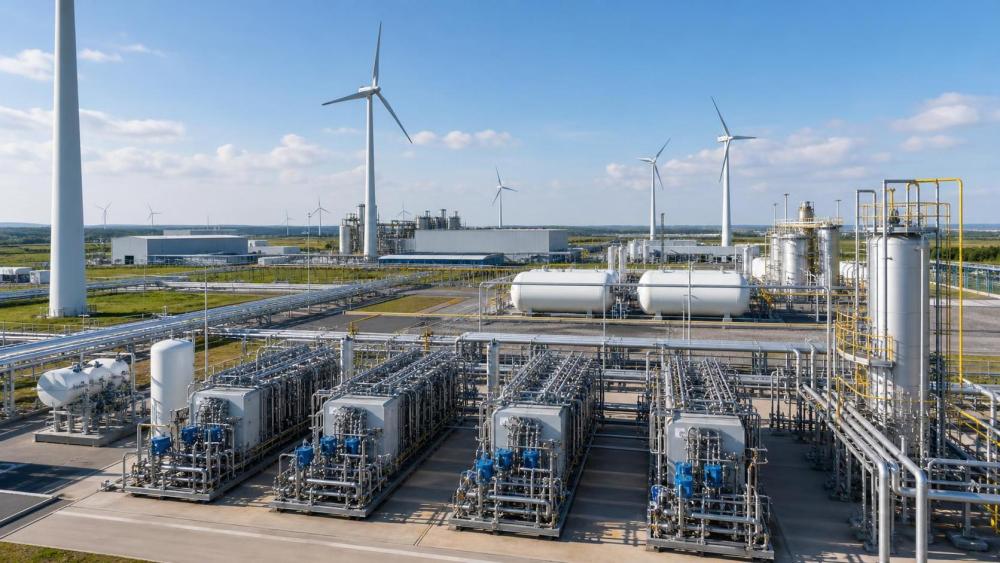
They hide in systems that are treated as secondary during early-stage budgeting. In practice, these are often the items that create budget stress later.
How much does electrolyzer degradation really affect operating cost?
More than many approval models admit. Degradation is not just a technical performance issue. It changes the electricity needed per unit of hydrogen, affects maintenance timing, and can force earlier stack refurbishment or replacement. In other words, it raises both variable and periodic operating cost.
This is especially relevant in wind-coupled projects because variable loading can influence stack aging. The exact effect depends on technology choice, control strategy, and operating range, so the key question is not whether degradation exists. It is whether the model reflects the actual duty cycle of the plant.
A useful procurement check is to compare three documents side by side: the technical data sheet, the performance warranty, and the financial model. If the degradation assumption in the model is gentler than the operating regime implied by the wind profile, the project is probably carrying hidden opex.
Does technology choice change wind hydrogen opex in a meaningful way?
Yes, particularly when comparing PEM and alkaline systems in a renewable-driven operating pattern. The difference is not simply one technology being cheaper and the other being better. Opex behavior changes with load flexibility, water purity requirements, stack materials, maintenance intervals, and response to intermittent power.
For a finance-led review, the practical question is this: which technology produces the most stable lifecycle cost under the expected wind regime? A system that looks attractive at steady baseload conditions may not remain attractive if it cycles frequently, runs at partial load, or requires more frequent intervention under variable operation.
That is why procurement teams should request operating-cost assumptions tied to the intended dispatch profile, not generic brochure values.
Why do water systems and gas treatment deserve more attention in cost reviews?
Because they are rarely optional and often underestimated. Electrolyzers need controlled water quality, and the plant must also manage purification, drying, and often downstream compression before hydrogen becomes usable or saleable. These systems consume power, require chemicals or replacement media, and introduce maintenance events that do not disappear just because the renewable source is cheap.
If the site has challenging source water, the opex exposure rises further. Treatment complexity, reject handling, and reliability planning all move with local water conditions. A serious review should include the raw water analysis, the guaranteed feedwater quality to the electrolyzer, and the planned maintenance schedule for treatment units. Without those three pieces, the water line item is often little more than a placeholder.
What is the biggest mistake in compressor-related opex assumptions?
Treating compression as a simple add-on. It is not. Compression can be one of the most persistent operating burdens in the plant, especially when the hydrogen must be delivered into storage, transport, pipeline injection, or high-pressure end use. The required discharge pressure, redundancy philosophy, moisture control, and duty cycle all affect maintenance cost and auxiliary electricity demand.
Projects get into trouble when they model only the purchase decision and not the service pattern. Approvers should ask for expected overhaul intervals, critical spare parts, planned downtime assumptions, and the cost consequence of compressor failure on hydrogen offtake commitments.
Do compliance and materials standards really show up in operating expenditure?
Absolutely. They may not always appear as one line called “compliance,” but they shape inspection frequency, documentation effort, maintenance procedures, parts selection, and sometimes replacement decisions. In hydrogen service, material integrity and safety management are not abstract engineering concerns. They influence routine cost and downtime exposure.
For utility-scale facilities, standards and frameworks such as hydrogen fueling, piping, and pressure-related codes can affect how systems are maintained and audited. The right finance question is not whether a project mentions recognized standards. It is whether the operator has budgeted the practical consequences: inspections, qualified procedures, traceable materials, and periodic intervention in hydrogen-handling equipment.
Which documents should a financial approver request before signing off?
A useful approval file is surprisingly specific. If the package stays at headline capex and levelized cost claims, you do not yet have enough to judge wind hydrogen opex.
- Hourly or sub-hourly operating model linked to expected wind supply.
- Electrolyzer performance curve across load ranges.
- Stack degradation and replacement basis used in the financial model.
- Water treatment process description and consumables schedule.
- Compression, drying, and storage operating assumptions.
- Annual maintenance plan, including major rotating equipment.
- Spare parts philosophy and long-lead replacement items.
- Safety, inspection, and material integrity obligations for hydrogen service.
- Service agreement scope, exclusions, and response times.
The point is not paperwork for its own sake. Each document closes a gap between engineering promise and operating cash requirement.
How should buyers compare two bids that both claim low wind hydrogen opex?
Normalize the assumptions before comparing the numbers. Two suppliers can report similar operating cost while using very different boundaries. One may exclude stack replacement. Another may assume steadier power input than the actual wind case allows. A third may leave out labor, wastewater handling, or compliance-driven inspections.
A clean comparison asks each bidder to price the same operating scenario, the same delivery pressure, the same water source condition, and the same maintenance responsibility split. Until those inputs are aligned, the cheapest opex figure is often just the narrowest definition.
What early warning signs suggest the opex model is too optimistic?
Several patterns show up again and again:
- very low auxiliary power with little explanation,
- no clear stack replacement logic,
- flat maintenance costs across many years,
- generic water treatment allowances without feedwater data,
- compression costs based only on power use,
- and service contracts that describe uptime goals but not exclusions.
Another warning sign is when the model treats wind variability as a production issue only. In reality, variability can also change wear, efficiency, and staffing needs. If the opex model does not react when the operating profile changes, it is probably too static to trust.
What is a sound decision rule before approval?
Approve the project only after the operating cost case has been tested against the actual wind profile, the actual hydrogen delivery requirement, and the actual maintenance obligations of hydrogen service. That sounds obvious, but many reviews still approve an average-cost story instead of an operating-cost model.
If one principle deserves to sit at the center of the decision, it is this: do not buy a low opex claim, buy a transparent operating boundary. In large-scale electrolyzer projects, that is usually the difference between a bankable hydrogen asset and a very expensive lesson.
Related News
- Electricity Price Volatility Is Rewriting Hydrogen Cost ModelsApr 27, 2026Impact of electricity price on hydrogen cost is transforming industrial decarbonization and large-scale electrolysis. Explore LCOH trends, PPA strategies, and resilient hydrogen infrastructure planning.
- Energy Transition Plans Often Fail at the Grid Connection StageApr 27, 2026Sustainable energy and energy transition projects often fail at grid connection. Learn how hydrogen infrastructure, PEM electrolysis, and industrial decarbonization can avoid delays and protect investment value.
- What Is Slowing Industrial Decarbonization Projects in 2026?Apr 27, 2026Industrial decarbonization faces delays in 2026 as hydrogen infrastructure, sustainable energy access, grid limits, safety standards, and project bankability challenge the energy transition.
- How PEM electrolyzers support the energy transition in EuropeNov 10, 2026Discover how PEM electrolyzers support the energy transition in Europe, from renewable hydrogen and industrial applications to project costs and infrastructure.
Related News
- 00
0000-00
Hydrogen Energy Storage for Data Centers Gets Costly Fast - 00
0000-00
When 99.999% Hydrogen Purity Still Is Not Good Enough - 00
0000-00
When Does a Hydrogen-Ready Gas Turbine Pay Off? - 00
0000-00
Electricity Price Volatility Is Rewriting Hydrogen Cost Models - 00
0000-00
PSA Recovery Rate Drops for Reasons Operators Miss
Dr. Aris Aero
Weekly Insights
Stay ahead with our curated technology reports delivered every Monday.