
When do PEM hydrogen plant solutions make sense for variable power?




PEM hydrogen plant solutions make sense for variable power when the value of flexible operation outweighs their typically higher capital cost and the additional costs of managing intermittent hydrogen production. They are particularly worth evaluating when renewable output changes frequently, grid imports are constrained or expensive, and the plant can use its operating range without creating excessive starts, shutdowns, or downstream disruptions.
Fast stack response alone is not a sufficient selection criterion. A plant connected to wind or solar must also manage power conversion, water treatment, gas purification, compression, storage, and delivery. If those systems cannot follow the same operating schedule, a nominally flexible electrolyzer may produce less usable hydrogen—or require more supporting equipment—than the initial design suggests.
Start with the power profile, not the electrolyzer rating
A nameplate renewable capacity does not describe the electricity available to the plant. Build an hourly or finer-resolution profile, using intervals appropriate to the variability and control decisions being studied. Include expected renewable output, grid import and export limits, electricity prices, curtailment rules, and any contractual restrictions on when power may be used. Where possible, test several representative weather and price periods rather than relying on an annual average.
Then compare available power with the complete plant load, not just the stack input. Rectifiers, cooling, water treatment, controls, purification, and compression can consume electricity even when the stack is operating below its rated output. A plant that appears able to run at a low stack load may have a higher practical minimum once auxiliary equipment and hydrogen quality requirements are included.
The most useful early question is whether available power falls within the plant’s permitted operating range often enough to justify the installed capacity. A large electrolyzer may capture short periods of surplus generation, but it can also spend long intervals idle. Conversely, a smaller unit may operate more hours while leaving valuable renewable power unused. Both configurations should be evaluated against the same delivered-hydrogen requirement.
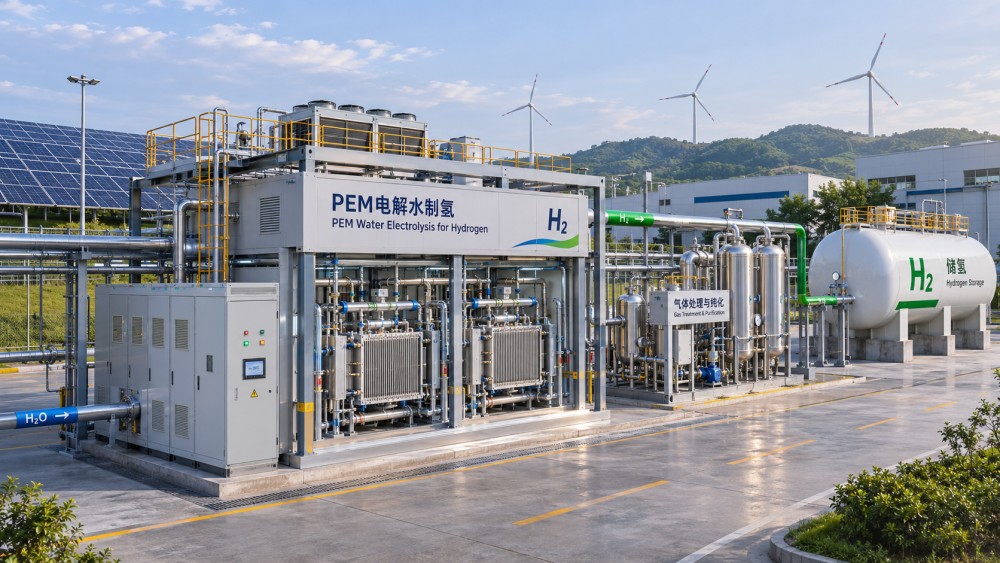
Where PEM flexibility can create value
PEM electrolysis is a strong candidate when a project needs to adjust production as power availability or price changes. The benefit is clearest when the plant has a reason to change load and can turn that flexibility into lower electricity expenditure, reduced curtailment, or a more achievable grid connection. Those benefits must be demonstrated in a dispatch model; they should not be assumed from a fast ramp-rate specification.
Renewable power with frequent variation
Where output changes within the operating day, PEM may be able to follow part of the available generation rather than repeatedly operating at a fixed level. The relevant specification is the plant-level response over the required load range, including any restrictions imposed by gas handling and thermal management. Ask whether the quoted ramp rate applies to a warm, operating stack, and whether it remains available over the full permitted range.
Low renewable output creates a separate decision. The operator may hold the plant at minimum load using grid electricity, place it in standby, or shut it down. Each choice has a cost and an operational consequence. Standby power can preserve readiness but adds electricity consumption; shutdown may save power while increasing restart time and cycling exposure. The preferred approach depends on the length and frequency of low-power periods.
Grid constraints and price-driven operation
Flexible consumption can be useful when a connection has an import limit or when electricity prices vary enough to justify changing production. Model the full tariff or supply agreement, including demand charges, network charges, fixed fees, and any limits on rapid load changes. Avoid treating low wholesale prices as the complete cost of electricity delivered to the plant.
There is also a distinction between being technically able to reduce load and being commercially free to do so. Hydrogen delivery commitments, power purchase terms, and grid-connection conditions may restrict dispatch. A plant with firm hydrogen obligations may need storage or another supply source before it can take full advantage of low-price electricity.
The limits that matter more than a single ramp rate
Equipment suppliers may describe flexibility using different boundaries. A meaningful comparison requires a common definition of power input, hydrogen output, operating state, and duration. Request operating maps and guaranteed conditions rather than comparing isolated figures from separate datasheets.
Hydrogen purity and gas crossover also need attention at low load and during transitions. The acceptable operating range depends on the equipment design, measurement systems, pressure conditions, and product specification. Ask how off-specification gas is detected and handled, and whether purging, venting, or recycling is required during startup and shutdown. These events affect both usable output and the design of safe discharge systems.
Connect variable production to the hydrogen demand
The electrolyzer’s output profile rarely matches a customer’s consumption profile exactly. A process that requires a steady flow cannot automatically use hydrogen produced only when renewable power is abundant. The gap must be covered by storage, demand flexibility, grid-supported production, an alternative supply, or a change in the delivery commitment.
Size storage from the time sequence of production and demand, not from average daily output alone. Simulate inventory over the selected power profiles, with starting inventory, minimum usable inventory, compression constraints, and delivery pressure included. Check extended low-generation periods as well as short fluctuations. A storage vessel’s nominal capacity is not necessarily its usable capacity across the required pressure range.
Compression and purification deserve the same scrutiny. A compressor may have its own minimum throughput, start limits, maintenance needs, and power demand. Product drying or purification equipment may require stable conditions or have transition losses. Where buffer storage is placed—before or after compression and purification—changes the duty of each component and the quality controls required. Compare these arrangements using delivered hydrogen, rather than stack production alone.
Water supply is another plant boundary. Feedwater must meet the electrolyzer supplier’s quality requirements, and treatment equipment must support the planned operating pattern. Consider the quality of the raw water, treatment recovery, storage, disposal of treatment streams, and the time needed to return treated water to specification after an extended stop. Running the stack intermittently does not eliminate the need for reliable water treatment and monitoring.
Compare PEM with alternatives on the same duty
Alkaline electrolysis is a relevant comparison, particularly when lower capital cost or long periods of steady operation are more important than rapid load changes. Some alkaline systems can also operate flexibly; capabilities vary by design. Do not assign a fixed operating range or cycling limit to an entire technology category. Request project-specific data from each supplier and model the proposed equipment under the same power and hydrogen-demand conditions.
A comparison should include at least the following costs and constraints:
- Installed equipment and integration costs, including electrical systems, water treatment, gas handling, and civil works.
- Electricity consumption at actual operating points, including auxiliaries and standby consumption.
- Expected maintenance, stack replacement assumptions, and the effect of the proposed cycling regime on warranties or service intervals.
- Storage, compression, backup supply, and any penalties or costs associated with unmet hydrogen demand.
- Renewable energy left unused, grid imports required, and applicable connection or tariff charges.
Calculate the cost per unit of hydrogen delivered at the required pressure and quality, using the same financial assumptions for each option. Report annual production alongside that cost: a design that produces inexpensive hydrogen during surplus hours may still fail a firm supply requirement. Test sensitivity to electricity prices, available operating hours, degradation, replacement timing, and storage size. The assumptions that change the ranking are the ones that need the strongest evidence before procurement.
When PEM may not be the best fit
PEM is less compelling when power is reliably available at a stable price, the electrolyzer can run for long periods near its preferred operating point, and a competing system meets the required flexibility at lower lifecycle cost. It may also be a poor match where renewable availability is so sparse that installed equipment sits idle for long periods and hydrogen demand cannot be shifted or economically buffered.
A restrictive grid connection can change the answer in either direction. It may make flexible load control valuable, but it can also prevent the plant from importing the electricity needed to maintain minimum load or meet hydrogen delivery obligations. Similarly, a generous renewable nameplate rating does not guarantee enough usable energy after export commitments, curtailment rules, and auxiliary loads are considered.
Before selecting a technology, check whether the assumed flexibility is actually needed. If the downstream process consumes hydrogen at a steady rate and storage is prohibitively costly, a more stable power supply or a different production configuration may be preferable to frequent electrolyzer cycling. The relevant alternative is the whole supply arrangement, not just another stack type.
Turn the operating model into procurement requirements
Once a candidate configuration is credible, translate the simulated duty into supplier requirements. Provide the expected load distribution, frequency and duration of outages, required hydrogen quality and pressure, site conditions, and delivery profile. Ask suppliers to identify any operating periods outside their permitted envelope and to state what additional equipment or restrictions would make the duty acceptable.
Acceptance and performance terms should use measurable plant boundaries: electrical input, auxiliary loads, hydrogen flow, product quality, pressure, and reference operating conditions. Define how standby consumption and startup losses are recorded. A guarantee at rated load alone does not establish the performance of a plant intended to spend substantial time at part load.
Finally, review the control and safety interfaces between power supply, electrolyzer, water system, gas treatment, compressor, and storage. The design needs defined responses to lost power, unavailable cooling, off-specification hydrogen, high storage pressure, and communication failure. Applicable safety codes and standards depend on the installation and jurisdiction; confirm the design basis and compliance responsibilities before fixing the operating envelope. A PEM plant is a sound choice when the modeled dispatch is achievable by the complete system and its flexibility has a demonstrable value under those constraints.
Related News
- Electricity Price Volatility Is Rewriting Hydrogen Cost ModelsApr 27, 2026Impact of electricity price on hydrogen cost is transforming industrial decarbonization and large-scale electrolysis. Explore LCOH trends, PPA strategies, and resilient hydrogen infrastructure planning.
- Energy Transition Plans Often Fail at the Grid Connection StageApr 27, 2026Sustainable energy and energy transition projects often fail at grid connection. Learn how hydrogen infrastructure, PEM electrolysis, and industrial decarbonization can avoid delays and protect investment value.
- What Is Slowing Industrial Decarbonization Projects in 2026?Apr 27, 2026Industrial decarbonization faces delays in 2026 as hydrogen infrastructure, sustainable energy access, grid limits, safety standards, and project bankability challenge the energy transition.
- How PEM electrolyzers support the energy transition in EuropeNov 10, 2026Discover how PEM electrolyzers support the energy transition in Europe, from renewable hydrogen and industrial applications to project costs and infrastructure.
Related News
- 00
0000-00
Hydrogen Energy Storage for Data Centers Gets Costly Fast - 00
0000-00
When 99.999% Hydrogen Purity Still Is Not Good Enough - 00
0000-00
When Does a Hydrogen-Ready Gas Turbine Pay Off? - 00
0000-00
Electricity Price Volatility Is Rewriting Hydrogen Cost Models - 00
0000-00
PSA Recovery Rate Drops for Reasons Operators Miss
Dr. Aris Aero
Weekly Insights
Stay ahead with our curated technology reports delivered every Monday.