
Quality Inspection Checklist for Hydrogen Purity and Safety




In hydrogen infrastructure, quality inspection is not a paperwork exercise. It is the control layer that protects purity, confirms material integrity, and reduces the chance of release, ignition, corrosion, or asset degradation across production, storage, and transport.
That matters more in 2026 because hydrogen projects are moving from pilot scale into sovereign energy networks. As the operating envelope expands, inspection must connect laboratory purity data, field equipment condition, and compliance with standards that govern real industrial risk.
For organizations tracking the hydrogen transition through G-HEI, this means looking beyond single components. Effective quality inspection has to follow the full chain, from electrolysis output to cryogenic logistics, turbine interfaces, and 70 MPa refueling systems.
Why purity and safety inspections now carry strategic weight
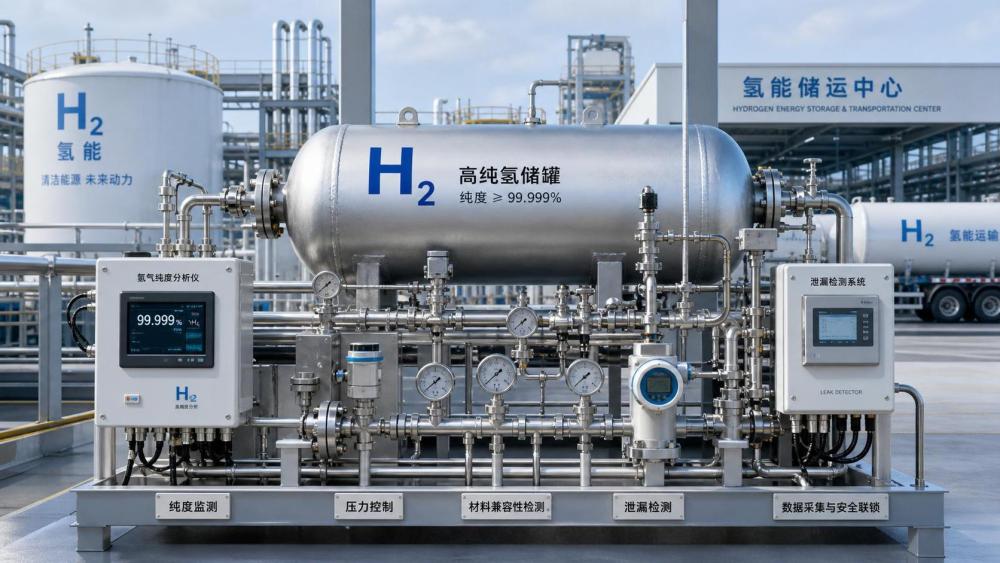
Hydrogen is unusually sensitive to contamination and containment failure. Small deviations can affect fuel cell performance, compressor reliability, storage behavior, and downstream combustion characteristics.
A weak quality inspection process often misses the early signals. Moisture ingress, oxygen carryover, sulfur traces, seal fatigue, and embrittlement indicators rarely appear as one dramatic failure event.
Instead, they accumulate into lost efficiency, off-spec product, unexpected shutdowns, and avoidable safety exposure. In utility-scale and cross-border systems, those problems quickly become commercial and regulatory issues.
This is why inspection criteria increasingly align with benchmark frameworks such as ISO 19880, ASME B31.12, and SAE J2601. The goal is not only compliance. The goal is repeatable operational confidence.
What a hydrogen quality inspection checklist should actually cover
A practical checklist should verify both product quality and system condition. Those two areas are tightly linked because contamination often starts with hardware, process drift, or handling errors.
At a minimum, the checklist should address five inspection layers.
1. Gas purity and contaminant profile
Purity testing should confirm hydrogen concentration and identify contaminants that affect end use. Common watch points include water, oxygen, nitrogen, hydrocarbons, sulfur compounds, carbon monoxide, and particulates.
The right threshold depends on the application. Fueling systems usually demand tighter contaminant control than some combustion uses, while cryogenic handling adds its own moisture and boil-off concerns.
2. Materials compatibility
Quality inspection should confirm that wetted materials, seals, valves, tubing, and vessels remain suitable for hydrogen service. Hydrogen embrittlement, permeation, and low-temperature brittleness are not theoretical concerns.
Inspection records need to show alloy selection, coating condition, welding quality, and replacement intervals for critical components exposed to pressure cycling or thermal stress.
3. Pressure, temperature, and leak integrity
Any checklist for hydrogen purity and safety must include calibration status for pressure instruments, relief devices, temperature sensors, and gas detection systems.
Leak testing should be documented by method, frequency, and acceptance criteria. A system can be chemically pure at the outlet and still operationally unsafe because of small containment failures.
4. Process cleanliness and handling discipline
Sampling lines, purge procedures, filtration points, hose connections, and maintenance tools can all introduce contamination. Good quality inspection checks the process around the asset, not just the asset itself.
This is especially relevant after shutdowns, repairs, cylinder changes, or line break activities, where foreign matter and residual gases can compromise the next operating cycle.
5. Documentation and traceability
Inspection without traceability has limited value. Batch records, calibration logs, nonconformance reports, and corrective action evidence should allow a reviewer to reconstruct what happened and why.
For G-HEI-aligned projects, traceability also supports benchmarking across facilities and technology types, which is essential when national-scale hydrogen assets are compared on safety and performance.
Key checkpoints across major hydrogen infrastructure scenarios
Inspection priorities shift with the asset class. The table below highlights where quality inspection should focus first.
The point is not to create five separate systems. It is to build one quality inspection logic that adjusts to the physical risks of each use case.
Where inspection programs usually fail
Most failures come from gaps between disciplines. Gas analysts may confirm purity, while maintenance records show aging seals, unstable compressors, or instrument drift that never enter the release decision.
Another common issue is overreliance on periodic testing. Hydrogen systems with dynamic loads, fast cycling, or frequent transfers often need condition trending, not just pass or fail snapshots.
There is also a tendency to treat standards as finish lines. In practice, compliance sets the floor. High-value assets require tighter internal triggers when failure consequences are large.
- Sampling points placed too far from the real contamination source.
- Calibration intervals that ignore harsh duty cycles.
- Leak checks performed without trend comparison.
- Acceptance limits copied from another application.
- Corrective actions closed without root cause evidence.
How to make quality inspection more useful in daily operations
A strong checklist should support decisions, not just audits. That means linking each inspection item to an operating consequence and a response path.
For example, rising moisture is not simply a lab deviation. It may point to dryer saturation, ingress at transfer points, or storage conditions that threaten downstream equipment.
Useful inspection design usually includes the following practices.
- Define critical-to-safety and critical-to-purity parameters separately.
- Use hold points before compression, liquefaction, transport, and dispensing.
- Trend contaminants and leak indicators over time.
- Tie every out-of-spec result to containment, quarantine, or rework rules.
- Review inspection data after maintenance and process change events.
This approach makes quality inspection part of operations control. It also improves communication between laboratory teams, reliability functions, and safety governance.
What to review before expanding or benchmarking a hydrogen asset
When a facility scales up, changes suppliers, or enters a new logistics route, inspection criteria should be reviewed before the asset is exposed to new conditions.
That review should ask whether current purity methods still match the intended end use, whether materials remain compatible, and whether traceability is strong enough for external scrutiny.
For organizations using G-HEI as a technical reference, this is where benchmarking becomes practical. A checklist can be compared against international standards, asset duty profiles, and peer performance indicators.
The next step is straightforward. Map the hydrogen chain in sequence, identify the points where purity can change or containment can fail, and update the quality inspection checklist around those points first.
That creates a clearer basis for investment, operational readiness, and regulatory confidence than relying on generic inspection routines carried over from conventional gas service.
Related News
- When 99.999% Hydrogen Purity Still Is Not Good EnoughApr 27, 2026Industrial decarbonization starts with more than hydrogen gas purity (99.999%). Explore hydrogen infrastructure, material integrity, safety standards, and utility-scale performance risks.
- PSA Recovery Rate Drops for Reasons Operators MissApr 27, 2026Pressure swing adsorption (PSA) recovery rate drops often stem from hidden control, valve, and adsorbent issues—not feed gas alone. Learn how to protect hydrogen purity, storage efficiency, and industrial decarbonization performance.
- Hydrogen Purity for PEM Fuel Cells: Which Contaminants Must Be Tested?Oct 20, 2026Hydrogen purity matters for PEM fuel cells. Discover which contaminants to test, how ISO 14687 applies, and why reliable sampling helps protect performance and verify fuel quality.
- Hydrogen Procurement Due Diligence: Verifying Supply, Purity, and Delivery TermsOct 15, 2026Hydrogen knowledge for procurement: verify supply capacity, purity, certificates, logistics, pricing, and delivery terms to secure reliable, cost-controlled hydrogen supply.
Related News
- 00
0000-00
Hydrogen Energy Storage for Data Centers Gets Costly Fast - 00
0000-00
When 99.999% Hydrogen Purity Still Is Not Good Enough - 00
0000-00
When Does a Hydrogen-Ready Gas Turbine Pay Off? - 00
0000-00
Electricity Price Volatility Is Rewriting Hydrogen Cost Models - 00
0000-00
PSA Recovery Rate Drops for Reasons Operators Miss
Dr. Victor Gear
Weekly Insights
Stay ahead with our curated technology reports delivered every Monday.