Hydrogen Blending Technology Suppliers: 2026 Shortlist Guide




In 2026, the shortlist for hydrogen blending technology suppliers matters far beyond routine sourcing. Blending hydrogen into gas networks now affects grid reliability, decarbonization speed, asset life, and regulatory exposure across multiple industries.
That shift changes how supplier evaluation should work. A capable partner is not just selling skids, valves, analyzers, or software. It is helping shape a safe pathway from pilot blending to sovereign-scale infrastructure.
Why hydrogen blending has become a procurement priority
Hydrogen blending sits at the intersection of energy transition realism and existing network economics. It allows utilities and industrial operators to lower carbon intensity without waiting for fully dedicated hydrogen systems.
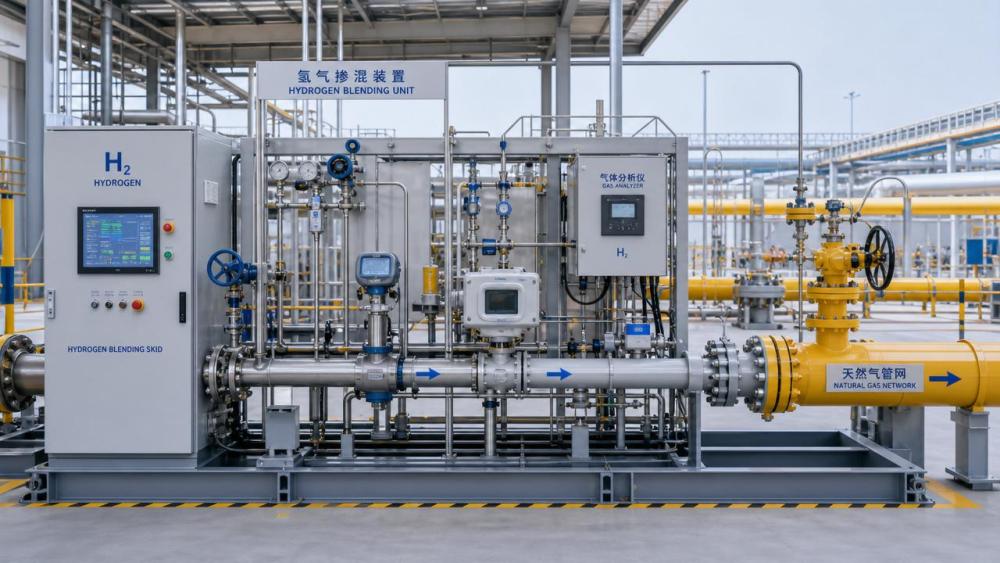
The attraction is obvious, but so are the constraints. Blending percentages, material compatibility, metering accuracy, combustion behavior, and safety zoning all vary by network condition and end-use profile.
This is why hydrogen blending technology suppliers are receiving closer scrutiny. Buyers are no longer comparing isolated product features. They are comparing engineering assumptions, standards alignment, and long-term system risk.
From the G-HEI perspective, hydrogen blending belongs within a larger zero-carbon infrastructure architecture. It connects upstream electrolysis, transport integrity, hydrogen-ready gas turbines, and national-level decarbonization strategies.
What hydrogen blending technology suppliers actually provide
The market label sounds simple, but supplier scope differs widely. Some firms specialize in injection packages. Others focus on controls, monitoring, metering, compressor interfaces, or pipeline integrity support.
The stronger hydrogen blending technology suppliers usually combine several layers:
- Hydrogen injection and blending skids
- Flow control, pressure regulation, and shutoff systems
- Gas composition measurement and continuous monitoring
- Leak detection, ventilation, and hazardous-area safety design
- SCADA, automation, and remote diagnostics
- Materials review for embrittlement and sealing performance
- Commissioning, operator training, and compliance documentation
In practice, a supplier that can only deliver hardware may struggle in a live network environment. Integration quality often determines whether a blending project remains a pilot or becomes repeatable infrastructure.
The 2026 shortlist should start with technical fit, not brand familiarity
Well-known industrial names do not automatically guarantee the best fit. A shortlist should begin with operating conditions, blending targets, network age, and downstream equipment sensitivity.
Some networks need low-percentage blending with strict gas quality management. Others are preparing for higher hydrogen fractions near turbine assets, district energy systems, or industrial combustion loads.
That means hydrogen blending technology suppliers should be judged against the exact use case. The wrong architecture can produce unstable calorific value, metering disputes, seal failures, or expensive retrofit cascades.
Core screening criteria
Safety and material integrity are where shortlist quality becomes visible
Many early evaluations still overweight price and underweight integrity. That is risky. Hydrogen behaves differently from methane, especially regarding molecular size, leak pathways, and metal interaction.
The better hydrogen blending technology suppliers do not treat safety as a documentation exercise. They show evidence of design philosophy, isolation strategy, venting logic, and verification under realistic operating pressure.
Material questions deserve equal attention. Compatibility is not limited to pipe wall metallurgy. Valve seats, gaskets, regulators, joints, and instrument housings can become weak links.
This is also where G-HEI benchmarking becomes relevant. A credible supplier should connect blending design to recognized frameworks, not just internal testing claims. Standards literacy is part of technical readiness.
Where these suppliers are most often used
Hydrogen blending is no longer limited to demonstration corridors. It appears in several operating contexts, each with different risk tolerance and performance priorities.
- City gate and distribution network blending stations
- Industrial parks with mixed thermal loads
- Gas turbine supply systems preparing for hydrogen-ready operation
- Power-to-gas projects linked to large electrolysis plants
- Ports, logistics hubs, and multi-energy infrastructure nodes
The right hydrogen blending technology suppliers understand these differences. A distribution network project values predictable gas quality and regulatory acceptance. A power project may prioritize transient control and combustion interface management.
Signals that separate strategic partners from basic vendors
Shortlists become stronger when buyers look for proof of systems thinking. That usually appears in how a supplier handles questions outside its immediate equipment boundary.
Positive indicators
- Clear reference cases with measured performance data
- Documented compatibility studies for mixed-gas service
- Ability to model blending behavior under varying flow conditions
- Transparent maintenance intervals and spare-parts strategy
- Strong interface management with turbine, pipeline, or storage partners
Warning signs
- Generic claims without hydrogen-specific field evidence
- Limited detail on controls, alarms, and fail-safe modes
- Weak documentation around standards and approvals
- No clear position on material degradation risk
- Overreliance on future customization for critical requirements
How to structure a practical 2026 shortlist
A useful shortlist usually has three layers. The first is technical eligibility. The second is project execution capability. The third is long-term operability within a broader hydrogen roadmap.
This method prevents a common mistake: selecting hydrogen blending technology suppliers based only on CAPEX. Lower upfront cost can disappear quickly if metering drift, shutdown frequency, or retrofit complexity rises later.
It also helps compare very different suppliers on a common basis. Some offer stronger controls. Others lead in metallurgy, packaged systems, or utility-scale deployment discipline.
For organizations using G-HEI-style benchmarking, the most valuable step is mapping each supplier against the full hydrogen value chain. Blending should not be assessed in isolation from production, transport, and end-use conversion.
What to do next before supplier engagement deepens
Before narrowing the final list, define the intended hydrogen fraction range, gas quality envelope, connection architecture, and downstream equipment constraints. Those four inputs remove much of the early ambiguity.
Then request evidence, not broad capability statements. Ask for standards mapping, material matrices, control philosophy, hazard analysis scope, analyzer selection logic, and reference operating data.
The best hydrogen blending technology suppliers will respond with structured technical depth. That response quality often predicts project quality.
As the hydrogen transition moves from pilot ambition to infrastructure reality, shortlist decisions deserve the same discipline as any strategic energy asset choice. A strong evaluation framework today will make future expansion faster, safer, and easier to defend.
Related News
- When Does a Hydrogen-Ready Gas Turbine Pay Off?Apr 27, 2026Hydrogen-ready gas turbine economics explained: evaluate industrial decarbonization, hydrogen blending, hydrogen infrastructure, and utility-scale power ROI to see when future-proof flexibility truly pays off.
- What Limits Hydrogen Blend Ratios in Existing Gas Turbine Fleets?Oct 11, 2026Gas turbines hydrogen blend limits depend on combustor design, emissions, controls, fuel systems, and operating conditions. Explore the key constraints for safer fleet upgrades.
- Where Hydrogen-Blending Gas Turbine Solutions Fit in Industrial Power ProjectsOct 06, 2026Gas turbine solutions for hydrogen blending: explore fuel flexibility, emissions, efficiency, safety, and procurement strategies for industrial power projects.
- What to verify before selecting hydrogen blending technology suppliersSep 19, 2026Compare hydrogen blending technology suppliers with confidence. Verify controls, gas quality, materials, safety, integration, and scalability before selecting a trusted partner.
Related News
- 00
0000-00
Hydrogen Energy Storage for Data Centers Gets Costly Fast - 00
0000-00
When 99.999% Hydrogen Purity Still Is Not Good Enough - 00
0000-00
When Does a Hydrogen-Ready Gas Turbine Pay Off? - 00
0000-00
Electricity Price Volatility Is Rewriting Hydrogen Cost Models - 00
0000-00
PSA Recovery Rate Drops for Reasons Operators Miss
Dr. Hideo Torque
Weekly Insights
Stay ahead with our curated technology reports delivered every Monday.