Hydrogen Blending Technology in Power Plants: What Improves Efficiency and What Adds Risk




Hydrogen Blending Technology in Power Plants: What Improves Efficiency and What Adds Risk
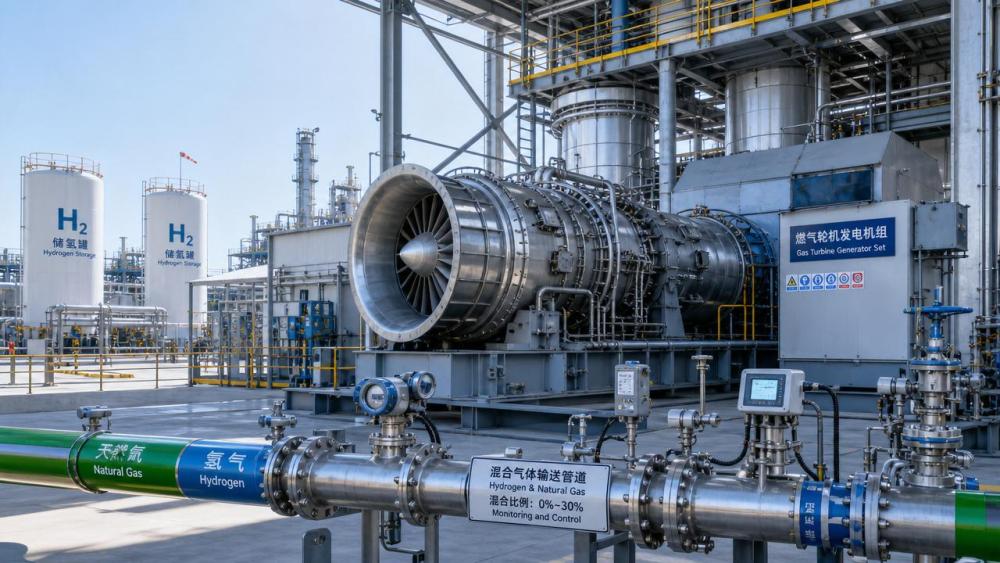
Hydrogen blending technology is moving from pilot discussion to plant-level decision.
For power producers, the appeal is clear.
It can cut carbon intensity without replacing every gas asset overnight.
But in real projects, hydrogen blending technology is not a simple fuel swap.
It changes combustion behavior, maintenance plans, piping design, and regulatory exposure.
That is why some blending programs improve heat rate and flexibility, while others add hidden cost and operational instability.
The practical question is not whether hydrogen blending technology matters.
The real question is where it creates measurable value, and where it pushes risk beyond acceptable limits.
Why Power Plants Are Adopting Hydrogen Blending Technology
The near-term driver is decarbonization without full asset replacement.
Many combined-cycle plants still have years of useful life.
Retiring them early often destroys value and weakens grid reliability.
Hydrogen blending technology offers a bridge between today’s gas systems and tomorrow’s low-carbon fuel mix.
It also aligns with a broader buildout of electrolysis, storage, and hydrogen transport infrastructure.
From a project perspective, this approach can phase capital spending.
Operators can start with lower blend ratios, verify turbine response, then expand as supply and controls mature.
That staged path looks attractive in markets facing carbon pricing, emissions reporting, or investor pressure.
Even so, the gains only hold when the full fuel-to-flame system is evaluated together.
Where Efficiency Can Actually Improve
Hydrogen has a higher flame speed than natural gas.
In the right combustion system, that can support more stable ignition and faster load response.
This matters for plants balancing renewable variability.
A properly tuned blend may also improve combustion completeness in certain operating windows.
That can reduce unburned fuel losses and support cleaner ramping performance.
Another efficiency advantage comes from system integration rather than turbine chemistry alone.
When surplus renewable power feeds electrolyzers, stored hydrogen can be dispatched later through existing power blocks.
That improves overall energy utilization across the site.
Still, the efficiency story is often overstated.
Hydrogen blending technology does not automatically raise turbine efficiency at every blend ratio.
What Usually Delivers Better Results
- Validated combustor upgrades matched to the target hydrogen percentage.
- Fast-response fuel controls that manage Wobbe Index variation.
- High-quality mixing before the burner, not uneven injection near the flame zone.
- Accurate metering for both natural gas and hydrogen streams.
- Operating envelopes based on actual site data, not only OEM brochure limits.
What Adds Risk in Hydrogen Blending Technology
The biggest risk is assuming that low blend ratios are always low risk.
That is not always true.
Even modest hydrogen content can shift flame dynamics, emissions behavior, and fuel system stress.
The risk profile becomes sharper when older assets were not designed for hydrogen service.
In those cases, hydrogen blending technology can expose weak points that natural gas never revealed.
Combustion Instability and NOx Control
Hydrogen burns faster and wider than methane.
That can increase flashback risk in premixed systems.
It can also drive pressure oscillations that damage combustor components over time.
A second issue is NOx formation.
Hydrogen contains no carbon, but hotter local flame zones can still increase thermal NOx.
So lower CO2 does not guarantee easier emissions compliance.
Material Compatibility and Asset Integrity
Hydrogen molecules are small and difficult to contain.
Leak paths that seem minor in natural gas service can become significant.
More important, certain steels and weld zones may face hydrogen embrittlement.
Seals, valves, compressors, and sensors may also perform differently.
This is where standards such as ASME B31.12 become practical decision tools, not box-ticking references.
If material review starts late, project schedules usually suffer.
Safety, Detection, and Regulatory Burden
Hydrogen has low ignition energy and different dispersion behavior.
That changes ventilation, hazard zoning, and gas detection design.
The challenge is often not one dramatic failure mode.
It is the accumulation of small design gaps across storage, blending skids, piping, and control systems.
This is why hydrogen blending technology must be reviewed as a whole-of-plant safety change.
How to Evaluate a Blending Project Before Approval
A useful evaluation framework starts with five questions.
- What blend ratio is realistic across seasonal fuel supply conditions?
- Which turbine, burner, and balance-of-plant components limit that ratio first?
- What efficiency gain is proven at site conditions, not theoretical conditions?
- What new failure modes appear in fuel delivery, combustion, and maintenance?
- Which codes, permits, and insurer requirements change after implementation?
These questions quickly separate strategic projects from symbolic ones.
They also keep hydrogen blending technology tied to measurable operating value.
A Practical Screening Table
Implementation Priorities That Reduce Risk
Successful hydrogen blending technology programs usually follow a disciplined sequence.
They do not begin with public blend targets.
They begin with asset evidence, operating limits, and safety design basis.
- Map all hydrogen-contact materials before finalizing blend scenarios.
- Use phased commissioning with hold points after each blend increase.
- Install monitoring for combustion dynamics, leaks, valve response, and NOx drift.
- Align process safety review with insurer and regulator expectations early.
- Create fallback operating modes if hydrogen supply quality changes unexpectedly.
This phased approach is slower at the beginning.
But it usually protects schedule, availability, and long-term asset value.
What a Strong Decision Looks Like
A strong decision on hydrogen blending technology is rarely based on emissions alone.
It balances carbon reduction with combustion stability, materials performance, and commercial resilience.
The best projects define a technically credible blend ratio, not an aspirational one.
They also connect plant retrofit choices to wider hydrogen infrastructure planning.
That includes electrolysis scale, storage methods, delivery pressure, and sovereign safety frameworks.
In that setting, hydrogen blending technology becomes more than a decarbonization label.
It becomes a controlled transition tool for hydrogen-ready power generation.
The most practical next step is simple.
Review the plant as a connected fuel, combustion, and integrity system.
Then test where hydrogen blending technology improves efficiency in measurable terms.
Just as important, identify where it adds risk before those risks reach the turbine floor.
Related News
- When Does a Hydrogen-Ready Gas Turbine Pay Off?Apr 27, 2026Hydrogen-ready gas turbine economics explained: evaluate industrial decarbonization, hydrogen blending, hydrogen infrastructure, and utility-scale power ROI to see when future-proof flexibility truly pays off.
- What Limits Hydrogen Blend Ratios in Existing Gas Turbine Fleets?Oct 11, 2026Gas turbines hydrogen blend limits depend on combustor design, emissions, controls, fuel systems, and operating conditions. Explore the key constraints for safer fleet upgrades.
- Where Hydrogen-Blending Gas Turbine Solutions Fit in Industrial Power ProjectsOct 06, 2026Gas turbine solutions for hydrogen blending: explore fuel flexibility, emissions, efficiency, safety, and procurement strategies for industrial power projects.
- What to verify before selecting hydrogen blending technology suppliersSep 19, 2026Compare hydrogen blending technology suppliers with confidence. Verify controls, gas quality, materials, safety, integration, and scalability before selecting a trusted partner.
Related News
- 00
0000-00
Hydrogen Energy Storage for Data Centers Gets Costly Fast - 00
0000-00
When 99.999% Hydrogen Purity Still Is Not Good Enough - 00
0000-00
When Does a Hydrogen-Ready Gas Turbine Pay Off? - 00
0000-00
Electricity Price Volatility Is Rewriting Hydrogen Cost Models - 00
0000-00
PSA Recovery Rate Drops for Reasons Operators Miss
Dr. Hideo Torque
Weekly Insights
Stay ahead with our curated technology reports delivered every Monday.