Machinery Equipment News Shaping Hydrogen Projects




Machinery equipment news now influences hydrogen projects far beyond product awareness. It shapes planning assumptions, financing confidence, delivery sequencing, and risk control across production, transport, storage, power integration, and refueling infrastructure.
That shift matters because hydrogen development has entered a tougher phase. Early pilots proved technical possibility, but large-scale deployment now depends on equipment maturity, standards alignment, asset integrity, and operational predictability.
In this environment, machinery equipment news becomes a decision signal. It helps interpret whether a new electrolyzer, cryogenic vessel, turbine retrofit, or refueling system is genuinely project-ready or simply market noise.
Why equipment news matters more in hydrogen
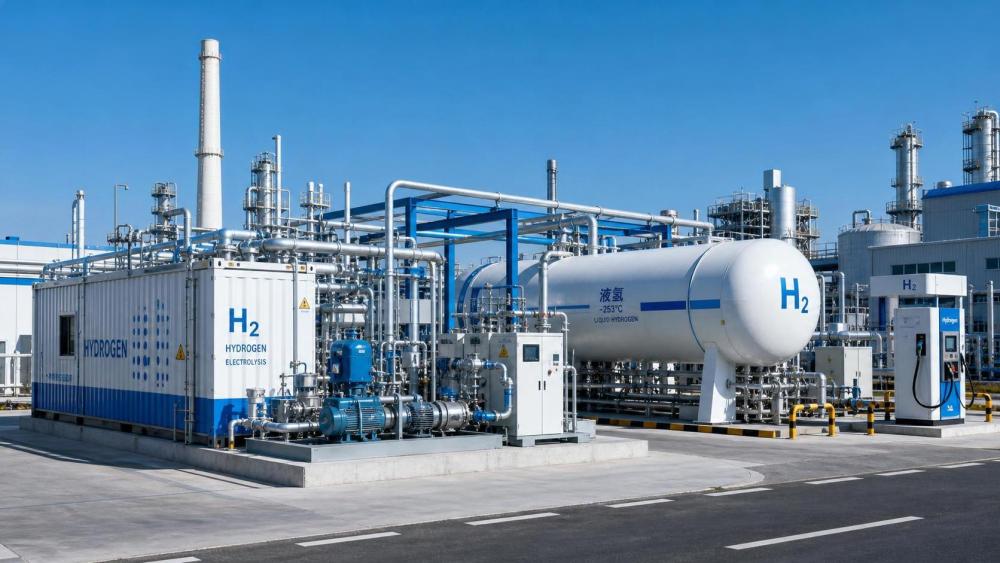
Hydrogen projects are equipment-intensive by design. Performance depends on how multiple systems behave together, not on a single machine in isolation.
A stack efficiency upgrade can change power demand models. A new compressor design can alter maintenance cycles. A revised storage standard can reshape site layout, permitting, and insurance assumptions.
That is why machinery equipment news has become strategic content. It is no longer just about launches, delivery announcements, or vendor claims.
For hydrogen, the real value of machinery equipment news lies in interpretation. The useful question is whether the update changes feasibility, bankability, safety posture, or lifecycle cost.
Reading the market through a systems lens
Hydrogen infrastructure sits inside a broader industrial chain. Electrolysis, logistics, power generation, CCUS, and high-pressure refueling are linked by material compatibility, control architecture, and compliance requirements.
This is where a benchmarking perspective becomes useful. G-HEI frames the market around sovereign-grade infrastructure, where every equipment decision must stand up to operational, regulatory, and capital scrutiny.
From that viewpoint, machinery equipment news should be read across five practical domains:
- Megawatt-scale electrolysis systems, especially PEM and ALK platform evolution
- Cryogenic liquid hydrogen handling, storage vessels, and loading systems
- Hydrogen-ready gas turbines and blending-related balance-of-plant upgrades
- CCUS equipment that supports hybrid decarbonization pathways
- 70MPa+ refueling systems where uptime and safety margins are critical
Looking at news this way prevents fragmented decision-making. It connects equipment updates to infrastructure outcomes rather than isolated procurement events.
The signals hidden inside machinery equipment news
Not every headline deserves equal weight. In practice, the most valuable machinery equipment news usually reveals one of four things: technical maturity, standards readiness, supply resilience, or integration risk.
Technical maturity
Useful reporting shows tested operating conditions, durability ranges, thermal behavior, and maintenance intervals. In hydrogen, nameplate performance means little without long-duration reliability data.
Standards readiness
Standards such as ISO 19880, ASME B31.12, and SAE J2601 are not side notes. They affect design review, hazard analysis, commissioning, and long-term insurability.
Supply resilience
A promising system can still delay a project if titanium components, specialized valves, insulation materials, or control modules face long lead times.
Integration risk
Hydrogen assets rarely fail on brochure specifications. They fail where interfaces are weak, especially around compression, boil-off management, purity control, and emergency shutdown logic.
Where current hydrogen projects feel the impact
Across the comprehensive industrial landscape, equipment developments are changing how projects are scoped and sequenced. The effects are visible from concept design through operations.
The table highlights a simple point. Machinery equipment news becomes useful when it changes assumptions embedded in cost models, schedules, or risk registers.
How to separate strategic insight from market noise
Hydrogen attracts ambitious announcements, and that creates filtering problems. A disciplined reading method helps convert machinery equipment news into practical guidance.
- Check whether performance claims include operating context, not just peak values
- Look for references to certification, code compliance, and test methodology
- Compare the update against maintenance access, spare parts, and service capability
- Review whether balance-of-plant implications are disclosed or ignored
- Ask if the equipment improves full-system economics or only one subsystem metric
This approach is especially important for high-performance assets. Titanium-based PEM stacks, vacuum-insulated cryogenic vessels, and hydrogen-blending turbines may look impressive, yet their value depends on operating fit and standards discipline.
Why benchmarking frameworks are becoming essential
As projects move toward sovereign-scale deployment, isolated vendor comparisons are no longer enough. Technical evaluation now needs structured benchmarking across safety, durability, efficiency, and interoperability.
That is the practical role of platforms such as G-HEI. They connect machinery equipment news with the deeper questions behind zero-carbon infrastructure: which assets are mature, which standards are decisive, and which configurations can scale with confidence.
In real project terms, benchmarking reduces three common errors. It limits overreliance on headline efficiency, underestimation of material integrity issues, and poor alignment between equipment procurement and regulatory approval pathways.
Practical judgment points before the next decision
Before acting on machinery equipment news, it helps to translate updates into a short decision checklist. The aim is not to predict the market perfectly, but to improve the quality of the next project choice.
Focus on interfaces
Equipment value often rises or falls at the interface between systems. Review control logic, pressure transitions, thermal behavior, and shutdown coordination.
Treat standards as design inputs
Compliance is not a final paperwork step. It should influence layout, component choice, testing scope, and contractor alignment from the start.
Watch lifecycle economics
An equipment upgrade may reduce energy use while raising maintenance complexity. The stronger decision usually comes from total lifecycle visibility, not isolated capex or efficiency gains.
Build an evidence trail
Document how machinery equipment news changes assumptions, approvals, or procurement logic. That improves internal alignment and supports later financing or audit reviews.
A more useful next step
Hydrogen projects do not advance on announcements alone. They move forward when equipment information is converted into defensible choices about safety, sequencing, cost, and operational resilience.
The most productive response to machinery equipment news is to map each update against current assets, target standards, logistics constraints, and integration priorities. That quickly shows what deserves attention now and what can wait.
Where the market is evolving fast, a clear benchmarking method is often more valuable than another headline. It creates a stable basis for comparing electrolysis platforms, cryogenic systems, hydrogen-ready power equipment, and refueling infrastructure as conditions change.
From there, the next move is straightforward: refine the decision criteria, verify standards exposure, and review whether the latest machinery equipment news changes the project case in measurable terms.
Related News
- Are Alkaline Electrolyzers Better for Remote Hydrogen Production?Sep 02, 2026Are alkaline electrolyzers better for remote hydrogen production? Explore costs, water needs, flexibility, safety, and the best fit for your site.
- How to Schedule Annual Maintenance for an Alkaline ElectrolyzerSep 01, 2026How to schedule annual maintenance for alkaline water electrolysis? Learn how to plan a safe, data-driven outage, secure critical spares, protect stack life, and ensure reliable hydrogen production.
- Is sovereign hydrogen infrastructure investment worth the long payback?Aug 15, 2026Sovereign hydrogen infrastructure investment can pay off despite long payback periods when it strengthens energy security, unlocks demand, and creates durable industrial advantage. Explore the strategic case.
- What Determines Stack Efficiency and Lifetime in an ALK Electrolysis Plant?Aug 08, 2026ALK electrolysis plant performance depends on stack materials, separator stability, electrolyte quality, temperature control, and load profile. Learn what truly drives efficiency, lifetime, and lower hydrogen cost.
Related News
- 00
0000-00
Hydrogen Energy Storage for Data Centers Gets Costly Fast - 00
0000-00
When 99.999% Hydrogen Purity Still Is Not Good Enough - 00
0000-00
When Does a Hydrogen-Ready Gas Turbine Pay Off? - 00
0000-00
Electricity Price Volatility Is Rewriting Hydrogen Cost Models - 00
0000-00
PSA Recovery Rate Drops for Reasons Operators Miss
Dr. Aris Aero
Weekly Insights
Stay ahead with our curated technology reports delivered every Monday.