Green Hydrogen Systems Capacity: What Shapes Real Output?




Green hydrogen systems capacity looks simple on a project sheet, yet practical output is shaped by far more than installed megawatts. Real production depends on how electrolysis stacks behave under fluctuating power, how water and heat are managed, and how the wider hydrogen chain handles compression, storage, transport, and safety compliance. In 2026, that distinction matters more than ever, because sovereign-scale decarbonization is no longer a pilot exercise. It is an infrastructure question with technical, financial, and regulatory consequences.
Capacity starts with design, but output is an operating result
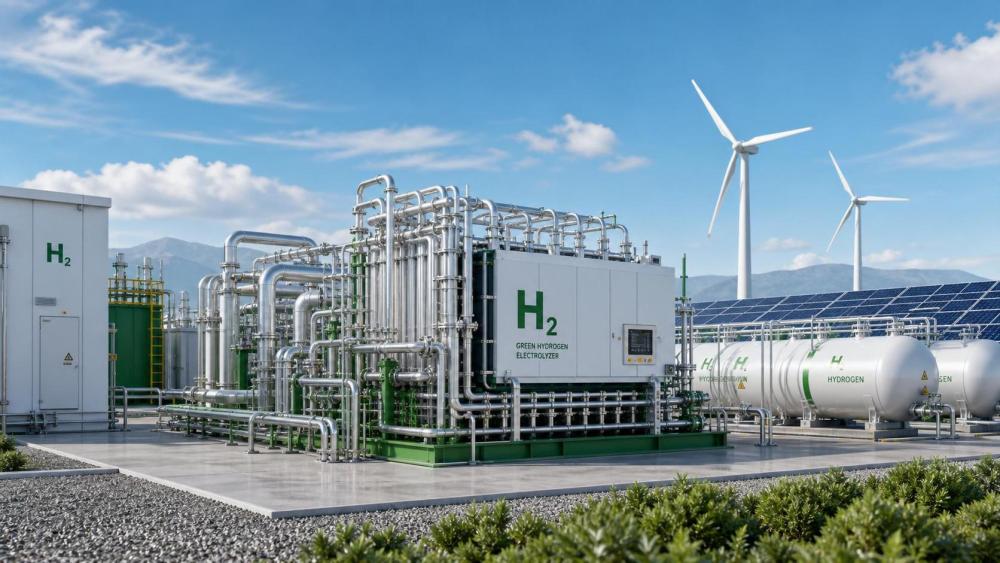
Nameplate capacity describes a theoretical production ceiling under defined conditions. It does not automatically reflect annual hydrogen yield, dynamic response, or reliability across a demanding duty cycle.
That is why green hydrogen systems capacity should be read as a system-level performance topic, not just a stack rating. The electrolysis unit may be central, but practical output is distributed across power electronics, water treatment, thermal control, gas handling, materials integrity, and operational discipline.
For large projects, the gap between nominal and realized output can materially affect levelized hydrogen cost, offtake reliability, storage strategy, and downstream asset sizing. A plant designed around optimistic assumptions may appear efficient on paper while underperforming in continuous service.
Why the topic has become more urgent
Hydrogen has moved beyond isolated demonstration assets. It now sits inside national energy security plans, grid-balancing strategies, industrial decarbonization programs, and long-distance fuel logistics.
That shift raises the standard for judging green hydrogen systems capacity. A sovereign-scale project cannot rely on broad marketing claims. It needs defensible production benchmarks tied to equipment behavior, network compatibility, and international codes.
This is where technical repositories such as G-HEI become relevant. By connecting megawatt-scale electrolysis, cryogenic logistics, hydrogen-ready gas turbines, CCUS interfaces, and high-pressure refueling systems, benchmarking becomes broader than electrolyzer efficiency alone.
In practice, a hydrogen project succeeds when the full chain remains stable, safe, and economically coherent. Capacity that cannot be stored, transported, compressed, or certified under operating standards is not fully usable capacity.
The variables that shape real green hydrogen systems capacity
Several engineering variables consistently determine whether green hydrogen systems capacity translates into dependable output. Their effects are cumulative rather than isolated.
Electrolyzer technology and stack condition
PEM and alkaline systems respond differently to load variation, startup frequency, current density, and water chemistry. Stack degradation rates also differ, which affects output consistency over time.
A high-efficiency stack at commissioning may lose practical advantage if durability is weak or replacement intervals are aggressive. Effective capacity is always time-weighted.
Power quality and renewable coupling
Electrolyzers do not consume electricity in a perfectly neutral way. Voltage instability, curtailment patterns, ramp frequency, and converter performance all influence hydrogen yield.
A plant linked to variable solar or wind resources may report strong instantaneous output while delivering lower annual utilization. Green hydrogen systems capacity should therefore be assessed against the real power profile, not the ideal one.
Water purity and balance of plant
Water treatment is often underestimated. Feedwater quality affects membrane life, contamination risk, maintenance frequency, and system efficiency.
Balance-of-plant equipment also matters. Pumps, dryers, separators, rectifiers, and control systems can create bottlenecks that lower usable capacity even when stacks remain healthy.
Thermal management and operating window
Electrolysis is temperature-sensitive. Inadequate cooling or unstable heat recovery reduces efficiency and accelerates component stress.
Plants that operate near thermal limits may show acceptable output in short tests, then drift under continuous operation. This is a common source of overestimated green hydrogen systems capacity.
Where output is gained or lost across the value chain
Hydrogen production is only one point in a longer chain. Real capacity can be reduced after generation if downstream systems are not matched to production behavior.
G-HEI’s wider benchmark model is useful here because it treats electrolysis output as part of a technical chain. That reflects how projects are financed, certified, and operated in reality.
Standards and materials are not secondary issues
Materials selection and code compliance directly affect green hydrogen systems capacity because they shape uptime, inspection intervals, and failure risk.
Hydrogen service exposes embrittlement risk, seal degradation, leakage pathways, and thermal stress. A project may install advanced stacks, yet lose operational value through poorly specified vessels, piping, or fittings.
Standards such as ISO 19880, ASME B31.12, and SAE J2601 help define safe and interoperable operating envelopes. Compliance should be read as a capacity enabler, not just a legal condition.
The same applies to cryogenic handling and high-pressure refueling. If downstream assets cannot safely absorb production, upstream capacity becomes stranded or intermittently usable.
How to evaluate capacity claims more accurately
A more reliable assessment of green hydrogen systems capacity usually starts with a few disciplined questions.
- Is the stated output based on steady baseload operation or variable renewable input?
- What stack efficiency is reported, and at which load range and temperature?
- How quickly does performance degrade across the expected duty cycle?
- What water specification is required, and how is purity maintained on site?
- Which parts of the balance of plant create the narrowest throughput limit?
- How much of the hydrogen can actually be compressed, stored, transported, or dispensed within the same operating window?
- Which international standards govern the plant, and where are the remaining integrity risks?
These questions move the discussion away from brochure numbers and toward delivered performance. They also make cross-vendor comparison more meaningful.
Typical scenarios where capacity is misunderstood
Misreading green hydrogen systems capacity is common in three situations.
Renewables-heavy production hubs
Installed electrolyzer power may exceed what the renewable profile can support across the year. The result is lower utilization than expected, despite technically adequate equipment.
Integrated industrial decarbonization projects
Hydrogen demand from steel, chemicals, or power assets may require stable flow. If output swings are not buffered through storage or hybrid power, the headline capacity becomes operationally misleading.
Export-oriented hydrogen corridors
Projects aimed at liquefaction, shipping, or refueling often focus on production volume first. Yet logistics losses, boil-off, compression constraints, and certification requirements can narrow usable export capacity.
A practical benchmark for the next decision
The most useful view of green hydrogen systems capacity combines four measures: stack efficiency, annualized output, downstream deliverability, and compliance-backed reliability.
That approach aligns better with real infrastructure planning. It also fits the broader hydrogen transition, where electrolysis, logistics, turbines, CCUS interfaces, and refueling assets increasingly depend on one another.
Before comparing projects or suppliers, it is worth building a common evaluation sheet around operating profile, degradation assumptions, balance-of-plant limits, and applicable standards. Once those factors are visible, green hydrogen systems capacity becomes easier to judge with technical confidence and lower deployment risk.
Related News
- Electricity Price Volatility Is Rewriting Hydrogen Cost ModelsApr 27, 2026Impact of electricity price on hydrogen cost is transforming industrial decarbonization and large-scale electrolysis. Explore LCOH trends, PPA strategies, and resilient hydrogen infrastructure planning.
- Energy Transition Plans Often Fail at the Grid Connection StageApr 27, 2026Sustainable energy and energy transition projects often fail at grid connection. Learn how hydrogen infrastructure, PEM electrolysis, and industrial decarbonization can avoid delays and protect investment value.
- What Is Slowing Industrial Decarbonization Projects in 2026?Apr 27, 2026Industrial decarbonization faces delays in 2026 as hydrogen infrastructure, sustainable energy access, grid limits, safety standards, and project bankability challenge the energy transition.
- When do industrial parks need megawatt-scale hydrogen production?Sep 28, 2026Hydrogen for industrial projects: discover when industrial parks need megawatt-scale production, from firm demand and power supply to storage, safety, and phased hub design.
Related News
- 00
0000-00
Hydrogen Energy Storage for Data Centers Gets Costly Fast - 00
0000-00
When 99.999% Hydrogen Purity Still Is Not Good Enough - 00
0000-00
When Does a Hydrogen-Ready Gas Turbine Pay Off? - 00
0000-00
Electricity Price Volatility Is Rewriting Hydrogen Cost Models - 00
0000-00
PSA Recovery Rate Drops for Reasons Operators Miss
Dr. Aris Aero
Weekly Insights
Stay ahead with our curated technology reports delivered every Monday.