How Adhesives Affect Print Quality and Package Durability




How Adhesives Affect Print Quality and Package Durability
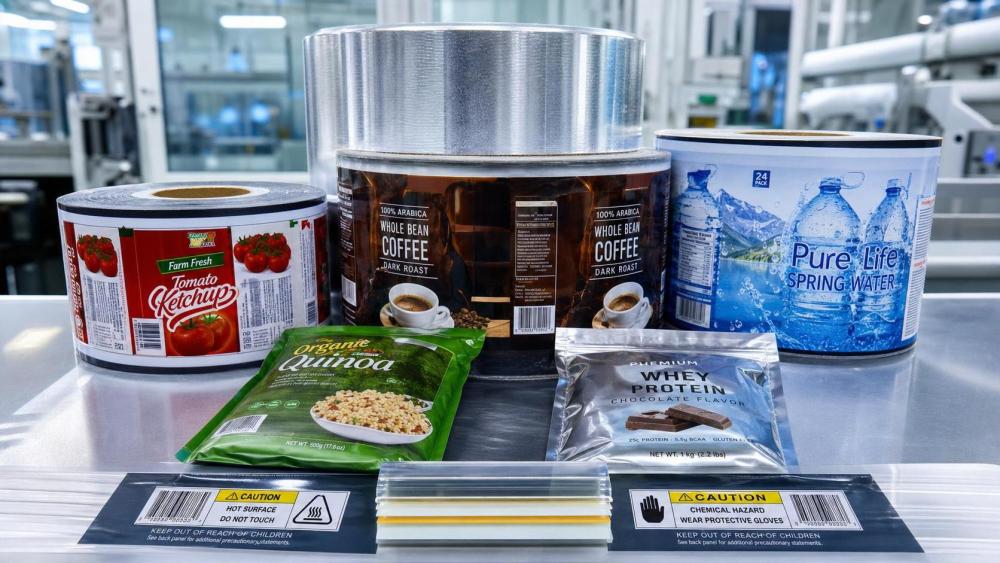
In technical packaging applications, adhesives do far more than bond layers together.
They shape print clarity, film stability, seal integrity, and service life.
That matters even more in energy, chemical, and infrastructure supply chains.
Labels, flexible packs, insulation wraps, and technical liners must stay readable and intact.
If adhesives fail, print quality often degrades before the package visibly breaks.
Smearing, tunneling, bubbling, edge lift, and delamination are common early warnings.
In high-value sectors, those issues create traceability gaps and handling risks.
For operations linked to hydrogen logistics and zero-carbon infrastructure, packaging reliability supports safety and compliance.
This also means adhesive selection should be treated as a technical decision, not a commodity purchase.
The most effective evaluations connect adhesive chemistry with printing methods, substrates, storage conditions, and lifecycle demands.
Why Adhesives Matter to Print Quality
Print quality depends on surface energy, coating uniformity, and dimensional stability.
Adhesives influence all three, especially in multilayer constructions.
When the adhesive wets poorly, layers may curl or shift during converting.
That movement creates registration errors, distorted graphics, and uneven ink transfer.
Some adhesives also release residual solvents or byproducts during cure.
Those emissions can interact with inks, coatings, or sensitive overprint varnishes.
The result may be hazing, ghosting, color shift, or reduced gloss consistency.
Pressure-sensitive applications face another challenge.
Aggressive adhesives can migrate, stain facestocks, or alter barcode contrast over time.
That risk is often underestimated in cold-chain or outdoor environments.
So, stable adhesives help protect not only package structure but also visual accuracy and data readability.
Common print defects linked to adhesives
- Silvering caused by poor wet-out on textured or low-energy surfaces.
- Wrinkling from shrink mismatch between film, ink layer, and adhesive.
- Blistering after heat exposure or rapid pressure changes.
- Ink distortion from adhesive ooze or plasticizer migration.
- Loss of legibility in QR codes, lot marks, and hazard labels.
How Adhesives Influence Package Durability
Package durability is rarely a single-property issue.
It comes from the interaction of bond strength, flexibility, barrier retention, and environmental resistance.
Adhesives sit at the center of that interaction.
A strong initial bond is useful, but it is not enough.
The bond must survive vibration, humidity, thermal cycling, and chemical contact.
This is especially relevant for components moving through industrial energy networks.
For example, packaged seals, sensors, fittings, and maintenance kits often face harsh transport conditions.
If adhesives become brittle, laminations crack and barrier layers separate.
If adhesives remain too soft, creep and edge failure become more likely.
Either case reduces package durability and raises the probability of handling damage.
Durability factors worth checking
- Peel strength after aging, not only at day one.
- Shear resistance under static load and elevated temperature.
- Resistance to oils, moisture, cleaning agents, and condensate.
- Performance after freeze-thaw and heat-humidity cycling.
- Bond stability on metals, foils, films, and coated papers.
Material Compatibility Is the Real Turning Point
From a technical standpoint, compatibility drives both print quality and package durability.
Many packaging failures start with a mismatch between adhesive chemistry and substrate behavior.
Polyethylene, PET, aluminum foil, nylon, and specialty laminates respond very differently.
Surface treatments can improve bonding, but they do not fix every mismatch.
Low-surface-energy films often require carefully tuned adhesives and controlled application windows.
Foil laminates create a different problem.
They can trap stress, amplify stiffness, and expose poor cure uniformity.
In practice, compatibility testing should include printing, converting, storage, and end-use simulation.
That full-path view catches problems that lab-only adhesion data may miss.
A practical compatibility checklist
- Confirm substrate surface energy and treatment stability.
- Review ink, primer, and adhesive interaction as one system.
- Test bond performance after real curing time, not rushed handling.
- Check print retention after abrasion, condensation, and flexing.
- Validate storage conditions against expected transport environments.
Adhesives, Barrier Performance, and Safety-Critical Packaging
In advanced industrial sectors, barrier performance is often non-negotiable.
Adhesives can strengthen or weaken that barrier depending on formulation and cure quality.
A poorly selected adhesive may create microchannels, edge pathways, or internal stress points.
Over time, that can reduce resistance to moisture, oxygen, vapor, or contamination.
For packaging used around hydrogen systems, instrumentation, or CCUS components, the risk profile is higher.
Technical labels and protective wraps may need to survive low temperatures, pressure fluctuations, or prolonged outdoor exposure.
A readable label is not just a branding issue.
It supports asset identification, maintenance control, and safe operational transfer.
That is why adhesives should be evaluated against the actual duty cycle, not only packaging speed or unit cost.
Relevant technical benchmarks
Specific packaging tests vary by use case, but the evaluation mindset should mirror strict industrial frameworks.
In adjacent infrastructure domains, standards such as ISO 19880, ASME B31.12, and SAE J2601 shape risk thinking.
Packaging decisions should align with that same discipline around material integrity and long-term reliability.
How to Evaluate Adhesives More Effectively
A better evaluation process starts by separating assumptions from measurable performance.
Many teams still approve adhesives based on vendor datasheets alone.
That approach is fast, but it often misses real operating stress.
A more reliable method combines lab testing with use-case simulation.
This is where adhesives stop being generic inputs and become engineered performance factors.
Questions that improve decisions
- Will these adhesives hold performance after full environmental aging?
- Do they protect print quality across storage, shipment, and field handling?
- Can the package tolerate vibration, abrasion, and temperature shock?
- Are failure modes visible early, or do they appear late in service?
What Better Adhesive Choices Look Like
Better adhesive choices usually come from clearer performance priorities.
If print quality is critical, focus on migration control, surface stability, and clean cure behavior.
If package durability is the main concern, prioritize aging resistance and structural balance.
In many industrial cases, the right answer is a balanced adhesive system, not the strongest one on paper.
This is especially true where traceability, barrier retention, and field reliability all matter at once.
From a broader market view, the trend is clear.
Adhesives are increasingly assessed as part of system integrity, not just converting efficiency.
That shift supports better packaging outcomes and lower lifecycle risk.
When packaging must perform in demanding technical environments, adhesives deserve deeper scrutiny.
They affect how packaging looks, how it protects, and how long it lasts.
More importantly, they influence whether critical information stays visible and materials stay secure.
A practical next step is simple.
Review adhesives against actual substrates, print systems, and service conditions before final approval.
That approach improves print quality, strengthens package durability, and reduces downstream failure exposure.
In technical packaging, better adhesive decisions usually pay for themselves long before failure would have shown up.
Related News
- Electricity Price Volatility Is Rewriting Hydrogen Cost ModelsApr 27, 2026Impact of electricity price on hydrogen cost is transforming industrial decarbonization and large-scale electrolysis. Explore LCOH trends, PPA strategies, and resilient hydrogen infrastructure planning.
- Energy Transition Plans Often Fail at the Grid Connection StageApr 27, 2026Sustainable energy and energy transition projects often fail at grid connection. Learn how hydrogen infrastructure, PEM electrolysis, and industrial decarbonization can avoid delays and protect investment value.
- What Is Slowing Industrial Decarbonization Projects in 2026?Apr 27, 2026Industrial decarbonization faces delays in 2026 as hydrogen infrastructure, sustainable energy access, grid limits, safety standards, and project bankability challenge the energy transition.
- What drives electrolysis scaling cost in megawatt PEM projects?Sep 13, 2026Electrolysis scaling cost explained: uncover the CAPEX, power, balance-of-plant, and lifecycle risks shaping bankable megawatt PEM projects.
Related News
- 00
0000-00
Hydrogen Energy Storage for Data Centers Gets Costly Fast - 00
0000-00
When 99.999% Hydrogen Purity Still Is Not Good Enough - 00
0000-00
When Does a Hydrogen-Ready Gas Turbine Pay Off? - 00
0000-00
Electricity Price Volatility Is Rewriting Hydrogen Cost Models - 00
0000-00
PSA Recovery Rate Drops for Reasons Operators Miss
Dr. Aris Aero
Weekly Insights
Stay ahead with our curated technology reports delivered every Monday.