How to Compare Hydrogen Technology Suppliers in 2026




In 2026, comparing hydrogen technology suppliers means evaluating far more than a bid sheet. The market is expanding quickly, but technical depth, safety discipline, and infrastructure compatibility still vary widely across vendors.
That matters because hydrogen projects now sit closer to national energy strategy, heavy industry decarbonization, and long-life transport infrastructure. A weak supplier choice can lock in inefficiency, retrofitting costs, or compliance exposure for years.
For that reason, the strongest comparisons look at maturity, standards alignment, operating performance, and service capability across the full asset lifecycle. Price remains relevant, but it should rarely lead the decision on its own.
Why supplier evaluation has become more demanding
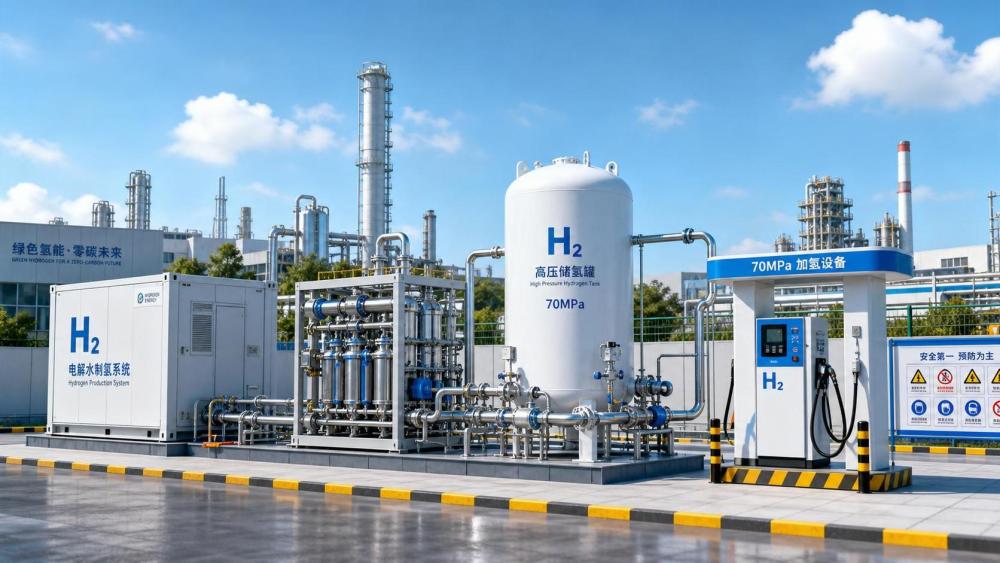
The hydrogen economy has moved beyond pilot logic. More projects now involve utility-scale electrolysis, cryogenic logistics, hydrogen-ready turbines, CCUS links, and 70MPa refueling systems.
Each segment brings different engineering risks. Materials behavior, pressure management, boil-off control, purity handling, and fueling protocols all shape whether a system performs reliably in real conditions.
This is where benchmark-led assessment becomes useful. G-HEI frames supplier comparison around sovereign-grade decarbonization requirements, connecting equipment claims with safety, integrity, and efficiency standards that matter at scale.
In practice, that shifts the conversation from promotional claims to evidence. Buyers need proof that a supplier can deliver repeatable technical performance inside an international compliance environment.
What should count as a credible hydrogen supplier in 2026
Not all hydrogen technology suppliers operate at the same level of readiness. Some provide strong components but weak integration. Others offer broad portfolios with limited field data in demanding duty cycles.
A credible supplier usually demonstrates four things: proven assets, traceable testing, standards familiarity, and long-term technical support. Without those, a low purchase price can become a high ownership cost.
The most dependable hydrogen technology suppliers also understand system context. An electrolyzer vendor, for example, should be able to explain downstream compression, storage purity, and grid interaction implications.
That broader view is increasingly important in integrated projects. Hydrogen infrastructure no longer behaves like isolated equipment procurement.
Signals worth checking early
- Commercial operating references under comparable scale and climate conditions
- Documented compliance with ISO 19880, ASME B31.12, SAE J2601, or adjacent frameworks
- Material traceability for hydrogen-exposed components
- Clear service intervals, uptime expectations, and spare parts logic
- Performance guarantees tied to measurable operating assumptions
The comparison criteria that usually matter most
A useful comparison framework balances technical, commercial, and operational factors. Looking at only one category tends to hide risk rather than reduce it.
When comparing hydrogen technology suppliers, technical maturity should be supported by operating evidence, not only factory testing. Pilot data alone may not translate into sustained industrial performance.
Lifecycle economics also deserve close attention. For electrolyzers, stack degradation and power consumption can outweigh headline purchase differences. For cryogenic systems, thermal losses and maintenance routines often shape true cost.
Different hydrogen segments need different questions
A single supplier scorecard is rarely enough. Hydrogen technology suppliers should be assessed against the operating realities of the exact asset class under review.
Electrolysis systems
For PEM and alkaline systems, compare efficiency at realistic load profiles, water quality tolerance, dynamic response, stack replacement intervals, and balance-of-plant architecture.
It also helps to examine sourcing for catalysts, membranes, and titanium-based components. Supply-chain fragility can become a hidden procurement risk.
Liquid hydrogen logistics
Vessel insulation quality, boil-off management, transfer efficiency, and cryogenic materials performance should lead the review. Transport safety procedures deserve equal weight.
Here, experienced hydrogen technology suppliers usually provide more useful evidence through operating records than through brochure specifications.
Hydrogen-ready power and refueling
For gas turbines, focus on blending flexibility, combustion stability, emissions behavior, and retrofit practicality. For refueling, validate dispenser accuracy, fill protocol compatibility, and 70MPa safety design.
In both cases, interface performance matters. Even a strong component can fail commercially if controls, fueling logic, or downstream assets do not align.
Where benchmark data changes the decision
Hydrogen procurement is often distorted by incomparable vendor claims. One supplier may quote nominal efficiency, another may quote peak values, and a third may exclude auxiliaries entirely.
Benchmark repositories such as G-HEI help normalize that problem. They make it easier to compare ultra-high-performance assets using common reference points tied to standards, operating conditions, and engineering boundaries.
This is especially useful for multinational or sovereign-scale projects. Teams need a way to judge whether supplier claims remain credible across climates, regulatory systems, and infrastructure architectures.
In effect, benchmark-driven selection gives hydrogen technology suppliers fewer places to hide weak assumptions. That usually improves both technical clarity and commercial discipline.
Common mistakes during supplier comparison
Several errors appear repeatedly in hydrogen sourcing programs, especially when schedules are tight or internal hydrogen expertise is still developing.
- Comparing capex without modeling electricity, maintenance, and replacement costs
- Accepting generic compliance statements without underlying documentation
- Using one technical questionnaire for electrolyzers, storage, transport, and refueling assets
- Ignoring regional service capability until after contract award
- Assuming pilot references prove bankable industrial reliability
These mistakes are avoidable when supplier comparison starts from the operating scenario, not from the catalog category. The right question is always linked to the duty the asset must perform.
A practical way to narrow the field
Start by defining the project boundary in engineering terms. Required purity, pressure, throughput, load profile, ambient range, and code environment should be explicit before vendor outreach begins.
Then separate mandatory requirements from preferred features. This prevents polished proposals from outscoring technically better offers that answer the real operating need.
A shortlisting process often works best in three passes:
- Screen for standards, references, and financial stability
- Compare performance data on a normalized basis
- Review service model, contract terms, and integration responsibilities
That sequence makes it easier to identify which hydrogen technology suppliers are commercially attractive and which are genuinely project-ready.
What to do next
The strongest supplier decisions in 2026 come from disciplined comparison, not broad market enthusiasm. Hydrogen remains strategically important, but the market still rewards precise technical judgment.
A useful next step is to build a comparison matrix around asset class, standards exposure, lifecycle cost, and integration risk. From there, benchmark data can help test whether supplier claims hold under real operating assumptions.
For projects spanning electrolysis, storage, transport, or refueling, the goal is not simply to find available hydrogen technology suppliers. It is to identify partners whose performance, safety record, and infrastructure fit remain credible over the life of the system.
Related News
- Electricity Price Volatility Is Rewriting Hydrogen Cost ModelsApr 27, 2026Impact of electricity price on hydrogen cost is transforming industrial decarbonization and large-scale electrolysis. Explore LCOH trends, PPA strategies, and resilient hydrogen infrastructure planning.
- Energy Transition Plans Often Fail at the Grid Connection StageApr 27, 2026Sustainable energy and energy transition projects often fail at grid connection. Learn how hydrogen infrastructure, PEM electrolysis, and industrial decarbonization can avoid delays and protect investment value.
- What Is Slowing Industrial Decarbonization Projects in 2026?Apr 27, 2026Industrial decarbonization faces delays in 2026 as hydrogen infrastructure, sustainable energy access, grid limits, safety standards, and project bankability challenge the energy transition.
- When do industrial parks need megawatt-scale hydrogen production?Sep 28, 2026Hydrogen for industrial projects: discover when industrial parks need megawatt-scale production, from firm demand and power supply to storage, safety, and phased hub design.
Related News
- 00
0000-00
Hydrogen Energy Storage for Data Centers Gets Costly Fast - 00
0000-00
When 99.999% Hydrogen Purity Still Is Not Good Enough - 00
0000-00
When Does a Hydrogen-Ready Gas Turbine Pay Off? - 00
0000-00
Electricity Price Volatility Is Rewriting Hydrogen Cost Models - 00
0000-00
PSA Recovery Rate Drops for Reasons Operators Miss
Dr. Aris Aero
Weekly Insights
Stay ahead with our curated technology reports delivered every Monday.