PPA for Hydrogen: Key Contract Terms That Shape Project Bankability




For financial approvers evaluating hydrogen projects, a robust PPA (Power Purchase Agreement) for hydrogen is more than a revenue document—it is a primary determinant of bankability. Pricing mechanics, offtake commitments, curtailment risk, credit support, and change-in-law protections can materially influence debt terms, investor confidence, and long-term project resilience.
What a PPA for Hydrogen Really Means
A PPA (Power Purchase Agreement) for hydrogen sits at the intersection of electricity procurement, industrial offtake, and infrastructure finance. In traditional renewables, a PPA mainly allocates price, volume, and delivery risk for power. In hydrogen, the contract must do more. It often supports the economics of electrolysis, links renewable electricity to hydrogen production volumes, and helps lenders understand whether the project can generate stable cash flow under changing market and regulatory conditions.
For financial approvers, the key issue is not only whether a project has a contract, but whether that contract translates into predictable revenue and acceptable downside protection. Hydrogen projects are especially sensitive to electricity cost, utilization rate, technology performance, storage constraints, and demand certainty. As a result, a well-structured PPA for hydrogen is usually reviewed alongside hydrogen offtake agreements, grid connection terms, balancing obligations, and compliance with safety and technical standards.
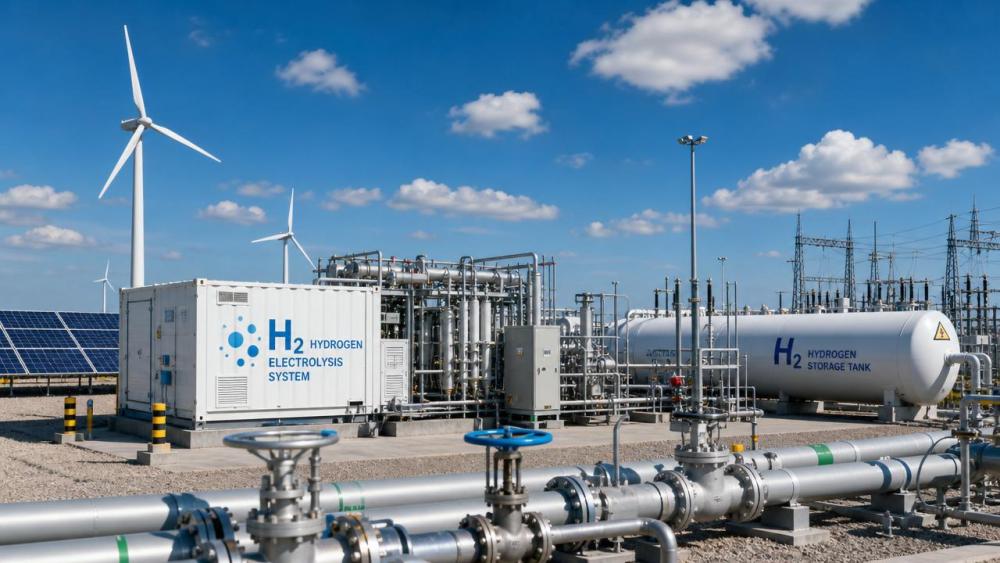
This matters across the zero-carbon value chain represented by G-HEI priorities: megawatt-scale PEM and alkaline electrolysis, cryogenic logistics, hydrogen-ready power systems, CCUS-linked industrial decarbonization, and high-pressure refueling infrastructure. In each case, contract design affects whether capital providers see a scalable infrastructure asset or an exposed technology bet.
Why the Market Pays Close Attention to Contract Structure
Hydrogen has reached a critical stage where technical capability is no longer the only hurdle. Large projects now require sovereign-scale confidence in delivery, safety, and financial durability. The transition from carbon-intensive fuels to hydrogen-based systems depends on long-life infrastructure that can withstand volatile power markets, policy evolution, and changing industrial demand. That is why the PPA (Power Purchase Agreement) for hydrogen has become a central bankability document rather than a secondary commercial attachment.
Unlike mature power assets with well-established operating profiles, hydrogen facilities face more moving parts. Electrolyzer efficiency can vary by operating regime, renewable generation may be intermittent, and storage economics can alter dispatch decisions. In many projects, revenue also depends on green certification, emissions accounting, or incentive eligibility. If the PPA does not align with these realities, a project may show strong strategic value but still fail credit approval.
Financial approvers therefore assess whether the contract absorbs volatility in a disciplined way. They want visibility on who carries price risk, who bears curtailment exposure, what happens if output underperforms, and whether counterparties have the credit strength to honor long-term commitments. In practical terms, the quality of a PPA for hydrogen can directly shape leverage ratios, reserve requirements, debt service coverage assumptions, and sponsor equity returns.
Core Contract Terms That Shape Bankability
Not every clause carries the same financial weight. For lenders, investors, and internal approval committees, several terms in a PPA (Power Purchase Agreement) for hydrogen usually have the greatest impact on risk allocation and cash flow certainty.
1. Pricing mechanism
The pricing model determines whether electricity input costs remain predictable enough to support hydrogen production economics. Fixed-price structures improve certainty but may reduce flexibility in volatile markets. Indexed pricing can track market conditions more closely, yet it may expose the project to margin compression if hydrogen sale prices are less dynamic. Some projects use collars, floors, or hybrid formulas to strike a balance.
2. Volume commitment and delivery profile
Hydrogen assets rarely operate like simple baseload consumers. The contract should reflect the expected production pattern, including minimum offtake, shape obligations, flexibility windows, and imbalance settlement. If the contracted power profile does not fit electrolyzer operations or storage capabilities, efficiency and revenue may deteriorate quickly.
3. Curtailment and availability risk
Curtailment clauses are especially important for projects tied to renewables or congested grids. Financial approvers need clarity on when curtailment is compensated, when it is excused, and how prolonged interruptions affect guaranteed volumes or payment obligations. Repeated curtailment can weaken utilization assumptions and harm debt sizing.
4. Credit support and counterparty strength
Even a well-priced PPA for hydrogen may not support financing if the buyer or seller cannot demonstrate strong creditworthiness. Parent guarantees, letters of credit, reserve accounts, step-in rights, and termination payment provisions often become central in committee review. The goal is to ensure that payment reliability survives operational stress or market disruption.
5. Change in law and regulatory adjustment
Hydrogen economics are deeply tied to policy frameworks, including renewable energy rules, emissions accounting, certification requirements, transport regulation, and public incentives. A bankable contract must define how regulatory changes are allocated. Without that clarity, future compliance costs can materially alter project viability.
6. Force majeure, performance relief, and termination
Hydrogen infrastructure interfaces with electricity systems, process equipment, storage, logistics, and safety frameworks. Termination rights, cure periods, and force majeure definitions should be tailored to this complexity. Generic clauses often leave too much ambiguity for credit committees.
A Practical Bankability View for Financial Approvers
From a finance perspective, the strongest PPA (Power Purchase Agreement) for hydrogen is not necessarily the one with the highest headline return. It is the one that allows downside cases to remain manageable. Decision-makers typically test a project under lower utilization, higher power costs, delayed ramp-up, and changing regulation. If the contract still preserves debt service and reasonable sponsor resilience, the project becomes materially easier to approve.
This is especially relevant for large-scale electrolysis projects benchmarked against international standards and expected to operate over long asset lives. Whether the project feeds industrial users, mobility corridors, gas turbine applications, or export chains, lenders look for evidence that the contract mirrors the technical reality of the asset. Misalignment between contract assumptions and operating behavior is one of the most common hidden risks in early-stage hydrogen financing.
Key Risk Areas and Their Financial Effect
Where Different Hydrogen Projects Need Different PPA Logic
A PPA for hydrogen is not uniform across all project types. Contract emphasis changes depending on the underlying use case, asset integration model, and value chain role.
Practical Evaluation Guidelines Before Approval
Before approving a hydrogen project, financial stakeholders should review the PPA (Power Purchase Agreement) for hydrogen in an integrated way rather than as a standalone legal package. Several practical questions help reveal whether the structure is genuinely financeable.
First, does the electricity pricing mechanism remain compatible with the expected hydrogen sales model under stress scenarios? Second, are contracted volumes realistic relative to electrolyzer efficiency, maintenance cycles, storage limitations, and renewable variability? Third, is curtailment risk transparent enough to model without excessive assumptions? Fourth, do counterparties provide sufficient security to survive long-term market fluctuations? Fifth, does the agreement preserve economics if certification standards, grid rules, or public support regimes evolve?
Approvers should also test whether the PPA aligns with technical integrity benchmarks and operating standards. For example, projects involving high-pressure refueling systems, cryogenic transport, or hydrogen-ready turbines may face different load patterns and compliance obligations from pure industrial supply projects. In the G-HEI context, contract diligence should therefore connect commercial terms with material integrity, safety frameworks, and asset performance expectations, not treat them as separate disciplines.
Common Weaknesses That Undermine a PPA for Hydrogen
Several recurring issues can reduce confidence in a PPA for hydrogen. One is overreliance on aggressive utilization assumptions without corresponding flexibility rights. Another is poorly defined treatment of curtailed energy or interrupted supply. A third is mismatch between the duration of the PPA and the tenor required by lenders. Projects also weaken when credit support is shallow, when change-in-law language is vague, or when force majeure clauses ignore hydrogen-specific operational realities.
A further weakness appears when sponsors assume that strategic demand alone can substitute for contractual discipline. Many hydrogen projects have strong policy relevance and long-term industrial logic, but capital approval still depends on defensible cash-flow architecture. Bankability comes from documented allocation of risk, not from market enthusiasm alone.
FAQ for Finance-Led Review
Is a long-term PPA always necessary?
Not always, but for most capital-intensive hydrogen projects, longer-term visibility materially improves financing conditions. Shorter structures may work when sponsors have strong balance sheets or when merchant exposure is intentional and well-hedged.
Can a hydrogen project be bankable with indexed electricity pricing?
Yes, if the project has matching revenue flexibility, effective hedging tools, or contractual pass-through mechanisms. Indexed pricing is not inherently weak; it becomes weak when cost volatility and revenue stability are misaligned.
Why does curtailment matter so much in a PPA for hydrogen?
Because hydrogen production economics depend heavily on operating hours and electricity availability. Repeated curtailment reduces utilization, raises unit costs, and can quickly impair debt service assumptions.
Final Perspective for Decision-Makers
For financial approvers, the real value of a PPA (Power Purchase Agreement) for hydrogen lies in its ability to convert an ambitious decarbonization concept into a financeable infrastructure case. A strong contract clarifies price formation, secures realistic volumes, allocates curtailment and regulatory risk sensibly, and reinforces confidence through credible credit support. It also reflects the technical operating profile of the hydrogen asset rather than forcing a conventional power template onto a more complex system.
As the hydrogen economy scales across electrolysis, logistics, mobility, power generation, and industrial decarbonization, disciplined contract design will increasingly separate investable projects from merely promising ones. If your approval process is evaluating a new hydrogen platform, review the PPA for hydrogen not only as a legal agreement, but as a strategic risk-allocation framework that defines long-term bankability.
Related News
- Electricity Price Volatility Is Rewriting Hydrogen Cost ModelsApr 27, 2026Impact of electricity price on hydrogen cost is transforming industrial decarbonization and large-scale electrolysis. Explore LCOH trends, PPA strategies, and resilient hydrogen infrastructure planning.
- Energy Transition Plans Often Fail at the Grid Connection StageApr 27, 2026Sustainable energy and energy transition projects often fail at grid connection. Learn how hydrogen infrastructure, PEM electrolysis, and industrial decarbonization can avoid delays and protect investment value.
- What Is Slowing Industrial Decarbonization Projects in 2026?Apr 27, 2026Industrial decarbonization faces delays in 2026 as hydrogen infrastructure, sustainable energy access, grid limits, safety standards, and project bankability challenge the energy transition.
- AEM Stability Remains the Big Question for Scale-UpApr 27, 2026Anion exchange membrane stability is the key barrier to large-scale electrolysis. Discover how AEM impacts industrial decarbonization, hydrogen infrastructure, safety, and scale-up economics.
Related News
- 00
0000-00
Hydrogen Energy Storage for Data Centers Gets Costly Fast - 00
0000-00
When 99.999% Hydrogen Purity Still Is Not Good Enough - 00
0000-00
When Does a Hydrogen-Ready Gas Turbine Pay Off? - 00
0000-00
Electricity Price Volatility Is Rewriting Hydrogen Cost Models - 00
0000-00
PSA Recovery Rate Drops for Reasons Operators Miss
Dr. Aris Aero
Weekly Insights
Stay ahead with our curated technology reports delivered every Monday.