Sustainable Iridium Sourcing Risks in PEM Electrolyzer Growth




Sustainable iridium sourcing is moving from a technical footnote to a core investment question in PEM electrolyzer growth. As hydrogen programs scale, iridium availability now affects project timing, capex credibility, localization strategy, and long-term operating resilience.
That shift matters because PEM technology remains central to high-performance electrolysis, especially where dynamic renewable power, compact system footprints, and fast response are required. In that context, sustainable iridium sourcing is no longer just a procurement issue. It is part of infrastructure risk management.
For large zero-carbon portfolios, the real question is not whether PEM electrolyzers can perform. It is whether the supply chain behind them can support sovereign-scale deployment without creating a new strategic bottleneck.
Why iridium sits at the center of PEM expansion
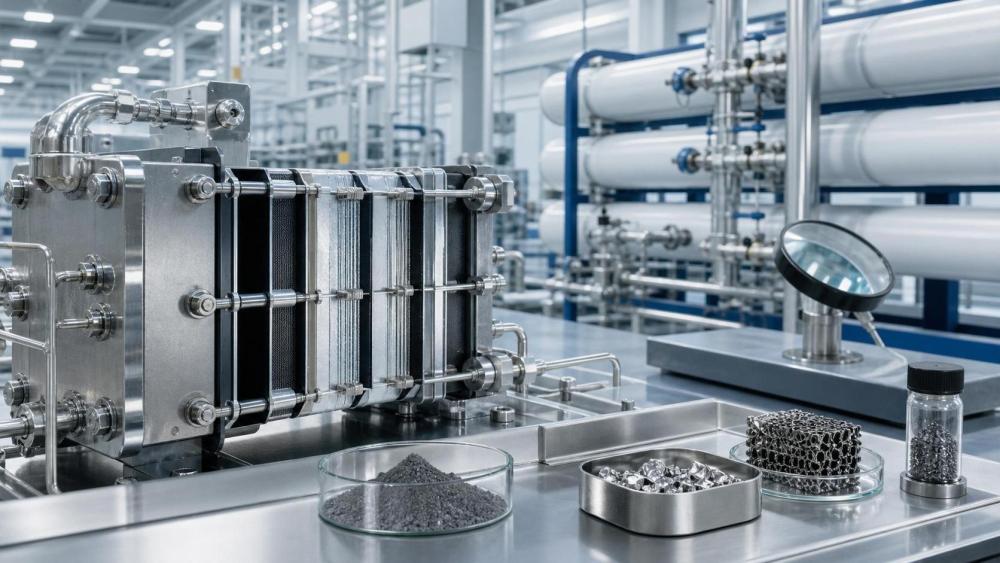
Iridium is used in PEM electrolyzer anodes because it can withstand highly acidic and oxidative operating conditions. Few materials offer comparable durability at industrial current densities.
This gives PEM systems a strong technical case in demanding applications. It also creates a structural dependency. Global iridium production is limited, highly concentrated, and largely tied to platinum-group metal mining rather than dedicated iridium extraction.
In practical terms, electrolyzer demand cannot scale independently of upstream mining realities. A surge in hydrogen deployment can therefore collide with a metals market that was never designed for rapid volume expansion.
That is why sustainable iridium sourcing has become a decisive filter in project evaluation. It connects electrochemistry, geopolitics, mining capacity, and financing discipline in one place.
The risk is broader than raw material scarcity
The first risk is obvious: there may not be enough iridium at the right price and schedule. The second risk is subtler and often more damaging. Supply uncertainty can weaken confidence across the full project structure.
If catalyst costs become volatile, stack pricing becomes harder to defend. If sourcing routes are opaque, ESG claims become vulnerable. If replacement assumptions are unclear, lifetime economics become harder to model.
This is especially relevant in large hydrogen platforms linked to power generation, liquid hydrogen logistics, refueling networks, and industrial decarbonization. A constrained input at stack level can ripple into the wider zero-carbon asset chain.
Within the G-HEI framework, that interdependence matters. Electrolysis performance cannot be separated from material integrity, safety frameworks, and long-horizon infrastructure security. Benchmarking the stack without benchmarking iridium exposure leaves a critical gap.
What sustainable iridium sourcing actually means
The phrase does not simply mean buying less expensive metal or finding an alternative trader. Sustainable iridium sourcing combines physical availability, traceability, ethical extraction, processing transparency, and efficient end use.
A credible strategy usually includes four dimensions:
- secured access to mined or refined iridium through reliable counterparties;
- clear visibility into geographic concentration and political exposure;
- material-efficiency pathways that reduce iridium loading per megawatt;
- recycling and recovery plans that support circular supply over time.
When one of these elements is missing, sustainable iridium sourcing becomes more of a narrative than an operating capability.
Where commercial exposure usually appears
The strongest exposures tend to show up before a plant is built, not after it starts producing hydrogen. Early-stage assumptions around stack procurement often understate the strategic weight of iridium.
Several pressure points deserve close attention:
These issues affect bankability because they shape whether projected hydrogen output can be delivered on time, at expected cost, and under defensible technical assumptions.
Material efficiency is becoming a competitive differentiator
The market response is not limited to securing more supply. It also involves reducing dependence per unit of electrolyzer capacity. This is where catalyst loading, stack design, and durability engineering become commercially important.
A lower iridium loading can improve scalability, but only if lifetime performance remains credible. Aggressive reduction targets that weaken durability may shift costs into stack replacement, uptime loss, or warranty tension.
That tradeoff matters across utility-scale hydrogen systems, high-pressure fueling assets, and hydrogen-linked power infrastructure. The cheapest material strategy on paper may be the weakest strategy over an asset’s real operating life.
In other words, sustainable iridium sourcing should be reviewed together with performance under recognized engineering standards. A sourcing claim without durability evidence is incomplete.
Why recycling cannot be treated as a side issue
Secondary supply will not solve short-term scarcity by itself, but it will shape medium-term resilience. End-of-life catalyst recovery, refining partnerships, and closed-loop programs can gradually improve supply flexibility.
For long-duration infrastructure portfolios, recycling also improves strategic visibility. It turns future stack replacement from a pure cost event into a potential material recovery event.
How to evaluate claims around sustainable iridium sourcing
Many market claims sound reassuring until they are tested against operating detail. A robust review usually asks how supply security is evidenced, not just how it is described.
Useful checkpoints include:
- origin transparency beyond the immediate catalyst supplier;
- multi-year supply agreements linked to realistic deployment volumes;
- validated iridium loading data at stack level, not only lab level;
- durability evidence under duty cycles relevant to renewable intermittency;
- defined recycling route with accountable refining partners;
- alignment with technical integrity frameworks and international standards.
This is where a benchmarking approach becomes valuable. G-HEI’s cross-domain lens is relevant because iridium risk does not sit in isolation. It intersects with stack integrity, logistics strategy, refueling reliability, and broader sovereign decarbonization planning.
A strategic view for hydrogen infrastructure planning
The strongest hydrogen programs now treat sustainable iridium sourcing as part of system architecture. That means pairing PEM deployment plans with material-efficiency targets, supplier diversification, and circular recovery planning from the outset.
It also means keeping technology optionality open. In some cases, the right answer may include a portfolio balance between PEM and alkaline systems, depending on duty profile, purity needs, ramping behavior, and material exposure.
This is not a retreat from PEM. It is a more disciplined way to support PEM where its strengths are strongest, while avoiding unsupported assumptions about unconstrained iridium supply.
The next step is straightforward. Review electrolyzer growth plans against actual iridium dependencies, not headline capacity targets. Compare supply security, loading efficiency, durability evidence, and recovery pathways before treating scale-up assumptions as bankable.
In the hydrogen economy, technical ambition is abundant. Sustainable iridium sourcing is one of the tests that shows whether that ambition is also investable, resilient, and fit for sovereign-scale infrastructure.
Related News
- Electricity Price Volatility Is Rewriting Hydrogen Cost ModelsApr 27, 2026Impact of electricity price on hydrogen cost is transforming industrial decarbonization and large-scale electrolysis. Explore LCOH trends, PPA strategies, and resilient hydrogen infrastructure planning.
- Energy Transition Plans Often Fail at the Grid Connection StageApr 27, 2026Sustainable energy and energy transition projects often fail at grid connection. Learn how hydrogen infrastructure, PEM electrolysis, and industrial decarbonization can avoid delays and protect investment value.
- What Is Slowing Industrial Decarbonization Projects in 2026?Apr 27, 2026Industrial decarbonization faces delays in 2026 as hydrogen infrastructure, sustainable energy access, grid limits, safety standards, and project bankability challenge the energy transition.
- How safety layers reduce risk in utility-scale hydrogen systemsOct 05, 2026Utility scale hydrogen systems safety: discover how layered prevention, detection, shutdown, venting, and inspection controls reduce operational risk.
Related News
- 00
0000-00
Hydrogen Energy Storage for Data Centers Gets Costly Fast - 00
0000-00
When 99.999% Hydrogen Purity Still Is Not Good Enough - 00
0000-00
When Does a Hydrogen-Ready Gas Turbine Pay Off? - 00
0000-00
Electricity Price Volatility Is Rewriting Hydrogen Cost Models - 00
0000-00
PSA Recovery Rate Drops for Reasons Operators Miss
Dr. Aris Aero
Weekly Insights
Stay ahead with our curated technology reports delivered every Monday.