UL Certification Requirements for Hydrogen Dispenser Safety




For quality control and safety managers, understanding UL certification requirements is essential to verifying that hydrogen dispensers can operate reliably under high-pressure, high-risk refueling conditions.
As 70MPa+ infrastructure expands, compliance is no longer a documentation exercise—it is a frontline safeguard for leak prevention, electrical safety, emergency shutdown integrity, and long-term asset trust.
This guide introduces the key certification expectations, safety checkpoints, and practical considerations needed to align hydrogen dispenser projects with recognized performance and risk-control standards.
What Safety Managers Really Need to Confirm First
The core search intent behind UL certification requirements is practical assurance: whether a hydrogen dispenser can be accepted, installed, inspected, and operated safely.
For QC and safety teams, the question is rarely academic. They need evidence that equipment design, components, controls, and documentation can withstand review.
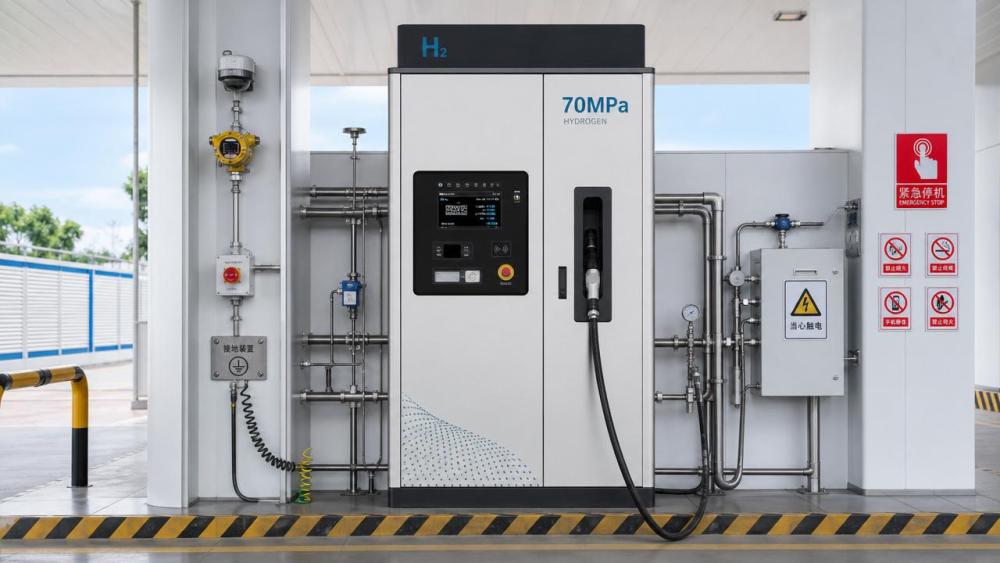
A hydrogen dispenser combines high-pressure gas handling, electrical systems, metering, communication, cooling, grounding, and emergency shutdown functions in one compact asset.
Certification therefore should not be treated as a label alone. It is a structured verification process connecting design assumptions with field safety performance.
The most important early judgment is whether the supplier can map each safety-critical function to applicable standards, test evidence, and traceable component approvals.
UL certification requirements may involve the complete dispenser, certified subassemblies, listed electrical components, hazardous-location equipment, and conformity with installation codes.
Because hydrogen projects often involve multiple jurisdictions, teams should also align UL expectations with NFPA 2, ISO 19880-1, SAE J2601, and local authority requirements.
A strong certification file helps answer three questions: is the product safe by design, consistently manufactured, and installable without uncontrolled field modification?
Why Hydrogen Dispensers Require Stricter Certification Discipline
Hydrogen is not simply another compressed gas. Its small molecule size, wide flammability range, and low ignition energy create demanding safety conditions.
At 35MPa and 70MPa fueling pressures, small design weaknesses can become major hazards under repeated thermal cycling, vibration, and rapid pressure transitions.
Certification discipline matters because many dispenser failures do not start as dramatic events. They begin as small leaks, loose fittings, software faults, or degraded seals.
Hydrogen flame visibility, accumulation behavior, and ignition sensitivity require safety systems that detect, isolate, vent, and shut down equipment before escalation.
For safety managers, the certification objective is not only avoiding catastrophic failure. It is preventing hidden degradation from becoming a recurring operational risk.
Quality control personnel should review whether certification evidence covers normal fueling, abnormal operation, maintenance exposure, electrical faults, pressure excursions, and emergency shutdown scenarios.
Where dispenser designs integrate precooling, mass flow measurement, payment terminals, human-machine interfaces, and cloud connectivity, certification boundaries must be especially clear.
Every interface adds risk. The certification plan should define what is certified, what is field-installed, and what remains under site-level engineering responsibility.
Core UL Certification Requirements to Expect
There is no useful shortcut version of UL certification requirements for hydrogen dispensers. The applicable pathway depends on construction, location, components, and intended use.
However, most robust certification reviews examine electrical safety, mechanical integrity, pressure containment, hazardous-location suitability, leakage control, grounding, software reliability, and emergency functions.
Electrical enclosures, wiring methods, circuit protection, bonding, connectors, displays, heaters, sensors, and control panels should use listed or recognized components where applicable.
Hazardous-location classification is critical. Equipment installed where hydrogen may be present must be suitable for the defined zone, division, or classified area.
Gas detection systems, ventilation interlocks, emergency stop circuits, and shutdown logic should be evaluated for function, placement, response time, and fail-safe behavior.
Pressure components require traceability to suitable materials, ratings, welding or joining methods, burst margins, fatigue considerations, and compatibility with high-pressure hydrogen exposure.
Dispensing hoses, breakaways, nozzles, filters, valves, regulators, and fittings should be selected and documented against hydrogen service requirements and pressure class.
Where the dispenser includes metering equipment, the certification file should distinguish safety approval from measurement accuracy, legal metrology approval, and commercial transaction requirements.
Safety managers should avoid assuming that one mark covers everything. UL certification may coexist with separate approvals for metering, telecom, cybersecurity, or pressure systems.
Documentation QC Teams Should Request Before Acceptance
Documentation is where many projects reveal whether certification is mature or superficial. A credible supplier should provide more than a certificate image.
Request the certification scope, applicable standards, model numbers, voltage ratings, pressure ratings, environmental ratings, hazardous-location markings, and any installation limitations.
The certification report or compliance summary should identify critical components, approved alternatives, manufacturing controls, required markings, and conditions of acceptability.
QC teams should also request pressure test records, leak test procedures, calibration certificates, material certificates, torque records, electrical continuity results, and software revision control.
For imported or customized equipment, confirm that the certified configuration matches the delivered configuration. Small substitutions can invalidate safety assumptions.
Examples include changing valve models, replacing sensors, modifying enclosure penetrations, rerouting tubing, altering firmware, or adding communication devices after certification.
Safety managers should insist on a deviation control process. Any design change should trigger an impact review against certification, site permitting, and operational risk.
A practical acceptance checklist should connect each document to an inspection point, so the team can verify physical equipment against certification evidence.
Leak Prevention and Pressure Integrity Checks
Leak prevention is central to dispenser safety because hydrogen leakage can occur through tiny gaps, damaged seals, permeation paths, or improperly assembled fittings.
Certification evidence should show that pressure-containing components are rated for maximum allowable working pressure, transient conditions, and expected duty cycles.
QC teams should confirm that factory leak testing uses appropriate methods, acceptance thresholds, test gases, pressure levels, stabilization times, and calibrated instruments.
Hydrogen-compatible materials deserve close attention. Elastomers, metals, coatings, lubricants, and sealants must tolerate pressure, temperature, and hydrogen exposure without unsafe degradation.
High-pressure tubing layout should reduce stress concentration, vibration fatigue, accidental impact exposure, and maintenance-induced damage during filter or hose replacement.
Pressure relief devices, vent lines, purge paths, and drain arrangements should discharge to safe locations and remain protected from obstruction or freezing.
The dispenser should have clear inspection access. If technicians cannot safely inspect fittings, hoses, sensors, and valves, preventive maintenance becomes unreliable.
For 70MPa service, safety managers should ask how the supplier validates repeated fueling cycles and whether fatigue assumptions are supported by testing.
Electrical Safety, Grounding, and Hazardous-Location Control
Electrical safety is a major part of UL certification requirements because ignition control depends on wiring integrity, enclosure suitability, grounding, and component selection.
QC personnel should verify that electrical drawings match the delivered equipment, including cable glands, conduit entries, terminal blocks, fuses, relays, and protective devices.
Grounding and bonding are especially important around hydrogen dispensers. Static discharge, fault current, and poor continuity can undermine otherwise strong mechanical design.
Hazardous-location equipment must be used according to its marking. Temperature class, gas group, ingress protection, and installation method all matter.
Gas detectors should not be treated as decorative accessories. Their location, calibration interval, alarm thresholds, and interlock actions determine their real safety value.
Emergency stop circuits should be accessible, clearly labeled, mechanically reliable, and tested as part of commissioning and periodic operational verification.
Safety managers should also evaluate electrical segregation. Power wiring, signal wiring, intrinsically safe circuits, and communication lines should follow documented separation rules.
If the dispenser includes remote monitoring, payment terminals, or data connections, cybersecurity changes should not compromise certified control or shutdown functions.
Emergency Shutdown and Functional Safety Expectations
Hydrogen dispenser safety depends on fast, predictable response when abnormal conditions occur. Certification review should therefore examine emergency shutdown philosophy.
Common triggers include gas detection, overpressure, hose rupture, breakaway activation, temperature limits, door opening, communication loss, and manual emergency stop activation.
The shutdown system should place the dispenser and connected fueling path in a defined safe state, not merely display an alarm.
QC teams should review cause-and-effect matrices showing each fault condition, detection method, control action, valve response, alarm output, and reset requirement.
Reset logic matters. A system that restarts automatically after a serious alarm may create hazards if the root cause remains unresolved.
Functional testing should be conducted during factory acceptance, site acceptance, commissioning, and periodic maintenance. Records should include results, personnel, instruments, and deviations.
Where software controls fueling profiles or safety interlocks, revision control and validation evidence should be reviewed before any update is approved.
Safety managers should require proof that emergency shutdown devices remain effective under loss of power, sensor failure, wiring fault, or controller malfunction.
Installation Conditions That Can Affect Certification
Even a properly certified dispenser can become noncompliant if installation ignores the conditions attached to the certification and manufacturer instructions.
Authorities having jurisdiction often evaluate site layout, separation distances, ventilation, crash protection, classified areas, electrical installation, signage, and emergency access.
QC and safety teams should verify that civil, electrical, mechanical, and controls contractors understand the certification boundaries before field work begins.
Field modifications are common sources of risk. Drilling enclosures, adding devices, changing cable entries, or altering tubing supports can affect safety listings.
Commissioning should include a physical conformity inspection comparing the installed dispenser with approved drawings, certification markings, and manufacturer installation requirements.
Environmental exposure also matters. Temperature range, humidity, rain, snow, dust, corrosion, seismic conditions, and vehicle impact risks can affect long-term reliability.
If the site uses hydrogen supplied by trailer, pipeline, liquid hydrogen storage, or on-site electrolysis, interface hazards should be separately reviewed.
The dispenser certificate does not automatically certify the entire station. Site integration must be evaluated through a broader safety and code-compliance process.
How to Evaluate Supplier Readiness
A supplier’s readiness is visible in how quickly and clearly it answers certification questions. Vague responses often predict commissioning delays.
Strong suppliers provide a compliance matrix connecting UL certification requirements with standards, test reports, drawings, component approvals, and manufacturing controls.
They can explain certification limitations without defensive language. They know what is covered, what is not covered, and what requires local approval.
For quality teams, supplier audits should include production traceability, calibration control, nonconformance handling, component substitution approval, and final inspection discipline.
Safety managers should ask how lessons from field incidents are captured. Mature suppliers update designs, maintenance instructions, and training materials based on evidence.
Spare parts control is another practical issue. Replacing a certified component with a visually similar nonapproved part can create hidden compliance risk.
Training quality should also be evaluated. Operators and technicians need clear procedures for startup, shutdown, leak response, alarms, isolation, and maintenance lockout.
The best supplier is not simply the one with a certificate. It is the one that can maintain compliance through the equipment lifecycle.
Common Certification Gaps That Create Project Risk
One common gap is treating component certifications as proof that the complete dispenser is certified. System-level interaction still requires careful review.
Another gap is unclear hazardous-area classification. If the area classification changes, electrical equipment suitability and installation methods may also change.
Documentation mismatch is frequent. Certificates may reference one model while the delivered unit includes custom options, different components, or altered control logic.
Some projects overlook maintenance conditions. A dispenser may be safe during operation but expose technicians to pressure, electrical, or gas hazards during service.
Alarm management is another weak point. Too many nuisance alarms can lead operators to bypass, ignore, or misunderstand critical safety warnings.
Cyber-enabled dispensers introduce new concerns. Remote access should not allow unauthorized changes to safety parameters, firmware, or operational limits.
Finally, teams sometimes assume certification eliminates the need for risk assessment. In reality, certification supports risk control but does not replace site-specific analysis.
Practical Acceptance Checklist for QC and Safety Teams
Before purchase, confirm the intended pressure class, fueling protocol, environmental rating, hazardous-location classification, and jurisdictional approval pathway for the dispenser.
Before shipment, review the certification scope, critical component list, pressure test records, leak test data, electrical test results, and final inspection report.
During receiving inspection, verify model numbers, nameplates, markings, serial numbers, documentation packages, spare parts, and visible damage during transport.
During installation, control any field modifications and ensure contractors follow certified drawings, installation manuals, grounding requirements, and classified-area wiring practices.
During commissioning, test emergency stop, gas detection, pressure isolation, breakaway response, alarms, communications, venting arrangements, and reset logic.
Before handover, ensure operators and maintenance teams receive training, procedures, inspection schedules, calibration requirements, and escalation contacts for abnormal events.
After startup, review incident logs, alarm history, leak findings, component replacements, software updates, and maintenance records to preserve compliance confidence.
This checklist is not a substitute for formal certification review, but it helps teams identify gaps before they become operational liabilities.
Final Takeaway: Certification Is a Safety System, Not a Paper Mark
UL certification requirements for hydrogen dispensers should be understood as a practical framework for controlling ignition, leakage, pressure, electrical, and operational risk.
For QC personnel, the priority is traceability: certified configuration, approved components, verified tests, controlled changes, and documented acceptance criteria.
For safety managers, the priority is operational confidence: reliable shutdowns, clear alarms, maintainable equipment, trained personnel, and installation conditions that preserve compliance.
The strongest projects integrate certification review early, before procurement decisions lock in equipment designs or site assumptions that are difficult to correct.
As hydrogen refueling networks scale, certification quality will influence uptime, insurance confidence, regulatory acceptance, and public trust in zero-carbon infrastructure.
A dispenser that meets recognized requirements, matches its documentation, and performs safely under real operating conditions becomes more than compliant equipment.
It becomes a dependable asset in the hydrogen economy, supporting high-pressure refueling with the technical discipline that safety-critical infrastructure demands.
Related News
- Hydrogen Dispenser Certifications: Which Standards Apply to 70 MPa Retail Stations?Oct 09, 2026Hydrogen dispenser certifications for 70 MPa retail stations: explore ISO 19880, SAE J2601, pressure equipment, hazardous-area and metering requirements.
- How ISO 19880 shapes safety requirements for hydrogen refueling systemsSep 22, 2026Hydrogen refueling systems ISO 19880 guides safer station design, pressure control, venting, emergency shutdowns, and verification. Explore essential safeguards.
- What makes a reliable hydrogen dispenser unit exporter for your project?Sep 16, 2026Hydrogen dispenser unit exporter guide: assess standards, integration, testing, logistics, and lifecycle support to choose a reliable project partner.
- What determines the cost of hydrogen dispenser units for a station?Sep 01, 2026Hydrogen dispenser units cost depends on pressure rating, protocols, safety, metering, integration, and lifecycle support. Explore smarter station procurement choices.
Related News
- 00
0000-00
Hydrogen Energy Storage for Data Centers Gets Costly Fast - 00
0000-00
When 99.999% Hydrogen Purity Still Is Not Good Enough - 00
0000-00
When Does a Hydrogen-Ready Gas Turbine Pay Off? - 00
0000-00
Electricity Price Volatility Is Rewriting Hydrogen Cost Models - 00
0000-00
PSA Recovery Rate Drops for Reasons Operators Miss
Dr. Victor Gear
Weekly Insights
Stay ahead with our curated technology reports delivered every Monday.