Decarbonization Frameworks Shaping Carbon Membrane Investment




As sovereign energy strategies accelerate, decarbonization frameworks are becoming a decisive lens for evaluating carbon membrane investment.
For business assessment teams, the opportunity extends beyond emissions reduction alone.
It now depends on aligning material durability, infrastructure readiness, and compliance benchmarks with hydrogen-era capital deployment.
Within integrated energy and industrial systems, carbon membranes sit at the intersection of CCUS, hydrogen purification, gas upgrading, and process efficiency.
That makes decarbonization frameworks essential for comparing technical relevance, regulatory fit, and long-term investment resilience.
Defining decarbonization frameworks in carbon membrane evaluation
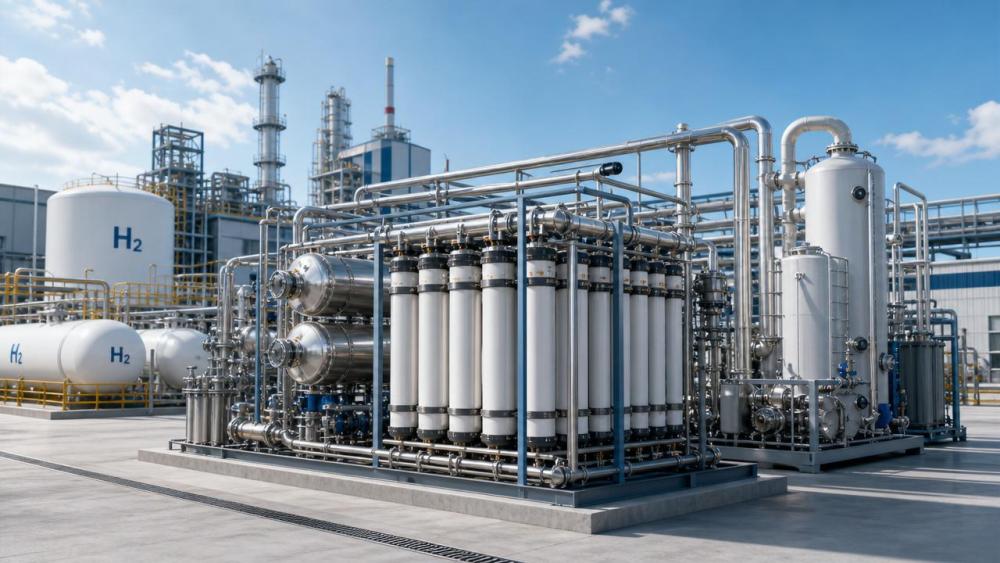
Decarbonization frameworks are structured methods used to assess how technologies contribute to lower-emission industrial systems.
They combine policy direction, engineering standards, lifecycle metrics, and infrastructure compatibility into one decision architecture.
For carbon membranes, these frameworks matter because membrane value depends on context, not material performance alone.
A membrane may show excellent selectivity in testing, yet still underperform strategically if transport systems, purity standards, or capture economics are misaligned.
In hydrogen and CCUS infrastructure, decarbonization frameworks usually examine five dimensions.
- Carbon reduction impact across the full process chain
- Compatibility with safety and pressure requirements
- Energy efficiency under industrial operating loads
- Asset longevity and maintenance exposure
- Alignment with international certification pathways
This definition is especially relevant to multidisciplinary platforms such as G-HEI.
Its benchmark scope spans electrolysis, cryogenic hydrogen logistics, hydrogen-ready turbines, CCUS assets, and high-pressure refueling systems.
In that environment, decarbonization frameworks function as an investment filter across connected infrastructure rather than isolated components.
Why decarbonization frameworks now influence market attention
Global energy transition planning has moved from pilot logic to sovereign-scale system design.
This shift raises the importance of technologies that can integrate into transport, storage, conversion, and emissions-control networks.
Carbon membrane investment receives stronger attention when decarbonization frameworks highlight three current realities.
Decarbonization frameworks also expose the difference between short-term performance and long-term bankability.
A carbon membrane designed for a static plant may not fit dynamic loads from renewable-linked hydrogen production.
Likewise, a capture system with good lab economics may face integration losses in cryogenic or high-pressure infrastructure.
Because of this, decarbonization frameworks have become practical tools for reducing strategic blind spots.
Investment value created by decarbonization frameworks
The strongest investment case appears when decarbonization frameworks convert technical uncertainty into comparable decision criteria.
That comparison supports portfolio discipline across sectors with very different operating conditions.
Risk visibility
Decarbonization frameworks reveal whether membrane assets depend on unstable policy incentives or durable industrial demand.
They also clarify exposure to pressure cycling, contamination, thermal stress, and retrofit complexity.
Capital prioritization
When multiple technologies compete for funding, decarbonization frameworks rank them by system contribution, not by isolated novelty.
This is critical in combined hydrogen and CCUS planning, where infrastructure interdependence shapes returns.
Compliance confidence
Framework-driven evaluation links materials and process units to standards pathways such as ISO 19880, ASME B31.12, and related safety regimes.
That improves readiness for permitting, insurance review, and cross-jurisdiction deployment.
Lifecycle value
Good decarbonization frameworks consider energy penalty, replacement intervals, maintenance access, and degradation over time.
These factors strongly influence the real economic performance of carbon membrane infrastructure.
Typical carbon membrane scenarios under decarbonization frameworks
Carbon membranes are not evaluated the same way across every zero-carbon pathway.
Decarbonization frameworks become useful when they separate use cases by function, operating intensity, and infrastructure dependency.
In each scenario, decarbonization frameworks help determine whether membrane deployment is strategic, transitional, or premature.
That distinction matters in sectors where infrastructure replacement cycles are long and asset integrity standards are strict.
Practical assessment criteria for integrated infrastructure decisions
A useful screening process should keep decarbonization frameworks close to field conditions.
Purely theoretical scoring often misses the operational constraints that shape actual project value.
- Measure separation performance under realistic pressure, temperature, and contaminant ranges.
- Map membrane outputs to downstream hydrogen, CCUS, or turbine system requirements.
- Check compatibility with material integrity, leak prevention, and maintenance protocols.
- Model energy penalty against avoided emissions, not efficiency in isolation.
- Review standards alignment early to reduce redesign and approval delays.
- Evaluate replacement frequency because membrane economics can weaken through downtime exposure.
For multidisciplinary benchmarking environments like G-HEI, these criteria become more powerful when compared across adjacent asset classes.
A membrane should not only perform well alone.
It should strengthen the broader zero-carbon architecture linking production, transport, storage, conversion, and utilization.
Common mistakes when using decarbonization frameworks
Even strong decarbonization frameworks can be misused if teams reduce them to emissions accounting alone.
That approach often ignores infrastructure interoperability and material risk.
- Treating pilot data as proof of grid-scale or sovereign-scale readiness.
- Ignoring standards pathways until late-stage engineering.
- Overvaluing capture rate without modeling energy and maintenance burden.
- Assuming hydrogen-era applications share the same membrane stress profile.
- Missing the value of integrated benchmarking across electrolyzers, logistics, and CCUS networks.
Avoiding these mistakes improves investment discipline and makes decarbonization frameworks more credible in strategic planning.
Next-step direction for carbon membrane evaluation
The future of carbon membrane investment will be shaped by how well assets fit sovereign decarbonization pathways.
Decarbonization frameworks provide the structure to test that fit across technical performance, infrastructure compatibility, and regulatory durability.
A practical next step is to build a benchmark matrix using hydrogen purity targets, CCUS capture thresholds, safety standards, and lifecycle energy intensity.
That matrix can quickly identify where carbon membranes support near-term deployment and where further validation is still necessary.
In an era defined by zero-carbon infrastructure, decarbonization frameworks are no longer optional reference tools.
They are becoming the operating logic behind resilient capital allocation.
Related News
- Decarbonization Technology Gaps That Delay Final InvestmentApr 27, 2026Explore decarbonization technology gaps delaying final investment in sustainable energy, from PEM electrolysis and hydrogen storage to CCUS infrastructure and hydrogen-ready assets.
- Japan Tightens JIS Rule for Carbon Capture MembranesJul 14, 2026Japan tightens JIS rule for Carbon Capture Membranes, requiring 72-hour stability at 8.5 MPa for CCUS certification. See how it impacts bids, suppliers, and market access now.
- Pre Combustion Capture vs Membranes: Which Setup Fits Industrial Decarbonization?Jul 14, 2026Pre combustion capture vs membranes: discover which setup best fits industrial decarbonization, hydrogen integration, retrofit limits, and long-term CCUS performance.
- Japan Tightens CO2 Membrane Test Under Revised JISJul 13, 2026Japan tightens CO2 membrane testing under revised JIS K 7280:2026. Learn the new 72-hour 8 MPa requirement, compliance risks, and what exporters must review before October 2026.
Related News
- 00
0000-00
Hydrogen Energy Storage for Data Centers Gets Costly Fast - 00
0000-00
When 99.999% Hydrogen Purity Still Is Not Good Enough - 00
0000-00
When Does a Hydrogen-Ready Gas Turbine Pay Off? - 00
0000-00
Electricity Price Volatility Is Rewriting Hydrogen Cost Models - 00
0000-00
PSA Recovery Rate Drops for Reasons Operators Miss
Industry Global
Weekly Insights
Stay ahead with our curated technology reports delivered every Monday.