
Policy and Regulation Updates Affecting Carbon Capture Permits




Policy and Regulation Updates Affecting Carbon Capture Permits
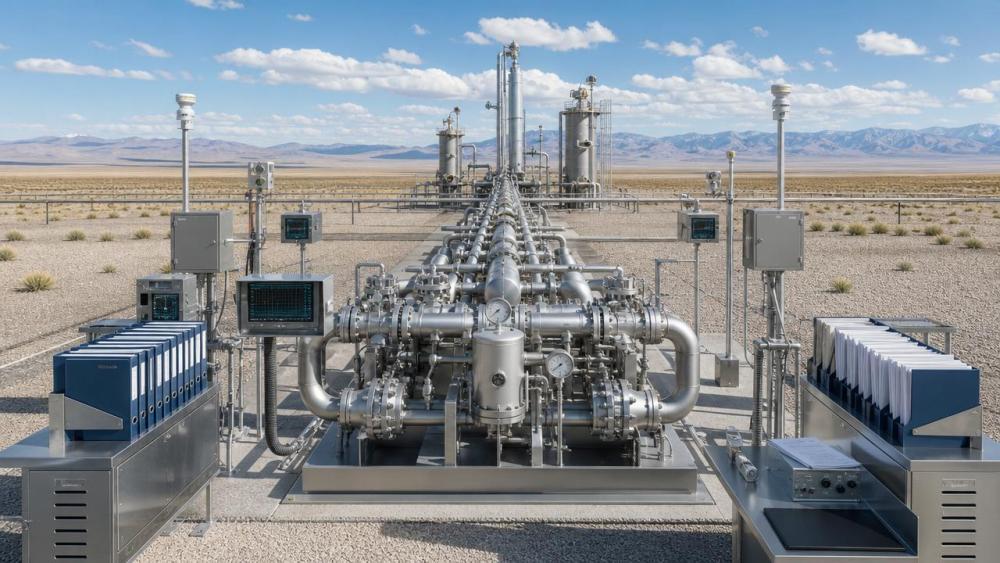
Carbon capture permitting is no longer a late-stage compliance task. It now shapes schedules, financing, site selection, engineering documentation, and cross-border infrastructure decisions.
Recent policy and regulation updates are redefining storage integrity, emissions accountability, pipeline safety, pore-space rights, monitoring duties, and long-term liability management.
This guide translates policy and regulation updates into practical checks for CCUS projects, helping technical teams align design choices with evolving decarbonization requirements.
Why Policy and Regulation Updates Require a Checklist Approach
Carbon capture, utilization, and storage projects involve multiple permitting tracks. Air permits, Class VI storage approvals, pipeline authorizations, and environmental reviews rarely move together.
Policy and regulation updates can change one approval pathway while leaving another unchanged. This creates hidden sequencing risks during FEED, procurement, and final investment decisions.
A checklist reduces interpretation gaps. It converts regulatory change into verifiable actions, responsible owners, evidence files, and decision gates.
For integrated hydrogen, power, industrial, and CCUS assets, this discipline is essential. Permits must support both current capture operations and future zero-carbon infrastructure expansion.
Core Checklist for Carbon Capture Permit Readiness
Use this checklist when reviewing policy and regulation updates that may affect new applications, permit amendments, or expansion approvals.
- Map every permit pathway, including capture facility approvals, injection wells, pipelines, storage leases, water use, environmental review, and decommissioning obligations.
- Verify whether recent policy and regulation updates changed application content, public consultation timing, technical modeling standards, or agency review authority.
- Confirm storage-site characterization data, including caprock integrity, pressure response, seismic risk, plume migration, geochemistry, and legacy well inventories.
- Align monitoring, reporting, and verification plans with current emissions-accounting rules, crediting requirements, leakage thresholds, and data-retention periods.
- Review CO₂ pipeline routing against updated safety setbacks, emergency response expectations, fracture-control criteria, and community notification requirements.
- Document ownership and access rights for pore space, surface facilities, pipeline corridors, monitoring wells, and long-term stewardship responsibilities.
- Test financial assurance models against new closure-cost assumptions, liability transfer rules, post-injection monitoring duration, and inflation-indexed security requirements.
- Update stakeholder records, including consultation evidence, environmental justice screening, indigenous engagement, landowner notices, and agency correspondence logs.
- Link engineering drawings, risk assessments, and operating procedures to permit commitments so design changes do not break regulatory assumptions.
- Create an escalation trigger when policy and regulation updates affect schedule float, financing conditions, offtake contracts, or tax-credit eligibility.
Key Policy and Regulation Updates to Watch
Storage Integrity and Class VI-Type Permitting
Many jurisdictions are tightening geological storage requirements. Applications increasingly need stronger site characterization and clearer proof of containment over long operating horizons.
Policy and regulation updates may expand the area of review, require updated pressure modeling, or demand additional legacy well remediation evidence before approval.
Permit files should explain how injection rates, reservoir capacity, caprock behavior, and monitoring systems remain compatible under credible operating scenarios.
Emissions Accounting and Carbon Credit Eligibility
Carbon capture permits increasingly interact with carbon markets, tax incentives, product carbon intensity rules, and national greenhouse gas inventories.
Recent policy and regulation updates often require tighter mass-balance calculations, verified metering, lifecycle emissions boundaries, and clear treatment of vented or recycled CO₂.
A permit strategy should not rely only on capture percentage. It must prove measurable, reportable, and verifiable abatement across the project boundary.
Pipeline Safety and CO₂ Transport Rules
CO₂ transport is receiving closer regulatory attention after incidents involving dense-phase releases, dispersion behavior, terrain effects, and emergency response planning.
Policy and regulation updates may affect material selection, fracture propagation control, odorization debates, block valve spacing, and public safety documentation.
Permitting teams should coordinate pipeline engineering with land access, route alternatives, hazard modeling, and local responder training before formal submission.
Long-Term Liability and Stewardship
Long-term responsibility remains one of the most important CCUS permitting questions. Rules differ across countries, states, provinces, and regional storage regimes.
Policy and regulation updates may define when liability transfers, how stewardship funds are calculated, and what evidence supports site closure.
Permit documentation should connect technical closure criteria with financial assurance, monitoring results, corrective-action plans, and regulator acceptance milestones.
Application Scenarios Across Industrial and Energy Projects
Hydrogen Production with Integrated CCUS
Hydrogen projects using natural gas reforming with carbon capture face both clean-hydrogen certification rules and CO₂ storage permitting requirements.
Policy and regulation updates can affect carbon intensity thresholds, eligible capture rates, upstream methane accounting, and rules for shared transport infrastructure.
Permit strategies should integrate hydrogen product claims with verified CO₂ disposition, not treat CCUS evidence as a separate back-office record.
Power Generation and Hydrogen-Ready Gas Turbines
Gas-fired power assets adding capture units must evaluate air permit changes, water demand, waste streams, and grid reliability obligations.
Policy and regulation updates may also influence eligibility for capacity payments, clean power standards, and compliance pathways for hydrogen blending.
Engineering records should show how capture performance, turbine operation, and CO₂ compression loads behave during ramping and seasonal dispatch.
Industrial Clusters and Shared CO₂ Hubs
Industrial clusters depend on shared pipelines, common injection sites, and synchronized commercial commitments. One delayed permit can affect several connected emitters.
Policy and regulation updates should be reviewed at cluster level, especially where multiple parties share measurement points, liability exposure, and storage capacity.
A central permitting matrix helps align emitter schedules, pipeline readiness, compression specifications, and storage-well commissioning windows.
Commonly Overlooked Permit Risks
Assuming Old Guidance Still Controls
Regulatory guidance can change faster than statutory language. Relying on an older agency checklist can create incomplete technical submissions.
Track policy and regulation updates through agency notices, consultation papers, enforcement trends, court decisions, and delegated authority changes.
Underestimating Public Participation Requirements
Public consultation is becoming more detailed for CO₂ pipelines and storage sites, especially where environmental justice screening applies.
Engagement records should show issue tracking, technical responses, route changes, emergency planning, and documented follow-up after public meetings.
Separating Permits from Engineering Change Control
A compressor upgrade, injection-rate revision, or monitoring-well relocation can invalidate assumptions used in earlier permit materials.
Every design change should trigger a permit-impact review, especially after policy and regulation updates introduce stricter technical thresholds.
Ignoring Cross-Border Infrastructure Effects
CO₂ networks may cross jurisdictions with different safety rules, ownership models, tax incentives, and environmental review timelines.
Cross-border projects need a unified compliance map that identifies the most restrictive requirement affecting design, documentation, and commissioning.
Practical Execution Framework
The following execution framework converts policy and regulation updates into routine project controls.
- Assign a regulatory owner for each permit package and require monthly confirmation that no material policy change has been missed.
- Build a permit register covering authority, submission date, evidence owner, review status, dependency, expiry date, and amendment trigger.
- Hold design-permit interface reviews at concept selection, FEED freeze, procurement release, construction start, and commissioning readiness.
- Maintain a live evidence library for modeling files, monitoring plans, land records, consultation logs, and agency technical comments.
- Quantify schedule exposure when policy and regulation updates affect baseline studies, public notice periods, or supplemental technical submissions.
- Prepare alternate scenarios for injection rate, storage capacity, pipeline route, and phased commissioning if approvals arrive out of sequence.
Decision Table for Fast Permit Screening
Summary and Next Actions
Carbon capture permits now sit at the center of infrastructure planning, financial certainty, and decarbonization credibility.
Policy and regulation updates can alter technical evidence, commercial eligibility, and stakeholder obligations after a project has already committed capital.
Begin with a permit pathway map, then test each approval against storage integrity, emissions accounting, pipeline safety, and long-term liability.
Next, connect the checklist to engineering change control and schedule governance. This turns policy and regulation updates into manageable project decisions.
The strongest CCUS permit strategy is proactive, documented, and technically defensible before formal questions arrive from regulators, financiers, or infrastructure partners.
Related News
- Decarbonization Technology Gaps That Delay Final InvestmentApr 27, 2026Explore decarbonization technology gaps delaying final investment in sustainable energy, from PEM electrolysis and hydrogen storage to CCUS infrastructure and hydrogen-ready assets.
- When does a modular CO2 capture system reduce project lead time?Oct 14, 2026Discover when a modular CO2 capture system cuts project lead time through parallel fabrication, faster installation, and smarter CCUS integration.
- Japan Tightens JIS Rule for Carbon Capture MembranesJul 14, 2026Japan tightens JIS rule for Carbon Capture Membranes, requiring 72-hour stability at 8.5 MPa for CCUS certification. See how it impacts bids, suppliers, and market access now.
- Pre Combustion Capture vs Membranes: Which Setup Fits Industrial Decarbonization?Jul 14, 2026Pre combustion capture vs membranes: discover which setup best fits industrial decarbonization, hydrogen integration, retrofit limits, and long-term CCUS performance.
Related News
- 00
0000-00
Hydrogen Energy Storage for Data Centers Gets Costly Fast - 00
0000-00
When 99.999% Hydrogen Purity Still Is Not Good Enough - 00
0000-00
When Does a Hydrogen-Ready Gas Turbine Pay Off? - 00
0000-00
Electricity Price Volatility Is Rewriting Hydrogen Cost Models - 00
0000-00
PSA Recovery Rate Drops for Reasons Operators Miss
Industry Global
Weekly Insights
Stay ahead with our curated technology reports delivered every Monday.