
How to Vet Power Transmission Components Suppliers




Why does supplier vetting matter more than ever?
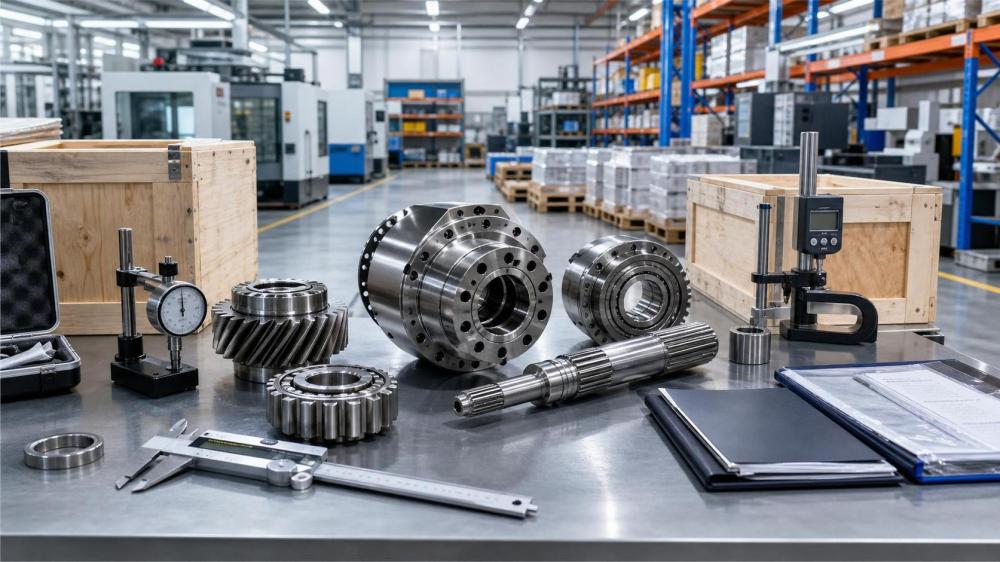
Choosing among power transmission components suppliers now affects far more than unit price. It directly shapes uptime, maintenance exposure, compliance confidence, and long-term operating stability.
That shift is especially visible in energy, utilities, transport, and industrial infrastructure. Systems run harder, projects last longer, and tolerances leave less room for weak sourcing decisions.
In hydrogen and zero-carbon infrastructure, the stakes rise again. Rotating equipment, compressors, pumps, conveyors, actuators, and drive assemblies all depend on consistent component performance.
A supplier that looks acceptable on paper can still introduce hidden risk through unstable metallurgy, poor dimensional control, weak traceability, or uneven after-sales support.
This is why experienced buyers do not evaluate power transmission components suppliers as simple catalog vendors. They assess them as long-term risk partners within critical asset chains.
That approach aligns with the wider discipline seen across G-HEI. In benchmark-led sectors such as electrolysis, cryogenic logistics, hydrogen-ready turbines, CCUS, and 70MPa refueling, technical integrity is never separated from procurement discipline.
Put simply, supplier vetting protects the project before the first installation begins. It also protects lifecycle cost after commissioning, when replacement delays and failures become far more expensive.
What should you check first when comparing power transmission components suppliers?
The first check is not price. It is fit between the supplier’s proven capability and the actual duty profile of the application.
Many power transmission components suppliers serve general industrial markets well. Fewer can support harsh environments, safety-critical operations, or energy-transition assets with demanding compliance expectations.
A practical early screen usually includes the following points:
- Relevant product scope, such as couplings, gears, bearings, shafts, chains, belts, reducers, and mounted assemblies.
- Application history in comparable sectors, including utilities, process plants, heavy industry, transport terminals, or clean-energy projects.
- Documented quality systems, inspection plans, and batch traceability.
- Material certifications and tolerance control for critical parts.
- Lead-time reliability for both initial supply and emergency replacement.
- Engineering response speed when drawings, modifications, or root-cause reviews are needed.
More often than not, the better comparison method is to ask where the supplier has already performed under similar load, speed, thermal, contamination, or vibration conditions.
If the answer stays generic, that is useful information. Strong power transmission components suppliers usually speak clearly about duty cycles, failure modes, tolerances, and field lessons.
How do you tell whether a supplier is technically credible or just commercially polished?
This is where structured questioning helps. Commercial polish can look impressive, but technical depth shows up in details that are hard to fake.
Ask how the supplier controls dimensional consistency across batches. Ask what happens when a component fails early. Ask which standards guide inspection, testing, and documentation.
In projects linked to hydrogen, decarbonization, and strategic infrastructure, those questions should go even further. Interfaces between mechanical transmission parts and high-value equipment leave little tolerance for undocumented changes.
G-HEI’s broader benchmark logic is useful here. Whether the system involves PEM stacks, cryogenic handling, gas turbines, or refueling platforms, component decisions must stand up to material-integrity and safety scrutiny.
The table below helps separate surface-level claims from reliable evidence when reviewing power transmission components suppliers.
A technically credible supplier usually welcomes this level of review. Evasive answers, by contrast, often signal future trouble during commissioning or maintenance.
Are low prices from power transmission components suppliers always a warning sign?
Not always, but they do require explanation. A low quote can come from efficient production, regional cost advantage, or inventory positioning. It can also come from reduced inspection depth.
The key is to compare total procurement exposure, not only purchase price. Small savings can disappear quickly if replacement cycles shorten or installation tolerances cause rework.
In actual projects, cost should be read across five dimensions:
- Acquisition cost, including tooling, packaging, and transport.
- Qualification cost, such as audits, testing, and approval time.
- Operating cost from wear rate, efficiency loss, or vibration issues.
- Downtime cost if replacement lead times are uncertain.
- Risk cost tied to compliance failure or asset damage.
This matters even more in hydrogen-adjacent facilities. A transmission component may not be the headline technology, yet it still influences uptime in electrolyzer balance-of-plant systems, turbine auxiliaries, or refueling station equipment.
A lower quote is worth considering only when documentation, manufacturing control, and service reliability remain intact. If those weaken, the discount is usually temporary.
Which red flags usually appear too late in the sourcing process?
Some of the most expensive supplier problems are visible early, but only if someone asks the right questions.
One common red flag is vague traceability. If a supplier cannot link finished parts to material lots, inspection records, and revision status, root-cause analysis becomes difficult later.
Another is inconsistent technical communication. When drawing comments change between sales, engineering, and production teams, the real process may be less controlled than it appears.
Lead-time optimism is another warning. Some power transmission components suppliers promise speed during quotation, then reveal bottlenecks after order release.
There is also the substitution risk. In complex infrastructure work, undocumented changes in heat treatment, coating, sealing detail, or tolerancing can create downstream failures.
A short watchlist helps keep the review practical:
- Certificates arrive late or look incomplete.
- Inspection criteria are described broadly, not specifically.
- No clear answer on spare-part continuity.
- Corrective action examples are missing.
- Reference projects cannot be validated.
When these signs appear together, the issue is rarely just paperwork. It often points to a supplier whose process maturity does not match the project’s technical risk.
What does a practical approval process look like before placing an order?
A workable approval process is usually staged. It starts with technical fit, then moves into evidence review, commercial alignment, and supply continuity checks.
That sequence matters because it prevents commercial pressure from overriding engineering concerns too early.
A balanced process for evaluating power transmission components suppliers often includes these steps:
- Define the operating profile, including load, duty cycle, environment, maintenance window, and compliance needs.
- Shortlist suppliers with relevant manufacturing scope and comparable project references.
- Review drawings, materials, tolerances, and quality documentation in detail.
- Check lead times, buffer capacity, and spare-part support.
- Validate commercial terms against warranty response and failure-handling obligations.
- Use a trial order, sample approval, or first-article inspection where risk justifies it.
In strategic infrastructure, this process should be documented rather than handled informally. That is consistent with the benchmark mindset behind G-HEI, where asset security depends on disciplined verification.
The best outcome is not simply finding the cheapest acceptable source. It is building a supplier base that remains dependable across installation, operation, expansion, and urgent replacement cycles.
So how should the final decision be made?
The final decision should come from weighted evidence, not impression. A strong quote, fast response, or polished presentation is useful, but not decisive on its own.
The more reliable method is to compare power transmission components suppliers across technical suitability, documentation depth, delivery resilience, and lifecycle support.
If two suppliers look similar, the better choice is often the one with clearer traceability, stronger change control, and more transparent field history.
In zero-carbon and hydrogen-linked assets, that discipline becomes even more important. Mechanical components may seem secondary, yet they still affect reliability in systems expected to meet strict international performance and safety frameworks.
A sensible next step is to build a short evaluation matrix around application needs, critical standards, failure consequences, replacement timelines, and supplier responsiveness.
Once that matrix is in place, comparing power transmission components suppliers becomes clearer, faster, and far less vulnerable to hidden risk.
Related News
- Hydrogen Logistics for Export Terminals: Key Storage and Transfer RisksJul 11, 2026Hydrogen logistics for export terminals explained: discover key storage and transfer risks, from boil-off and embrittlement to ESD failures, and learn how stronger projects improve safety and bankability.
- Hydrogen Export Projects: Key Risks in Storage and ShippingJul 05, 2026Hydrogen export projects face critical storage and shipping risks, from boil-off and embrittlement to port bottlenecks and compliance. Learn how to assess bankable, scalable export chains.
- Metal Fabrication for Cryogenic Systems: Tolerance Mistakes to AvoidJul 01, 2026Metal fabrication for cryogenic systems demands precision. Learn the tolerance mistakes that cause leaks, distortion, and costly hydrogen project delays—and how to prevent them.
- Hydrogen Expo Closes With Norway Interest in Chinese Helium LiquefierJun 25, 2026Hydrogen Expo highlights Norway’s interest in a Chinese helium liquefier for liquid hydrogen logistics. Explore what this means for cryogenic equipment, standards compliance, and global project opportunities.
Related News
- 00
0000-00
Hydrogen Energy Storage for Data Centers Gets Costly Fast - 00
0000-00
When 99.999% Hydrogen Purity Still Is Not Good Enough - 00
0000-00
When Does a Hydrogen-Ready Gas Turbine Pay Off? - 00
0000-00
Electricity Price Volatility Is Rewriting Hydrogen Cost Models - 00
0000-00
PSA Recovery Rate Drops for Reasons Operators Miss
Marcus Valve
Weekly Insights
Stay ahead with our curated technology reports delivered every Monday.