



As hydrogen moves from pilot projects to sovereign-scale energy systems in 2026, enterprise leaders face policy uncertainty, infrastructure bottlenecks, technology risk, and capital allocation pressure.
Yet the same volatility is creating sovereign hydrogen infrastructure investment opportunities for organizations able to benchmark assets against safety, efficiency, and material-integrity standards.
This article examines the key investment risks shaping national hydrogen strategies and how decision-makers can protect long-term value while positioning for zero-carbon infrastructure growth.
What Enterprise Leaders Are Really Trying to Decide
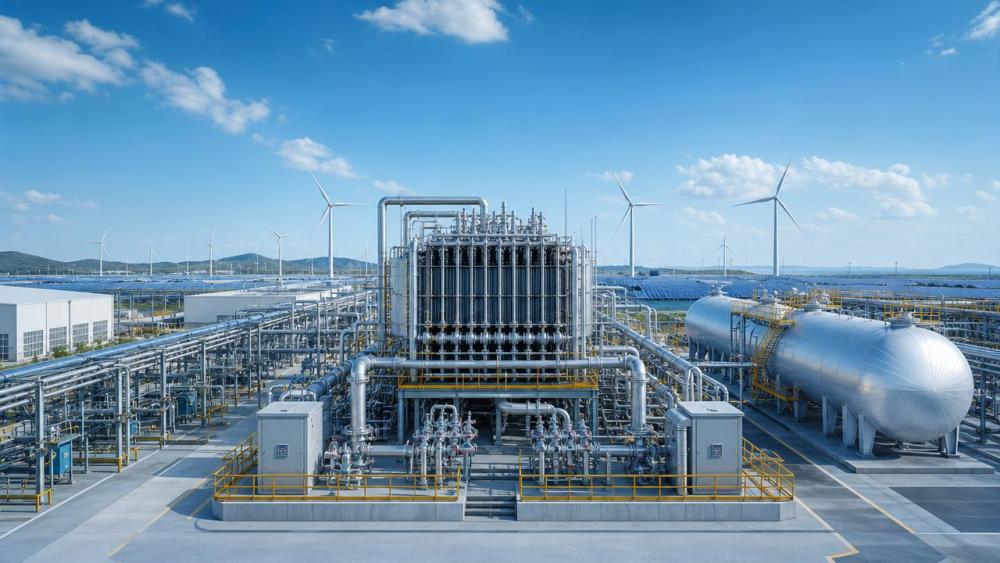
The central question in 2026 is not whether hydrogen will matter. It is where sovereign-scale hydrogen infrastructure can create bankable, defensible value.
For enterprise decision-makers, hydrogen investment is no longer a sustainability narrative. It is a capital allocation decision involving energy security, industrial competitiveness, and asset resilience.
Executives searching for sovereign hydrogen infrastructure investment opportunities usually want to compare risks across production, storage, transport, power generation, and refueling networks.
They also need to know which projects can survive changing subsidies, shifting standards, high interest rates, and uncertain demand from industrial offtakers.
The strongest opportunities are emerging where national policy, grid capacity, industrial demand, safety standards, and long-duration capital align around credible infrastructure corridors.
The 2026 Investment Context: From Demonstration Assets to Sovereign Systems
Hydrogen infrastructure is entering a more demanding phase because governments are moving from isolated pilot projects toward integrated national energy systems.
This transition raises the investment threshold. Assets must now operate safely at scale, interface with power markets, and meet international engineering requirements.
Projects based only on political enthusiasm are becoming harder to finance. Investors increasingly expect transparent utilization assumptions, lifecycle economics, and credible offtake structures.
For sovereign systems, infrastructure value depends on network effects. Electrolyzers, pipelines, storage terminals, turbines, and refueling stations must reinforce one another.
A well-located electrolyzer without storage or transport can become stranded. A hydrogen-ready turbine without reliable fuel supply can become underutilized capital.
This is why 2026 investment diligence must evaluate ecosystems, not single assets. Sovereign hydrogen infrastructure is valuable when it supports dependable industrial decarbonization.
Policy and Sovereign Risk: Incentives Can Create Value or Distort It
Policy remains the largest external variable in hydrogen investment. Subsidies, tax credits, carbon pricing, and procurement mandates can quickly change project economics.
The risk is not simply that incentives may disappear. The deeper risk is that projects may be designed around incentives rather than durable demand.
Enterprise leaders should test whether an asset remains strategically useful under conservative subsidy assumptions. This separates genuine infrastructure from policy-dependent financial engineering.
Sovereign risk also includes permitting delays, local-content rules, water access disputes, import restrictions, and unclear definitions of low-carbon hydrogen.
In cross-border projects, investors must assess certification compatibility. Hydrogen produced under one regulatory regime may not qualify for premiums in another.
The practical solution is staged exposure. Commit capital first to assets with flexible offtake options, modular expansion paths, and defensible compliance frameworks.
Demand Risk: The Weak Link in Many Hydrogen Business Cases
Many hydrogen projects fail investment scrutiny because demand is assumed rather than contracted. Industrial buyers need price certainty, reliability, and technical compatibility.
Steel, ammonia, refining, chemicals, shipping, and heavy transport are attractive demand centers, but each has different conversion economics and operating constraints.
Enterprise investors should distinguish between declared demand and bankable demand. Letters of interest rarely carry the same value as enforceable offtake agreements.
Price tolerance is equally important. Some offtakers support green premiums for strategic reasons, while others require parity with incumbent fuels.
The best sovereign hydrogen infrastructure investment opportunities are usually near demand clusters where multiple buyers can share supply risk and logistics costs.
Investors should also examine whether demand can grow in phases. Early anchor customers can support initial utilization while broader industrial adoption matures.
Technology Risk: Performance Claims Must Survive Real Operating Conditions
Hydrogen technologies are advancing quickly, but investment risk rises when projects rely on unproven performance at utility or national scale.
PEM and alkaline electrolysis systems have different strengths. PEM offers dynamic response, while alkaline systems may provide cost advantages in steadier operations.
The right choice depends on electricity profile, water quality, load factor, maintenance strategy, and required purity for downstream applications.
Technology diligence should examine stack degradation, replacement intervals, power conversion efficiency, heat management, water treatment, and system availability.
For cryogenic liquid hydrogen logistics, investors must evaluate boil-off management, insulation integrity, transfer losses, and emergency response requirements.
For hydrogen-ready gas turbines, the central risks are combustion stability, nitrogen oxide management, blending limits, and future conversion pathways.
For high-pressure refueling systems, reliability depends on compression performance, dispenser accuracy, storage cascade design, and compliance with protocols such as SAE J2601.
Material Integrity and Safety: The Non-Negotiable Investment Filter
Hydrogen is not just another energy carrier. Its small molecular size, flammability range, and embrittlement behavior create specific engineering risks.
Pipelines, valves, compressors, storage vessels, and fittings must be assessed for pressure cycling, leakage pathways, fatigue, and material compatibility.
Standards such as ASME B31.12, ISO 19880, and related national codes are becoming central to asset bankability.
Investors should view compliance as a value protection mechanism, not a procedural burden. Safety credibility reduces insurance, permitting, and reputational risk.
Material-integrity failures can destroy investment value faster than market volatility. They can trigger shutdowns, litigation, regulatory intervention, and public opposition.
A rigorous safety case should include hazard analysis, inspection planning, emergency response design, digital monitoring, and clear accountability across operators.
Infrastructure Bottlenecks: Where Capital Can Be Trapped or Multiplied
Hydrogen infrastructure often fails where interfaces are weak. Production, storage, transport, and end use must be synchronized to avoid stranded capacity.
Grid connection is a major bottleneck for electrolysis. Low-cost renewable power is valuable only when transmission, curtailment access, and balancing are realistic.
Water availability can also constrain projects, especially in regions where public acceptance depends on responsible resource management and desalination planning.
Storage is frequently underestimated. Seasonal demand, intermittent renewable generation, and industrial reliability requirements all increase the need for buffer capacity.
Transport choices require careful comparison. Pipelines, tube trailers, ammonia conversion, methanol pathways, and liquid hydrogen each change economics and risk.
Capital can be multiplied when infrastructure serves multiple markets. Shared corridors reduce unit costs and improve utilization across industrial, power, and mobility demand.
Financial Risk: The New Discipline of Hydrogen Capital Allocation
Hydrogen projects are capital intensive, and higher financing costs have made weak assumptions more visible in 2026 investment committees.
Decision-makers should pressure-test capital expenditure, operating cost, electricity price exposure, equipment replacement schedules, and ramp-up utilization.
The levelized cost of hydrogen is useful, but insufficient. Investors also need delivered cost, storage-adjusted cost, and reliability-adjusted cost.
Revenue models should include contracted offtake, grid services, carbon credits, capacity payments, strategic reserves, or industrial decarbonization premiums where applicable.
Projects with only one revenue source are more fragile. Diversified value streams can improve resilience, especially during early market formation.
Enterprise leaders should also evaluate exit options. Infrastructure that can serve multiple hydrogen colors, carriers, or end markets usually retains better optionality.
How to Identify Strong Sovereign Hydrogen Infrastructure Investment Opportunities
The strongest opportunities share several characteristics: policy alignment, anchor demand, expandable infrastructure, proven technology, and credible safety certification.
Location is often the decisive factor. Projects near ports, industrial clusters, renewable generation, storage sites, or heavy transport corridors have structural advantages.
Scalability matters, but premature oversizing can destroy returns. Modular design allows investors to match capacity additions with verified demand.
Interoperability is another investment signal. Assets designed around recognized standards can connect more easily with future networks and international supply chains.
Strategic investors should favor platforms over isolated assets. Platforms can integrate electrolysis, storage, logistics, refueling, and power applications over time.
G-HEI’s benchmarking approach reflects this reality by comparing infrastructure against technical, safety, efficiency, and material-integrity requirements across the hydrogen value chain.
A Practical Decision Framework for 2026 Investment Committees
Investment committees should begin by defining the strategic role of hydrogen. The asset may support decarbonization, energy security, industrial retention, or export growth.
Next, evaluate market certainty. Identify anchor buyers, pricing structures, contract duration, volume flexibility, and penalties for non-delivery.
Then review technical maturity. Confirm supplier track records, operating references, maintenance obligations, degradation assumptions, and warranty enforceability.
Safety and compliance should be reviewed before financial approval, not after. Late-stage redesigns can damage schedule, cost, and credibility.
Financial modeling should include downside cases. Committees should test lower utilization, delayed subsidies, higher power prices, and slower demand adoption.
Finally, assess strategic optionality. The best assets can adapt to new standards, additional carriers, different end users, and changing national priorities.
What to Deprioritize: Avoiding Attractive but Weak Hydrogen Narratives
Enterprise leaders should be cautious with projects that emphasize scale without demonstrating utilization, compliance, or integration with demand.
They should also question claims based only on future cost declines. Learning curves are real, but they cannot replace executable business models.
Another warning sign is excessive dependence on one policy mechanism. A resilient project should not collapse when incentives change or reporting rules tighten.
Technology novelty should not be confused with investment quality. In sovereign infrastructure, reliability, maintainability, and certification often matter more than innovation headlines.
Finally, avoid fragmented assets that cannot connect into wider networks. Hydrogen economics improve through corridors, clusters, and shared infrastructure.
Conclusion: Risk Management Is the Path to Hydrogen Value
In 2026, sovereign hydrogen infrastructure investment is defined by both opportunity and discipline. The market rewards ambition only when supported by rigorous execution.
The most attractive projects are not necessarily the largest or most publicized. They are the assets that combine demand, standards, safety, and flexibility.
For enterprise decision-makers, the priority is to separate strategic infrastructure from subsidy-driven speculation. That requires technical benchmarking and realistic commercial diligence.
Sovereign hydrogen infrastructure investment opportunities will expand as national energy systems decarbonize, but value will concentrate in assets built for long-term resilience.
Organizations that evaluate hydrogen through policy, demand, technology, safety, and network integration will be better positioned to protect capital and lead the transition.