Improving Cryogenic Hydrogen Thermal Efficiency




As liquid hydrogen becomes central to zero-carbon energy transport, technical evaluators must look beyond storage capacity and assess the real performance losses caused by boil-off, heat ingress, transfer cycles, and material constraints. Improving thermal management efficiency for cryogenic hydrogen systems is now a decisive factor in infrastructure reliability, asset economics, and sovereign-scale energy security. This article examines the engineering priorities, benchmarking criteria, and system-level strategies required to reduce thermal losses while maintaining safety, compliance, and operational resilience across next-generation hydrogen logistics networks.
For ministries, utility CTOs, port authorities, and investment teams, the question is no longer whether liquid hydrogen can be stored. The sharper question is whether it can be stored, transferred, and dispatched with predictable losses across 24-hour, 7-day, and multi-month operating cycles.
Why Cryogenic Hydrogen Thermal Losses Define Asset Performance
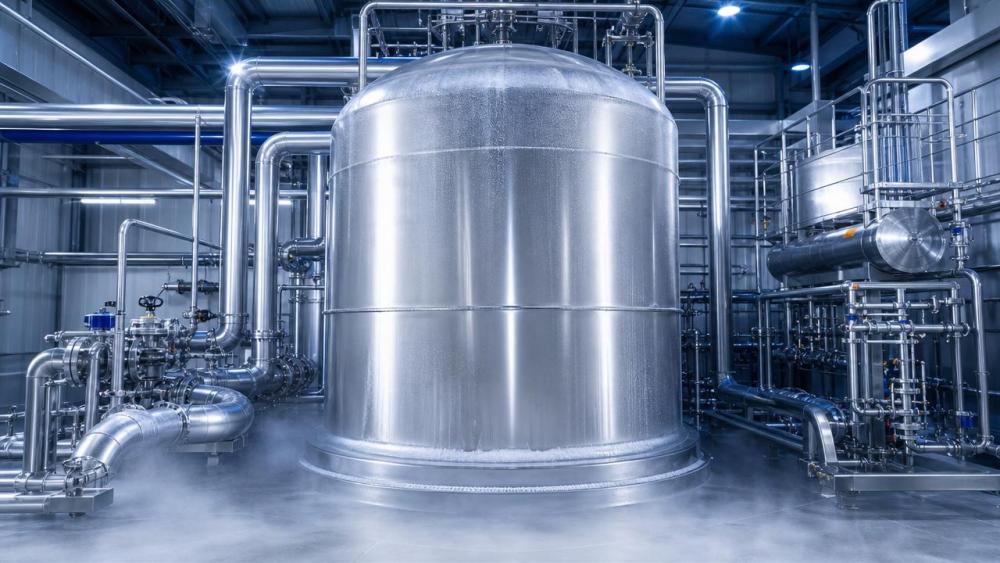
Liquid hydrogen is typically handled near 20 K, where even small heat ingress can create measurable boil-off. A storage asset that appears competitive by capacity alone may underperform if insulation, piping, valves, and operating routines are not assessed together.
Technical evaluators should treat thermal management efficiency for cryogenic hydrogen systems as a system-level metric, not as a tank-only specification. Losses occur during liquefaction interface, storage standby, pump cooldown, transfer connection, loading, unloading, and pressure control.
Key loss mechanisms to quantify
- Static heat leak through vessel walls, supports, penetrations, and instrumentation ports.
- Dynamic heat input during transfer cycles, including hose cooldown and pump recirculation.
- Pressure management losses caused by venting, relief events, or inadequate vapor handling.
- Thermal degradation from vacuum loss, multilayer insulation compression, or moisture contamination.
- Operational losses caused by low utilization, long dwell times, and poorly sequenced dispatch.
In large infrastructure programs, a 0.1%–0.3% daily boil-off range can be acceptable for certain stationary applications, while more demanding logistics chains may require tighter control. The benchmark depends on vessel scale, duty cycle, safety philosophy, and downstream hydrogen demand.
Why evaluators need a total-cycle view
A high-performance cryogenic vessel can still deliver weak economics if transfer losses occur 3–5 times per day. Conversely, a moderate standby loss may be acceptable if dispatch planning minimizes cooldown frequency and stabilizes pressure behavior.
G-HEI benchmarking encourages decision-makers to compare assets across complete operating envelopes. This includes 8-hour peak cycles, 24-hour standby windows, 30-day inventory scenarios, emergency isolation, and recovery after planned maintenance.
Benchmarking Criteria for Technical Evaluation
Procurement teams often receive vendor claims expressed as insulation type, design pressure, or nominal capacity. These data points are useful, but they do not fully prove thermal management efficiency for cryogenic hydrogen systems under real operating conditions.
The following table organizes practical evaluation criteria for sovereign-scale liquid hydrogen logistics, especially where assets must align with ISO 19880, ASME B31.12, SAE J2601 principles, and local safety codes.
The strongest bids normally provide measured data, test boundaries, and operating assumptions. A claim of low boil-off is incomplete without vessel fill level, ambient condition, pressure range, test duration, and transfer frequency.
Minimum documentation package
- Process flow diagram covering liquid, vapor, vent, purge, and emergency isolation paths.
- Thermal balance for standby, transfer, cooldown, and abnormal pressure scenarios.
- Material compatibility statement for cryogenic hydrogen exposure and cyclic stress.
- Inspection and maintenance plan for vacuum integrity, valves, seals, and relief devices.
- Factory acceptance and site acceptance procedures with measurable pass criteria.
For major programs, evaluators should request at least 3 operating cases: low utilization, nominal dispatch, and peak turnover. This avoids selecting equipment optimized only for a narrow laboratory condition.
Common benchmarking mistake
A frequent error is comparing boil-off percentages without comparing tank size. A 250 m³ vessel and a 5,000 m³ terminal tank may show different percentages because surface-area-to-volume ratio changes the thermal balance.
Engineering Strategies to Improve Thermal Management Efficiency
Improving thermal management efficiency for cryogenic hydrogen systems requires coordinated design choices. Insulation, material selection, control logic, transfer architecture, and operator behavior must be aligned from early front-end engineering.
Insulation and vessel architecture
Vacuum-jacketed construction with multilayer insulation remains central for liquid hydrogen storage. However, insulation performance depends on installation quality, support design, penetration count, and long-term vacuum stability under vibration and thermal cycling.
For evaluation, request heat-leak data at representative fill levels, such as 25%, 50%, and 90%. Partial-fill behavior matters because many import terminals and refueling depots operate below nameplate capacity during ramp-up periods.
Transfer-cycle optimization
Transfers can dominate losses when equipment is frequently cooled and warmed. A 15-minute cooldown repeated 6 times per shift may generate more operational penalty than expected from a simple daily boil-off figure.
- Group deliveries into fewer, larger transfers where downstream demand allows.
- Use optimized cooldown sequences to reduce cold gas venting.
- Specify low-thermal-mass connectors for mobile and modular applications.
- Monitor transfer efficiency using mass-in, mass-out, and residual vapor calculations.
Pressure and vapor management
Vapor is not always waste. In integrated hydrogen hubs, boil-off gas can support fuel cell auxiliary loads, gas turbine blending, reliquefaction, or controlled compression. The best option depends on scale and utilization.
For facilities above several tonnes per day of hydrogen throughput, vapor recovery should be evaluated as part of the base architecture. Smaller sites may prioritize safe, predictable vent management and fewer mechanical subsystems.
Material-integrity considerations
Thermal efficiency cannot compromise safety. Stainless steels, aluminum alloys, seals, gaskets, and composite interfaces must be assessed for cryogenic toughness, hydrogen compatibility, permeability, and repeated thermal contraction.
A technically credible design should show how materials behave across startup, shutdown, emergency depressurization, and maintenance cycles. This is especially important for assets expected to operate for 20–30 years.
Operational Controls, Monitoring, and Maintenance Priorities
Once assets enter service, thermal management efficiency for cryogenic hydrogen systems depends heavily on monitoring discipline. Operators need fast visibility into heat ingress, vacuum degradation, pressure drift, and transfer anomalies.
The table below summarizes operational controls that technical evaluators can include in specifications, commissioning plans, and service-level agreements for cryogenic hydrogen infrastructure.
The key conclusion is that measurement architecture must be specified before procurement. Retrofitting sensors after commissioning often costs more and may leave important loss pathways invisible for months.
5-step implementation workflow
- Define the duty cycle: storage duration, transfer frequency, peak flow, and acceptable loss threshold.
- Build a thermal balance covering standby, cooldown, transfer, pressure control, and upset cases.
- Specify equipment using measurable acceptance criteria rather than descriptive vendor language.
- Commission with 72-hour stability tests and at least 2 representative transfer events.
- Review monthly performance data and update operating procedures based on measured losses.
This workflow helps convert engineering assumptions into operational evidence. It also gives procurement committees a defensible basis for comparing bids with different vessel designs, control packages, and service models.
Maintenance practices that protect efficiency
Maintenance plans should include valve seat inspection, relief-device verification, insulation surface checks, sensor calibration, and vacuum integrity review. Many facilities use 6-month and 12-month service intervals, adjusted by operating intensity.
Frost patterns, unexplained pressure rise, longer cooldown times, or abnormal venting should trigger a root-cause review. These indicators often reveal degraded insulation, procedural drift, or component wear before major downtime occurs.
Procurement Risks and Selection Guidance for Hydrogen Infrastructure
Technical evaluation teams must balance thermal efficiency, safety, schedule, maintainability, and lifecycle cost. Selecting only the lowest capital price can create higher losses, more venting, and reduced hydrogen availability over 10–20 years.
Questions to ask before awarding a contract
- What assumptions support the stated boil-off or heat-leak value?
- How does the system perform at 30%, 60%, and 90% fill level?
- Can vapor be recovered, reused, compressed, or safely routed under peak conditions?
- Which inspections are required after transport, installation, seismic event, or emergency shutdown?
- What data will be available to the owner during the first 90 days of operation?
These questions reveal whether bidders understand operational reality. They also help align thermal management efficiency for cryogenic hydrogen systems with financial modeling, risk allocation, and long-term asset governance.
Fit-for-purpose selection by application
A port import terminal, a power generation buffer, and a high-pressure refueling hub do not need the same configuration. Each has different storage duration, transfer rhythm, pressure control requirement, and emergency response profile.
For a utility-scale power site, stable dispatch to hydrogen-ready gas turbines may be the priority. For a refueling corridor, rapid transfer and connection reliability may dominate. For national reserves, low standby loss over weeks becomes critical.
Risk controls for decision committees
Decision committees should require a risk register with at least 4 categories: safety compliance, thermal performance, material integrity, and operational availability. Each risk should include mitigation, owner responsibility, and acceptance evidence.
Contract language should define performance testing, data ownership, maintenance response time, spare parts strategy, and consequences for failing agreed acceptance criteria. Clear metrics reduce disputes during commissioning and early operation.
Building a Sovereign-Scale Thermal Efficiency Roadmap
Improving thermal management efficiency for cryogenic hydrogen systems is not a single equipment purchase. It is a roadmap linking electrolyzer output, liquefaction interface, storage terminals, mobile logistics, refueling assets, and end-use conversion.
G-HEI supports this roadmap by helping technical evaluators benchmark assets against international safety, material-integrity, and efficiency expectations. The objective is practical: fewer hidden losses, stronger compliance, and more reliable zero-carbon energy delivery.
What a robust roadmap should include
- A 3-stage maturity model covering pilot assets, commercial deployment, and national-scale replication.
- A shared performance vocabulary for boil-off, heat ingress, vapor recovery, and transfer efficiency.
- A digital data framework that captures temperatures, pressures, mass flow, alarms, and maintenance events.
- A procurement checklist that links technical parameters to lifecycle cost and safety obligations.
- A periodic review cycle, typically quarterly during the first year and annually after stabilization.
When these elements are in place, stakeholders can compare technologies on evidence rather than slogans. This is essential as hydrogen infrastructure moves from demonstration projects to strategic national energy systems.
Cryogenic hydrogen efficiency will shape the bankability and resilience of future zero-carbon networks. Technical teams that quantify losses early, specify measurable performance, and integrate vapor management will reduce both operational risk and lifecycle cost.
For infrastructure owners, ministries, and enterprise evaluators planning next-generation hydrogen logistics, G-HEI provides a structured benchmarking lens across cryogenic storage, transfer systems, safety standards, and asset governance. To assess your project requirements or compare competing technical proposals, contact us to obtain a customized evaluation framework and explore more hydrogen infrastructure solutions.
Related News
- Hydrogen Storage Choices Get Costly at Utility ScaleApr 27, 2026Hydrogen storage drives utility-scale power costs in the energy transition. Explore hydrogen economy trade-offs across PEM electrolysis, cryogenic liquid hydrogen, transport, and decarbonization technology.
- Cryogenic Liquid Hydrogen Storage Has a Boil-Off ProblemApr 27, 2026Cryogenic liquid hydrogen and hydrogen storage face a major boil-off challenge shaping the hydrogen economy, hydrogen transport, and zero-carbon infrastructure—see practical insights for safer, scalable decarbonization.
- Liquid Hydrogen Tank Selection: Sizing Hold Time and Boil-Off for Daily DemandOct 12, 2026Liquid hydrogen tanks: learn how to size usable inventory, assess hold time and boil-off, and select a safer, cost-effective storage solution for daily demand.
- Which hydrogen liquefaction standards apply to new storage projects?Oct 10, 2026Hydrogen liquefaction standards for new storage projects: explore ISO, ASME, NFPA, CGA, and local compliance requirements for safer design, approval, and operation.
Related News
- 00
0000-00
Hydrogen Energy Storage for Data Centers Gets Costly Fast - 00
0000-00
When 99.999% Hydrogen Purity Still Is Not Good Enough - 00
0000-00
When Does a Hydrogen-Ready Gas Turbine Pay Off? - 00
0000-00
Electricity Price Volatility Is Rewriting Hydrogen Cost Models - 00
0000-00
PSA Recovery Rate Drops for Reasons Operators Miss
Marcus Valve
Weekly Insights
Stay ahead with our curated technology reports delivered every Monday.