Dynamic Grid Balancing Protocols: What Flexible Electrolyzers Must Handle




As power systems absorb more variable renewables, dynamic grid balancing protocols are becoming a defining requirement for flexible electrolyzers. For engineering teams shaping hydrogen infrastructure, the issue is no longer limited to nameplate production. The real question is whether an electrolyzer can ramp, hold, curtail, and recover in step with unstable renewable generation, dispatch signals, and grid-code constraints without sacrificing stack life, safety integrity, or hydrogen quality. In large-scale hydrogen programs tied to utility networks, industrial hubs, and sovereign decarbonization roadmaps, these operating capabilities now determine whether an asset behaves like a passive load or a strategic balancing resource.
What do dynamic grid balancing protocols mean for electrolyzer operation?
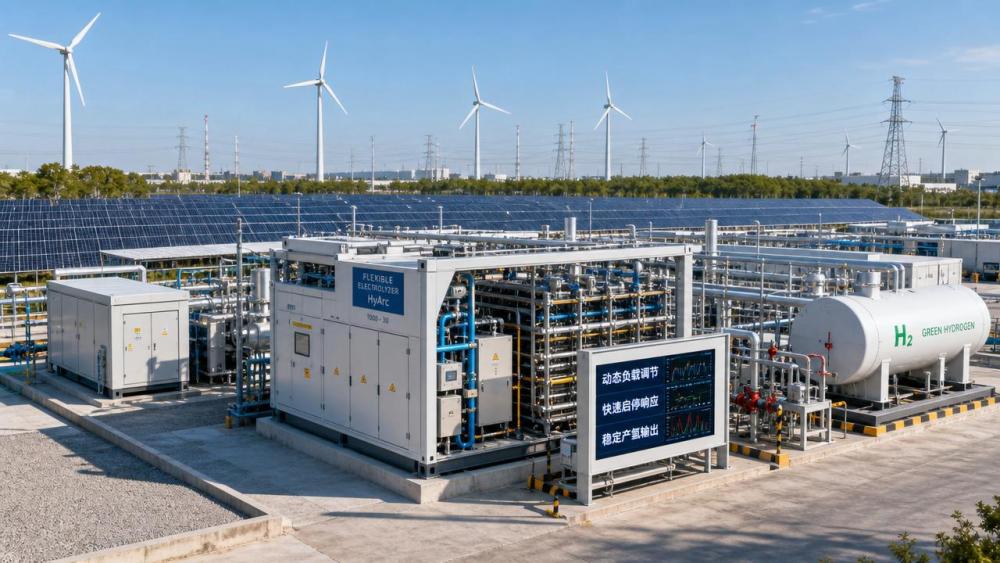
Dynamic grid balancing protocols refer to the control rules, response sequences, and operating limits that allow power-connected assets to help stabilize a grid under changing conditions. In the context of electrolysis, they define how a plant reacts to frequency deviations, voltage variation, renewable intermittency, dispatch instructions, and short-duration power disturbances. A flexible electrolyzer must therefore do more than consume electricity efficiently; it must translate grid variability into controlled hydrogen production behavior.
For PEM and alkaline systems alike, this often includes fast ramp-up and ramp-down capability, partial-load stability, hot standby modes, black-start coordination boundaries, and controlled restart logic after grid events. The stricter the balancing market or grid support obligation, the more important it becomes to verify response speed in seconds rather than only production in kilograms per hour.
In practical terms, dynamic grid balancing protocols connect three layers: the external grid signal, the plant control system, and the electrochemical process window. If any of these layers is weak, the asset may trip too often, degrade stacks prematurely, or fail to capture balancing value.
Which technical capabilities must flexible electrolyzers handle first?
The first priority is operational flexibility under non-ideal power input. Renewable-linked plants rarely receive perfectly flat electricity. Wind ramps, solar clipping, intraday market dispatch, and transmission congestion can all alter available power within minutes or seconds. To operate reliably under dynamic grid balancing protocols, electrolyzers should demonstrate several essential capabilities:
- Fast load following: the ability to change current density quickly without unstable cell behavior.
- Wide turndown ratio: stable performance at low load, not only at design point.
- Frequent cycling tolerance: starts, stops, and load swings should not trigger unacceptable degradation.
- Thermal management resilience: process temperatures must remain within limits during rapid transitions.
- Hydrogen purity control: gas quality must remain compliant during partial-load and transient conditions.
- Power electronics compatibility: rectifiers, transformers, and converters must support dynamic response without creating harmful harmonics.
This is where system architecture matters. A flexible PEM plant may offer superior ramp speed, while an alkaline configuration may require different control strategies or buffering arrangements to satisfy similar dynamic grid balancing protocols. Neither technology should be judged only by maximum efficiency at nominal load. What matters is the delivered performance envelope across the full duty cycle.
Why does partial-load behavior matter so much?
Many projects underestimate partial-load operation. Yet grid balancing often pushes electrolyzers to spend significant time below rated capacity. At these points, risks can rise: lower gas purity margins, unstable water management, slower thermal equilibrium, and less favorable balance-of-plant efficiency. If partial-load behavior is not engineered properly, a plant that appears flexible on paper may become conservative in real dispatch.
How should controls, automation, and power interfaces be designed?
Control design is the real backbone of compliance with dynamic grid balancing protocols. Flexible electrolysis plants need coordinated automation across stack modules, rectifiers, water treatment, gas separation, drying, compression, storage, and safety systems. A fast stack is not enough if downstream compression or purification cannot follow the same operating rhythm.
At minimum, the plant control system should support high-resolution monitoring, predictive alarms, automatic setpoint adjustment, and event-based interlocking. It should also distinguish between acceptable grid disturbances and true process threats. Overly conservative trips reduce availability. Overly permissive controls increase safety and equipment risk.
Power interfaces are equally important. Dynamic balancing service usually requires robust coordination with transformers, rectifier systems, harmonic filtering, and supervisory control platforms. In utility-linked installations, communication latency and dispatch interpretation can become hidden bottlenecks. A plant may have excellent electrochemical flexibility but still fail dynamic grid balancing protocols because signal pathways are too slow, unverified, or poorly integrated.
For this reason, commissioning should test not only process equipment but the full chain from incoming grid signal to stabilized process response. Step-change simulations, low-voltage disturbance tests, and controlled recovery drills reveal weaknesses that factory acceptance testing often misses.
What infrastructure and safety limits can restrict flexibility?
A common misconception is that flexibility depends only on the electrolyzer stack. In reality, the surrounding hydrogen infrastructure can sharply limit performance under dynamic grid balancing protocols. Buffer storage, compression sequencing, vent handling, cooling capacity, demineralized water supply, and gas quality assurance all shape how aggressively the plant can move.
For example, if hydrogen storage pressure is already high, the plant may not absorb a sudden increase in renewable power without curtailment or compressor overload. If cooling systems are undersized, repeated ramping can drive thermal imbalance. If shutdown and purge logic is too rigid, the plant may lose valuable availability after short grid interruptions.
Safety frameworks also become more demanding as cycling frequency increases. Material fatigue, seal wear, valve response integrity, and transient gas crossover risk must be evaluated in relation to actual operating profiles. This is especially relevant for assets benchmarked against high-integrity frameworks such as ISO 19880, ASME B31.12, and adjacent hydrogen handling standards. In sovereign-scale projects, technical flexibility without safety defensibility is not bankable flexibility.
How can projects judge whether dynamic grid balancing protocols are truly supported?
The best way to judge support for dynamic grid balancing protocols is to ask for duty-cycle evidence rather than brochure claims. Rated efficiency and peak output are useful, but they do not show whether the plant can sustain realistic balancing behavior over time. Verification should focus on measured ramp rates, minimum stable load, warm and cold restart times, frequency of permissible cycles, hydrogen purity under transients, and stack degradation under variable load profiles.
It is also important to separate stack-level performance from plant-level capability. A module may ramp fast in isolation, while the complete facility responds slowly because of compression, thermal, or automation constraints. Therefore, evaluation should include integrated testing scenarios such as:
- 15-minute renewable output swings
- sub-minute dispatch setpoint changes
- short grid dips followed by restart sequencing
- extended low-load operation with purity validation
- interaction with storage pressure and compressor staging
If these tests are unavailable, project assumptions around flexibility should be treated cautiously. For capital-intensive hydrogen assets, unsupported claims around dynamic grid balancing protocols can cascade into underperformance, delayed grid approval, or lower-than-expected revenue stacking.
What mistakes are most common when planning for dynamic grid balancing protocols?
One frequent mistake is sizing the plant around average renewable power rather than the true volatility pattern. Another is focusing only on LCOH while ignoring the value of responsiveness, curtailment capture, or balancing participation. Some projects also assume that if an electrolyzer is labeled “flexible,” every subsystem around it is equally flexible. That assumption often fails during commissioning.
A second error is overlooking degradation economics. Aggressive cycling may unlock grid value, but it can also shorten maintenance intervals or stack replacement timing if operating envelopes are not carefully managed. The most effective dynamic grid balancing protocols are not the fastest in theory; they are the ones that optimize response, durability, and hydrogen quality together.
Finally, projects sometimes underinvest in digital architecture. Yet historian quality, event logging, forecast integration, and control-system cybersecurity increasingly influence dispatch credibility and compliance readiness. In strategic hydrogen infrastructure, control transparency is part of technical bankability.
What is the practical next step for implementation?
A practical implementation path starts with a duty-cycle definition. Map expected renewable variability, grid-service requirements, hydrogen demand profile, storage constraints, and applicable codes. Then convert those conditions into testable plant requirements: ramp speed, minimum load, restart logic, purity thresholds, and cycling frequency. This gives dynamic grid balancing protocols a measurable basis instead of leaving them as a general design intention.
From there, validate the complete system architecture: stack technology, rectifier topology, cooling capacity, buffer storage, compression staging, automation speed, and safety instrumented functions. Where sovereign-scale decarbonization or critical infrastructure resilience is involved, benchmarking against rigorous international frameworks and proven transient-response data is essential.
In summary, dynamic grid balancing protocols are now central to how flexible electrolyzers are specified, financed, and operated. The winning systems will be those that can absorb renewable volatility, satisfy grid compliance, protect stack life, and maintain hydrogen quality as one integrated performance package. The next step is straightforward: define the real operating duty, test every subsystem against it, and close the gaps before they become limitations in service.
Related News
- Electricity Price Volatility Is Rewriting Hydrogen Cost ModelsApr 27, 2026Impact of electricity price on hydrogen cost is transforming industrial decarbonization and large-scale electrolysis. Explore LCOH trends, PPA strategies, and resilient hydrogen infrastructure planning.
- Energy Transition Plans Often Fail at the Grid Connection StageApr 27, 2026Sustainable energy and energy transition projects often fail at grid connection. Learn how hydrogen infrastructure, PEM electrolysis, and industrial decarbonization can avoid delays and protect investment value.
- What Is Slowing Industrial Decarbonization Projects in 2026?Apr 27, 2026Industrial decarbonization faces delays in 2026 as hydrogen infrastructure, sustainable energy access, grid limits, safety standards, and project bankability challenge the energy transition.
- AEM Stability Remains the Big Question for Scale-UpApr 27, 2026Anion exchange membrane stability is the key barrier to large-scale electrolysis. Discover how AEM impacts industrial decarbonization, hydrogen infrastructure, safety, and scale-up economics.
Related News
- 00
0000-00
Hydrogen Energy Storage for Data Centers Gets Costly Fast - 00
0000-00
When 99.999% Hydrogen Purity Still Is Not Good Enough - 00
0000-00
When Does a Hydrogen-Ready Gas Turbine Pay Off? - 00
0000-00
Electricity Price Volatility Is Rewriting Hydrogen Cost Models - 00
0000-00
PSA Recovery Rate Drops for Reasons Operators Miss
Dr. Aris Aero
Weekly Insights
Stay ahead with our curated technology reports delivered every Monday.