Electrolyzer System Integration Cost: Where Projects Overspend First




Electrolyzer system integration cost often rises faster than stack pricing during early project execution, yet many teams still underestimate where overspend begins.
For project managers and engineering leads, the first budget gaps usually appear in balance-of-plant design, utilities, controls, safety compliance, and site interfaces.
Understanding these hidden cost drivers is essential to keeping hydrogen projects bankable, scalable, and aligned with performance targets.
Why electrolyzer system integration cost becomes the first budget problem
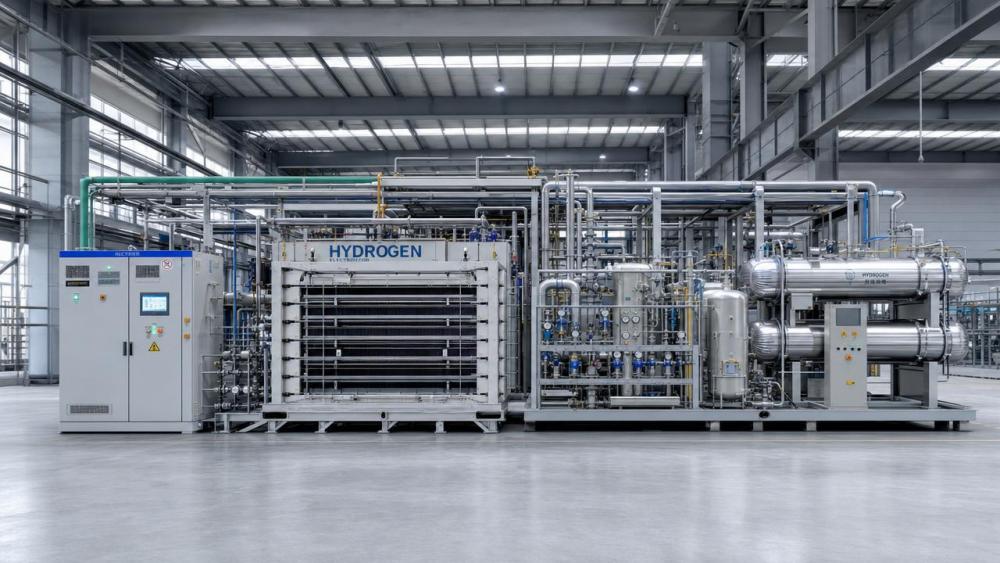
Many hydrogen project teams begin with stack price assumptions, then build financial models around a simplified equipment number. That approach works only at concept level.
Once FEED, utility mapping, safety reviews, and interface engineering begin, electrolyzer system integration cost expands into a broader package that includes far more than the electrolyzer skid itself.
In utility-scale PEM and alkaline projects, early overspend rarely starts with one dramatic procurement mistake. It usually starts with a sequence of underestimated interfaces.
- Process boundaries are defined too late, so vendors price exclusions and the EPC team later absorbs them as variations.
- Water treatment, power conditioning, cooling, and compression loads are based on nominal values instead of site-specific operating envelopes.
- Control architecture is split across multiple suppliers without a clear cause-and-effect matrix or cybersecurity ownership.
- Hazardous area classification, venting, purge design, and materials selection are postponed until detailed engineering.
- Civil, structural, and logistics assumptions ignore actual module weights, crane access, maintenance clearances, or phased expansion requirements.
For project leaders, the practical lesson is simple: the first overspend usually appears at the interfaces between disciplines, not inside a single datasheet line item.
That is why G-HEI places strong emphasis on benchmarked system boundaries, standards alignment, and sovereign-grade technical review across electrolysis, hydrogen logistics, power integration, and safety-critical infrastructure.
What makes integration more expensive than expected?
Electrolyzer system integration cost rises when project assumptions are made in isolation. The stack may be technically sound, but the plant around it determines whether CAPEX remains controlled.
When a project must satisfy industrial uptime, dynamic renewable operation, and international compliance expectations, integration complexity compounds quickly.
Where projects overspend first: the real cost centers beyond the stack
The table below shows where electrolyzer system integration cost often escalates first during pre-FEED, FEED, procurement, and construction. These are recurring pressure points for project managers.
The pattern is consistent: overspend begins where assumptions meet reality. If the project basis does not define utility quality, output purity, control philosophy, and compliance scope early, cost control weakens fast.
Balance-of-plant is often the first blind spot
Project teams usually know stack efficiency, footprint, and nominal production rate. They are less aligned on how balance-of-plant packages interact during transient operation.
That gap matters because utilities and support systems often drive change orders first. A skid can arrive on time and still trigger budget growth if site integration was incomplete.
PEM vs alkaline: how integration cost risk shifts by technology choice
Technology selection affects electrolyzer system integration cost in different ways. Stack CAPEX gets most attention, but system-level tradeoffs often decide total installed cost and execution risk.
Neither option is universally cheaper once full integration is considered. The right decision depends on power source variability, water quality, product pressure, purity specification, operator capability, and expansion strategy.
A useful decision rule for project managers
Do not ask which technology has the lower equipment price. Ask which technology reduces the highest-cost interfaces on your specific site over the full execution window.
How to control electrolyzer system integration cost during project development
The most effective control method is to convert ambiguous scope into measurable interface definitions before major procurement begins. This is where disciplined technical benchmarking adds direct financial value.
- Define battery limits package by package, including utilities, drains, vents, access, controls, and owner-furnished systems.
- Create a site-specific operating envelope covering ambient temperature, water quality, renewable intermittency, and target turndown conditions.
- Link hydrogen purity, delivery pressure, storage concept, and downstream use case before selecting drying and compression packages.
- Run safety and compliance reviews early against relevant frameworks such as ISO 19880, ASME B31.12, and applicable electrical and pressure system rules.
- Build a single controls responsibility matrix covering PLC, DCS, SIS, alarms, data historian, remote diagnostics, and cybersecurity boundaries.
- Validate maintainability, lifting routes, spare parts logistics, and phased capacity expansion before freezing civil design.
These actions do not eliminate risk, but they shift expensive surprises from the construction stage back into a manageable engineering stage where change is cheaper.
Why benchmark-driven review matters
G-HEI supports decision-makers who must compare electrolysis systems within the larger zero-carbon infrastructure chain, not as isolated equipment packages.
That perspective is important when hydrogen production interfaces with cryogenic logistics, hydrogen-ready turbines, refueling systems, or CCUS-linked industrial decarbonization assets.
Procurement checklist: what to verify before awarding the package
Before contract award, project teams should review more than output rate and efficiency. The checklist below helps prevent hidden electrolyzer system integration cost from appearing after purchase order release.
- Confirm whether vendor scope includes rectifier, water treatment, cooling loop, gas purification, vent handling, and startup consumables.
- Check guaranteed performance conditions. Nominal values may not hold under actual site temperature, altitude, or renewable intermittency.
- Review all exclusions and tie-in assumptions in writing, especially foundations, interconnecting pipe, cable trays, fire and gas devices, and instrument air.
- Align acceptance testing with project objectives, including FAT, SAT, dynamic response, purity verification, and utility consumption measurement.
- Evaluate spare parts philosophy, service access, maintenance intervals, and local capability for critical subpackages.
- Review documentation deliverables early, including P&IDs, cause-and-effect charts, hazardous area data, and materials compatibility records.
A strong procurement package reduces claims later. It also improves lender confidence because technical risk is documented rather than implied.
Standards, safety, and compliance: why late alignment is expensive
In hydrogen projects, compliance is not a finishing step. It shapes plot layout, material selection, vent routing, instrumentation, emergency shutdown logic, and operating procedures from the start.
When compliance review starts late, electrolyzer system integration cost increases because modifications affect several disciplines at once.
The takeaway is not that every project must adopt every framework in the same way. It is that standards mapping should occur before detailed design hardens, especially for sovereign-scale or export-oriented infrastructure.
Common misconceptions that inflate integration cost
“The OEM package price tells us most of the CAPEX”
It does not. The OEM package may exclude major electrical works, water systems, foundations, interconnecting pipework, safety systems, or owner control integration.
“If we standardize one site, all future sites will cost the same”
Replication helps, but site altitude, climate, utility reliability, permitting conditions, and downstream hydrogen use can alter the integration package significantly.
“Safety reviews can wait until detailed engineering”
That is one of the fastest ways to create rework. Hazardous area boundaries, vent stack locations, and material compatibility decisions influence layout and procurement too early to delay.
FAQ for project managers evaluating electrolyzer system integration cost
How should we estimate electrolyzer system integration cost at concept stage?
Use a layered estimate. Separate stack package cost from power systems, water treatment, cooling, purification, compression, safety systems, civil works, and controls integration. Then apply site-specific contingency to the interface-heavy packages, not only to the OEM skid.
Which projects are most exposed to early overspend?
Projects tied to variable renewable power, constrained water supply, high outlet purity requirements, export logistics, or brownfield tie-ins face the highest interface risk. Multi-supplier delivery models also increase coordination cost.
What should we ask vendors before comparing offers?
Ask for battery limits, utility consumption by operating mode, guaranteed purity and pressure conditions, controls architecture, excluded scope, commissioning support, and compliance documentation assumptions. Without those details, low quotes are difficult to compare fairly.
Can benchmarking reduce procurement risk?
Yes. Benchmarking helps teams compare systems by interface complexity, standards alignment, asset integrity expectations, maintainability, and downstream compatibility, not only by nominal production rate.
Why choose us for hydrogen infrastructure benchmarking and project support
For complex hydrogen programs, cost control depends on cross-disciplinary clarity. G-HEI helps project managers and engineering leads assess electrolyzer system integration cost within the wider zero-carbon infrastructure chain.
Our focus spans megawatt-scale electrolysis, cryogenic liquid hydrogen logistics, hydrogen-ready gas turbine systems, CCUS-linked industrial pathways, and high-pressure refueling infrastructure.
That means discussions can go beyond equipment lists and into practical decisions that affect budget, schedule, compliance, and asset security.
- Clarify technical boundaries for PEM or alkaline project packages before tender release.
- Compare integration pathways for water treatment, power conditioning, gas purification, storage, and downstream hydrogen use.
- Review standards alignment for hydrogen piping, fueling interfaces, hazardous design, and materials integrity.
- Discuss delivery sequencing, package interfaces, commissioning scope, and documentation needed for investment review.
- Evaluate custom benchmarking support for parameter confirmation, technology selection, certification requirements, project phasing, and quotation discussions.
If your team is preparing FEED, validating a vendor offer, or trying to prevent early budget drift, contact us to review site assumptions, integration scope, delivery timelines, and compliance priorities before cost escalation becomes contractual reality.
Related News
- Electricity Price Volatility Is Rewriting Hydrogen Cost ModelsApr 27, 2026Impact of electricity price on hydrogen cost is transforming industrial decarbonization and large-scale electrolysis. Explore LCOH trends, PPA strategies, and resilient hydrogen infrastructure planning.
- Energy Transition Plans Often Fail at the Grid Connection StageApr 27, 2026Sustainable energy and energy transition projects often fail at grid connection. Learn how hydrogen infrastructure, PEM electrolysis, and industrial decarbonization can avoid delays and protect investment value.
- What Is Slowing Industrial Decarbonization Projects in 2026?Apr 27, 2026Industrial decarbonization faces delays in 2026 as hydrogen infrastructure, sustainable energy access, grid limits, safety standards, and project bankability challenge the energy transition.
- What drives electrolysis project solutions cost at megawatt scale?Sep 26, 2026Electrolysis project solutions cost at megawatt scale: uncover CAPEX, power, BoP, safety, and lifecycle factors for bankable hydrogen investments.
Related News
- 00
0000-00
Hydrogen Energy Storage for Data Centers Gets Costly Fast - 00
0000-00
When 99.999% Hydrogen Purity Still Is Not Good Enough - 00
0000-00
When Does a Hydrogen-Ready Gas Turbine Pay Off? - 00
0000-00
Electricity Price Volatility Is Rewriting Hydrogen Cost Models - 00
0000-00
PSA Recovery Rate Drops for Reasons Operators Miss
Dr. Aris Aero
Weekly Insights
Stay ahead with our curated technology reports delivered every Monday.