Electrolyzer Technology Guide: PEM vs ALK vs SOEC




Electrolyzer Technology Guide: PEM vs ALK vs SOEC
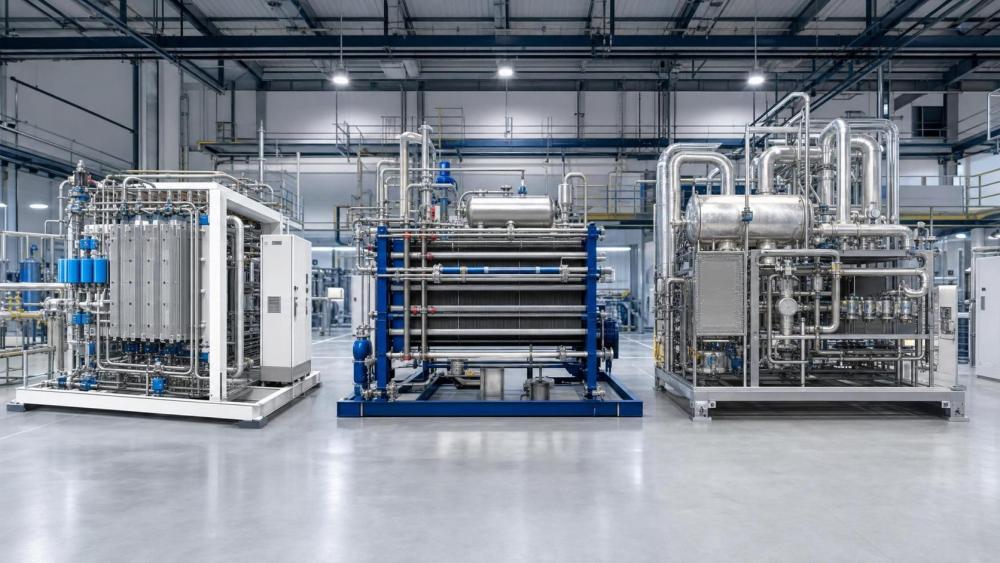
This electrolyzer technology guide compares PEM, ALK, and SOEC where real projects succeed or fail: efficiency, operating windows, materials, integration, and long-term deployment risk.
For hydrogen infrastructure at sovereign scale, the technology choice shapes capex, grid behavior, water strategy, maintenance, and compliance exposure.
That is why an electrolyzer technology guide should go beyond nameplate efficiency and look at whole-system performance under operating reality.
PEM, ALK, and SOEC each have credible use cases. The better question is not which is universally best, but which fits the duty cycle, energy source, and risk appetite.
In practice, this electrolyzer technology guide is most useful when tied to standards, stack degradation patterns, balance-of-plant complexity, and project bankability.
Why Electrolyzer Selection Has Become a Strategic Decision
Hydrogen projects used to focus on production cost alone. That view is no longer enough.
Now, energy security, local manufacturing, water availability, and safety certification carry equal weight. This shifts how any electrolyzer technology guide should be read.
PEM supports fast ramping and pairs well with variable renewables. ALK remains proven for large industrial baseload. SOEC offers high theoretical efficiency when quality heat is available.
The stronger signal is that deployment conditions are diverging. Offshore wind coupling, ammonia export hubs, refinery decarbonization, and steelmaking do not need the same machine behavior.
This also means a useful electrolyzer technology guide must compare not only stack chemistry, but response speed, purity requirements, thermal stability, and supply-chain resilience.
PEM Electrolyzers: Fast, Compact, and Renewable-Friendly
PEM stands for Proton Exchange Membrane electrolysis. It uses a solid polymer electrolyte and typically operates at relatively high current density.
In any modern electrolyzer technology guide, PEM is usually the leading option for projects needing rapid start-stop behavior and tight coupling with solar or wind power.
Its strengths are clear:
- High dynamic response
- Compact system footprint
- High hydrogen purity
- Pressurized output potential
However, PEM also comes with harder material constraints. Catalysts often rely on iridium and platinum group metals, while stack hardware may require titanium for corrosion resistance.
Those choices improve performance, but they affect cost, procurement risk, and localization strategy. For sovereign programs, that matters as much as efficiency.
Water quality is another practical issue. PEM systems are less forgiving of contamination, so deionized water management cannot be treated as a secondary utility question.
A balanced electrolyzer technology guide should therefore frame PEM as a premium option for flexibility and compactness, not simply as a default advanced technology.
ALK Electrolyzers: Mature, Scalable, and Cost-Focused
ALK refers to alkaline electrolysis, the longest-established commercial pathway. It uses a liquid alkaline electrolyte, commonly potassium hydroxide.
Any serious electrolyzer technology guide should acknowledge ALK’s biggest advantage: industrial familiarity. Many operators trust it because maintenance practices and performance behavior are well known.
ALK often performs well where power input is relatively stable and land is not severely constrained. That makes it attractive for large plants connected to steady renewable supply or grid-backed generation.
Its main benefits include:
- Lower stack material cost
- Broad manufacturing base
- Long industrial operating history
- Strong suitability for large-scale baseload production
The tradeoff is responsiveness. ALK generally ramps more slowly than PEM and can be less comfortable under frequent load cycling.
Gas crossover control, electrolyte handling, and operating pressure design also deserve close review. These are manageable issues, but they shape safety architecture and purification needs.
In this electrolyzer technology guide, ALK stands out as the practical choice where cost discipline, proven scale, and stable operation matter more than rapid flexibility.
SOEC Electrolyzers: High Efficiency with Higher Integration Demands
SOEC means Solid Oxide Electrolysis Cell. Unlike PEM and ALK, it operates at high temperature and can use steam as a feed.
That thermal regime changes the value equation. When waste heat or nuclear-grade heat is available, SOEC can reduce electrical consumption and raise system efficiency.
This is where many simplified comparisons miss the point. An electrolyzer technology guide should treat SOEC as an integrated thermochemical asset, not just another electricity-driven stack.
SOEC is compelling for sites with strong heat integration potential, including ammonia, refining, e-fuels, and certain industrial clusters.
Still, the risks are more pronounced:
- Thermal cycling can accelerate degradation
- Sealing and ceramic durability are critical
- Balance-of-plant integration is more demanding
- Commercial maturity remains less uniform
So, this electrolyzer technology guide places SOEC in a high-potential category, but one that requires disciplined thermal design, validated operating profiles, and careful lifecycle analysis.
Side-by-Side Comparison for Technical Evaluation
A workable electrolyzer technology guide should always convert these comparisons into site-specific assumptions. A refinery with spare steam is not evaluating the same decision as a remote wind-to-hydrogen corridor.
Standards, Safety, and Material Integrity
Technology selection cannot be separated from compliance. That point becomes sharper as plants move from pilot scale into national infrastructure.
A robust electrolyzer technology guide should align equipment decisions with hydrogen handling standards, piping codes, fueling requirements, and pressure containment rules.
Relevant frameworks often include ISO 19880, ASME B31.12, and SAE J2601, depending on the downstream use case and transport configuration.
Material integrity is equally important. Hydrogen embrittlement, corrosion control, seal compatibility, and pressure cycling behavior can erase theoretical efficiency gains if ignored early.
For that reason, this electrolyzer technology guide treats stack selection and balance-of-plant materials as one decision chain, not two separate procurement packages.
How to Choose the Right Electrolyzer Pathway
In actual project work, a decision framework is more useful than a generic ranking.
- Define the load profile. Continuous operation and highly variable operation lead to different outcomes.
- Map utility constraints. Water treatment, compression, heat, and grid quality often dominate total system performance.
- Audit material exposure. Critical minerals, corrosion-resistant metals, and ceramic supply chains change procurement risk.
- Test standards alignment. Design choices should support permitting, insurance, and downstream transport requirements.
- Model degradation honestly. Efficiency at day one is less important than predictable output over service life.
That is the practical value of an electrolyzer technology guide. It turns a broad technology debate into a disciplined comparison tied to duty cycle, infrastructure fit, and sovereign-grade risk control.
PEM fits flexibility-first strategies. ALK fits scale and cost control. SOEC fits heat-integrated efficiency plays where technical discipline is already strong.
The next step is simple: evaluate the plant as a full hydrogen system, not as a stack purchase. That is where better decisions usually start.
Related News
- Electricity Price Volatility Is Rewriting Hydrogen Cost ModelsApr 27, 2026Impact of electricity price on hydrogen cost is transforming industrial decarbonization and large-scale electrolysis. Explore LCOH trends, PPA strategies, and resilient hydrogen infrastructure planning.
- Energy Transition Plans Often Fail at the Grid Connection StageApr 27, 2026Sustainable energy and energy transition projects often fail at grid connection. Learn how hydrogen infrastructure, PEM electrolysis, and industrial decarbonization can avoid delays and protect investment value.
- What Is Slowing Industrial Decarbonization Projects in 2026?Apr 27, 2026Industrial decarbonization faces delays in 2026 as hydrogen infrastructure, sustainable energy access, grid limits, safety standards, and project bankability challenge the energy transition.
- How safety layers reduce risk in utility-scale hydrogen systemsOct 05, 2026Utility scale hydrogen systems safety: discover how layered prevention, detection, shutdown, venting, and inspection controls reduce operational risk.
Related News
- 00
0000-00
Hydrogen Energy Storage for Data Centers Gets Costly Fast - 00
0000-00
When 99.999% Hydrogen Purity Still Is Not Good Enough - 00
0000-00
When Does a Hydrogen-Ready Gas Turbine Pay Off? - 00
0000-00
Electricity Price Volatility Is Rewriting Hydrogen Cost Models - 00
0000-00
PSA Recovery Rate Drops for Reasons Operators Miss
Dr. Aris Aero
Weekly Insights
Stay ahead with our curated technology reports delivered every Monday.