Electronics Industry Trends 2023: What Still Matters Now




Why electronics industry trends 2023 still shape decisions now
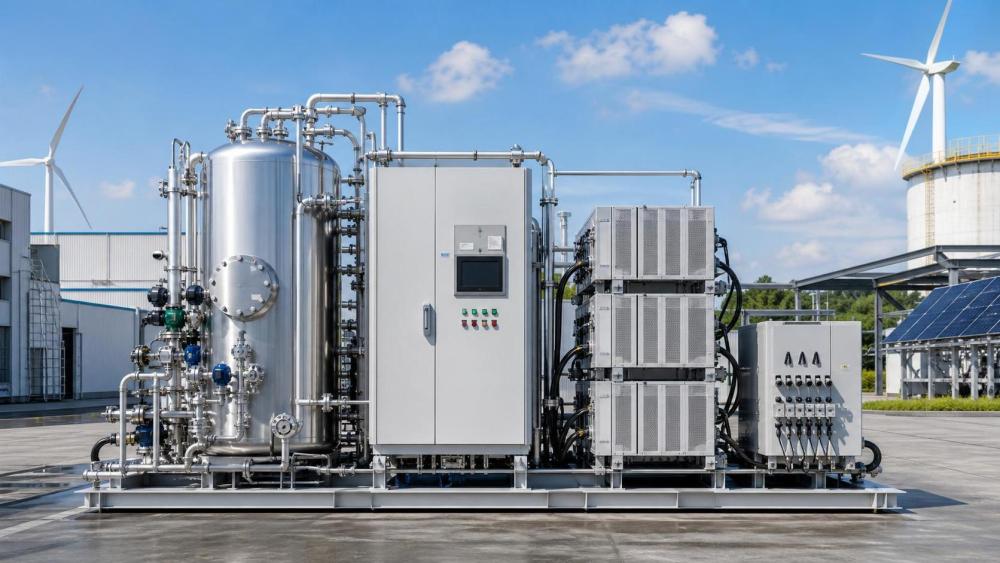
Electronics industry trends 2023 were never only about consumer devices or short-cycle component demand.
They revealed a deeper shift in how industrial systems are designed, monitored, powered, and protected.
That shift matters even more today because zero-carbon infrastructure now depends on electronics as a strategic control layer.
In hydrogen, grid, and CCUS projects, value no longer sits only in large physical assets.
It increasingly sits in power conversion, sensing accuracy, thermal stability, and compliance-ready control architecture.
This is why electronics industry trends 2023 still offer reliable signals for current capital allocation.
The strongest signals are not fashionable ones.
They are the patterns that kept showing up across industrial automation, energy systems, and resilient supply chains.
For platforms such as G-HEI, those patterns now influence how sovereign-scale hydrogen assets are benchmarked against safety, integrity, and efficiency requirements.
The biggest change was electronics moving closer to core infrastructure risk
A few years ago, electronics were often treated as supporting subsystems.
Now they shape uptime, certification pathways, operating efficiency, and asset bankability.
That is one reason electronics industry trends 2023 still deserve attention.
In megawatt-scale electrolysis, small inefficiencies in control electronics can multiply into serious energy losses.
In cryogenic hydrogen logistics, instrumentation reliability becomes a materials and safety issue, not just an operations issue.
In hydrogen-ready turbines, power electronics and sensors define how flexibly a system handles varying fuel blends.
The practical lesson is clear.
Electronics can no longer be separated from infrastructure strategy, especially where standards such as ISO 19880, ASME B31.12, and SAE J2601 set the performance floor.
Why this became more visible
- Higher energy costs made conversion efficiency measurable at board, module, and system level.
- Supply disruptions exposed overdependence on single-source semiconductors and control components.
- Safety rules tightened around high-pressure, high-voltage, and cryogenic operating environments.
- Digital monitoring moved from optional analytics to a requirement for asset assurance.
Demand shifted from more electronics to better electronics
One useful way to read electronics industry trends 2023 is through quality of function, not quantity of devices.
Industrial buyers did not simply want more boards, sensors, and converters.
They wanted electronics that could survive harsher conditions and deliver cleaner operating data.
That preference still shapes procurement logic in energy transition projects.
From recent project activity, four demand shifts stand out.
This is where the conversation became more mature.
The real question shifted from availability to suitability under real operating stress.
The supply-chain lesson did not end when shortages eased
Some markets assume the supply shock phase is over.
That reading is too narrow.
Electronics industry trends 2023 showed that visibility, traceability, and substitution planning are now permanent management disciplines.
For hydrogen infrastructure, the stakes are higher than delivery timing.
A missing controller, sensor, insulation monitor, or power module can delay certification or trigger redesign.
That is especially true when assets must satisfy strict performance and safety frameworks across multiple jurisdictions.
G-HEI’s relevance sits partly here.
Benchmarking is no longer a technical luxury.
It is a way to compare whether critical electronics choices align with sovereign-scale reliability expectations.
What stronger supply-chain discipline looks like
- Map single-point component dependencies before final engineering freeze.
- Validate alternate parts against thermal, vibration, and compliance conditions.
- Track firmware, calibration, and standards alignment together, not separately.
- Review lifecycle support, not only purchase price and lead time.
What matters across hydrogen, power, and industrial decarbonization
The most durable insight from electronics industry trends 2023 is that sector lines have blurred.
A power electronics decision can affect storage economics, maintenance cycles, and safety reporting at the same time.
A sensor strategy can influence both operational continuity and insurance confidence.
That is why the same electronics themes keep appearing across different zero-carbon applications.
Where the impact is most visible
In PEM and ALK electrolysis, rectification quality, thermal management, and control stability affect hydrogen output consistency.
In liquid hydrogen logistics, monitoring electronics must perform under cryogenic stress without creating new failure modes.
In hydrogen-ready turbines, electronics determine response speed, combustion tuning, and long-interval performance verification.
In CCUS infrastructure, instrumentation quality affects measurement credibility and audit confidence.
In 70MPa refueling systems, fast and safe dispensing depends on tightly coordinated sensing and control.
These are not isolated engineering details.
They influence whether an asset scales smoothly or accumulates hidden operating risk.
The next decisions should be based on fit, not hype
A common mistake is to read electronics industry trends 2023 as a list of technologies to copy.
The better reading is more selective.
Keep what improves asset assurance, energy efficiency, standards readiness, and replacement resilience.
Question what only adds software layers or hardware complexity without reducing risk.
In practical terms, the next round of decisions should focus on a few filters.
- Does the electronics architecture improve measurable energy performance under fluctuating loads?
- Can the selected components hold calibration and reliability in harsh environments?
- Will the design support compliance reviews without late-stage redesign?
- Is there a realistic path for replacement, serviceability, and multi-year support?
Those questions matter more than broad claims about digital transformation.
They also create a more grounded bridge between electronics strategy and infrastructure performance.
What still deserves close attention from here
Electronics industry trends 2023 still matter because the underlying constraints never disappeared.
Energy efficiency remains expensive to ignore.
Asset integrity still depends on data quality.
And strategic infrastructure still fails when electronic subsystems are treated as interchangeable commodities.
A more useful next step is to review where electronic design choices now affect risk more than expected.
That may include electrolysis efficiency drift, cryogenic monitoring confidence, turbine control margins, or refueling safety logic.
From there, compare current assets and planned investments against recognized benchmarks and standards pathways.
The organizations that move well in this phase are not chasing every signal.
They are identifying which parts of electronics industry trends 2023 still improve decision quality now, then building phased responses around them.
That approach is slower than hype, but far more durable in hydrogen and zero-carbon infrastructure.
Related News
- Electricity Price Volatility Is Rewriting Hydrogen Cost ModelsApr 27, 2026Impact of electricity price on hydrogen cost is transforming industrial decarbonization and large-scale electrolysis. Explore LCOH trends, PPA strategies, and resilient hydrogen infrastructure planning.
- Energy Transition Plans Often Fail at the Grid Connection StageApr 27, 2026Sustainable energy and energy transition projects often fail at grid connection. Learn how hydrogen infrastructure, PEM electrolysis, and industrial decarbonization can avoid delays and protect investment value.
- What Is Slowing Industrial Decarbonization Projects in 2026?Apr 27, 2026Industrial decarbonization faces delays in 2026 as hydrogen infrastructure, sustainable energy access, grid limits, safety standards, and project bankability challenge the energy transition.
- What drives electrolysis scaling cost in megawatt PEM projects?Sep 13, 2026Electrolysis scaling cost explained: uncover the CAPEX, power, balance-of-plant, and lifecycle risks shaping bankable megawatt PEM projects.
Related News
- 00
0000-00
Hydrogen Energy Storage for Data Centers Gets Costly Fast - 00
0000-00
When 99.999% Hydrogen Purity Still Is Not Good Enough - 00
0000-00
When Does a Hydrogen-Ready Gas Turbine Pay Off? - 00
0000-00
Electricity Price Volatility Is Rewriting Hydrogen Cost Models - 00
0000-00
PSA Recovery Rate Drops for Reasons Operators Miss
Dr. Aris Aero
Weekly Insights
Stay ahead with our curated technology reports delivered every Monday.