Future of Seawater Electrolysis Technology in Scale-Up




Future of Seawater Electrolysis Technology in Scale-Up
The future of seawater electrolysis technology is moving from laboratory promise to infrastructure-scale reality, reshaping how project leaders plan hydrogen production in coastal and water-constrained regions.
For engineering project managers, scale-up is no longer only about stack efficiency; it also involves corrosion control, desalination integration, materials durability, safety compliance, and bankable system design.
As global hydrogen networks expand, understanding these technical and commercial factors will be essential for delivering reliable, zero-carbon assets that meet sovereign energy goals.
What Project Leaders Really Need to Know Before Scaling
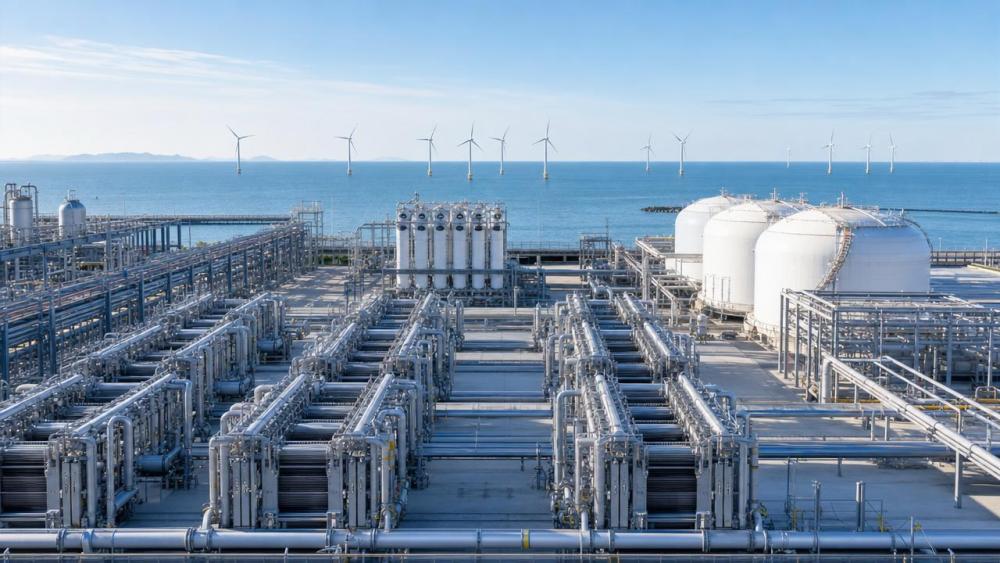
The practical question is not whether seawater can theoretically produce hydrogen. It is whether the complete system can operate reliably, safely, and economically at scale.
For project managers, the near-term answer is cautious but promising. Seawater electrolysis will scale first through hybrid models, not fully untreated seawater systems.
Most bankable projects will combine intake pretreatment, desalination, high-performance electrolysis, brine management, and strict materials selection to control technical uncertainty.
Direct seawater electrolysis remains strategically important, especially for offshore hydrogen, island grids, coastal industry, and regions where freshwater availability limits project approval.
However, direct systems must still prove long-duration durability, chlorine suppression, membrane stability, and asset maintainability under real marine operating conditions.
This distinction matters because investors, EPC contractors, and regulators evaluate not only novelty, but predictable performance across decades of operation.
Why Seawater Electrolysis Is Becoming a Strategic Infrastructure Topic
Hydrogen projects increasingly compete for land, power, grid access, permits, and water rights. Coastal deployment can reduce several of these constraints.
Many heavy hydrogen users are already near ports, refineries, ammonia terminals, LNG hubs, steel clusters, and emerging carbon-management infrastructure.
Locating electrolysis near seawater resources can simplify logistics, support export corridors, and align hydrogen production with offshore wind or coastal renewables.
For national planners, seawater-based hydrogen also reduces dependence on inland freshwater, which is politically sensitive in drought-prone or agriculture-heavy regions.
The future of seawater electrolysis technology is therefore connected to energy sovereignty, not only equipment innovation or academic efficiency records.
Project leaders should view seawater electrolysis as part of a broader zero-carbon infrastructure portfolio, including storage, transport, power balancing, and safety governance.
Direct Seawater Electrolysis Versus Desalination-Coupled Systems
A core planning decision is whether to pursue direct seawater electrolysis or use desalination before conventional PEM or alkaline electrolysis.
Desalination-coupled systems are more mature today. Reverse osmosis adds cost and complexity, but it reduces stack degradation and operational uncertainty.
For utility-scale assets, this approach is often easier to finance because equipment suppliers, warranties, maintenance practices, and performance models are better understood.
Direct seawater electrolysis aims to bypass desalination and use seawater more directly. Its advantage is conceptual simplicity and potential system compactness.
The challenge is that seawater contains chloride, magnesium, calcium, microorganisms, particulates, and other species that can damage catalysts, membranes, electrodes, and piping.
Chlorine evolution is a major concern because it creates safety, environmental, corrosion, and permitting issues if not rigorously controlled.
For most near-term projects, managers should treat direct seawater electrolysis as an innovation pathway, while desalination-coupled systems remain the lower-risk deployment route.
Scale-Up Challenges That Matter More Than Laboratory Efficiency
Laboratory results often emphasize current density, selectivity, and catalyst performance. Industrial scale-up requires a wider view of asset behavior.
Marine environments create persistent corrosion risks across pumps, valves, heat exchangers, frames, fasteners, sensors, and electrical interfaces.
Even when the electrochemical stack performs well, balance-of-plant weaknesses can reduce uptime, raise maintenance costs, and compromise safety.
Project teams must also account for biofouling, sediment loading, seasonal seawater variation, intake design, filtration performance, and cleaning regimes.
Thermal management becomes more complex at scale because electrolysis efficiency, membrane life, and gas purity depend on stable operating conditions.
Hydrogen and oxygen separation must be continuously monitored. Gas crossover risks become more serious as production volume and system pressure increase.
Therefore, scale-up planning should prioritize availability, maintainability, and safety integrity alongside headline conversion efficiency.
Materials and Corrosion Control Are Central to Bankability
Material selection is one of the most important cost and reliability decisions in seawater electrolysis projects.
Titanium, nickel alloys, coated stainless steels, advanced polymers, and specialized catalysts may all be considered depending on exposure conditions.
The optimal choice is not always the most corrosion-resistant material. It is the material that balances lifetime, manufacturability, inspection, repairability, and cost.
Project managers should require corrosion testing under realistic temperature, salinity, pressure, and electrical conditions, not only standard laboratory immersion tests.
Coatings and protective layers can improve performance, but they introduce questions about adhesion, defect tolerance, field repair, and degradation monitoring.
Stack suppliers should demonstrate how they manage chloride exposure, catalyst poisoning, membrane stability, and gas purity over extended operating periods.
Without a credible materials-integrity plan, scale-up can shift from a hydrogen opportunity into a long-term maintenance liability.
How to Evaluate Commercial Readiness Without Being Misled
Project leaders often face optimistic vendor claims, especially in emerging technology categories. A structured readiness assessment protects schedule and capital.
Start by separating component readiness from system readiness. A promising electrode does not automatically create a reliable megawatt-scale production facility.
Review operating hours, degradation rates, shutdown behavior, restart performance, seawater variability tolerance, and maintenance intervals under representative field conditions.
Ask whether performance data comes from synthetic seawater, filtered seawater, brine, or actual coastal intake water with biological and mineral variation.
Bankable projects also need clear warranty terms, replacement schedules, spare-parts availability, cybersecurity controls, and remote monitoring capabilities.
For early deployments, pilot plants should be designed as learning assets, not publicity assets. Instrumentation quality is as important as nameplate capacity.
The best pilots produce actionable data for permitting, EPC design, financial modeling, safety cases, and future procurement decisions.
Integration With Renewable Power and Coastal Infrastructure
Seawater electrolysis becomes more compelling when integrated with offshore wind, coastal solar, port electrification, and hydrogen export terminals.
However, variable renewable power creates operating challenges for electrolyzers, especially if systems cycle frequently or run below optimal load.
Project managers must examine whether the selected stack technology supports dynamic operation without unacceptable degradation or efficiency loss.
Energy storage, grid connection, power electronics, and dispatch strategy will strongly influence the economics of coastal hydrogen production.
For offshore or nearshore concepts, additional complexity arises from platform space, marine maintenance access, storm resilience, and emergency response limitations.
Hydrogen compression, liquefaction, pipeline injection, ammonia conversion, or refueling applications must be defined early because each path changes system requirements.
A seawater electrolysis project is not a standalone electrochemical plant. It is a node in a larger energy and logistics network.
Safety, Standards, and Permitting Cannot Be Added Late
Hydrogen projects require disciplined safety engineering from concept design onward. Seawater electrolysis adds marine and chemical hazards to the standard hydrogen risk profile.
Potential chlorine formation, oxygen management, brine discharge, electrical isolation, hazardous area classification, and emergency ventilation must be addressed early.
Applicable frameworks may include hydrogen fueling standards, pressure piping codes, electrical safety requirements, environmental discharge rules, and maritime regulations.
For large infrastructure programs, alignment with ISO 19880, ASME B31.12, and related hydrogen safety standards supports regulatory confidence.
Permitting agencies will expect evidence that seawater intake and discharge will not damage local ecosystems or violate coastal environmental limits.
Stakeholder engagement is also important. Coastal communities may support clean energy but oppose unclear water, land, or marine impacts.
Projects that integrate safety and permitting late often suffer redesign, procurement delay, budget escalation, and reputational risk.
Cost Drivers and Investment Logic for Scale-Up
The economics of seawater electrolysis depend on more than electrolyzer cost per kilowatt. Balance-of-plant expenses can dominate project outcomes.
Key cost drivers include seawater intake, filtration, desalination or pretreatment, corrosion-resistant materials, power conversion, gas purification, compression, and monitoring systems.
Operating costs include electricity, membrane replacement, catalyst degradation, cleaning chemicals, water treatment, skilled maintenance, and unplanned downtime.
For investment directors and project sponsors, the main question is whether seawater integration improves total delivered hydrogen cost.
In some locations, desalination may be a small cost compared with electricity. In others, permitting or water scarcity may make it decisive.
Project managers should model several scenarios, including direct seawater, desalination-coupled electrolysis, imported freshwater, and alternative hydrogen supply routes.
The strongest business cases will connect seawater access with cheap renewable power, high utilization, secure offtake, and strategic infrastructure value.
Recommended Scale-Up Roadmap for Engineering Teams
A disciplined roadmap reduces the risk of moving too quickly from laboratory success to expensive infrastructure failure.
The first stage should define the use case, hydrogen destination, offtake profile, target capacity, water conditions, and regulatory constraints.
The second stage should compare technology options through technical due diligence, vendor audits, lifecycle cost modeling, and failure-mode analysis.
The third stage should deploy a pilot with real seawater exposure, robust sensors, gas-quality monitoring, and planned maintenance interventions.
The fourth stage should validate EPC assumptions, including footprint, modularity, access routes, spare-parts logistics, safety zoning, and integration with power supply.
The fifth stage should scale through modular expansion, allowing lessons from early operation to inform procurement, design optimization, and operator training.
This phased approach improves investor confidence because it converts unknowns into measurable engineering and commercial parameters.
Where the Technology Is Most Likely to Scale First
Early commercial scale-up is most likely in locations where seawater access directly solves a strategic constraint.
Island economies, arid coastal regions, offshore wind hubs, port industrial clusters, and remote defense or mining applications are strong candidates.
These settings often face limited freshwater availability, high fuel import dependence, or strong policy incentives for local clean hydrogen production.
Projects linked to ammonia, methanol, synthetic fuels, refining, or heavy transport may also justify higher early costs due to valuable offtake.
Direct seawater electrolysis may first gain traction in specialized applications where system compactness, water independence, or offshore integration provides clear value.
Large inland hydrogen hubs will likely continue using treated water unless seawater transport or coastal production offers a superior total system cost.
The winning projects will not be those with the boldest claims, but those with the clearest fit between technology and site conditions.
What the Future of Seawater Electrolysis Technology Means for Project Managers
The future of seawater electrolysis technology will be shaped by durability, integration, standardization, and financeability rather than laboratory breakthroughs alone.
Project managers should expect rapid progress in catalysts, selective membranes, anti-corrosion coatings, modular stacks, and digital condition monitoring.
Still, the path to infrastructure-scale deployment will depend on proving long operating life under realistic marine conditions.
Near-term success will come from pragmatic designs that combine mature desalination, advanced electrolysis, rigorous safety engineering, and transparent performance data.
Longer term, direct seawater electrolysis could reduce system complexity and unlock offshore or water-constrained hydrogen production models.
For now, the smartest strategy is neither to ignore the technology nor to overcommit before evidence supports full-scale investment.
Engineering leaders should build optionality: test early, specify carefully, demand field data, and align every technical decision with lifecycle asset performance.
Conclusion: A Promising Future, but Only for Disciplined Projects
Seawater electrolysis can become a major enabler of coastal hydrogen production, especially where freshwater access, energy security, and industrial demand intersect.
Its scale-up potential is real, but it requires careful management of corrosion, chlorine risk, materials durability, permitting, and system integration.
For project leaders, the immediate priority is to distinguish credible infrastructure pathways from early-stage technology optimism.
Desalination-coupled electrolysis will likely dominate near-term deployment, while direct seawater electrolysis advances through pilots and specialized applications.
The best projects will combine technical conservatism with strategic ambition, using pilots and modular expansion to reduce risk before committing major capital.
In that sense, the future of seawater electrolysis technology is not just a science story. It is an execution challenge for serious hydrogen infrastructure teams.
Related News
- Electricity Price Volatility Is Rewriting Hydrogen Cost ModelsApr 27, 2026Impact of electricity price on hydrogen cost is transforming industrial decarbonization and large-scale electrolysis. Explore LCOH trends, PPA strategies, and resilient hydrogen infrastructure planning.
- Energy Transition Plans Often Fail at the Grid Connection StageApr 27, 2026Sustainable energy and energy transition projects often fail at grid connection. Learn how hydrogen infrastructure, PEM electrolysis, and industrial decarbonization can avoid delays and protect investment value.
- What Is Slowing Industrial Decarbonization Projects in 2026?Apr 27, 2026Industrial decarbonization faces delays in 2026 as hydrogen infrastructure, sustainable energy access, grid limits, safety standards, and project bankability challenge the energy transition.
- How US policy updates affect PEM hydrogen tax credit eligibilityOct 16, 2026US policy updates reshape PEM hydrogen tax credit eligibility. Explore the 2028 construction deadline, clean power rules, and key steps to protect your project's returns.
Related News
- 00
0000-00
Hydrogen Energy Storage for Data Centers Gets Costly Fast - 00
0000-00
When 99.999% Hydrogen Purity Still Is Not Good Enough - 00
0000-00
When Does a Hydrogen-Ready Gas Turbine Pay Off? - 00
0000-00
Electricity Price Volatility Is Rewriting Hydrogen Cost Models - 00
0000-00
PSA Recovery Rate Drops for Reasons Operators Miss
Dr. Aris Aero
Weekly Insights
Stay ahead with our curated technology reports delivered every Monday.