
Renovation Materials for Safer Hydrogen Sites




For safer hydrogen sites, facility renovation is no longer routine upkeep. It is a pressure-integrity, leak-control, fire-resistance, and compliance decision.
The right renovation materials influence reliability across electrolysis plants, refueling stations, cryogenic storage areas, and hydrogen-ready power infrastructure.
Material selection should connect site risk, operating pressure, temperature exposure, inspection access, and standards such as ISO 19880, ASME B31.12, and SAE J2601.
Renovation Materials for Safer Hydrogen Sites: Why Scenario Judgment Comes First
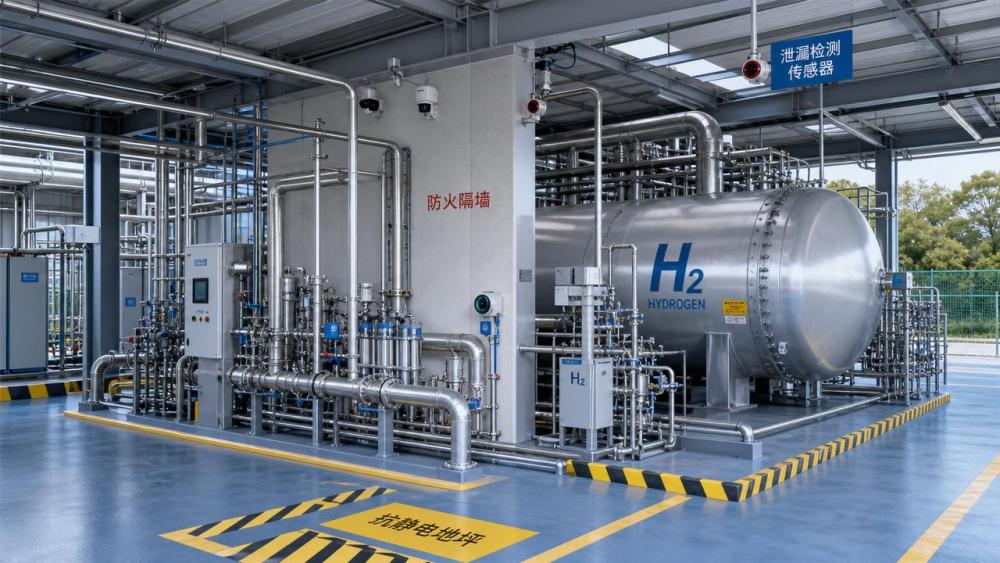
Hydrogen behaves differently from conventional fuels. It diffuses rapidly, burns with low visible flame, and challenges many legacy materials.
That means renovation materials must be evaluated by scenario, not only by catalog strength or general industrial durability.
A coating suitable for a utility building may fail near a compressor skid. A gasket used in natural gas service may leak in hydrogen duty.
Scenario judgment reduces hidden mismatch. It also helps prioritize upgrades when budgets, shutdown windows, and regulatory deadlines are constrained.
G-HEI benchmarking emphasizes this approach. Renovation materials should support asset sovereignty through safer interfaces, traceable performance, and long-term inspection confidence.
Scene 1: Electrolysis Plants Need Materials That Resist Moisture, Current, and Hydrogen Exposure
Electrolysis facilities combine water, power electronics, hydrogen, oxygen, and control systems. Renovation materials must control corrosion and electrical risk together.
Near PEM and alkaline stacks, selection should focus on chemical compatibility, insulation stability, condensate management, and cleanable surface finishes.
Stainless steels, compatible polymer seals, non-sparking flooring, and anti-corrosion coatings often matter more than decorative refurbishment.
Cable trays, partition panels, and floor systems should tolerate humidity without supporting contamination, microbial growth, or conductive residue accumulation.
For this scene, renovation materials should protect process uptime while preserving access for leak detection, sensor calibration, and emergency isolation checks.
Core judgment points for electrolysis areas
- Can surfaces resist alkaline mist, deionized water, and cleaning agents?
- Do seals remain stable under cycling temperature and low-pressure hydrogen?
- Can panels and floor finishes support fast visual inspection?
- Are metallic parts compatible with grounding and bonding plans?
Scene 2: Refueling Stations Require Leak-Tight, High-Pressure Renovation Materials
Hydrogen refueling stations often operate around 35MPa and 70MPa systems. Pressure cycles create demanding conditions for joints, enclosures, and protective barriers.
Renovation materials around dispensers, tube trailers, compressors, and storage banks must support leak prevention and rapid maintenance access.
Critical choices include hydrogen-compatible elastomers, reinforced concrete protection, blast-relief panels, antistatic flooring, and corrosion-resistant fasteners.
Material decisions should align with ISO 19880 and SAE J2601 expectations for fueling safety, temperature control, and system reliability.
Renovation materials in these zones should not hide leakage paths. Smooth, inspectable finishes are preferable to complex cladding with concealed cavities.
Practical station upgrade priorities
- Replace aged gaskets with documented hydrogen-compatible seal materials.
- Upgrade enclosure panels to manage ventilation and deflagration relief.
- Use coatings that resist road salt, fuel residues, and ultraviolet exposure.
- Confirm flooring supports static control and safe emergency movement.
Scene 3: Cryogenic Hydrogen Areas Demand Thermal Shock and Insulation Discipline
Liquid hydrogen logistics introduce extreme cold, oxygen condensation risk, and thermal contraction. Ordinary renovation materials may become brittle or unsafe.
Around cryogenic vessels, transfer lines, and loading bays, renovation materials should tolerate low temperatures and prevent moisture ingress.
Vacuum-insulated systems, suitable stainless steels, cryogenic-rated sealants, and low-temperature insulation jackets are central to safe refurbishment.
Concrete pads and supports should be reviewed for freeze-thaw damage, spill exposure, and differential movement around anchors.
In this scene, renovation materials should protect thermal integrity while keeping relief devices, valves, and inspection points visible and reachable.
Scene 4: Hydrogen-Ready Power Sites Need Fire, Vibration, and Exhaust-Area Compatibility
Hydrogen-ready gas turbines introduce high-temperature equipment, vibration, combustion controls, and fuel-blending interfaces. Renovation materials must support layered safety.
Fire-rated wall systems, high-temperature coatings, vibration-resistant supports, and compatible pipe insulation help reduce operational risk.
Hydrogen blending also changes leak-detection needs. Materials around fuel skids should not obstruct sensors, ventilation paths, or flame detection coverage.
Renovation materials near turbines should be assessed for heat aging, acoustic performance, and resistance to oil, condensate, and cleaning chemicals.
A safe renovation plan links civil works, mechanical interfaces, and instrumentation visibility instead of treating each package separately.
Scene 5: CCUS-Linked Hydrogen Infrastructure Needs Corrosion and Containment Control
Blue hydrogen and CCUS-linked assets involve CO₂, moisture, amines, sour components, and compression systems. Renovation materials face mixed chemical exposure.
Pipe supports, coatings, floor linings, containment curbs, and drainage materials must resist process chemicals and cleaning cycles.
Where hydrogen and CO₂ systems share utility corridors, renovation materials should separate risk zones and preserve clear labeling.
Compatibility matrices should include corrosion allowance, chemical resistance, fire rating, permeability, and inspection frequency.
This prevents a common failure mode: choosing materials that survive one process stream but degrade under adjacent operating conditions.
Different Site Scenes Create Different Material Requirements
The safest renovation materials are selected through risk mapping. Pressure, temperature, chemistry, ignition probability, and maintenance access must be compared.
This comparison avoids one-size-fits-all renovation materials. It also supports safer budgeting by linking each upgrade to a measurable risk.
Scenario-Based Adaptation Advice for Renovation Materials
A reliable renovation plan should begin with a materials register. Each item should include location, exposure, certification, and inspection interval.
For hydrogen-contact parts, documented compatibility is essential. Assumptions from natural gas, ammonia, or general chemical service can create unsafe gaps.
- Use ASME B31.12 alignment for piping and hydrogen service interfaces.
- Check ISO 19880 relevance for station renovations and fueling areas.
- Review SAE J2601 implications where dispenser performance is affected.
- Document material traceability for seals, coatings, fasteners, and panels.
- Prefer inspectable assemblies over sealed decorative finishes.
Renovation materials should also match the shutdown strategy. Fast-curing coatings may help, but only if they meet chemical and fire requirements.
Temporary patches should be controlled carefully. Hydrogen sites require permanent correction plans, not indefinite provisional repairs.
Common Misjudgments When Selecting Renovation Materials
A frequent mistake is treating hydrogen as simply another light gas. This can lead to unsuitable seals, coatings, and enclosure designs.
Another error is prioritizing appearance over inspectability. Attractive cladding can conceal corrosion, blocked vents, or small hydrogen leaks.
Some renovations also overlook galvanic corrosion. Mixed metals, humid environments, and conductive residues can accelerate hidden degradation.
Cryogenic zones are sometimes underestimated. Materials that perform at ambient temperature may crack, shrink, or lose sealing force under extreme cold.
Fire protection can also be misapplied. Fire-rated renovation materials must be placed according to credible ignition paths and emergency response needs.
Questions that prevent poor material choices
- Is hydrogen compatibility documented, not assumed?
- Will the material remain inspectable after installation?
- Does the upgrade change ventilation or detection coverage?
- Can maintenance teams replace the component without unsafe disassembly?
- Does the material support future expansion or higher pressure operation?
How G-HEI Benchmarking Supports Safer Material Decisions
G-HEI connects hydrogen infrastructure renovation with international safety, material-integrity, and efficiency frameworks.
Its benchmarking approach helps compare renovation materials across electrolysis, cryogenic logistics, turbine power, CCUS, and high-pressure refueling systems.
This is especially valuable when assets combine old civil structures with new hydrogen equipment and stricter zero-carbon infrastructure targets.
A benchmarked decision process can identify where titanium-based PEM stacks, vacuum-insulated vessels, or hydrogen-blending turbines impose special material demands.
Renovation materials then become part of sovereign asset security, not a secondary construction detail.
Action Plan: Turn Material Selection Into Site-Level Safety Improvement
Start with a site map that marks hydrogen pressure zones, cryogenic areas, ignition sources, ventilation routes, and emergency access paths.
Then classify renovation materials by exposure. Separate hydrogen-contact, hydrogen-adjacent, fire-protection, containment, structural, and inspection-support materials.
Next, verify compatibility using standards, supplier documentation, operating data, and failure history from comparable hydrogen facilities.
Finally, connect every selected material to an inspection method. If performance cannot be checked, the upgrade may create new uncertainty.
- Define the operating scene before shortlisting products.
- Screen renovation materials for hydrogen, temperature, chemical, and fire compatibility.
- Confirm standards alignment and traceability records.
- Plan installation around safe shutdown and pressure isolation.
- Create post-renovation inspection and maintenance triggers.
Safer hydrogen sites are built through disciplined scenario decisions. The strongest renovation materials are those matched to real exposure and verifiable performance.
For zero-carbon infrastructure, material renovation should advance reliability, compliance, and long-term technical sovereignty at the same time.
Related News
- Electricity Price Volatility Is Rewriting Hydrogen Cost ModelsApr 27, 2026Impact of electricity price on hydrogen cost is transforming industrial decarbonization and large-scale electrolysis. Explore LCOH trends, PPA strategies, and resilient hydrogen infrastructure planning.
- Energy Transition Plans Often Fail at the Grid Connection StageApr 27, 2026Sustainable energy and energy transition projects often fail at grid connection. Learn how hydrogen infrastructure, PEM electrolysis, and industrial decarbonization can avoid delays and protect investment value.
- What Is Slowing Industrial Decarbonization Projects in 2026?Apr 27, 2026Industrial decarbonization faces delays in 2026 as hydrogen infrastructure, sustainable energy access, grid limits, safety standards, and project bankability challenge the energy transition.
- How US policy updates affect PEM hydrogen tax credit eligibilityOct 16, 2026US policy updates reshape PEM hydrogen tax credit eligibility. Explore the 2028 construction deadline, clean power rules, and key steps to protect your project's returns.
Related News
- 00
0000-00
Hydrogen Energy Storage for Data Centers Gets Costly Fast - 00
0000-00
When 99.999% Hydrogen Purity Still Is Not Good Enough - 00
0000-00
When Does a Hydrogen-Ready Gas Turbine Pay Off? - 00
0000-00
Electricity Price Volatility Is Rewriting Hydrogen Cost Models - 00
0000-00
PSA Recovery Rate Drops for Reasons Operators Miss
Dr. Aris Aero
Weekly Insights
Stay ahead with our curated technology reports delivered every Monday.