Global Green Hydrogen Project Pipeline 2026: Where Capacity Is Actually Growing




The global green hydrogen project pipeline 2026 shows a decisive shift from headline announcements to bankable, infrastructure-linked capacity growth. For commercial evaluators, the real question is no longer where projects are proposed, but where electrolysis, transport, storage, and end-use systems are scaling in commercially viable clusters. This analysis highlights the regions, asset classes, and technical benchmarks that are actually shaping investable momentum.
What does the global green hydrogen project pipeline 2026 really measure?
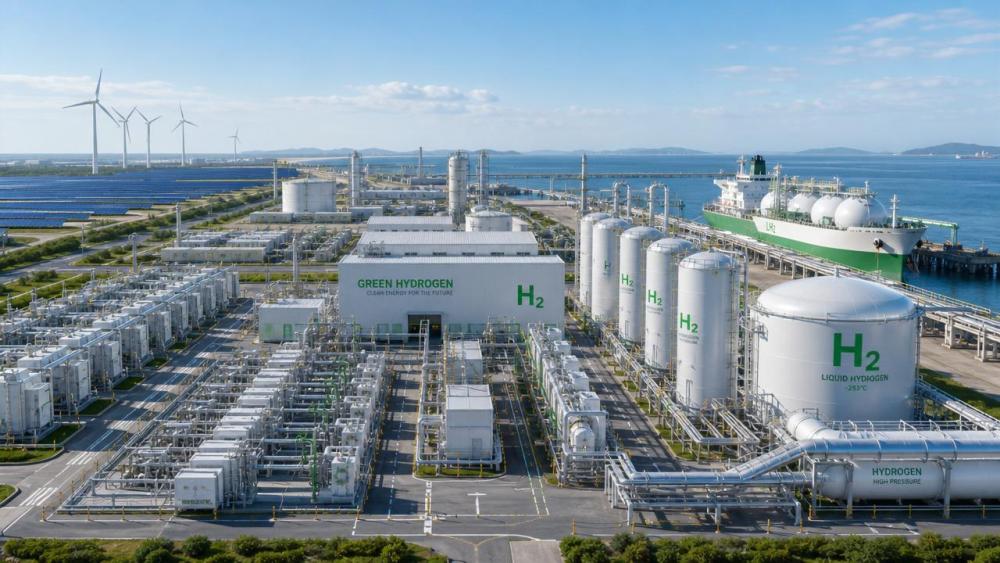
The phrase global green hydrogen project pipeline 2026 is often used as if every announced project has equal weight. In practice, it measures a layered development funnel: announced capacity, pre-feasibility, front-end engineering, final investment decision, construction, commissioning, and real operating output. The strongest signal in 2026 is not total gigawatts announced, but the share of projects moving into financed construction with defined offtake, grid access, water sourcing, and transport integration.
A credible pipeline must connect production with downstream demand. That means electrolyzer deployments should be read alongside ammonia export terminals, hydrogen-ready turbines, industrial heat applications, pipeline conversion plans, liquid hydrogen logistics, and refueling infrastructure. In other words, the global green hydrogen project pipeline 2026 is no longer just a power-to-molecule story; it is a systems-integration story.
This is why technical benchmarking matters. Projects that align with standards such as ISO 19880 for hydrogen fueling, ASME B31.12 for hydrogen piping, and SAE J2601 for fueling protocols tend to present lower execution ambiguity. In parallel, stack durability, compression efficiency, boil-off management, storage material integrity, and interconnection timing have become as important as nameplate electrolyzer size.
Where is capacity actually growing in the global green hydrogen project pipeline 2026?
In the global green hydrogen project pipeline 2026, capacity growth is becoming concentrated in regions that combine low-cost renewables, industrial demand, and policy-backed infrastructure. The leading pattern is cluster-based growth rather than isolated mega-announcements.
1. Middle East and North Africa
This region is strengthening its position through utility-scale solar and wind, export-oriented ammonia strategies, and sovereign infrastructure coordination. Growth is most credible where desalination, port access, and long-term export contracts are already embedded into project design. The advantage is not only cheap power, but the ability to move from molecule production to export logistics at scale.
2. Northern Europe
Northern Europe remains important because hydrogen capacity is linked to steel, refining, chemicals, dispatchable power, and cross-border network planning. The region’s pipeline may look smaller on paper than some export hubs, but its commercial maturity is often higher. Industrial offtake, carbon pricing, and port-based import terminals make it one of the most bankable segments of the global green hydrogen project pipeline 2026.
3. Australia
Australia continues to hold strategic relevance for large-format renewable resources and export ambition. However, the real growth is increasingly tied to phased developments near industrial corridors, mining decarbonization, and derivative fuels such as green ammonia. Projects with realistic water management, transmission planning, and modular expansion pathways are advancing more credibly than single-step mega-sites.
4. North America
North America is seeing meaningful momentum where tax incentives, industrial gas demand, power market access, and hydrogen hub frameworks overlap. Gulf Coast, Midwest, and selected coastal corridors stand out because they already possess storage, pipeline, export, and industrial consumption assets. The strongest projects are integrating hydrogen with CCUS, gas turbines, and existing chemical infrastructure rather than relying on speculative standalone demand.
Which asset classes are driving the most bankable projects?
A central question in the global green hydrogen project pipeline 2026 is whether value is accumulating in production hardware or in integrated infrastructure. The answer is increasingly the latter. Electrolysis remains the entry point, but investable growth follows the chain of connected assets.
- Megawatt-scale electrolysis systems: PEM and alkaline platforms are both scaling, but project confidence rises when stack replacement strategy, balance-of-plant efficiency, and renewable matching profiles are transparent.
- Cryogenic liquid hydrogen logistics: Liquefaction, vacuum-insulated storage, and boil-off control are becoming decisive in export and mobility chains. Logistics bottlenecks can erase upstream cost advantages.
- Hydrogen-ready gas turbine power: Flexible power generation is emerging as a serious demand anchor, especially where grids require long-duration balancing and decarbonized peaking capacity.
- CCUS-linked industrial clusters: Not all decarbonization pathways will be pure green hydrogen from day one. Integrated hydrogen and carbon management corridors can create faster bankable demand.
- High-pressure refueling systems: In transport corridors, 70MPa+ stations supported by SAE J2601-compliant fueling and robust compression architecture can turn demand projections into measurable throughput.
This is where a technical hub such as G-HEI becomes relevant: benchmarking stacks, cryogenic vessels, fueling systems, turbine compatibility, and pipeline materials against internationally recognized standards reduces uncertainty between concept design and operating reality.
How can projects in the global green hydrogen project pipeline 2026 be judged for credibility?
The fastest way to misread the global green hydrogen project pipeline 2026 is to focus only on installed electrolyzer capacity. A stronger evaluation framework asks whether the project can survive technical, commercial, and regulatory scrutiny.
Projects scoring well across these dimensions are the ones actually converting the global green hydrogen project pipeline 2026 from paper capacity into operational assets. The market is rewarding execution discipline over pure scale claims.
What are the biggest risks and misconceptions in reading the pipeline?
One common misconception is that the largest announced project will define regional leadership. In 2026, that is often false. Leadership increasingly belongs to ecosystems that can commission incrementally, secure offtake early, and meet safety and material-integrity requirements without redesign delays.
Another risk is assuming low renewable power automatically delivers low hydrogen cost. Compression, storage, water treatment, liquefaction, transmission upgrades, and curtailment management can materially change project economics. For some sites, the delivered cost of hydrogen or ammonia matters far more than the headline cost of electricity.
There is also a tendency to underprice technical complexity. Hydrogen embrittlement, purity management, cryogenic losses, fueling protocol compliance, and turbine blending limits are not peripheral engineering details; they directly affect insurability, uptime, and contract performance. This is why the global green hydrogen project pipeline 2026 should be assessed through both infrastructure readiness and standards-based engineering maturity.
What should be the next practical step when tracking the global green hydrogen project pipeline 2026?
A practical approach is to move from broad market watching to project-level benchmarking. Start by separating announced capacity from FID-stage and under-construction assets. Then compare projects across five filters: renewable input quality, electrolyzer performance, transport and storage pathway, end-use certainty, and standards compliance. This quickly reveals which clusters are scaling as true industrial systems.
For deeper evaluation, map the pipeline against high-value asset categories: PEM and alkaline electrolysis, liquid hydrogen logistics, hydrogen-ready turbines, CCUS-linked infrastructure, and high-pressure refueling. The global green hydrogen project pipeline 2026 is strongest where these elements are coordinated rather than procured in isolation.
The most useful conclusion is simple: capacity is not growing evenly across the world, and not every headline project deserves equal confidence. Real growth is appearing in commercially integrated corridors with technical discipline, infrastructure sequencing, and verifiable downstream demand. Tracking those signals with rigorous benchmarks will produce a far clearer view of where the hydrogen economy is becoming operational rather than merely aspirational.
If the goal is to interpret the global green hydrogen project pipeline 2026 with decision-grade clarity, focus on where engineering standards, logistics architecture, and bankable offtake converge. That is where sovereign-scale decarbonization capacity is actually being built.
Related News
- Electricity Price Volatility Is Rewriting Hydrogen Cost ModelsApr 27, 2026Impact of electricity price on hydrogen cost is transforming industrial decarbonization and large-scale electrolysis. Explore LCOH trends, PPA strategies, and resilient hydrogen infrastructure planning.
- Energy Transition Plans Often Fail at the Grid Connection StageApr 27, 2026Sustainable energy and energy transition projects often fail at grid connection. Learn how hydrogen infrastructure, PEM electrolysis, and industrial decarbonization can avoid delays and protect investment value.
- What Is Slowing Industrial Decarbonization Projects in 2026?Apr 27, 2026Industrial decarbonization faces delays in 2026 as hydrogen infrastructure, sustainable energy access, grid limits, safety standards, and project bankability challenge the energy transition.
- AEM Stability Remains the Big Question for Scale-UpApr 27, 2026Anion exchange membrane stability is the key barrier to large-scale electrolysis. Discover how AEM impacts industrial decarbonization, hydrogen infrastructure, safety, and scale-up economics.
Related News
- 00
0000-00
Hydrogen Energy Storage for Data Centers Gets Costly Fast - 00
0000-00
When 99.999% Hydrogen Purity Still Is Not Good Enough - 00
0000-00
When Does a Hydrogen-Ready Gas Turbine Pay Off? - 00
0000-00
Electricity Price Volatility Is Rewriting Hydrogen Cost Models - 00
0000-00
PSA Recovery Rate Drops for Reasons Operators Miss
Dr. Aris Aero
Weekly Insights
Stay ahead with our curated technology reports delivered every Monday.