
Packaging Solutions for E-commerce: Reducing Damage and Returns




For enterprise operations, packaging is no longer a back-office cost.
It is a strategic lever for protecting margins, customer trust, and supply chain performance.
Effective packaging solutions for e-commerce reduce product damage, minimize costly returns, improve fulfillment efficiency, and support sustainability goals.
As online order volumes rise, packaging must balance durability, right-sizing, material performance, and brand experience.
This FAQ guide explains how smarter packaging decisions lower risk, improve delivery outcomes, and strengthen long-term competitiveness.
What Are Packaging Solutions for E-commerce?
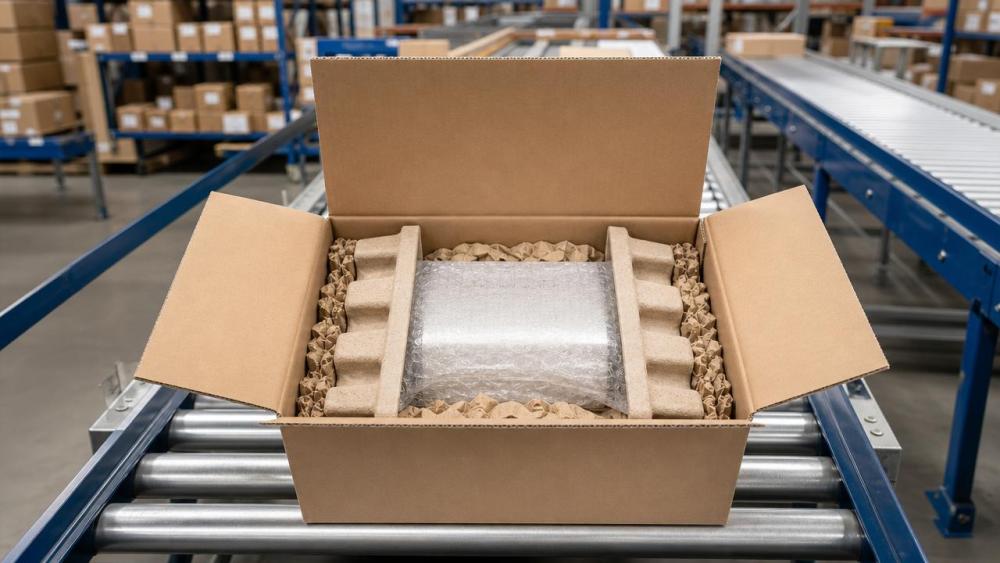
Packaging solutions for e-commerce cover the materials, structures, processes, and data rules used to protect shipped products.
They include mailers, corrugated cartons, inserts, cushioning, void fill, labels, seals, and automated packing systems.
The goal is simple: deliver the right product, in the right condition, at the right cost.
Good packaging solutions for e-commerce also consider carrier networks, warehouse workflows, product fragility, and customer opening experience.
A durable box alone is not enough if it is oversized, costly, or slow to pack.
A lightweight mailer is not enough if it fails during compression, moisture exposure, or last-mile handling.
The strongest approach treats packaging as an engineered system, not a commodity purchase.
How does e-commerce packaging differ from retail packaging?
Retail packaging often focuses on shelf visibility, graphics, and in-store handling.
E-commerce packaging must survive sorting belts, drops, stacking pressure, vibration, and weather exposure.
For this reason, packaging solutions for e-commerce need stronger protective logic and better dimensional control.
They must protect the item without creating excessive material waste or dimensional weight charges.
Why Do Products Get Damaged During E-commerce Delivery?
Damage usually happens when packaging design does not match the real distribution environment.
Common causes include poor cushioning, weak carton strength, excessive void space, moisture sensitivity, and unstable product orientation.
Many returns begin before the parcel reaches the final address.
A box may be dropped from a conveyor, compressed under heavier parcels, or exposed to humidity.
Packaging solutions for e-commerce should be selected after mapping the full journey from fulfillment to doorstep.
Which damage types are most common?
- Crushing from inadequate compression strength.
- Breakage caused by poor impact absorption.
- Scratching from loose internal movement.
- Leakage from weak seals or unstable closures.
- Moisture damage from unsuitable outer materials.
Each damage type requires a different design response.
More material is not always the answer.
Better geometry, better fit, and better testing often deliver stronger results.
How Can Packaging Solutions for E-commerce Reduce Returns?
Returns are expensive because they affect freight, labor, inventory accuracy, resale value, and customer confidence.
Packaging solutions for e-commerce reduce returns by preventing damage and improving delivery consistency.
They also reduce “not as expected” complaints when presentation, labeling, and product protection feel professional.
Right-sized packaging is especially important.
Oversized parcels allow movement, require extra void fill, and often trigger higher shipping costs.
Undersized parcels create pressure points that damage corners, seals, caps, or sensitive components.
What should be measured first?
A practical program starts with return reason codes, damage photos, carrier claims, packaging cost, and customer feedback.
These data points reveal whether failures are structural, operational, or product-specific.
Packaging solutions for e-commerce should then be tested against the highest-volume and highest-loss product categories.
This avoids overengineering low-risk items while prioritizing where financial impact is greatest.
Which Materials Work Best for E-commerce Packaging?
No single material is best for every shipment.
Material choice depends on weight, fragility, moisture exposure, sustainability targets, and fulfillment speed.
Packaging solutions for e-commerce often combine outer protection with internal stabilization.
Corrugated cartons remain widely used because they offer strength, printability, recyclability, and size flexibility.
Paper mailers work well for soft goods, documents, and low-fragility items.
Padded mailers protect small products but must match item shape and impact risk.
Molded pulp, paper cushions, and honeycomb structures support more sustainable protective packaging strategies.
How should sustainability be balanced with protection?
Sustainable packaging fails if it increases damage, replacements, and reverse logistics.
The better goal is damage reduction with lower total environmental impact.
Packaging solutions for e-commerce should reduce empty space, avoid unnecessary layers, and use recyclable materials where practical.
Clear disposal guidance also improves customer participation in recycling or reuse programs.
How Should Packaging Be Chosen for Different Product Categories?
Product category is one of the strongest predictors of packaging risk.
Packaging solutions for e-commerce should not use one standard box for all items.
Fragile goods need impact control and limited internal movement.
Liquids need seal integrity, upright stability, and secondary containment.
Electronics need cushioning, anti-static consideration, and clean presentation.
Apparel usually benefits from flexible mailers, return-ready closures, and moisture resistance.
This category-based method makes packaging decisions easier to standardize and audit.
It also supports faster onboarding of new products and seasonal assortments.
What Mistakes Increase Damage, Cost, and Customer Complaints?
Several packaging mistakes appear inexpensive at first but become costly across high order volumes.
The most common mistake is selecting packaging by unit price alone.
A cheaper carton may increase damage, claims, labor time, and reshipments.
Another mistake is ignoring dimensional weight.
A lightweight but oversized parcel can still create unnecessary freight cost.
Poor sealing also causes preventable losses.
Tape, adhesive, tear strips, and locking tabs must match product weight and carrier handling.
Which assumptions should be challenged?
- “More void fill always means better protection.”
- “All carriers handle parcels the same way.”
- “A premium unboxing experience requires excess material.”
- “Return packaging does not affect loyalty.”
- “Sustainability and strength cannot work together.”
Better packaging solutions for e-commerce replace assumptions with testing, data, and continuous refinement.
How Can Packaging Performance Be Tested Before Scaling?
Testing helps confirm whether packaging can survive real distribution stress.
Common tests include drop, vibration, compression, seal strength, moisture exposure, and transit simulation.
Packaging solutions for e-commerce should be tested with actual products, not only empty samples.
Seasonal temperature changes, product orientation, and mixed-carton shipments should also be considered.
Pilot runs are useful before full rollout.
A limited shipment batch can reveal fulfillment issues, damage patterns, and customer reactions.
The pilot should compare damage rate, packing time, freight cost, and return rate against the current baseline.
What does a practical testing checklist include?
- Define product risk by fragility, weight, value, and leak potential.
- Select packaging concepts for each product family.
- Run drop, compression, and vibration checks.
- Measure packing speed and material consumption.
- Track real shipment results and customer comments.
This process turns packaging from a reactive expense into a measurable performance system.
FAQ Summary: What Should Be Prioritized First?
The best packaging solutions for e-commerce begin with visibility into damage, costs, and operational constraints.
They improve protection while reducing unnecessary weight, empty space, and handling friction.
A strong next step is to audit the top-selling products, highest-return items, and most expensive damage claims.
Then test improved packaging formats with measurable targets for damage reduction, packing speed, freight cost, and customer satisfaction.
With disciplined testing and continuous optimization, packaging solutions for e-commerce become a practical engine for lower returns and stronger delivery performance.
Related News
- Electricity Price Volatility Is Rewriting Hydrogen Cost ModelsApr 27, 2026Impact of electricity price on hydrogen cost is transforming industrial decarbonization and large-scale electrolysis. Explore LCOH trends, PPA strategies, and resilient hydrogen infrastructure planning.
- Energy Transition Plans Often Fail at the Grid Connection StageApr 27, 2026Sustainable energy and energy transition projects often fail at grid connection. Learn how hydrogen infrastructure, PEM electrolysis, and industrial decarbonization can avoid delays and protect investment value.
- What Is Slowing Industrial Decarbonization Projects in 2026?Apr 27, 2026Industrial decarbonization faces delays in 2026 as hydrogen infrastructure, sustainable energy access, grid limits, safety standards, and project bankability challenge the energy transition.
- AEM Stability Remains the Big Question for Scale-UpApr 27, 2026Anion exchange membrane stability is the key barrier to large-scale electrolysis. Discover how AEM impacts industrial decarbonization, hydrogen infrastructure, safety, and scale-up economics.
Related News
- 00
0000-00
Hydrogen Energy Storage for Data Centers Gets Costly Fast - 00
0000-00
When 99.999% Hydrogen Purity Still Is Not Good Enough - 00
0000-00
When Does a Hydrogen-Ready Gas Turbine Pay Off? - 00
0000-00
Electricity Price Volatility Is Rewriting Hydrogen Cost Models - 00
0000-00
PSA Recovery Rate Drops for Reasons Operators Miss
Dr. Aris Aero
Weekly Insights
Stay ahead with our curated technology reports delivered every Monday.