PEM Electrolysis Technology: Performance Metrics That Matter




PEM Electrolysis Technology: Performance Metrics That Matter
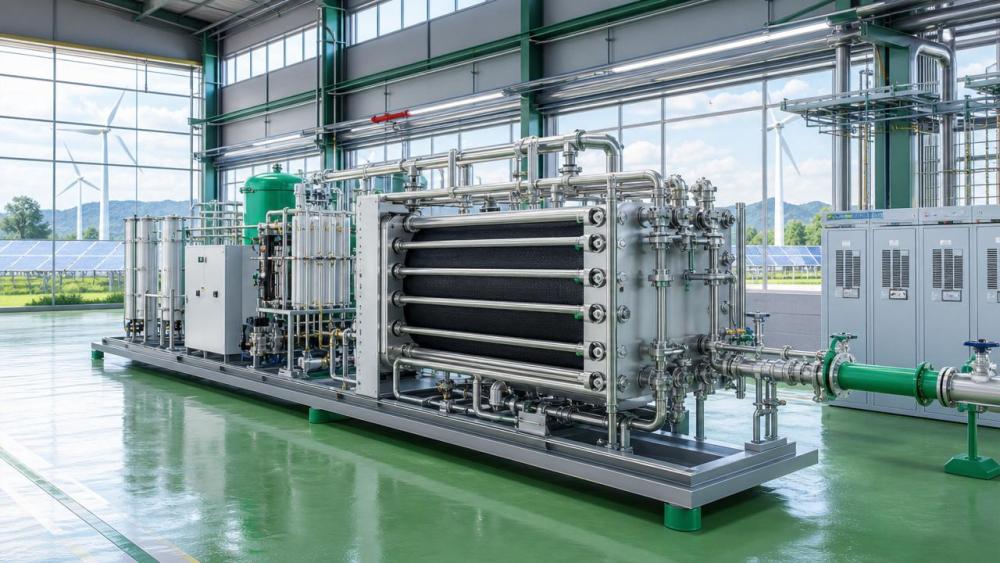
For technical evaluators, PEM electrolysis technology is no longer assessed by hydrogen output alone.
Stack efficiency, dynamic response, degradation rate, water purity tolerance, pressure capability, and balance-of-plant reliability now define project quality.
As utility-scale hydrogen assets expand, PEM electrolysis technology must support bankability, sovereign decarbonization, and strict international safety benchmarks.
This guide provides a practical checklist for comparing megawatt-class systems with lifecycle performance, not brochure claims.
Why PEM Electrolysis Technology Needs a Checklist-Based Review
Hydrogen infrastructure is moving from pilot projects to national energy assets.
That shift changes how PEM electrolysis technology should be evaluated, financed, operated, and protected.
A stack that performs well in laboratory conditions may not deliver the same result under fluctuating renewable power.
Likewise, high nominal efficiency means little if cooling, compression, purification, or controls create hidden energy losses.
Checklist-based evaluation reduces ambiguity.
It connects electrochemical performance with safety, maintenance planning, grid behavior, water treatment, and asset governance.
For G-HEI benchmarking, PEM electrolysis technology must be measured against recognized standards and real operating duty cycles.
Core Checklist for PEM Electrolysis Technology Evaluation
Use the following checklist before comparing prices, delivery timelines, or project-level hydrogen output.
- Verify stack efficiency at rated load, partial load, and realistic operating temperature instead of relying only on ideal lower heating value figures.
- Compare system efficiency after pumps, rectifiers, dryers, cooling systems, controls, and auxiliary loads are included in the energy calculation.
- Measure dynamic response under renewable power fluctuations, including ramp rate, minimum load, cold start, and safe shutdown behavior.
- Confirm degradation rate through documented voltage rise, membrane thinning indicators, catalyst performance, and long-duration operating data.
- Assess water purity requirements, treatment redundancy, conductivity limits, and contamination response under continuous plant operation.
- Check hydrogen outlet pressure, differential pressure control, membrane stress limits, and compatibility with downstream compression strategy.
- Review balance-of-plant reliability, including cooling loops, gas-liquid separation, sensors, power electronics, and safety interlocks.
- Validate materials compatibility for acidic PEM environments, titanium components, coatings, elastomers, and high-pressure hydrogen exposure.
- Examine certification pathways against ISO, ASME, IEC, SAE, and site-specific hydrogen safety requirements before procurement commitment.
- Model lifecycle cost using stack replacement timing, electricity price exposure, water treatment cost, uptime, and service access.
1. Stack Efficiency and System Efficiency
Efficiency is often the first headline metric for PEM electrolysis technology.
However, stack efficiency and total system efficiency are not the same.
Stack figures show electrochemical conversion inside the cell.
System figures show the energy actually needed to produce usable hydrogen at required conditions.
For bankable comparison, request efficiency curves across multiple loads.
PEM electrolysis technology usually benefits from strong part-load flexibility, but auxiliaries may reduce that advantage.
2. Dynamic Response Under Renewable Power
Grid-coupled hydrogen production increasingly depends on solar, wind, and hybrid renewable profiles.
This makes dynamic response a strategic metric for PEM electrolysis technology.
Important indicators include ramp rate, minimum stable load, start-stop frequency, and response to voltage disturbance.
Fast response supports grid balancing, curtailment capture, and power-to-gas flexibility.
Yet repeated cycling can accelerate wear if controls, hydration, and thermal management are weak.
3. Degradation Rate and Stack Lifetime
Degradation defines how PEM electrolysis technology performs after years, not weeks.
A small annual efficiency loss can become a major electricity cost over the project life.
Key evidence includes voltage increase per thousand hours, membrane durability, catalyst stability, and field operating references.
Avoid accepting lifetime claims without test boundaries.
Temperature, current density, water quality, cycling frequency, and pressure conditions all affect degradation.
4. Water Quality and Contamination Control
PEM electrolysis technology requires high-purity water to protect membranes, catalysts, and stack channels.
Poor water quality can create irreversible performance loss.
Evaluate deionization capacity, conductivity monitoring, filtration, dissolved gas control, and emergency isolation logic.
Water strategy should also match regional scarcity, permitting limits, and maintenance accessibility.
In sovereign-scale infrastructure, water treatment is not a side package.
5. Pressure Capability and Downstream Integration
Outlet pressure influences compression energy, equipment selection, safety design, and hydrogen delivery cost.
High-pressure PEM electrolysis technology can reduce downstream compression needs in selected layouts.
Still, pressure must be evaluated alongside membrane stress, gas crossover, sealing integrity, and code compliance.
Projects linked to storage, refueling, pipelines, or turbines need clear pressure interface definitions.
Performance Metrics Table for PEM Electrolysis Technology
Application Scenarios That Change the Evaluation
Renewable Hydrogen Hubs
Renewable hydrogen hubs need PEM electrolysis technology that tolerates variable power without excessive degradation.
The strongest systems combine rapid response with stable hydration, thermal balance, and robust power electronics.
Industrial Feedstock Supply
Industrial users often value uptime, hydrogen purity, and predictable production more than fast cycling.
Here, PEM electrolysis technology should be reviewed for redundancy, purification stability, service intervals, and spare stack strategy.
Hydrogen Refueling and High-Pressure Storage
Refueling infrastructure adds pressure, purity, drying, and safety requirements.
PEM electrolysis technology must align with compression stages, 70MPa-plus storage, dispensing protocols, and SAE J2601-related operations.
Hydrogen-Ready Power Generation
Power generation projects may pair electrolysis with turbines, storage caverns, or blended fuel systems.
In these cases, PEM electrolysis technology should be evaluated with storage dispatch, turbine ramping, and gas quality specifications.
Commonly Overlooked Risks
Ignoring Balance-of-Plant Losses
A high-performing stack cannot compensate for inefficient cooling, drying, power conversion, or gas handling.
Evaluate PEM electrolysis technology as a complete production system, not as a stack brochure.
Underestimating Materials Exposure
Acidic environments, oxygen exposure, and high-pressure hydrogen create demanding material conditions.
Confirm titanium grades, coatings, seals, porous transport layers, and hydrogen-compatible piping standards.
Treating Safety as a Final Approval Step
Safety should shape layout, ventilation, detection, emergency shutdown, electrical zoning, and maintenance access from the beginning.
PEM electrolysis technology must fit the full safety case, including ISO 19880 and ASME B31.12 interfaces where relevant.
Using Unrealistic Operating Assumptions
Annual output models often assume stable electricity, ideal water, and uninterrupted operation.
Stress-test PEM electrolysis technology against curtailment, outages, ambient temperature, water variation, and maintenance downtime.
Practical Execution Steps
- Define the duty cycle first, including renewable variability, annual operating hours, minimum load, and required hydrogen delivery pressure.
- Request evidence-based performance data for PEM electrolysis technology under the same duty cycle, not generic reference conditions.
- Build a lifecycle model that includes electricity consumption, stack replacement, water treatment, service visits, downtime, and certification costs.
- Review safety documentation early, including hazard studies, gas detection logic, pressure relief design, and emergency shutdown philosophy.
- Compare proposals using normalized assumptions, including hydrogen purity, outlet pressure, ambient conditions, and auxiliary energy boundaries.
A disciplined review process prevents misleading comparisons.
It also improves financing confidence because PEM electrolysis technology risks become visible, measurable, and manageable.
Conclusion and Action Guide
PEM electrolysis technology is central to zero-carbon infrastructure, but performance must be judged with engineering discipline.
The most important metrics are not isolated.
Efficiency affects electricity cost, degradation affects replacement planning, and pressure affects downstream system architecture.
Water quality, materials integrity, controls, safety, and balance-of-plant design determine whether performance remains stable.
Before selecting PEM electrolysis technology, create a project-specific checklist and demand comparable evidence from every system proposal.
Then benchmark the results against international standards, lifecycle cost models, and the intended hydrogen delivery pathway.
That approach turns technical claims into investment-grade decisions and supports secure, scalable hydrogen infrastructure.
Related News
- Electricity Price Volatility Is Rewriting Hydrogen Cost ModelsApr 27, 2026Impact of electricity price on hydrogen cost is transforming industrial decarbonization and large-scale electrolysis. Explore LCOH trends, PPA strategies, and resilient hydrogen infrastructure planning.
- Energy Transition Plans Often Fail at the Grid Connection StageApr 27, 2026Sustainable energy and energy transition projects often fail at grid connection. Learn how hydrogen infrastructure, PEM electrolysis, and industrial decarbonization can avoid delays and protect investment value.
- What Is Slowing Industrial Decarbonization Projects in 2026?Apr 27, 2026Industrial decarbonization faces delays in 2026 as hydrogen infrastructure, sustainable energy access, grid limits, safety standards, and project bankability challenge the energy transition.
- Which hydrogen engineering data matters when sizing a PEM electrolyzer?Oct 11, 2026Hydrogen engineering data is essential for sizing a PEM electrolyzer. Explore power, pressure, water quality, degradation, and delivery factors for reliable capacity.
Related News
- 00
0000-00
Hydrogen Energy Storage for Data Centers Gets Costly Fast - 00
0000-00
When 99.999% Hydrogen Purity Still Is Not Good Enough - 00
0000-00
When Does a Hydrogen-Ready Gas Turbine Pay Off? - 00
0000-00
Electricity Price Volatility Is Rewriting Hydrogen Cost Models - 00
0000-00
PSA Recovery Rate Drops for Reasons Operators Miss
Dr. Aris Aero
Weekly Insights
Stay ahead with our curated technology reports delivered every Monday.