Refinery Decarbonization Strategies: Where Green Hydrogen Fits First




Refinery decarbonization strategies are moving from long-range ambition to board-level execution, and green hydrogen is emerging as one of the first practical levers. For complex refining systems, the debate is no longer abstract. The real issue is where hydrogen can reduce emissions fastest without disrupting throughput, product quality, reliability, or compliance. In that context, refinery decarbonization strategies increasingly focus on replacing carbon-intensive hydrogen supply, decarbonizing process heat over time, and linking refinery assets to wider zero-carbon infrastructure. The earliest wins are typically found where hydrogen is already consumed, already measured, and already tied to regulatory and margin performance.
The first shift in refinery decarbonization strategies is from future concept to existing hydrogen demand
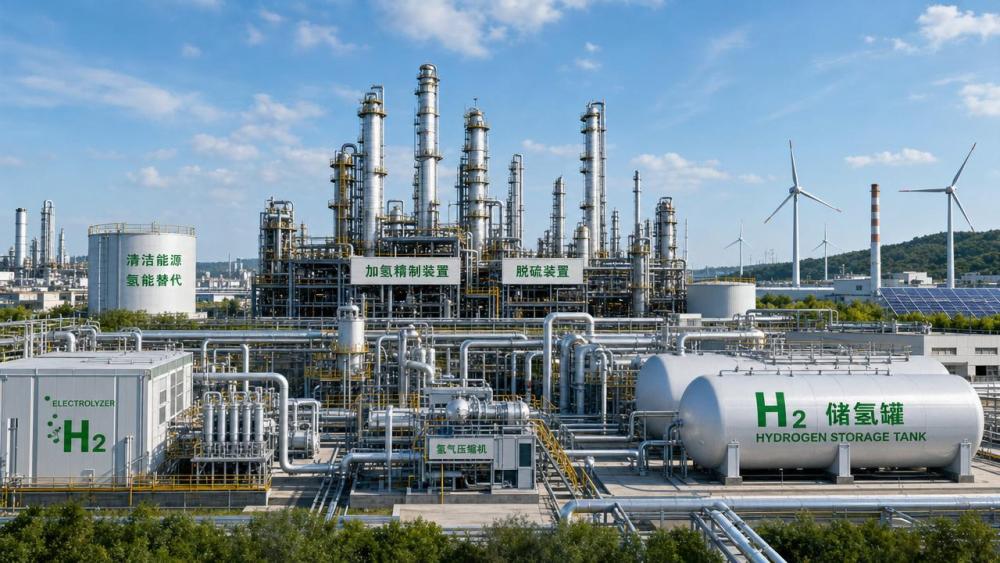
A critical market signal is that green hydrogen is not entering refineries as a speculative fuel first. It is entering as a cleaner substitute for hydrogen that refineries already use every day in hydrotreating, hydrocracking, desulfurization, and product upgrading. That distinction matters because the infrastructure, safety case, operating discipline, and process integration logic already exist inside most large refining sites. As a result, some of the most credible refinery decarbonization strategies begin not with total plant redesign, but with the decarbonization of captive or merchant hydrogen supply.
This is especially relevant as fuel specifications tighten, sulfur removal remains non-negotiable, and lifecycle carbon intensity becomes a commercial differentiator. Refineries that rely on steam methane reforming face direct and indirect pressure from carbon pricing, low-carbon fuel standards, disclosure requirements, and investor scrutiny. Green hydrogen therefore fits first where it can displace gray hydrogen while preserving the operating role hydrogen already plays in refinery chemistry.
Why green hydrogen is moving up the refinery agenda now
The acceleration behind refinery decarbonization strategies is not driven by one factor alone. It is the result of regulation, energy security, asset renewal cycles, and improving project economics across the hydrogen value chain. For integrated industrial groups, the refinery is also becoming a strategic node in broader hydrogen, CCUS, and clean fuels planning.
For organizations tracking sovereign-scale energy transition, these drivers reinforce a larger pattern: refinery decarbonization strategies are becoming part of national infrastructure strategy rather than isolated plant upgrades. Electrolysis, storage, materials integrity, hydrogen-ready piping, and transport interfaces all matter because a refinery is both an industrial consumer and a future energy hub.
Where green hydrogen fits first inside refinery operations
Not every refinery use case delivers the same value at the same time. The strongest refinery decarbonization strategies prioritize applications where substitution risk is low and carbon impact is measurable. In most cases, green hydrogen fits first in three areas.
1. Hydrotreating and desulfurization units
These units already consume substantial hydrogen volumes. Replacing gray hydrogen here can produce immediate emissions benefits without changing the end purpose of the process. The operational challenge is less about process chemistry and more about supply continuity, purity management, compression, and balancing hourly production with refinery demand.
2. Hydrocracking and upgrading pathways
Where heavier feedstocks are upgraded into higher-value products, hydrogen intensity is significant. Green hydrogen can support lower-carbon upgrading strategies, especially where product slates are being optimized to meet cleaner fuel standards. This makes it one of the more strategic pathways in refinery decarbonization strategies, though economics depend heavily on electricity price and plant utilization.
3. New integrated low-carbon fuel platforms
Refineries evolving toward sustainable aviation fuel, renewable diesel co-processing, e-fuels, or hybrid petrochemical models often need a cleaner hydrogen backbone. In such cases, green hydrogen is not just a substitution input. It becomes an enabling platform for future product portfolios, export positioning, and infrastructure partnerships.
The impact extends beyond process units to infrastructure, risk, and capital planning
Effective refinery decarbonization strategies affect more than emissions inventories. They reshape utility systems, storage planning, rotating equipment requirements, control architecture, and asset integrity programs. Hydrogen produced through electrolysis may introduce new load profiles, water treatment demands, oxygen handling considerations, and pressure-management issues. For facilities operating at large scale, these are infrastructure questions, not just sustainability questions.
There is also a capital allocation implication. Green hydrogen projects compete internally with efficiency upgrades, CCUS, flare reduction, furnace optimization, and power decarbonization. That is why the sequencing of refinery decarbonization strategies matters. The best early projects are those that align carbon reduction with operational resilience, permitability, and long-life asset modernization rather than relying only on a favorable headline carbon metric.
- Hydrogen purity, compression, and storage must align with refinery process specifications.
- Piping, valves, and metallurgy should be reviewed for hydrogen service under relevant standards.
- Electrical integration is central, especially where electrolyzers interact with renewable power and grid constraints.
- Safety frameworks must be designed at industrial scale, not treated as a minor retrofit issue.
What deserves the closest attention when evaluating refinery decarbonization strategies
The next phase of refinery decarbonization strategies will be decided by execution discipline. Green hydrogen can create value, but only when technical fit, economics, and infrastructure readiness are assessed together. Several decision points deserve close attention.
- Hydrogen baseline: quantify current hydrogen consumption by unit, purity class, source, variability, and carbon intensity.
- Replacement logic: determine whether the first move is full substitution, partial blending, or dedicated low-carbon supply for selected units.
- Power coupling: model electrolyzer utilization, renewable sourcing, curtailment exposure, and grid dependence.
- Standards and integrity: assess compliance pathways linked to hydrogen piping, refueling interfaces if relevant, storage vessels, and process safety frameworks.
- Commercial structure: compare on-site production, third-party supply, tolling, or hub-based procurement models.
- Portfolio fit: evaluate whether hydrogen investment strengthens wider decarbonization options such as hydrogen-ready turbines, CCUS, or low-carbon fuels exports.
These priorities are particularly important in an environment where capital discipline remains tight. Refinery decarbonization strategies succeed when they are framed not as isolated green projects, but as integrated industrial system upgrades with measurable reliability and compliance outcomes.
A practical way to judge readiness and sequence the next moves
A useful approach is to stage refinery decarbonization strategies by readiness rather than by ambition alone. This helps avoid overbuilding infrastructure before process demand, power access, and regulatory incentives are clear.
This sequencing reflects a broader industrial reality. Green hydrogen does not need to solve every refinery emissions challenge on day one to justify action. It needs to fit first where operational logic is strongest and where the plant can build confidence, standards compliance, and infrastructure maturity for broader transformation later.
In the years ahead, the most resilient refinery decarbonization strategies will likely combine multiple pathways: efficiency upgrades, CCUS where justified, cleaner electricity, and targeted hydrogen deployment. But among these options, green hydrogen stands out because it can enter the refinery through existing demand channels while opening the door to future low-carbon fuels, hydrogen logistics, and sovereign-grade energy system integration.
The most productive next step is to conduct a unit-by-unit hydrogen opportunity assessment tied to carbon intensity, process criticality, infrastructure compatibility, and power sourcing scenarios. That level of analysis turns refinery decarbonization strategies from broad aspiration into an investable, technically defensible roadmap—one that identifies exactly where green hydrogen fits first, and why.
Related News
- Electricity Price Volatility Is Rewriting Hydrogen Cost ModelsApr 27, 2026Impact of electricity price on hydrogen cost is transforming industrial decarbonization and large-scale electrolysis. Explore LCOH trends, PPA strategies, and resilient hydrogen infrastructure planning.
- Energy Transition Plans Often Fail at the Grid Connection StageApr 27, 2026Sustainable energy and energy transition projects often fail at grid connection. Learn how hydrogen infrastructure, PEM electrolysis, and industrial decarbonization can avoid delays and protect investment value.
- What Is Slowing Industrial Decarbonization Projects in 2026?Apr 27, 2026Industrial decarbonization faces delays in 2026 as hydrogen infrastructure, sustainable energy access, grid limits, safety standards, and project bankability challenge the energy transition.
- AEM Stability Remains the Big Question for Scale-UpApr 27, 2026Anion exchange membrane stability is the key barrier to large-scale electrolysis. Discover how AEM impacts industrial decarbonization, hydrogen infrastructure, safety, and scale-up economics.
Related News
- 00
0000-00
Hydrogen Energy Storage for Data Centers Gets Costly Fast - 00
0000-00
When 99.999% Hydrogen Purity Still Is Not Good Enough - 00
0000-00
When Does a Hydrogen-Ready Gas Turbine Pay Off? - 00
0000-00
Electricity Price Volatility Is Rewriting Hydrogen Cost Models - 00
0000-00
PSA Recovery Rate Drops for Reasons Operators Miss
Dr. Aris Aero
Weekly Insights
Stay ahead with our curated technology reports delivered every Monday.