Stack Cold-Start Time: Why Seconds Matter in Flexible Hydrogen Plants




In flexible hydrogen plants, stack cold-start time (seconds) is more than a technical metric—it directly shapes dispatchability, asset utilization, and project economics. For project managers and engineering leads balancing grid-responsive operations with safety and reliability, every second can influence startup strategy, power-market participation, and long-term system performance. Understanding why faster, controlled starts matter is essential to building competitive hydrogen infrastructure.
For large-scale electrolysis assets operating under variable renewable input, startup behavior is no longer a secondary engineering detail. In a market shaped by intraday power volatility, ancillary services, curtailment recovery, and strict uptime targets, the difference between a 30-second and a 300-second stack response can affect hydrogen output planning, balance-of-plant stress, and revenue capture. For decision-makers responsible for project delivery, procurement, commissioning, and long-term performance benchmarking, stack cold-start time (seconds) must be evaluated as a plant-level design variable rather than a standalone laboratory number.
This is especially relevant in sovereign-scale hydrogen programs and utility-linked projects, where electrolyzer fleets must integrate with grid codes, safety regimes, and asset-integrity standards. In such environments, faster starts are valuable only when they are repeatable, controlled, and aligned with thermal management, water quality, power electronics, and operating logic. That is why project teams need a practical framework for assessing startup performance in the context of flexible plant design.
Why stack cold-start time matters beyond the stack itself
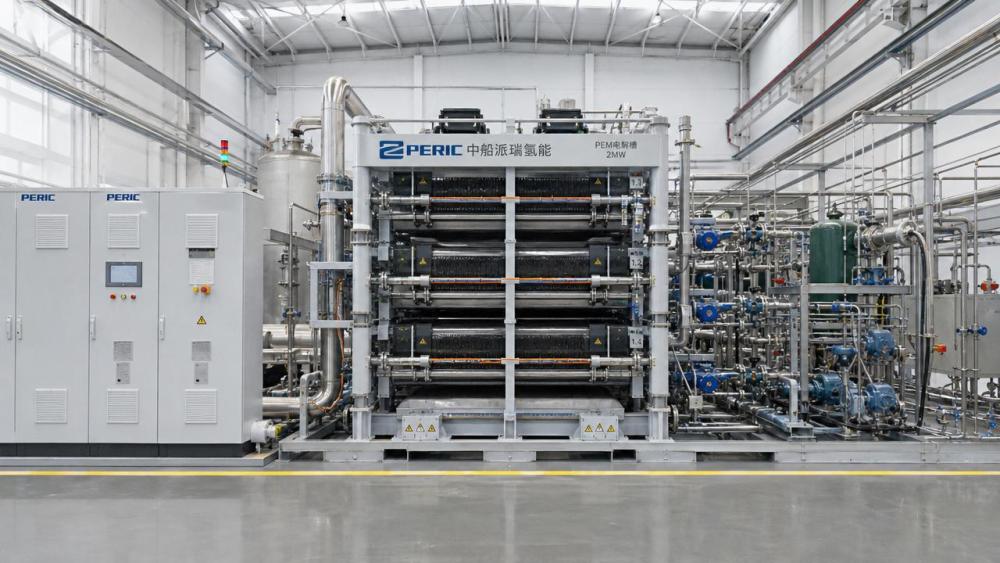
When engineers discuss stack cold-start time (seconds), the focus often begins with how quickly an electrolyzer can move from a non-operating state to stable hydrogen production. But in real projects, cold start affects at least 5 interconnected layers: power conversion, water treatment, thermal conditioning, gas handling, and control system sequencing. If even one of these layers lags, the stack’s theoretical startup speed may never be achieved in field operation.
In flexible hydrogen plants, cold-start performance is closely linked to dispatchability. A plant participating in renewable smoothing or responding to 15-minute market intervals cannot rely on startup procedures that consume a large share of the dispatch window. If a system needs 8 to 12 minutes to reach stable output after a cold state, the commercial value of short-duration operating opportunities may decline sharply. By contrast, a system that can complete a controlled startup in under 60 to 180 seconds may access more operating windows while reducing lost production time.
Operational consequences for project managers
For project managers, the startup metric influences scheduling, acceptance testing, and equipment selection. It also changes how risk is allocated across EPC scope, OEM guarantees, and O&M contracts. A fast startup promise that excludes ambient-temperature limits, preheated water, or a warmed balance-of-plant can create disputes during site acceptance. That is why startup definitions should specify at least 4 conditions: initial stack temperature, standby duration, auxiliary systems status, and target production stability point.
- Faster response can improve utilization of curtailed renewable power during short surplus periods.
- Shorter startup sequences may reduce idle losses across compressors, chillers, and recirculation loops.
- Poorly controlled rapid starts can increase membrane stress, voltage imbalance, and maintenance frequency.
- Startup repeatability often matters more than best-case speed measured under ideal factory conditions.
What “seconds” really means in field conditions
A useful procurement approach is to separate three timing definitions. First is command-to-energization time, often measured in a few seconds. Second is stack-to-stable-current time, which may range from 20 to 180 seconds depending on technology and thermal state. Third is plant-to-specification-output time, which can extend to several minutes if drying, pressure equalization, or downstream purity control is required. Without this distinction, comparisons between vendors become misleading.
The table below shows how different startup definitions influence project evaluation for flexible hydrogen plants.
The key conclusion is that startup speed should be specified at the plant boundary, not only at the cell-stack boundary. For procurement, the most bankable metric is often the time required to reach stable, specification-grade hydrogen under declared ambient and standby conditions.
Technology context: PEM and alkaline systems
PEM electrolyzers are generally better suited to rapid load changes and shorter cold-start sequences because of their dynamic response characteristics. Alkaline systems can also operate flexibly, but startup behavior may be more constrained by electrolyte management, thermal inertia, and system architecture. For multi-megawatt projects, however, the practical result depends less on technology labels alone and more on system integration quality, standby strategy, and control sophistication.
How cold-start performance affects plant economics, reliability, and risk
A common mistake in project evaluation is treating stack cold-start time (seconds) as a performance bonus rather than an economic lever. In reality, startup duration influences 3 major value drivers: hydrogen production recovered from intermittent power, degradation exposure during repeated cycling, and the ability to capture high-value grid service intervals. Even if the direct energy used during startup is small, the cumulative operational effect across 5,000 to 20,000 annual start-stop events can be significant in highly flexible plants.
Dispatch revenue and curtailed power capture
In renewable-linked projects, curtailed energy windows may last only 10 to 45 minutes. If startup consumes 6 minutes and stabilization takes another 4 minutes, as much as 22% to 100% of the available window can be diluted or lost. Faster starts therefore increase the fraction of time spent in productive operation. This matters especially for wind-heavy regions with volatile output profiles and for solar-linked assets responding to cloud-driven ramp events.
For engineering leads, the practical question is not simply whether a stack can start fast, but whether it can do so repeatedly without triggering power-quality issues, water imbalance, or thermal shock. A plant that starts in 40 seconds but requires frequent reset logic or unscheduled intervention may underperform a plant that consistently starts in 120 seconds with higher stability.
Cycling stress and lifetime considerations
Cold starts can amplify mechanical and electrochemical stress. Rapid hydration changes, temperature gradients, and current transients can accelerate wear if startup sequencing is too aggressive. For projects targeting 10 to 20 years of operational life, the acceptable startup profile must balance speed with durability. This is particularly relevant when annual cycling exceeds 1,000 starts or when plants operate under harsh ambient conditions such as sub-zero winters or desert heat above 40°C.
The most effective project teams define startup not as a minimum-time race, but as an engineered envelope. That envelope should include acceptable voltage rise rates, thermal gradients, gas purity milestones, and maximum allowable differential pressure during the first 30 to 180 seconds.
Risk categories to assess during FEED and procurement
Before finalizing vendor selection, teams should map startup-related risks across design, operations, and compliance. The table below provides a practical framework for FEED reviews and technical clarification rounds.
This risk screen helps teams avoid a common procurement failure: selecting equipment based on nominal dynamic response while overlooking plant-level startup constraints. In many projects, the hidden bottleneck is not the stack, but the coordination between auxiliaries, controls, and downstream interfaces.
How to specify and improve stack cold-start time in flexible hydrogen projects
Improving stack cold-start time (seconds) begins with disciplined specification writing. Project teams should avoid generic requests such as “fast startup required” and instead define measurable startup scenarios. A robust technical specification usually includes at least 6 items: initial temperature range, no-load duration before start, available auxiliary preconditioning, target load level, hydrogen purity threshold, and allowable time to stable operation.
A 5-step specification and validation process
- Define operating scenarios: full cold shutdown, warm standby, overnight idle, and renewable-triggered rapid start.
- Set measurable endpoints: for example, 90% rated current within 60 seconds, or on-spec hydrogen within 5 minutes.
- Assign ambient envelopes: such as -10°C to 35°C, or indoor conditioned operation at 10°C to 25°C.
- Link performance to degradation assumptions: especially if daily cycling exceeds 3 to 10 starts.
- Validate in FAT, SAT, and early operations using the same timing definitions and data logging rules.
This process is particularly important for projects connected to hydrogen-ready turbines, high-pressure refueling systems, or liquid hydrogen logistics, where startup delays at the electrolyzer can propagate through the wider zero-carbon infrastructure chain. If downstream assets require synchronized gas availability, even a 2-minute mismatch can disrupt compression staging or storage dispatch plans.
Design measures that typically improve startup performance
Several design and operational measures can shorten startup time without compromising safety. These include smart standby modes, optimized thermal retention, faster control-loop initialization, and tighter integration between power electronics and stack controls. In some plants, maintaining selected auxiliaries in low-energy standby can reduce startup delay by 30% to 70% compared with a full cold shutdown, though this must be weighed against parasitic load and site operating philosophy.
- Use clear standby-state logic to avoid unnecessary total system resets.
- Coordinate water purification readiness with startup commands to prevent delayed feed availability.
- Review insulation and heat-trace strategy for outdoor installations with freeze exposure.
- Ensure data historians capture sub-minute startup events for troubleshooting and warranty validation.
Questions to ask vendors during technical clarification
Procurement teams should ask whether the stated stack cold-start time (seconds) assumes deionized water already at temperature, energized auxiliaries, or previously pressurized gas circuits. They should also ask how performance changes after 6 months, 24 months, and under high cycling frequency. Another critical question is whether rapid startup affects maintenance intervals for valves, seals, membranes, or power-conversion equipment.
Common mistakes that reduce real-world startup performance
Many delays originate from integration oversights rather than stack limitations. Examples include undersized heaters, delayed PLC interlocks, conservative purge timing inherited from unrelated plant designs, and poorly tuned ramp-rate constraints. Another frequent issue is testing startup in controlled factory conditions, then expecting identical results on remote outdoor sites with different humidity, wind exposure, and utility power quality.
For project execution teams, the lesson is straightforward: treat startup as a cross-disciplinary performance package. Mechanical, electrical, control, process, and safety functions all need alignment. In large hydrogen projects, a 1-second improvement at the stack level is less valuable than a 60-second reduction in total plant readiness achieved through better sequencing and interface management.
What this means for benchmark-driven hydrogen infrastructure planning
As hydrogen infrastructure scales toward national and utility-grade deployment, benchmarking must move beyond nameplate capacity and energy consumption alone. Startup agility now belongs alongside efficiency, material integrity, safety compliance, and lifecycle durability as a core project metric. For stakeholders evaluating PEM and alkaline assets, stack cold-start time (seconds) offers a practical lens into how well a system can serve flexible, grid-linked, and sovereign-scale decarbonization goals.
For organizations such as G-HEI, which connect megawatt-scale electrolysis with rigorous international frameworks, the value of this metric lies in comparability and decision quality. When startup definitions are standardized, technical teams can compare assets more fairly, align EPC packages more precisely, and reduce downstream commissioning surprises. That makes startup performance not just a design detail, but a strategic benchmark for resilient hydrogen systems.
If your project must balance dynamic renewable integration, asset security, safety compliance, and long-term economics, now is the time to review how startup metrics are specified, tested, and guaranteed. To evaluate stack cold-start time (seconds) in the context of real plant performance, procurement risk, and infrastructure readiness, contact us to get a tailored technical benchmark, request a customized solution, or learn more about implementation pathways for flexible hydrogen plants.
Related News
- Electricity Price Volatility Is Rewriting Hydrogen Cost ModelsApr 27, 2026Impact of electricity price on hydrogen cost is transforming industrial decarbonization and large-scale electrolysis. Explore LCOH trends, PPA strategies, and resilient hydrogen infrastructure planning.
- Energy Transition Plans Often Fail at the Grid Connection StageApr 27, 2026Sustainable energy and energy transition projects often fail at grid connection. Learn how hydrogen infrastructure, PEM electrolysis, and industrial decarbonization can avoid delays and protect investment value.
- What Is Slowing Industrial Decarbonization Projects in 2026?Apr 27, 2026Industrial decarbonization faces delays in 2026 as hydrogen infrastructure, sustainable energy access, grid limits, safety standards, and project bankability challenge the energy transition.
- AEM Stability Remains the Big Question for Scale-UpApr 27, 2026Anion exchange membrane stability is the key barrier to large-scale electrolysis. Discover how AEM impacts industrial decarbonization, hydrogen infrastructure, safety, and scale-up economics.
Related News
- 00
0000-00
Hydrogen Energy Storage for Data Centers Gets Costly Fast - 00
0000-00
When 99.999% Hydrogen Purity Still Is Not Good Enough - 00
0000-00
When Does a Hydrogen-Ready Gas Turbine Pay Off? - 00
0000-00
Electricity Price Volatility Is Rewriting Hydrogen Cost Models - 00
0000-00
PSA Recovery Rate Drops for Reasons Operators Miss
Dr. Aris Aero
Weekly Insights
Stay ahead with our curated technology reports delivered every Monday.