
Hydrogen Infrastructure Financing Models Explained




Hydrogen Infrastructure Financing Models Explained
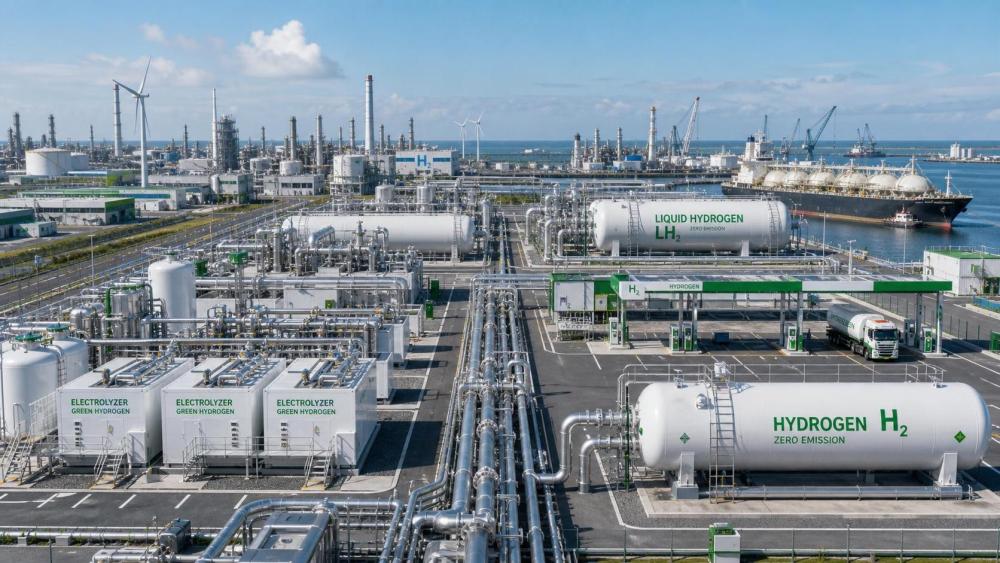
As hydrogen projects move from pilots to sovereign-scale assets, financing discipline matters as much as engineering quality.
That is why hydrogen infrastructure financing models now sit at the center of investment approval, procurement timing, and risk allocation.
The challenge is simple to state but hard to solve.
Hydrogen transport, storage, electrolysis, refueling, and conversion systems require large upfront capital and long asset lives.
Returns, however, depend on demand growth, power pricing, policy stability, and technology performance.
In practice, the best hydrogen infrastructure financing models align revenue certainty with technical bankability.
They also connect capital structure to real operating conditions, not just optimistic transition narratives.
For decision-makers reviewing budgets, this means evaluating who carries construction risk, volume risk, regulatory risk, and residual value risk.
This article breaks down the main hydrogen infrastructure financing models, where each works best, and how to judge cost, resilience, and approval readiness.
Why financing structures matter in hydrogen infrastructure
Hydrogen infrastructure is not one asset class.
It includes PEM and ALK electrolysis plants, pipeline retrofits, cryogenic logistics, 70MPa refueling systems, gas turbine integration, and CCUS-linked hubs.
Each segment has a different cash-flow profile.
A refueling corridor may scale with mobility uptake.
A sovereign hydrogen port may depend on export contracts and shipping capacity.
An industrial hydrogen hub may rely on anchor offtake from steel, ammonia, refining, or dispatchable power.
Because of this, hydrogen infrastructure financing models must match asset function.
A low-cost debt structure can still fail if revenue is too uncertain.
A higher-cost blended structure may actually be safer if it unlocks guarantees, grants, and better procurement terms.
More clearly now, lenders and strategic investors want proof of code compliance, materials integrity, safety certification, and operating efficiency.
Standards such as ISO 19880, ASME B31.12, and SAE J2601 are not just technical references.
They shape insurability, financing covenants, and asset valuation.
The core hydrogen infrastructure financing models
Most bankable projects use one of four primary structures, or a layered combination of them.
1. Corporate balance sheet financing
This model works when a utility, industrial major, or global energy group funds the project directly.
It is often the fastest route for early hydrogen deployment.
Approval is easier when the sponsor already understands long-cycle infrastructure and can absorb ramp-up volatility.
The tradeoff is concentration risk on the sponsor’s own balance sheet.
2. Project finance
Project finance isolates the asset in a special-purpose vehicle and repays debt from project cash flow.
This is one of the most discussed hydrogen infrastructure financing models because it limits sponsor exposure.
Still, it only works when offtake contracts, supply agreements, and performance guarantees are strong enough.
Without those protections, lenders price risk aggressively.
3. Public-private partnership structures
PPP structures are useful for ports, corridors, storage terminals, and national hydrogen backbone assets.
Public support can lower financing costs through land access, concessional capital, demand support, or regulated returns.
In hydrogen, PPP design matters because sovereign priorities often extend beyond immediate project returns.
4. Blended finance
Blended finance combines commercial debt or equity with grants, guarantees, climate funds, export credit, or development finance.
Among hydrogen infrastructure financing models, this is often the bridge between pilot economics and investment-grade scale.
It helps projects survive early years when utilization is still building.
How to choose the right model by asset type
Not every structure fits every asset.
That is where many approval delays begin.
In real procurement reviews, the financing model should follow the revenue engine.
If cash flow depends on one anchor customer, contract depth matters more than headline market growth.
If the asset supports national resilience, sovereign backing may be more rational than forcing pure merchant economics.
The risk lenses that shape approval
Strong hydrogen infrastructure financing models do not eliminate risk.
They place each risk with the party best able to manage it.
- Construction risk should sit with experienced EPC contractors under clear performance terms.
- Technology risk must be tested against operating data, stack life, boil-off rates, compression reliability, and maintenance needs.
- Offtake risk needs minimum-volume commitments, pricing floors, or indexed purchase agreements.
- Regulatory risk should be covered through tariff clarity, permitting discipline, and stable certification frameworks.
- Power-price risk matters deeply for electrolysis and should be hedged or contractually managed.
- Refinancing risk increases when early debt assumptions depend on future policy support.
A useful rule is this.
If a project model needs heroic assumptions to meet coverage ratios, the financing structure is not the real problem.
The commercial architecture is.
Strategic partnerships and industrial alignment
Another clear trend is the rise of strategic joint ventures.
These partnerships connect producers, infrastructure owners, equipment suppliers, and end users in one capital framework.
This can improve the bankability of hydrogen infrastructure financing models in three ways.
- It creates demand visibility through captive or semi-captive offtake.
- It aligns technical specifications across production, storage, transport, and end use.
- It shares downside risk between parties that benefit from long-term hydrogen adoption.
For example, a hydrogen-ready turbine project backed by a utility, a gas supplier, and an industrial cluster has a very different risk profile.
It is far stronger than a stand-alone asset hoping the market catches up.
The same logic applies to cryogenic export chains.
If vessel suppliers, terminal operators, and offtakers align early, financing terms usually improve.
A practical checklist for cost and procurement review
When comparing hydrogen infrastructure financing models, a practical review framework helps avoid expensive misreads.
- Check whether the revenue model is contracted, regulated, or merchant.
- Test utilization assumptions against real ramp rates, not policy headlines.
- Review technical compliance with ISO 19880, ASME B31.12, SAE J2601, and related national codes.
- Confirm warranty depth, stack replacement assumptions, and maintenance obligations.
- Map every subsidy, tax credit, guarantee, and concession to a timing risk.
- Stress-test debt service under lower demand, delayed commissioning, and higher power costs.
- Assess residual value honestly, especially for early-generation equipment.
This is where a technical benchmarking platform such as G-HEI becomes valuable.
Financing decisions improve when asset performance, safety standards, materials integrity, and efficiency data are reviewed together.
That reduces the gap between engineering claims and investable reality.
What strong hydrogen financing looks like now
The best hydrogen infrastructure financing models are not defined by novelty.
They are defined by discipline.
They combine realistic demand assumptions, proven technical standards, layered risk support, and procurement terms that protect long-term cash flow.
From a cost perspective, the cheapest capital is not always the best capital.
The stronger option is usually the one that preserves resilience when markets tighten or utilization lags.
As hydrogen networks expand, approval quality will increasingly depend on how well financing matches infrastructure purpose.
That also means better decisions start earlier, with integrated review of standards, asset design, counterparties, and commercial structure.
If the goal is a bankable zero-carbon system, hydrogen infrastructure financing models must be built with the same rigor as the infrastructure itself.
Related News
- What drives hydrogen refueling station equipment prices?Sep 09, 2026Hydrogen refueling station equipment price: discover the key cost drivers, from compression and storage to cooling, safety, compliance, and lifecycle value.
- What should a turnkey hydrogen refueling station include?Sep 08, 2026Hydrogen refueling stations turnkey: discover essential equipment, safety systems, controls, site integration, and lifecycle support for reliable 70 MPa fueling.
- What determines the price of a hydrogen refueling station?Aug 31, 2026Hydrogen refueling stations price depends on capacity, pressure, supply model, site conditions, and safety scope. Discover key cost drivers for smarter investment planning.
- When does high pressure hydrogen refueling make sense for heavy duty fleetsAug 23, 2026High pressure hydrogen refueling for heavy duty fleets makes sense when uptime, fast turnaround, and long range matter most. Learn where 70MPa+ delivers real operational value.
Related News
- 00
0000-00
Hydrogen Energy Storage for Data Centers Gets Costly Fast - 00
0000-00
When 99.999% Hydrogen Purity Still Is Not Good Enough - 00
0000-00
When Does a Hydrogen-Ready Gas Turbine Pay Off? - 00
0000-00
Electricity Price Volatility Is Rewriting Hydrogen Cost Models - 00
0000-00
PSA Recovery Rate Drops for Reasons Operators Miss
Dr. Victor Gear
Weekly Insights
Stay ahead with our curated technology reports delivered every Monday.