PSA Recovery Rate: When Higher Isn't Always Better




In hydrogen purification, the pressure swing adsorption (psa) recovery rate is often treated as a headline KPI, but a higher number does not always mean better system performance. For operators, the real challenge is balancing hydrogen yield with purity, energy use, cycle stability, and downstream safety requirements. Understanding this trade-off is essential for making smarter decisions in zero-carbon process operations.
Why does pressure swing adsorption (psa) recovery rate mislead so many operators?
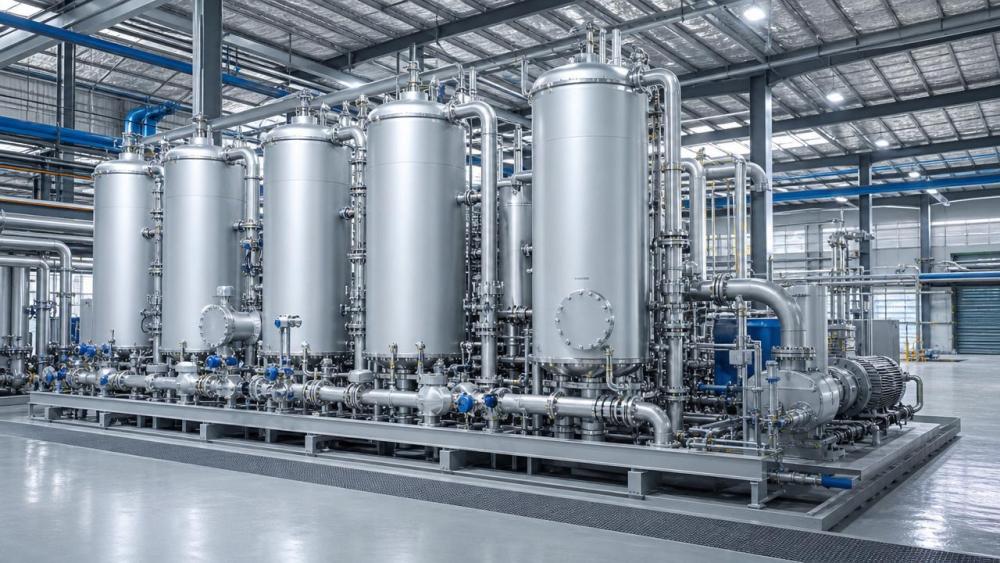
In daily plant discussions, the pressure swing adsorption (psa) recovery rate is easy to elevate into a single measure of unit quality. It sounds intuitive: recover more hydrogen, waste less feed, improve economics. Yet operators know the field reality is less simple.
A PSA unit does not operate in isolation. It sits inside a broader hydrogen value chain that may include PEM or alkaline electrolysis, buffer storage, compression, drying, liquefaction, turbine blending, refueling, or process-gas reuse. When the recovery target rises too aggressively, other variables often move in the wrong direction.
For example, pushing recovery may increase impurity slip, extend cycle time beyond stable adsorption behavior, raise equalization complexity, or create off-gas compositions that are harder to handle safely. In sovereign-scale hydrogen infrastructure, these trade-offs affect not just yield, but also compliance, asset integrity, and downstream operability.
- Higher recovery can reduce hydrogen loss, but may also narrow the process margin needed to maintain product purity under feed fluctuations.
- A strong recovery number may hide higher compression demand, deeper bed cycling, or more difficult valve sequencing.
- Operators focused only on recovery may miss the real plant objective: reliable hydrogen delivery at the required specification and pressure.
What does the pressure swing adsorption (psa) recovery rate actually tell you?
At a basic level, the pressure swing adsorption (psa) recovery rate describes how much hydrogen in the feed gas becomes usable product gas. It is usually expressed as a percentage. A higher figure means less hydrogen leaves in the tail gas, at least on paper.
But operators should read this number together with purity, feed variability, cycle design, adsorption bed condition, and off-gas management strategy. A recovery rate without operating context is incomplete. It may even encourage poor setpoint decisions.
The table below helps translate the pressure swing adsorption (psa) recovery rate into a more practical operator view.
The practical lesson is clear: the pressure swing adsorption (psa) recovery rate is a useful KPI, but only as part of a full operating envelope. In large hydrogen systems, isolated optimization usually creates hidden losses elsewhere.
Which trade-offs matter most in zero-carbon hydrogen operations?
For operators in decarbonization projects, the real question is not “How high is the recovery rate?” but “What does that recovery rate cost the rest of the process?” This is especially important where hydrogen must meet stringent downstream requirements.
Purity versus yield
Hydrogen for turbines, industrial feedstock, or pipeline blending may tolerate different impurity limits than hydrogen for high-pressure mobility systems. Trying to maximize yield can raise trace contaminants at the wrong point in the chain.
Energy versus recovery
Some PSA strategies recover more hydrogen but increase the burden on compressors, purge gas handling, and recycle loops. If electricity cost, renewable intermittency, or compression bottlenecks dominate plant economics, a slightly lower recovery target may deliver better total performance.
Stability versus peak optimization
A PSA can look excellent under design conditions and struggle during startup, load swings, temperature changes, or adsorbent aging. Operators should prefer an optimization window that survives real disturbances, not just one that looks strong in a steady-state data sheet.
- If feed composition changes with electrolyzer load, recovery targets may need dynamic adjustment.
- If hydrogen goes into 70 MPa refueling systems, purity control can outweigh the last few points of recovery.
- If off-gas can be valorized in a burner or auxiliary process, a lower pressure swing adsorption (psa) recovery rate may still be economically rational.
How should operators evaluate psa performance across different hydrogen use cases?
The correct recovery target depends on the destination of the hydrogen. G-HEI’s benchmarking perspective is useful here because it connects upstream purification decisions with downstream safety, storage, transport, and end-use requirements.
The following comparison table shows why one pressure swing adsorption (psa) recovery rate target does not fit every project.
This is why experienced operators ask for scenario-specific optimization. A strong pressure swing adsorption (psa) recovery rate only creates value when it matches the technical duty of the wider asset base.
What should you check before selecting or retuning a PSA unit?
Selection and retuning often fail because teams compare vendor claims without translating them into real operating conditions. Operators need a checklist that connects feed gas reality, maintenance burden, and compliance constraints.
Key selection factors
- Define feed gas composition ranges, not just nominal composition. Transient impurities can affect both purity and pressure swing adsorption (psa) recovery rate.
- Confirm product hydrogen specification at the actual handover point, especially if compression, drying, or storage follows the PSA.
- Review cycle architecture, valve count, bed sequencing, and control logic. High recovery designs can become maintenance-heavy if mechanical reliability is weak.
- Assess tail-gas use. If off-gas can be safely reused, the economic penalty of lower recovery may be reduced.
- Check integration with standards-driven downstream systems where contamination or pressure instability has wider safety implications.
The table below can support procurement reviews, revamp projects, or performance troubleshooting workshops.
This kind of disciplined review prevents a common procurement mistake: paying for a high nominal recovery design that later requires conservative operation to remain stable.
How do standards and system integrity affect PSA decisions?
In hydrogen infrastructure, purification decisions must respect more than process economics. Operators work inside a framework shaped by safety, materials compatibility, pressure management, and end-use standards. That broader context changes how the pressure swing adsorption (psa) recovery rate should be interpreted.
For high-pressure and mobility-linked systems, standards such as ISO 19880 and SAE J2601 influence how impurity control and dispensing reliability are managed. For piping, transport, and hydrogen service materials, ASME B31.12 and related engineering rules shape acceptable risk and design discipline.
- If a PSA is upstream of compression, trace contaminants can intensify wear or risk in later stages.
- If hydrogen enters cryogenic or high-pressure storage, impurity management becomes a system-integrity issue, not just a purity number.
- If the project serves sovereign-scale energy assets, stable operation often matters more than maximizing a single KPI.
This is where G-HEI adds value. Its multidisciplinary benchmarking approach helps decision makers and operators judge PSA choices against the full zero-carbon chain, from megawatt-scale electrolysis to cryogenic logistics, hydrogen-ready power systems, CCUS-linked integration, and 70 MPa refueling infrastructure.
Common misconceptions about pressure swing adsorption (psa) recovery rate
“The highest recovery rate is always the most economical.”
Not necessarily. Economics depend on energy cost, tail-gas use, downtime risk, maintenance frequency, and product specification penalties. Sometimes a slightly lower recovery point improves total asset performance.
“If purity is on spec today, the recovery target is safe.”
A single operating snapshot is not enough. Operators must evaluate performance during transient conditions, adsorbent aging, ambient changes, and valve wear. A pressure swing adsorption (psa) recovery rate that looks acceptable in a narrow window may become risky later.
“PSA optimization is only a process-engineering issue.”
In hydrogen infrastructure, PSA settings affect storage, transport, compression, safety management, and downstream asset life. This is an operational and strategic issue, not just a unit-level tuning task.
FAQ: what do operators ask most often?
How do I know if my pressure swing adsorption (psa) recovery rate is too high?
Watch for signs such as purity drift during load changes, rising valve intervention, unstable cycle timing, unexpected compressor burden, or off-gas handling problems. If these increase while the recovery figure improves, the setpoint may be too aggressive for the real operating envelope.
Is a lower recovery rate ever the better decision?
Yes. It can be the better choice when downstream purity is critical, when feed composition varies, when tail gas has usable value, or when uptime matters more than peak hydrogen capture. Operators should optimize for plant value, not for a single headline KPI.
What data should I request from a supplier or integrator?
Request recovery and purity performance across load ranges, cycle details, feed gas assumptions, valve maintenance expectations, utility demand, startup behavior, and expected response to feed variation. Also ask how the PSA interacts with compression, storage, liquefaction, or refueling requirements.
Which teams should be involved in PSA evaluation?
Include operations, process engineering, maintenance, safety, and downstream system owners. In hydrogen projects, purification decisions affect the entire chain, so siloed review is a frequent source of underperformance.
Why choose us for hydrogen purification benchmarking and decision support?
G-HEI helps operators and project teams evaluate the pressure swing adsorption (psa) recovery rate in the context that actually matters: full-chain hydrogen performance, not isolated vendor claims. Our strength is the ability to connect purification metrics to electrolysis scale-up, cryogenic logistics, turbine readiness, CCUS-linked infrastructure, and high-pressure dispensing requirements.
If you are comparing options, troubleshooting an existing PSA, or planning a new hydrogen asset, you can consult us on:
- Parameter confirmation, including feed composition windows, purity targets, cycle assumptions, and realistic pressure swing adsorption (psa) recovery rate expectations.
- System selection support for electrolysis-linked purification, cryogenic preparation, turbine fuel conditioning, or 70 MPa refueling pathways.
- Delivery and integration planning, especially where tight schedules and downstream technical dependencies create commissioning risk.
- Custom benchmarking against standards-sensitive infrastructure where safety, materials integrity, and efficiency must be balanced together.
- Quote-stage discussions focused on technical trade-offs, not only headline KPIs, so teams can avoid costly misalignment later.
When hydrogen assets move from pilot ambition to sovereign-scale execution, smarter decisions begin with better technical framing. If you need help reviewing recovery targets, purification strategy, or downstream compatibility, contact us for a structured assessment aligned with your operating scenario.
Related News
- When 99.999% Hydrogen Purity Still Is Not Good EnoughApr 27, 2026Industrial decarbonization starts with more than hydrogen gas purity (99.999%). Explore hydrogen infrastructure, material integrity, safety standards, and utility-scale performance risks.
- PSA Recovery Rate Drops for Reasons Operators MissApr 27, 2026Pressure swing adsorption (PSA) recovery rate drops often stem from hidden control, valve, and adsorbent issues—not feed gas alone. Learn how to protect hydrogen purity, storage efficiency, and industrial decarbonization performance.
- EU H2Quality Sensor Draft Mandates SAE J2601-2026 CalibrationMay 24, 2026EU H2Quality Sensor Draft mandates SAE J2601-2026 calibration—key for CE marking, hydrogen fueling compliance & market access. Act now.
- EU Proposes New CE Rules for H2 Quality SensorsMay 23, 2026EU proposes new CE rules for H2 quality sensors—mandating SAE J2601-2026 compliance by Jan 2027. Act now to avoid market access risks & customs delays.
Related News
- 00
0000-00
Hydrogen Energy Storage for Data Centers Gets Costly Fast - 00
0000-00
When 99.999% Hydrogen Purity Still Is Not Good Enough - 00
0000-00
When Does a Hydrogen-Ready Gas Turbine Pay Off? - 00
0000-00
Electricity Price Volatility Is Rewriting Hydrogen Cost Models - 00
0000-00
PSA Recovery Rate Drops for Reasons Operators Miss
Dr. Victor Gear
Weekly Insights
Stay ahead with our curated technology reports delivered every Monday.