
Home Improvement Supply Chain Solutions That Reduce Stockouts




Home Improvement Supply Chain Solutions That Reduce Stockouts
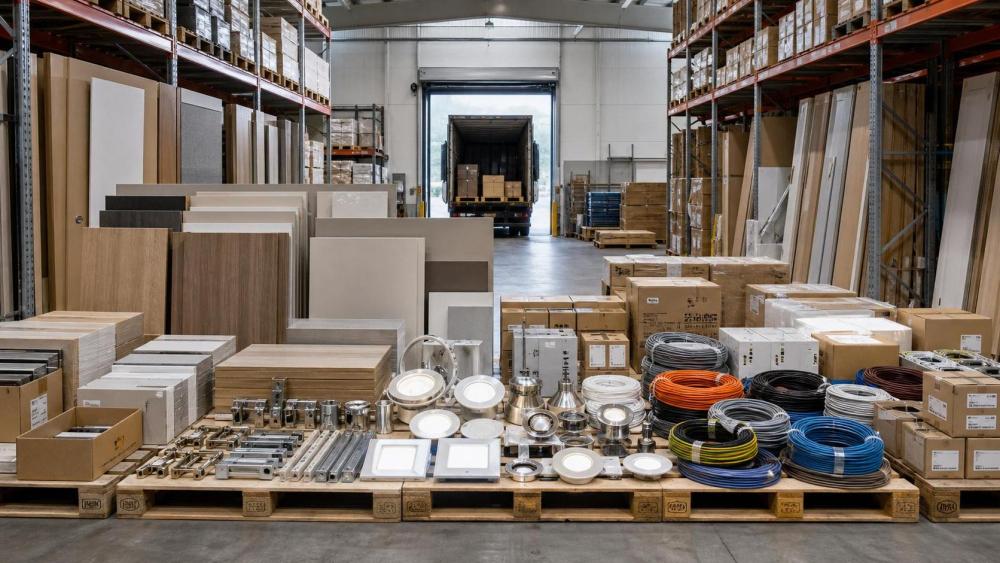
For project managers and engineering leads, home improvement supply chain solutions now shape delivery speed, budget control, and schedule confidence.
A stockout is rarely just a missing item. It can stall crews, trigger resequencing, and raise freight, labor, and subcontractor costs at once.
That is why stronger home improvement supply chain solutions matter. They help teams see demand earlier, secure supply faster, and respond before shortages become delays.
In practical terms, the best approach combines procurement discipline, supplier visibility, inventory logic, and project-level coordination.
The goal is simple: keep materials flowing without tying up too much cash in unnecessary stock.
Why stockouts hit home improvement projects so hard
Home improvement work depends on tightly timed material availability. Cabinets, fixtures, sealants, wiring, fasteners, and finish items all connect to specific milestones.
When one category slips, the impact spreads. Installers wait, inspections move, and downstream trades lose productive hours.
More importantly, shortages often appear in mixed ways. Some items are delayed by transport, while others are blocked by supplier allocation or incomplete forecasting.
This is where home improvement supply chain solutions deliver real value. They connect ordering decisions to schedule risk instead of treating purchasing as a separate function.
Common causes behind repeat shortages
- Forecasts based on outdated takeoffs or unapproved revisions
- Long-lead items purchased too late
- Too many low-visibility suppliers across categories
- No clear trigger for replenishment at site or warehouse level
- Poor coordination between procurement, logistics, and field teams
Each issue looks manageable on its own. Together, they create the perfect conditions for stockouts.
What effective home improvement supply chain solutions include
Not every shortage problem needs a complex technology stack. The strongest home improvement supply chain solutions usually start with a few disciplined operating choices.
First, demand planning must reflect actual project phasing. Ordering by annual averages misses the reality of labor windows and sequence dependencies.
Second, supplier performance should be measured by fill rate, lead-time reliability, and responsiveness to changes, not just unit cost.
Third, inventory policies must be segmented. High-risk items need tighter buffers than widely available commodities.
Core capabilities worth building
- Demand visibility tied to project schedules and change orders
- Supplier scorecards with live lead-time tracking
- Safety stock rules for critical and long-lead materials
- Multi-source options for vulnerable categories
- Delivery monitoring from warehouse to site handoff
These home improvement supply chain solutions reduce guesswork. They also make schedule conversations far more concrete.
How to match supply strategy to project risk
A useful supply chain plan treats materials differently based on their role in the build. Not every item deserves the same controls.
For example, paint rollers are replaceable quickly. Custom vanities or specialty fixtures are not. The sourcing strategy should reflect that difference.
In actual operations, teams get better results when they group items by lead time, substitution flexibility, and schedule impact.
A simple material risk matrix
This type of prioritization is one of the most practical home improvement supply chain solutions because it directs attention where delays hurt most.
Better supplier coordination prevents more shortages than extra inventory
Many teams respond to uncertainty by ordering more. That can help briefly, but it often creates storage strain, damage exposure, and working capital pressure.
A better move is stronger supplier coordination. Good home improvement supply chain solutions rely on earlier communication and clearer release schedules.
Suppliers perform better when they understand demand windows, revision risks, and acceptable substitutions before the order becomes urgent.
Supplier practices that improve fill rates
- Share rolling forecasts every two to four weeks
- Confirm long-lead status before final site need dates
- Define approved alternates for sensitive SKUs
- Review late deliveries with root-cause tracking
- Use supplier scorecards during sourcing renewals
These steps make home improvement supply chain solutions more resilient without automatically increasing inventory levels.
Digital visibility turns home improvement supply chain solutions into daily control tools
Visibility matters most when conditions change fast. A spreadsheet updated after the fact cannot protect the schedule in real time.
The most useful home improvement supply chain solutions combine project schedules, open purchase orders, receiving data, and site consumption signals.
That does not require a massive transformation. Even a focused dashboard can highlight shortages early enough for rerouting, substitution, or expedited release.
Metrics that deserve weekly review
- Fill rate by supplier and category
- Purchase orders at risk of late arrival
- Items below safety stock threshold
- Schedule-critical materials without confirmed delivery dates
- Expedite costs as a share of material spend
When those numbers are visible, home improvement supply chain solutions become an operating system for decisions, not just a reporting layer.
A practical rollout plan for reducing stockouts
The best supply improvements are usually phased. Teams make faster progress when they fix the highest-friction points first.
A clear rollout for home improvement supply chain solutions can start with one project, one supplier group, or one critical material family.
Suggested 90-day sequence
- Map stockout incidents from the last six to twelve months.
- Identify the ten most schedule-critical material categories.
- Set reorder logic and safety stock for those categories.
- Launch supplier scorecards and forecast sharing.
- Create a weekly shortage-risk review tied to project milestones.
- Track fill rate, late arrivals, and expedite spend for improvement.
This sequence keeps home improvement supply chain solutions grounded in measurable outcomes. It also helps teams prove value quickly.
The bottom line
Stockouts are rarely random. They usually reflect weak forecasting, limited visibility, or slow supplier coordination.
Well-designed home improvement supply chain solutions address all three. They reduce schedule disruption, improve purchasing accuracy, and protect margin under pressure.
For teams managing complex delivery timelines, the real advantage is not just better inventory. It is better control over project outcomes.
Start with the materials that create the biggest schedule risk, strengthen supplier visibility, and build from there. That is how home improvement supply chain solutions begin reducing stockouts in a durable way.
Related News
- How ISO 19880 shapes safety requirements for hydrogen refueling systemsSep 22, 2026Hydrogen refueling systems ISO 19880 guides safer station design, pressure control, venting, emergency shutdowns, and verification. Explore essential safeguards.
- What makes a reliable hydrogen dispenser unit exporter for your project?Sep 16, 2026Hydrogen dispenser unit exporter guide: assess standards, integration, testing, logistics, and lifecycle support to choose a reliable project partner.
- What determines the cost of hydrogen dispenser units for a station?Sep 01, 2026Hydrogen dispenser units cost depends on pressure rating, protocols, safety, metering, integration, and lifecycle support. Explore smarter station procurement choices.
- EU Mandates ISO 19880-5 Type Approval for 70 MPa Hydrogen DispensersAug 15, 2026EU mandates ISO 19880-5 type approval for 70 MPa hydrogen dispensers from 2027, reshaping certification, compliance, and market access for exporters.
Related News
- 00
0000-00
Hydrogen Energy Storage for Data Centers Gets Costly Fast - 00
0000-00
When 99.999% Hydrogen Purity Still Is Not Good Enough - 00
0000-00
When Does a Hydrogen-Ready Gas Turbine Pay Off? - 00
0000-00
Electricity Price Volatility Is Rewriting Hydrogen Cost Models - 00
0000-00
PSA Recovery Rate Drops for Reasons Operators Miss
Dr. Victor Gear
Weekly Insights
Stay ahead with our curated technology reports delivered every Monday.