Hydrogen Energy Storage for Data Centers: What Actually Changes Uptime Costs




As power resilience becomes a board-level priority, hydrogen energy storage for data centers is moving from pilot concept to strategic infrastructure option. For enterprise decision-makers, the real question is no longer whether hydrogen can support uptime, but how it changes backup economics, risk exposure, fuel logistics, and long-term decarbonization value compared with diesel and batteries.
Why are enterprises re-evaluating hydrogen energy storage for data centers now?
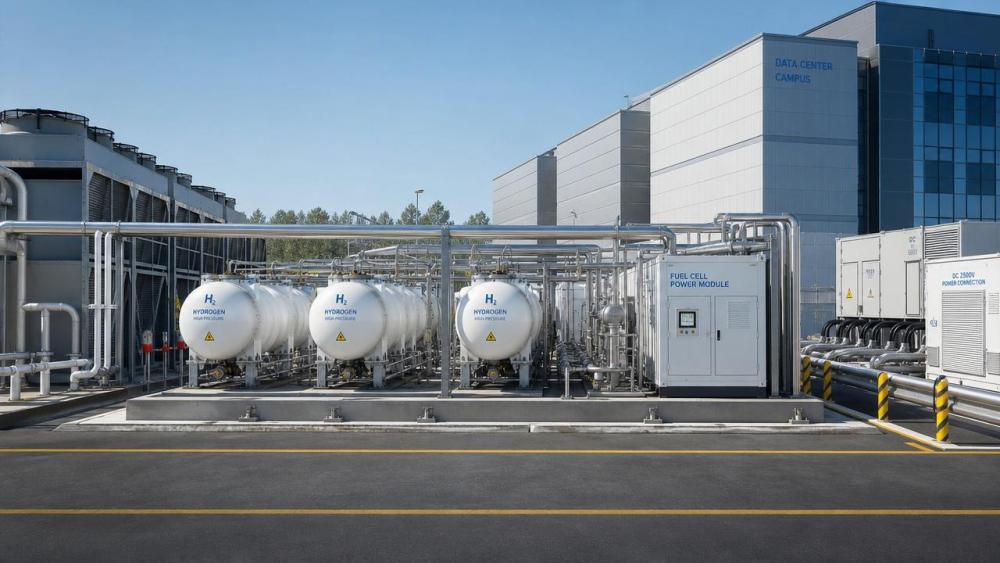
Data center resilience used to be framed as a narrow facilities issue: install diesel generators, maintain UPS strings, and plan around limited outage windows. That model is under pressure. Grid instability is increasing in several regions, diesel permitting is tightening, and corporate carbon commitments are becoming procurement constraints rather than marketing statements. In that environment, hydrogen energy storage for data centers is no longer a speculative sustainability topic. It is a strategic question about runtime, refueling certainty, site risk, and future power architecture.
For enterprise decision-makers, the cost discussion is often misunderstood. The headline capital cost of hydrogen systems matters, but it does not explain the full economic shift. What actually changes uptime costs is the interaction among storage duration, site footprint, emergency fuel availability, maintenance burden, compliance complexity, and the value of low-carbon backup capacity during long-duration outages. A short outage can be absorbed by batteries. A multi-hour or multi-day event exposes the limitations of both battery-only and diesel-dependent strategies.
This is where G-HEI becomes relevant. As a multidisciplinary technical hub focused on the hydrogen frontier, G-HEI helps sovereign and enterprise stakeholders compare hydrogen infrastructure through the lens that matters most to mission-critical facilities: technical safety, materials integrity, transport practicality, and benchmarkable performance. For data center operators, that means moving beyond abstract hydrogen enthusiasm toward bankable evaluation criteria.
- Backup duration is expanding from minutes and hours toward resilience planning measured in days.
- Carbon and air-permit restrictions are affecting generator replacement cycles and new-site approvals.
- Boards increasingly want backup assets that support both uptime and decarbonization narratives.
- Hydrogen supply chains are maturing through electrolysis, logistics, storage, and gas turbine integration.
What actually changes in uptime cost compared with diesel and batteries?
The most important shift is that hydrogen energy storage for data centers changes the cost structure from pure standby equipment ownership to integrated energy resilience planning. Diesel economics are familiar: relatively low upfront generator cost, ongoing maintenance, periodic testing, fuel polishing, local emissions issues, and uncertain fuel replenishment during regional emergencies. Battery economics are different: excellent fast response, high efficiency for short duration, but rapidly increasing cost and space demands as duration scales.
Hydrogen sits in a third category. It can support longer duration backup without scaling footprint in the same way as batteries, and it can reduce dependence on liquid fossil fuel deliveries in markets where hydrogen production or contracted supply is viable. However, hydrogen introduces new cost components: storage vessel design, fuel cell or turbine integration, safety engineering, ventilation, gas detection, materials compatibility, and code review. Decision quality depends on understanding which cost line items rise and which risk-adjusted costs fall.
The table below helps frame hydrogen energy storage for data centers not as a single technology purchase, but as a resilience-cost decision across multiple outage and compliance variables.
The financial implication is clear: hydrogen may increase front-end engineering and infrastructure costs, but it can reduce the hidden cost of long-duration vulnerability, especially where diesel refill risk, emissions constraints, or corporate decarbonization penalties are already material. For data centers with strict uptime obligations, avoided outage exposure can be worth more than a narrow equipment price comparison.
Which data center scenarios are the best fit for hydrogen?
Sites where battery-only backup is too short
If a facility is currently optimized for UPS and short bridging intervals, hydrogen can fill the gap between short-response storage and long-duration generation. This is especially relevant for colocation and hyperscale environments where service-level commitments leave little tolerance for prolonged utility events.
Urban or regulated sites with diesel constraints
Some data centers face planning resistance because of local air quality rules, noise, community impact, or fuel storage restrictions. Hydrogen energy storage for data centers can create a more permitable resilience pathway when matched with proper safety engineering and local code engagement.
Campuses pursuing integrated low-carbon infrastructure
Facilities located near industrial hydrogen corridors, renewable electrolysis projects, or future hydrogen-ready power networks have a stronger strategic case. In these environments, backup power is not a standalone asset; it becomes part of a broader zero-carbon energy procurement roadmap.
The scenario table below supports procurement teams that need to decide where hydrogen energy storage for data centers is commercially plausible today and where it remains premature.
The key takeaway is that hydrogen is strongest where duration, decarbonization, and fuel-security concerns intersect. It is weaker where outages are short, infrastructure is constrained, or decision-makers only compare nameplate capital cost.
What should procurement teams evaluate before selecting a hydrogen architecture?
Not every hydrogen system is the same. Procurement teams should distinguish between hydrogen as stored fuel, hydrogen as produced on site, and hydrogen as part of a hybrid backup design with batteries, fuel cells, or hydrogen-ready turbines. The wrong specification process often starts by asking for equipment quotations too early. The right process starts with resilience targets, outage profile, site boundaries, and compliance conditions.
- Define the critical load and required autonomy. A 30-minute bridge, a six-hour backup, and a 48-hour resilience requirement produce very different system designs.
- Map site constraints. Hydrogen storage pressure class, separation distances, ventilation routes, and hazardous area considerations all affect feasibility.
- Decide the energy pathway. Fuel cells may suit low-emission backup and modular deployment, while hydrogen-ready turbines may become relevant at larger campus scale.
- Verify logistics. A backup system is only credible if refueling or replenishment can be secured under emergency conditions.
- Evaluate standards alignment early. Late-stage redesign due to safety, piping, or fueling code issues is expensive and avoidable.
G-HEI adds value at this stage because its benchmarking scope spans electrolysis, cryogenic logistics, hydrogen-ready power systems, and high-pressure infrastructure. For data center stakeholders, that broader perspective matters. Backup power decisions are no longer isolated mechanical purchases. They sit inside a changing energy supply chain that must perform under technical, geopolitical, and regulatory stress.
Which technical and compliance issues are most likely to affect project risk?
Materials integrity and hydrogen compatibility
Hydrogen service requires careful attention to embrittlement risk, sealing performance, piping specification, and pressure containment. This is one reason enterprise buyers should avoid generic “green backup” claims and instead ask for detailed engineering assumptions, operating conditions, and maintenance envelopes.
Storage form and logistics pathway
Compressed gas, liquid hydrogen, and delivered or generated supply each create different trade-offs in density, handling, boil-off management, transportation complexity, and emergency response planning. The correct answer depends on site load, duration target, and local infrastructure maturity.
Standards and authority review
Hydrogen energy storage for data centers must be assessed against applicable safety and engineering frameworks rather than treated as a direct plug-in substitute for diesel. Relevant reference points may include ISO 19880 for fueling-related infrastructure contexts, ASME B31.12 for hydrogen piping and pipelines, and other local fire, pressure vessel, electrical, and hazardous area codes depending on jurisdiction.
- Ask how storage vessels, piping materials, valves, and seals have been selected for hydrogen duty.
- Require a site-specific hazard review that covers leak detection, ventilation, ignition control, and isolation logic.
- Clarify whether the design assumes trucked hydrogen, on-site electrolysis, or both.
- Confirm maintenance responsibilities, response times, and spare-parts strategy before signing supply agreements.
How should executives compare total cost without oversimplifying the decision?
A useful business case for hydrogen energy storage for data centers should compare more than capex per kilowatt. It should include avoided downtime risk, cost of emissions compliance, probability of emergency fuel disruption, land or footprint constraints, asset life assumptions, and the potential strategic value of hydrogen within a broader corporate energy transition plan.
In practice, executives should segment cost into five layers.
- Initial infrastructure cost: storage, conversion equipment, controls, safety systems, and interconnection.
- Fuel pathway cost: delivered hydrogen, on-site generation inputs, or contracted long-term supply.
- Operational cost: testing, inspections, maintenance labor, and replacement intervals.
- Compliance cost: permitting studies, code engagement, and engineering redesign risk.
- Strategic value: carbon reduction, resilience positioning, and compatibility with future hydrogen infrastructure.
This is also where G-HEI’s cross-pillar knowledge matters. Organizations that understand electrolysis systems, cryogenic logistics, turbine readiness, and pressure infrastructure together can help buyers identify when a hydrogen backup project is truly integrated and when it simply shifts risk from one part of the system to another.
Common misconceptions about hydrogen energy storage for data centers
“Hydrogen only makes sense for utilities.”
Not necessarily. Large utility-scale systems are important, but enterprise campuses with high uptime requirements and strong decarbonization goals can also justify hydrogen, especially when diesel limitations are becoming costly or politically difficult.
“It replaces batteries.”
Usually it complements them. Batteries remain highly effective for instantaneous response and short-duration ride-through. Hydrogen is more often considered for extended backup duration or low-carbon generation support.
“If the fuel is clean, the project is automatically simple.”
No. Hydrogen projects can be technically robust, but only if storage, handling, code compliance, and materials selection are rigorously engineered. Clean energy value does not remove the need for disciplined safety design.
FAQ: what do decision-makers ask most often?
How do we know whether hydrogen energy storage for data centers is financially credible for our site?
Start with outage duration, critical load, and local fuel logistics rather than technology preference. If your business case includes long-duration resilience, emissions pressure, or unreliable diesel replenishment, hydrogen may deserve detailed modeling. If your need is only short ride-through, battery expansion may remain more practical.
What procurement data should we request first?
Request storage method, usable runtime assumptions, start-up behavior, maintenance intervals, site safety requirements, expected footprint, code basis, and fuel supply model. Without these details, quotations are difficult to compare and often misleading.
Is on-site electrolysis necessary?
Not always. Some sites may prefer delivered hydrogen because it simplifies generation infrastructure. Others may value on-site production for energy sovereignty or supply assurance. The right answer depends on power price, water availability, resilience goals, and site operations.
Which standards should our team review early?
Teams should review the hydrogen-specific piping, fueling, pressure equipment, electrical, fire protection, and local authority requirements relevant to the intended architecture. ISO 19880 and ASME B31.12 are useful reference points in many hydrogen discussions, but project compliance is always jurisdiction-specific.
Why work with G-HEI when evaluating hydrogen backup options?
Hydrogen energy storage for data centers cannot be judged well through a single-equipment lens. Decision-makers need to understand fuel production pathways, cryogenic or compressed storage implications, conversion technologies, standards exposure, and the long-term role of hydrogen in zero-carbon infrastructure. G-HEI is built for exactly that level of strategic and technical benchmarking.
Because G-HEI spans megawatt-scale electrolysis, cryogenic liquid hydrogen logistics, hydrogen-ready gas turbine power, CCUS infrastructure, and high-pressure hydrogen systems, enterprise buyers gain a broader view of feasibility and risk. That helps executives avoid two common mistakes: overcommitting to hydrogen without a supply-chain plan, or dismissing it because they evaluated it only against diesel capex.
- Consult on parameter confirmation for backup duration, storage pathway, and conversion architecture.
- Support product and solution selection based on site load, footprint, and compliance constraints.
- Discuss delivery timing, infrastructure sequencing, and phased deployment options.
- Review certification and standards considerations relevant to hydrogen piping, storage, and fueling interfaces.
- Coordinate tailored benchmarking for quotation comparison, technical due diligence, and board-level investment decisions.
If your team is comparing diesel replacement, hybrid battery-hydrogen backup, hydrogen-ready generation, or long-duration zero-carbon resilience planning, contact us to review runtime assumptions, infrastructure options, compliance checkpoints, and quotation logic before procurement moves into detailed design.
Related News
- Hydrogen Energy Storage for Data Centers Gets Costly FastApr 27, 2026Hydrogen energy storage for data centers gets costly fast as hydrogen storage, cryogenic liquid hydrogen, safety standards, and utility-scale power needs reshape the energy transition case. Learn the real trade-offs.
- Hydrogen Energy Storage for Data Centers: Backup Power Options ComparedJun 14, 2026Hydrogen energy storage for data centers compared: see how hydrogen, diesel, batteries, and hybrids perform on uptime, emissions, safety, and long-duration backup.
- Energy Storage Battery Sizing: Key Specs That Affect Runtime and CostJun 14, 2026Energy storage battery sizing affects far more than kWh. Learn how DoD, C-rate, efficiency, temperature, and degradation shape runtime, lifecycle cost, and smarter project decisions.
- Industrial Energy Efficiency Upgrades With the Fastest PaybackJun 07, 2026Industrial energy efficiency upgrades with the fastest payback: discover proven ways to cut power loss, reduce downtime, and improve ROI in hydrogen, CCUS, turbines, and cryogenic systems.
Related News
- 00
0000-00
Hydrogen Energy Storage for Data Centers Gets Costly Fast - 00
0000-00
When 99.999% Hydrogen Purity Still Is Not Good Enough - 00
0000-00
When Does a Hydrogen-Ready Gas Turbine Pay Off? - 00
0000-00
Electricity Price Volatility Is Rewriting Hydrogen Cost Models - 00
0000-00
PSA Recovery Rate Drops for Reasons Operators Miss
Dr. Hideo Torque
Weekly Insights
Stay ahead with our curated technology reports delivered every Monday.