
Stack Cold-Start Time (Seconds): Why It Matters in Stationary Fuel Cell Backup Design




In stationary fuel cell backup design, stack cold-start time (seconds) can determine whether critical loads stay protected during real-world outages. For project managers and engineering leads, this metric directly affects system availability, startup reliability, thermal strategy, and compliance planning. Understanding how stack cold-start time (seconds) influences backup performance is essential for selecting resilient fuel cell architectures and reducing risk across zero-carbon infrastructure projects.
For B2B infrastructure teams, this is not a niche laboratory parameter. In data centers, telecom shelters, utility substations, water treatment facilities, and hydrogen-enabled industrial campuses, even a 30-second delay can change the sizing of batteries, inverters, purge systems, and control logic. When decision-makers evaluate zero-carbon backup power, stack cold-start time (seconds) becomes a practical design variable tied to uptime, CAPEX allocation, and commissioning success.
Within the broader hydrogen economy, organizations such as G-HEI frame this issue as part of sovereign-grade infrastructure readiness. Cold-start behavior affects how stationary fuel cell systems integrate with electrolysis, hydrogen storage, safety interlocks, and asset integrity standards. For project leaders managing multi-stakeholder programs in 2026 and beyond, the question is not only how fast a stack starts, but whether the entire backup architecture can deliver protected power under realistic temperature, fuel, and load conditions.
Why Cold-Start Time Is a Critical Backup Power Metric
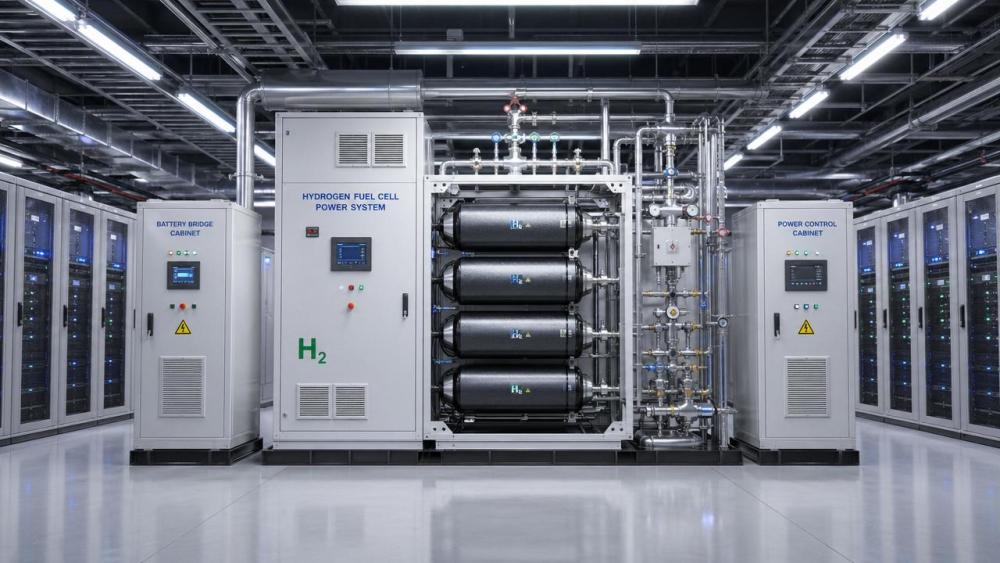
In stationary systems, stack cold-start time (seconds) describes how long a fuel cell stack needs to move from an inactive thermal state to stable power production. This interval may include controller boot-up, valve sequencing, hydrogen delivery, purge routines, humidification management, thermal ramping, and voltage stabilization. In many projects, the practical startup window falls into categories such as less than 10 seconds, 10–60 seconds, 1–5 minutes, or more than 5 minutes, depending on chemistry, system design, and ambient conditions.
For backup applications, the value of this metric is simple: critical loads do not wait. If a telecom node can tolerate only 15–30 seconds before service degradation, a slower stack requires a battery bridge or hybrid UPS layer. If a substation control room requires uninterrupted DC support with less than 1 second transfer tolerance, stack cold-start time (seconds) directly determines whether fuel cells act as primary bridge power, secondary endurance power, or merely a long-duration supplement.
Project managers often focus first on rated power, hydrogen storage volume, or runtime in hours. Those matter, but startup delay is what links nameplate capability to real outage performance. A 50 kW system with a 180-second cold start may be less suitable than a 20 kW system with a 20-second start if the protected load profile peaks during the first minute of interruption. This is why cold-start performance should be reviewed alongside transfer time, battery autonomy, and first-minute load acceptance.
Where project risk appears first
The earliest design gap usually appears in the gap between outage detection and usable output. Teams may specify a fuel cell for 8 hours of backup but overlook the first 60 seconds. In practice, that can trigger nuisance trips, server resets, control system faults, or process interruption. In sectors with high restart penalties, a short outage can create a larger commercial loss than a longer but well-managed event.
- Battery-only ride-through is often sized for 30 seconds to 5 minutes, depending on load criticality.
- Fuel cell startup logic may require 3 to 8 sequential control checks before current ramps safely.
- Ambient temperatures below 0°C can extend startup time materially if enclosure heating is limited.
For engineering leads, stack cold-start time (seconds) should therefore be treated as a system integration parameter, not only a stack datasheet field. It influences electrical architecture, thermal packaging, redundancy strategy, and acceptance testing criteria.
What Determines Stack Cold-Start Time in Real Installations
Cold-start performance is shaped by more than the electrochemical stack itself. Fuel cell type, membrane condition, balance-of-plant design, hydrogen purity, ambient temperature, enclosure insulation, startup software, and standby strategy all contribute. In stationary backup projects, teams often see a difference between laboratory startup claims and field startup results because the total system includes piping runs, regulators, purge valves, sensors, and communications checks.
PEM-based systems are commonly selected for faster response, especially when compared with higher-temperature technologies that may need longer warm-up periods. Even within PEM architectures, however, a stack that starts in 15 seconds at 20°C may need 45–90 seconds at subzero temperatures if water management and preheating are not optimized. This is one reason why cold-climate and desert-climate deployments should never share the same default assumptions.
Hydrogen delivery conditions also matter. Pressure regulation, line purge, and valve response can add several seconds before electrochemical startup begins. If hydrogen is supplied from compressed storage with 2-stage regulation, the pressure stabilization sequence may be predictable. If hydrogen comes from a more complex integrated campus network, start permissives may involve additional interlocks tied to leak detection and ventilation logic.
Key technical drivers to review during FEED and procurement
The table below helps project teams assess what most often changes stack cold-start time (seconds) between proposal stage and site operation.
The practical takeaway is that startup claims should be requested in at least 3 conditions: nominal room temperature, site minimum temperature, and post-idle restart after a defined dwell period such as 12 or 24 hours. Without that, procurement teams risk comparing unlike-for-like figures.
Common specification mistake
A frequent error is specifying only “black-start capable” without defining “usable output.” A system may technically start, yet deliver only partial power for the first 30–120 seconds. For protected infrastructure, the more relevant measure is time to stable kilowatt output at the required voltage window and load step.
Design Implications for Stationary Fuel Cell Backup Architecture
Once stack cold-start time (seconds) is understood, the backup system architecture becomes easier to optimize. The main design question is whether the fuel cell is expected to carry the load immediately, support a hybrid transition, or provide endurance after another source stabilizes the site. Different answers lead to different electrical topologies, battery capacities, and thermal approaches.
For example, a site with a 20-second cold start and 99.95% annual availability target may choose a lithium battery bridge sized for 2–3 minutes, covering startup plus margin. A site with a 3-minute cold start may need 5–10 minutes of bridge autonomy if environmental conditions are variable. The extra battery cost may still be justified if hydrogen runtime extends beyond 6 hours and reduces diesel dependence or emissions compliance burden.
Thermal strategy is equally important. Cold standby minimizes parasitic draw, but warm standby reduces startup delay. For remote assets with infrequent outages, cold standby may be economical. For high-value digital infrastructure with monthly grid disturbances, warm standby can produce better lifecycle performance. The correct choice depends on outage frequency, acceptable energy overhead, and maintenance philosophy.
Architecture options by response requirement
The following comparison helps project managers align startup behavior with site resilience goals.
This comparison shows why stack cold-start time (seconds) cannot be separated from hybridization. A slower startup is not necessarily disqualifying, but it must be absorbed by a deliberate bridge strategy with tested control integration.
Practical design checks
- Define maximum permissible interruption in seconds for each critical load tier.
- Map stack startup curve to battery bridge autonomy with at least 25% margin.
- Validate first-minute load acceptance, not only steady-state output.
- Specify site temperature envelope and startup verification conditions in the contract.
These 4 checks are often enough to prevent the most expensive redesigns during commissioning.
How to Specify, Test, and Procure for Real-World Performance
For procurement teams, the safest approach is to convert stack cold-start time (seconds) into measurable acceptance criteria. Instead of asking vendors only for “fast startup,” ask for time to first power, time to 50% rated output, and time to stable rated output under defined temperature and load conditions. This creates a clearer basis for comparing proposals from different OEMs and integrators.
Project documentation should also state whether startup is measured from outage detection, controller energization, hydrogen valve open, or stack electrochemical activation. These start points can differ by 5–60 seconds, which is material in backup design. Contract language should align all parties on a single clock start and a single endpoint such as stable bus voltage within tolerance for at least 60 seconds.
Testing should not stop at FAT. For sovereign-scale and utility-adjacent projects, SAT and integrated functional testing are essential because site wiring, gas routing, ventilation, and SCADA permissives affect startup. A system that performs well on a factory skid may behave differently once connected to local safety logic and actual load banks.
Recommended procurement checklist
- Request startup data at 3 ambient points, such as 20°C, 0°C, and site minimum design temperature.
- Ask whether values represent cold standby, warm standby, or recently active stack conditions.
- Confirm hydrogen purity expectations and regulator response assumptions.
- Require evidence of load acceptance for at least 2 step levels, such as 25% and 80% of rated load.
- Include restart frequency limits if the site may see repeated outages within 24 hours.
The table below summarizes what should be written into technical schedules and commissioning plans.
This level of definition is especially useful for hydrogen programs governed by strict safety and asset-integrity frameworks. It helps ensure that startup performance is validated without bypassing ventilation, leak detection, pressure control, or emergency shutdown logic.
Common Misunderstandings, Risk Controls, and Project FAQs
Several recurring misunderstandings affect backup fuel cell programs. The first is assuming that faster is always better. In reality, an extremely aggressive startup profile can introduce stress on stack materials, water balance, or power electronics if the system is not tuned for repeated emergency starts. The better goal is startup speed that is matched to load criticality and proven by repeatable testing.
The second misunderstanding is treating stack cold-start time (seconds) as independent from the rest of the hydrogen infrastructure. In integrated zero-carbon sites, startup can be shaped by storage pressure management, enclosure classification, purge exhaust routing, and compliance with applicable codes and site-specific procedures. This is where multidisciplinary benchmarking becomes valuable, especially for utility, government, and industrial stakeholders managing long asset lifecycles.
The third risk is failing to distinguish between one-time startup success and reliable startup performance across seasons. A backup system may start once during commissioning but still underperform after months of idle time, low-temperature exposure, or repeated outages. Maintenance planning should therefore include periodic functional starts, often monthly or quarterly depending on site criticality and OEM guidance.
FAQ: How short should stack cold-start time be for backup use?
There is no single universal target. For highly sensitive digital loads, fewer than 30 seconds may be desirable unless a UPS bridge covers the gap. For broader industrial backup applications, 60–300 seconds can still be acceptable if batteries or another source maintain continuity. The correct threshold depends on the site’s interruption tolerance and bridge design.
FAQ: Is warm standby worth the extra energy use?
Often yes, but only for assets where outage cost is high. Warm standby can reduce startup delay significantly, yet it adds parasitic consumption and may affect maintenance intervals. A lifecycle review should compare annual energy overhead against the cost of larger batteries, downtime exposure, and resilience targets.
FAQ: What should operations teams monitor after handover?
- Actual startup time trend versus the acceptance baseline.
- Hydrogen pressure stability before and during startup.
- Enclosure temperature and heater health in winter conditions.
- Number of successful starts per month or quarter.
- Voltage recovery and first-minute load acceptance after each test event.
These operating indicators help prevent hidden degradation from appearing only during a real outage. For project owners building sovereign-grade hydrogen infrastructure, that discipline is part of resilient asset stewardship rather than optional maintenance.
Stack cold-start time (seconds) is one of the most consequential yet frequently under-specified metrics in stationary fuel cell backup design. It shapes battery bridge sizing, thermal strategy, control architecture, commissioning scope, and long-term reliability. For project managers and engineering leads, the most effective approach is to define startup performance in measurable terms, test it under site-relevant conditions, and integrate it with the wider hydrogen safety and infrastructure framework.
If your organization is planning zero-carbon backup power for critical infrastructure, a disciplined review of startup behavior can reduce design risk and improve procurement clarity. To evaluate stack cold-start time (seconds) within a broader hydrogen infrastructure strategy, contact us to discuss your project requirements, request a tailored technical benchmark, or explore more resilient backup power solutions.
Related News
- Hydrogen Energy Storage for Data Centers Gets Costly FastApr 27, 2026Hydrogen energy storage for data centers gets costly fast as hydrogen storage, cryogenic liquid hydrogen, safety standards, and utility-scale power needs reshape the energy transition case. Learn the real trade-offs.
- Hydrogen Energy Storage for Data Centers: Backup Power vs Battery SystemsMay 19, 2026Hydrogen energy storage for data centers vs battery systems: compare backup duration, safety, costs, and zero-carbon resilience to choose the right power strategy.
- Solar-Hydrogen Hybrid Microgrids: When Fuel Cells Beat Battery-Only DesignsMay 18, 2026Solar-hydrogen hybrid microgrids outperform battery-only designs when long-duration resilience, lower lifecycle cost, and diesel-free backup matter most. See where fuel cells win.
- Hydrogen Energy Storage for Data Centers: Backup Power or Cost Burden?May 18, 2026Hydrogen energy storage for data centers: smart long-duration backup or rising cost burden? Explore resilience, safety, carbon benefits, and ROI before you invest.
Related News
- 00
0000-00
Hydrogen Energy Storage for Data Centers Gets Costly Fast - 00
0000-00
When 99.999% Hydrogen Purity Still Is Not Good Enough - 00
0000-00
When Does a Hydrogen-Ready Gas Turbine Pay Off? - 00
0000-00
Electricity Price Volatility Is Rewriting Hydrogen Cost Models - 00
0000-00
PSA Recovery Rate Drops for Reasons Operators Miss
Dr. Hideo Torque
Weekly Insights
Stay ahead with our curated technology reports delivered every Monday.