Improving Cryogenic Hydrogen Thermal Efficiency




Improving cryogenic hydrogen thermal efficiency is now a decisive benchmark for safe, scalable zero-carbon infrastructure. For technical evaluators, the challenge extends beyond minimizing boil-off losses: it requires rigorous assessment of insulation architecture, heat ingress pathways, material integrity, pressure control, and system-level operating profiles. This article examines thermal management efficiency for cryogenic hydrogen systems through the lens of large-scale logistics, asset reliability, and international compliance, helping stakeholders compare technologies and identify designs capable of supporting sovereign hydrogen deployment at industrial scale.
Why Thermal Efficiency Has Become a Procurement Gatekeeper
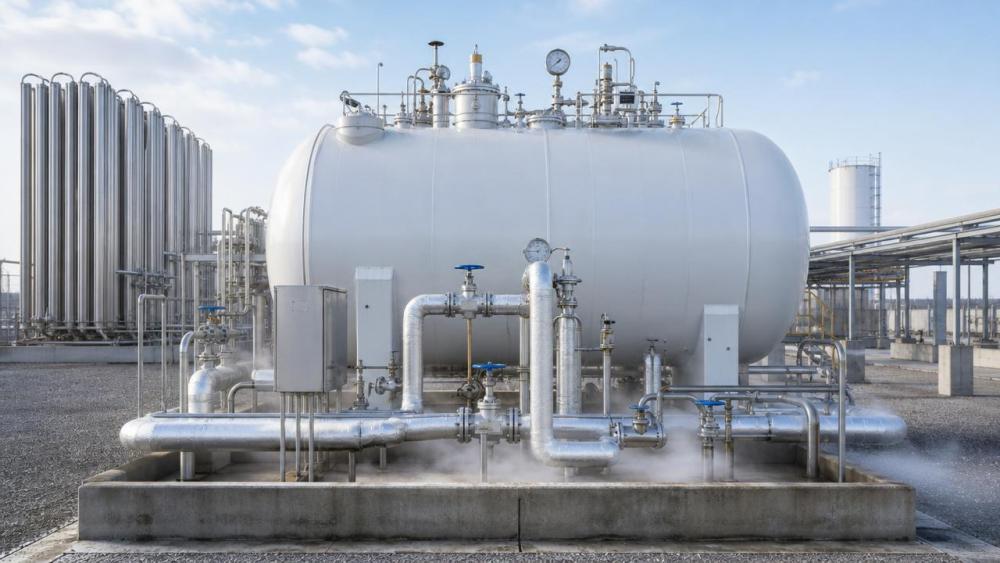
Liquid hydrogen offers exceptional gravimetric energy density, but its cryogenic temperature near 20 K creates a demanding engineering environment. Every watt of heat ingress matters.
For technical evaluators, thermal management efficiency for cryogenic hydrogen systems is not a narrow insulation metric. It affects safety margins, logistics economics, availability, and downstream fuel quality.
A vessel may show acceptable static boil-off during factory qualification yet underperform during port dwell time, trailer transfer, or intermittent refueling operations.
Key questions evaluators should ask early
- How is heat ingress quantified across supports, piping penetrations, valves, instrumentation, and transfer interfaces?
- Does the supplier provide operating data for realistic duty cycles, not only ideal storage conditions?
- Can the design maintain pressure stability during delayed unloading, partial fills, and repeated thermal cycling?
- Are materials, welds, seals, and insulation systems evaluated against hydrogen embrittlement and cryogenic contraction risks?
G-HEI frames these questions within sovereign hydrogen infrastructure planning, where procurement mistakes can delay terminals, refueling corridors, and utility-scale energy programs.
Where Heat Enters a Cryogenic Hydrogen System
Improving thermal management efficiency for cryogenic hydrogen systems starts with mapping heat ingress pathways. The weakest interface often determines total operating performance.
Technical teams should separate steady-state storage losses from dynamic losses during transfer, cool-down, venting, and pressure equalization.
Heat ingress pathways to evaluate
This table shows why single-point boil-off data is insufficient. Evaluators need a pathway-level audit that connects design features with operating behavior.
G-HEI benchmarking considers cryogenic vessels, transfer equipment, hydrogen-ready power assets, and refueling infrastructure as one connected zero-carbon value chain.
How to Compare Insulation and Pressure-Control Architectures
Different cryogenic hydrogen applications require different balances between capital cost, maintainability, thermal performance, footprint, and safety philosophy.
The right choice depends on whether the asset serves export logistics, stationary buffer storage, trailer distribution, aviation fueling, or industrial backup power.
Architecture comparison for technical decision-making
A design with lower static boil-off is not always the best lifecycle option. Evaluators should model energy use, vent recovery, maintenance access, and operational resilience together.
Thermal management efficiency for cryogenic hydrogen systems improves when insulation, instrumentation, controls, and logistics planning are specified as an integrated package.
What Parameters Should Be in a Technical Evaluation Sheet?
A robust specification should convert broad efficiency claims into measurable acceptance criteria. This avoids procurement ambiguity and reduces commissioning disputes.
For multi-country projects, the evaluation sheet should also support regulatory review, investor due diligence, and operator training requirements.
Recommended parameter categories
- Static heat leak under defined fill level, ambient temperature, pressure range, and test duration.
- Boil-off handling method, including venting, utilization, compression, recovery, or reliquefaction assumptions.
- Vacuum integrity criteria, acceptable degradation thresholds, monitoring method, and maintenance intervention triggers.
- Thermal cycling limits for inner vessel materials, piping, valves, sensors, supports, and welded joints.
- Pressure relief sizing basis, emergency vent routing, hazardous area classification, and operational alarm hierarchy.
Thermal management efficiency for cryogenic hydrogen systems should be reviewed with both design-point numbers and off-design operating cases.
A practical scoring approach
- Start with mission profile: daily transfer volume, dwell time, logistics delay tolerance, and expected ambient conditions.
- Request heat balance documentation separating radiation, conduction, penetrations, transfer losses, and operational events.
- Compare supplier data against independent engineering assumptions, not only brochure-level boil-off percentages.
- Check whether control philosophy protects product, people, and pressure equipment during abnormal scenarios.
G-HEI supports this structured approach by aligning cryogenic logistics evaluation with electrolysis output, hydrogen gas turbine demand, and high-pressure refueling requirements.
Which Applications Need the Strictest Thermal Management?
Not every hydrogen asset needs the same solution. However, any system with long dwell time, variable demand, or difficult vent recovery deserves closer scrutiny.
Thermal management efficiency for cryogenic hydrogen systems becomes most critical when product loss affects energy security, project bankability, or public safety perception.
Application-specific evaluation priorities
This segmentation helps buyers avoid over-specifying simple assets and under-specifying mission-critical nodes. The best design is matched to the operating risk.
Compliance, Safety, and Material Integrity Considerations
Cryogenic hydrogen projects must satisfy more than efficiency targets. Safety, pressure containment, material compatibility, and refueling interfaces shape acceptance.
Relevant frameworks may include ISO 19880 for hydrogen fueling stations, ASME B31.12 for hydrogen piping, and SAE J2601 for fueling protocols.
Compliance checkpoints for evaluators
- Confirm that pressure equipment design, relief devices, and vent stacks match local regulations and project hazard studies.
- Review material selection for cryogenic toughness, hydrogen compatibility, weld procedure qualification, and inspection access.
- Assess sensor redundancy for liquid level, pressure, vacuum space monitoring, temperature gradients, and safety interlocks.
- Require operating procedures for cool-down, warm-up, emergency shutdown, purging, and maintenance isolation.
Thermal management efficiency for cryogenic hydrogen systems should never be pursued by weakening safety margins or reducing inspection practicality.
G-HEI’s multidisciplinary perspective is valuable because hydrogen infrastructure links cryogenic storage with electrolysis production, high-pressure dispensing, CCUS interfaces, and power conversion.
Common Misconceptions That Distort Supplier Selection
Many procurement teams focus on the lowest boil-off claim, then discover that real losses are driven by transfer frequency, controls, or site procedures.
Misconception checklist
- “Better insulation alone solves the problem.” In practice, piping penetrations and supports can dominate heat leak.
- “Static boil-off equals field efficiency.” Actual performance includes cool-down losses, venting events, and operator decisions.
- “Active refrigeration is always superior.” It may reduce product loss but adds energy consumption and maintenance exposure.
- “Compliance review can wait.” Late-stage safety redesign can delay commissioning and increase total installed cost.
A disciplined evaluation treats thermal performance as a lifecycle variable. It connects equipment design, duty cycle, safety case, and commercial assumptions.
FAQ: Technical Evaluation of Cryogenic Hydrogen Efficiency
The following questions reflect common concerns from evaluators comparing thermal management efficiency for cryogenic hydrogen systems across suppliers and project stages.
How should boil-off rate be compared between suppliers?
Compare data only when test conditions are equivalent. Fill level, ambient temperature, pressure setpoint, vessel size, and stabilization time can change results substantially.
When is reliquefaction worth considering?
It is most relevant for large inventories, long dwell periods, or sites where vented hydrogen cannot be productively used. Power availability must be evaluated.
What documentation should be requested before procurement approval?
Request heat balance assumptions, pressure relief calculations, material compatibility evidence, operating procedures, inspection plans, and applicable standard alignment.
Can one specification cover storage, transport, and refueling assets?
A common evaluation framework is useful, but acceptance criteria should vary by duty cycle, mobility, transfer rate, safety zoning, and integration requirements.
Why Choose G-HEI for Cryogenic Hydrogen Benchmarking
G-HEI helps technical evaluators move from supplier claims to defensible engineering decisions. Our focus is sovereign-scale hydrogen infrastructure, not isolated component comparison.
We support evaluation across megawatt-scale electrolysis, cryogenic liquid hydrogen logistics, hydrogen-ready gas turbines, CCUS infrastructure, and 70 MPa+ refueling systems.
Consultation areas available for project teams
- Parameter confirmation for heat leak, boil-off handling, pressure control, vacuum monitoring, and transfer interface requirements.
- Technology selection support for storage vessels, trailers, terminal systems, valve boxes, and recovery options.
- Compliance mapping against relevant hydrogen, pressure equipment, piping, and fueling standards for international projects.
- Custom benchmarking for delivery schedules, lifecycle cost assumptions, maintenance planning, and project risk registers.
- Commercial preparation for quotation discussions, supplier clarification meetings, and investment committee review.
Contact G-HEI to review thermal management efficiency for cryogenic hydrogen systems before final specification, supplier shortlisting, or sovereign infrastructure investment approval.
Related News
- When should cryogenic bearings use liquid nitrogen instead of liquid hydrogen?Oct 12, 2026Cryogenic bearings: learn when liquid nitrogen is suitable and when liquid hydrogen is essential for safe, reliable low-temperature performance and testing.
- How liquid hydrogen bearings prevent friction at cryogenic temperaturesOct 11, 2026Liquid hydrogen bearings prevent friction at cryogenic temperatures with stable fluid films, precision clearances, and smart thermal control. Discover the design essentials.
- Hydrogen Logistics for Export Terminals: Key Storage and Transfer RisksJul 11, 2026Hydrogen logistics for export terminals explained: discover key storage and transfer risks, from boil-off and embrittlement to ESD failures, and learn how stronger projects improve safety and bankability.
- Hydrogen Export Projects: Key Risks in Storage and ShippingJul 05, 2026Hydrogen export projects face critical storage and shipping risks, from boil-off and embrittlement to port bottlenecks and compliance. Learn how to assess bankable, scalable export chains.
Related News
- 00
0000-00
Hydrogen Energy Storage for Data Centers Gets Costly Fast - 00
0000-00
When 99.999% Hydrogen Purity Still Is Not Good Enough - 00
0000-00
When Does a Hydrogen-Ready Gas Turbine Pay Off? - 00
0000-00
Electricity Price Volatility Is Rewriting Hydrogen Cost Models - 00
0000-00
PSA Recovery Rate Drops for Reasons Operators Miss
Marcus Valve
Weekly Insights
Stay ahead with our curated technology reports delivered every Monday.