Electrolyzer Power Consumption: What kWh/Nm3 Means for H2 Cost




For financial approvers evaluating hydrogen projects, electrolyzer power consumption (kWh/Nm3) is more than a technical metric—it directly shapes H2 production cost, project bankability, and long-term asset competitiveness. Understanding how this efficiency indicator affects electricity demand, operating expenses, and return profiles is essential for making disciplined investment decisions in large-scale zero-carbon infrastructure.
What does electrolyzer power consumption (kWh/Nm3) actually measure?
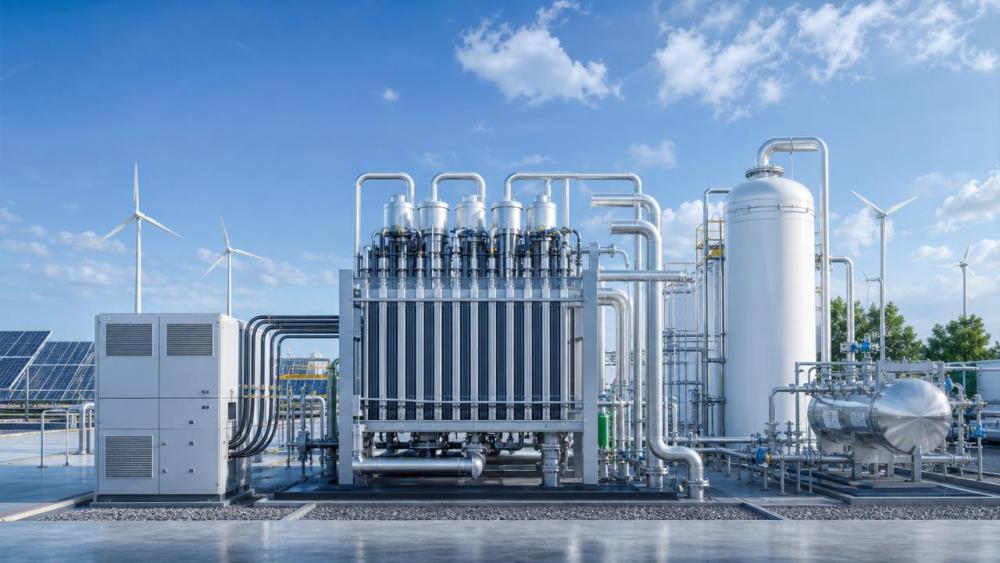
Electrolyzer power consumption (kWh/Nm3) expresses how much electrical energy is required to produce one normal cubic meter of hydrogen.
“Nm3” means gas volume at standardized temperature and pressure. This allows fair comparison across technologies, sites, and operating conditions.
In practical terms, a lower electrolyzer power consumption (kWh/Nm3) usually indicates better electrical efficiency and lower variable production cost.
However, the number should never be read in isolation. It depends on stack design, system boundaries, load range, water treatment, compression, and balance-of-plant configuration.
Some suppliers report stack-only performance. Others include rectifiers, pumps, cooling, controls, and auxiliary systems. The decision impact can be significant.
For sovereign-scale hydrogen infrastructure, this distinction matters because grid power, renewable curtailment, and storage integration all influence real plant economics.
Why is kWh/Nm3 widely used in project screening?
It converts engineering performance into a finance-ready metric. Electricity is often the largest operating cost in green hydrogen production.
When electricity dominates OPEX, a modest shift in electrolyzer power consumption (kWh/Nm3) can materially change cash flow and levelized hydrogen cost.
- Useful for comparing PEM and alkaline systems
- Helpful in power purchase agreement evaluation
- Relevant for grid connection sizing
- Critical in dispatch optimization studies
How does electrolyzer power consumption (kWh/Nm3) affect hydrogen cost?
The relationship is direct. Higher electrolyzer power consumption (kWh/Nm3) means more electricity is needed for the same hydrogen output.
If electricity costs rise, inefficient systems become more exposed. This weakens margin resilience, especially under volatile wholesale power markets.
Consider a simplified example. If one system uses 4.5 kWh/Nm3 and another uses 5.2 kWh/Nm3, the cost gap grows rapidly at scale.
Over annual production volumes, even small efficiency differences can translate into major cost deltas and stronger or weaker debt-service coverage.
A simple decision formula
Hydrogen electricity cost per Nm3 ≈ electrolyzer power consumption (kWh/Nm3) × electricity price per kWh.
This simple formula does not capture full project economics, but it provides a fast screening lens for commercial viability.
It also helps evaluate renewable coupling. A plant with lower electrolyzer power consumption (kWh/Nm3) needs less generation capacity for identical hydrogen output.
What else changes beyond OPEX?
Power consumption affects transformer sizing, cable loads, inverter design, heat rejection, and potentially water and cooling requirements.
It can also alter the economics of downstream compression, liquefaction, ammonia synthesis, or pipeline injection strategies.
Which factors make electrolyzer power consumption (kWh/Nm3) rise or fall?
The metric is influenced by both technology and operating discipline. Published values often differ from real-world plant performance.
Key technical drivers
- Stack efficiency and electrode materials
- Current density and operating pressure
- Temperature control and cooling quality
- Rectifier efficiency and power electronics design
- Water purity and circulation management
- Load-following behavior under renewable intermittency
Operational conditions also matter
Electrolyzer power consumption (kWh/Nm3) can worsen at partial load, during frequent ramping, or when maintenance quality declines.
A highly dynamic renewable profile may therefore produce different annual efficiency than nameplate test conditions suggest.
That is why benchmark repositories, performance guarantees, and standards-based testing are valuable for zero-carbon infrastructure planning.
PEM versus alkaline: is one always better?
Not always. PEM systems often offer stronger dynamic response and compact design. Alkaline systems may offer cost advantages in certain duty cycles.
The better choice depends on utilization rate, power profile, hydrogen purity needs, pressure strategy, maintenance philosophy, and localization constraints.
How should performance claims be compared during due diligence?
The first step is to normalize the data. Ask exactly what is included in the electrolyzer power consumption (kWh/Nm3) figure.
A headline value can be attractive, yet misleading if auxiliaries, degradation, or operating flexibility are excluded from the calculation.
Critical questions to test supplier numbers
- Is the figure stack-only or system-level?
- At what load percentage was it measured?
- Does it include compression or product drying?
- How does performance change over stack life?
- Which test protocol or standard was applied?
- What are the guaranteed and liquidated-damages thresholds?
What common mistakes distort cost expectations?
One common error is treating electrolyzer power consumption (kWh/Nm3) as fixed under all operating conditions. Real plants rarely behave that way.
Another mistake is focusing only on CAPEX. A cheaper unit with poorer efficiency may destroy value over the asset life.
It is also risky to ignore degradation. Efficiency drift can erode expected savings and create refinancing pressure later.
Frequent bankability misconceptions
- Assuming laboratory data equals field performance
- Ignoring power quality and grid disturbance effects
- Excluding standby and start-stop losses
- Using unrealistic renewable utilization assumptions
- Failing to align efficiency with storage and transport strategy
How can projects improve electrolyzer power consumption (kWh/Nm3) in practice?
Improvement starts with system integration, not only stack selection. The best project outcome often comes from coordinated engineering choices.
High-impact optimization actions
- Match electrolyzer technology to actual power profile.
- Optimize operating window instead of chasing headline nameplate numbers.
- Use high-efficiency rectifiers and robust thermal management.
- Apply predictive maintenance to limit hidden performance losses.
- Model annual energy use with real dispatch scenarios.
- Link efficiency analysis with compression, storage, and export pathway.
For large-scale hydrogen programs, these steps support stronger technical certainty, lower lifecycle cost, and clearer alignment with international efficiency frameworks.
Quick FAQ table: what should be checked before approval?
Electrolyzer power consumption (kWh/Nm3) is not merely a specification line. It is a strategic signal for energy demand, H2 cost, and infrastructure competitiveness.
The most reliable decisions come from normalized comparisons, lifetime modeling, and strong attention to operational reality.
For complex hydrogen platforms, the next step is to benchmark candidate systems using verified efficiency data, realistic duty cycles, and full balance-of-plant boundaries.
Related News
- Electricity Price Volatility Is Rewriting Hydrogen Cost ModelsApr 27, 2026Impact of electricity price on hydrogen cost is transforming industrial decarbonization and large-scale electrolysis. Explore LCOH trends, PPA strategies, and resilient hydrogen infrastructure planning.
- Energy Transition Plans Often Fail at the Grid Connection StageApr 27, 2026Sustainable energy and energy transition projects often fail at grid connection. Learn how hydrogen infrastructure, PEM electrolysis, and industrial decarbonization can avoid delays and protect investment value.
- What Is Slowing Industrial Decarbonization Projects in 2026?Apr 27, 2026Industrial decarbonization faces delays in 2026 as hydrogen infrastructure, sustainable energy access, grid limits, safety standards, and project bankability challenge the energy transition.
- AEM Stability Remains the Big Question for Scale-UpApr 27, 2026Anion exchange membrane stability is the key barrier to large-scale electrolysis. Discover how AEM impacts industrial decarbonization, hydrogen infrastructure, safety, and scale-up economics.
Related News
- 00
0000-00
Hydrogen Energy Storage for Data Centers Gets Costly Fast - 00
0000-00
When 99.999% Hydrogen Purity Still Is Not Good Enough - 00
0000-00
When Does a Hydrogen-Ready Gas Turbine Pay Off? - 00
0000-00
Electricity Price Volatility Is Rewriting Hydrogen Cost Models - 00
0000-00
PSA Recovery Rate Drops for Reasons Operators Miss
Dr. Aris Aero
Weekly Insights
Stay ahead with our curated technology reports delivered every Monday.