Refinery Decarbonization Strategies Using Direct Hydrogen Burners




Refinery decarbonization strategies are shifting from pilot discussions to capital planning decisions. Process heat remains one of the hardest emissions sources to reduce inside complex refining systems.
Direct hydrogen burners are gaining attention because they can lower combustion-related CO2 emissions without waiting for complete refinery reconstruction. They also fit broader hydrogen infrastructure planning.
For operators balancing reliability, safety, and retrofit economics, refinery decarbonization strategies now depend on whether hydrogen combustion can be integrated into fired heaters, reformers, and utility systems with controlled risk.
Refinery decarbonization strategies are entering a faster decision cycle
Several signals show the market has moved beyond concept evaluation. Carbon pricing is tightening. Disclosure rules are expanding. Fuel flexibility is becoming a strategic requirement, not a technical preference.
At the same time, many refineries still rely on aging furnaces and boilers designed for natural gas, refinery fuel gas, or mixed hydrocarbon streams. That reality shapes practical refinery decarbonization strategies.
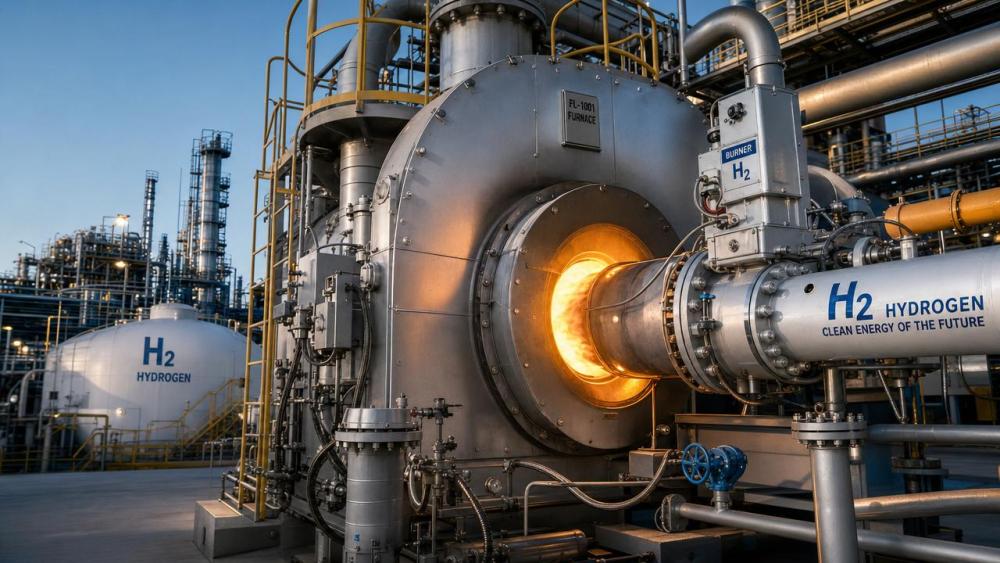
Direct hydrogen burners stand out because they target process heat, where electrification is often difficult, expensive, or constrained by grid readiness. This makes hydrogen combustion relevant across both brownfield and phased-transition projects.
Why direct hydrogen burners are moving from niche option to mainstream pathway
The shift is not driven by one factor. It is the result of technical maturity, policy pressure, asset aging, and new expectations around energy sovereignty and resilient fuel systems.
These drivers explain why refinery decarbonization strategies increasingly combine burner retrofits, hydrogen logistics, materials review, and staged emissions accounting rather than treating combustion as an isolated engineering issue.
What changes inside the refinery when hydrogen becomes a combustion fuel
Direct hydrogen burners can reduce carbon intensity at the point of heat generation. However, they also alter flame behavior, heat transfer profiles, control logic, and emissions management requirements.
Combustion characteristics change first
Hydrogen burns faster than methane-rich fuels. Flame visibility may decrease. Flashback risk rises. Burner geometry and mixing design therefore become central to stable operation.
NOx management becomes critical
Although direct hydrogen burners avoid combustion CO2, they can raise thermal NOx if temperature peaks are not controlled. Low-NOx design and advanced staging are essential.
Materials and piping need renewed scrutiny
Hydrogen compatibility is not uniform across seals, valves, instrumentation, and piping networks. A burner upgrade often triggers a wider integrity review across connected systems.
Control systems must become more responsive
Because hydrogen has different combustion dynamics, air-fuel ratio control, flame monitoring, purge sequences, and shutdown logic usually require redesign or recalibration.
This is why effective refinery decarbonization strategies treat direct hydrogen burners as part of an integrated process safety and performance upgrade.
The strongest refinery decarbonization strategies now link heat, supply, and infrastructure
The most resilient approach is not simply replacing one burner tip with another. It is aligning heat demand, hydrogen sourcing, storage, distribution, and outage planning in one roadmap.
- Map fired assets by temperature duty, runtime, age, and emissions intensity.
- Separate equipment suitable for hydrogen blending from assets needing dedicated hydrogen burners.
- Test whether onsite electrolysis, merchant supply, or pipeline hydrogen best matches consumption patterns.
- Review flare, vent, purge, and emergency isolation systems for hydrogen service implications.
- Coordinate combustion upgrades with CCUS, steam optimization, and turnaround schedules.
This integrated view matters because weak hydrogen logistics can undermine otherwise sound refinery decarbonization strategies. A burner retrofit only creates value when fuel availability and safety governance are equally mature.
Different business functions will feel the impact in different ways
Hydrogen combustion affects more than furnace performance. It changes maintenance planning, compliance reporting, risk analysis, supply contracting, and long-term capital sequencing.
As a result, refinery decarbonization strategies increasingly require cross-functional coordination. Technical success depends on commercial, regulatory, and infrastructure decisions made far beyond the burner package itself.
The next wave of attention is shifting toward execution risk, not concept validation
The market no longer asks whether hydrogen can burn in refinery equipment. The more urgent questions concern where to start, how to scale, and how to avoid stranded investments.
Key points that deserve close attention
- Prioritize units with high annual firing hours and concentrated emissions intensity.
- Do not assume all existing burners can safely handle high hydrogen fractions.
- Model NOx outcomes before approving carbon reduction claims.
- Audit piping, valves, and storage interfaces against hydrogen service standards.
- Confirm whether hydrogen supply is continuous, seasonal, or interruptible.
- Tie retrofit timing to turnarounds to reduce disruption and cost.
- Validate lifecycle economics, not only immediate emissions savings.
These checkpoints help prevent refinery decarbonization strategies from becoming fragmented pilots with weak operational follow-through.
A practical decision framework can improve timing and reduce retrofit uncertainty
A structured roadmap supports better sequencing. It also helps compare direct hydrogen burners against alternatives such as blending, electrification, heat recovery, or CCUS-linked fuel systems.
- Establish a combustion asset baseline, including fuel mix, duty, age, and emissions profile.
- Screen each asset for hydrogen readiness, flame stability, and expected NOx performance.
- Assess hydrogen sourcing options, storage needs, and pressure management requirements.
- Review applicable standards, permitting pathways, and safety case updates.
- Pilot on a high-value unit with measurable heat demand and manageable integration scope.
- Scale through phased retrofit bundles aligned with infrastructure and capital cycles.
For technically demanding transitions, benchmarking against international frameworks such as ISO 19880, ASME B31.12, and related hydrogen integrity practices can reduce uncertainty and strengthen project confidence.
Refinery decarbonization strategies will reward disciplined action over headline ambition
Direct hydrogen burners are not a universal shortcut, yet they are becoming a serious lever inside refinery decarbonization strategies. Their value is highest when combustion upgrades, hydrogen supply, safety engineering, and staged capital planning move together.
The next practical step is to build a unit-by-unit heat decarbonization map, verify hydrogen compatibility across connected systems, and compare burner retrofit scenarios against long-term infrastructure pathways.
When decisions are grounded in emissions impact, asset integrity, and fuel resilience, refinery decarbonization strategies can move from ambition to repeatable industrial execution.
Related News
- When does a hydrogen steelmaking retrofit make operational sense?Sep 06, 2026Hydrogen steelmaking retrofit: discover the operational conditions, gas-network upgrades, supply strategy, safety controls, and economics needed for a practical, production-ready transition.
- How Hydrogen Ignition Control Reduces Flashback Risk in Direct BurnersAug 13, 2026Hydrogen ignition control helps reduce flashback risk in direct burners by improving timing, mixing, and flame stability—keeping hydrogen combustion safer, cleaner, and more reliable.
- Industrial Hydrogen Solutions for Refineries: Cost Priorities and Retrofit OptionsJul 13, 2026Industrial hydrogen solutions for refineries: compare cost priorities, retrofit paths, and low-carbon options to improve resilience, compliance, and long-term refinery value.
- When to Hire Refinery Decarbonization Consultants for Scope, Cost, and ComplianceJul 12, 2026Refinery decarbonization consultants help buyers define scope, control retrofit costs, and improve compliance readiness. Learn the best time to hire for stronger refinery project decisions.
Related News
- 00
0000-00
Hydrogen Energy Storage for Data Centers Gets Costly Fast - 00
0000-00
When 99.999% Hydrogen Purity Still Is Not Good Enough - 00
0000-00
When Does a Hydrogen-Ready Gas Turbine Pay Off? - 00
0000-00
Electricity Price Volatility Is Rewriting Hydrogen Cost Models - 00
0000-00
PSA Recovery Rate Drops for Reasons Operators Miss
Dr. Hideo Torque
Weekly Insights
Stay ahead with our curated technology reports delivered every Monday.