Refinery Decarbonization Strategies: Where Hydrogen Cuts Emissions First




For project leaders navigating refinery transformation, refinery decarbonization strategies must deliver measurable emissions cuts without disrupting throughput, safety, or asset integrity.
Hydrogen often offers the fastest starting point, especially in hydrotreating, process heating, and low-carbon utility integration.
This article explains where emissions fall first, which refinery conditions matter most, and how to prioritize refinery decarbonization strategies with technical discipline and investment clarity.
Why some refinery sites capture hydrogen benefits faster
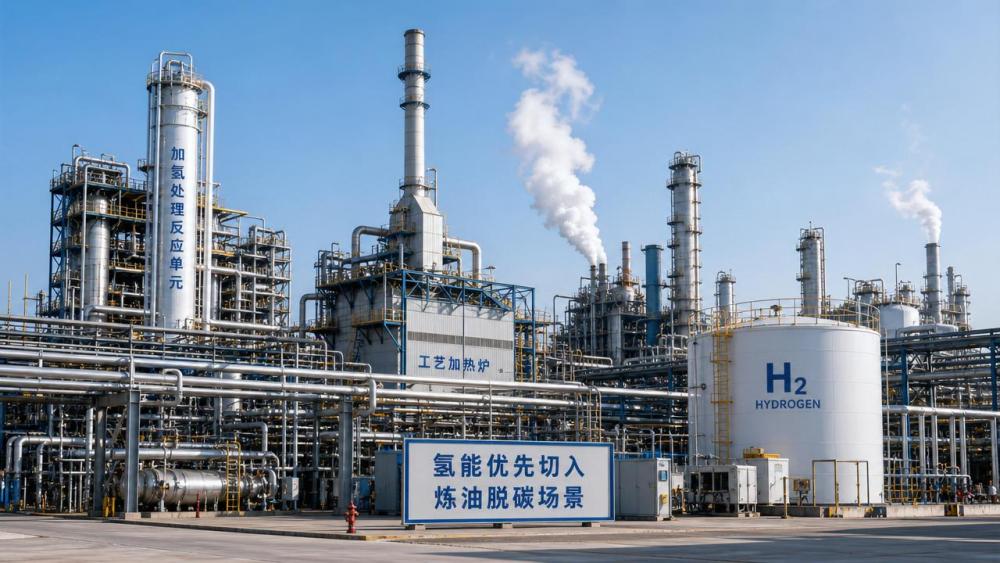
Not every asset delivers equal carbon reduction in the first phase.
The strongest refinery decarbonization strategies begin where hydrogen already exists in operations, infrastructure, and process control.
Sites with large hydrotreaters, aging fired heaters, and carbon-intensive utilities usually unlock earlier gains.
The logic is practical.
When hydrogen replaces higher-carbon inputs inside established process boundaries, engineering complexity stays lower than a full site redesign.
Early-stage refinery decarbonization strategies also depend on feedstock quality, product slate, and regional energy prices.
A refinery processing sulfur-heavy crude sees different hydrogen demand and emissions opportunities than a fuels site with lighter inputs.
That is why decision quality improves when decarbonization planning is tied to operating scenarios instead of generic carbon targets.
Scenario 1: Hydrotreating upgrades often deliver the first measurable cuts
Among refinery decarbonization strategies, hydrotreating is often the most visible starting point.
Hydrogen is already essential for sulfur removal, product compliance, and cleaner fuel production.
If conventional hydrogen comes from high-carbon steam methane reforming, emissions remain embedded in every treated barrel.
Replacing part of that supply with low-carbon hydrogen can cut Scope 1 emissions without changing the product market strategy.
The key judgement points include hydrogen purity, pressure compatibility, reformer dependence, and existing storage resilience.
Where blending is technically feasible, refiners can phase entry without waiting for a complete hydrogen network rebuild.
What makes this scenario attractive
- Hydrogen demand is already known and process-linked.
- Emissions accounting is easier than for wider site changes.
- Fuel specification compliance creates strong business continuity value.
- Incremental upgrades are possible before larger capex decisions.
This makes hydrotreating one of the most bankable refinery decarbonization strategies for early implementation.
Scenario 2: Process heaters become a priority when combustion emissions dominate
Many refineries produce a large share of direct emissions from fired heaters, boilers, and thermal systems.
In these cases, refinery decarbonization strategies should test hydrogen where combustion equipment is old, heavily loaded, or difficult to electrify.
Hydrogen co-firing can reduce carbon intensity quickly, but heater conversion is never just a fuel switch.
Flame speed, NOx formation, burner design, metallurgy, and control systems must be reviewed carefully.
The right candidate assets are usually units with stable duty profiles and clear maintenance windows.
If a unit already faces burner replacement, combining that work with hydrogen readiness can improve project economics.
Core judgement points for heater conversion
- Can the burner safely handle hydrogen blending ratios?
- Will NOx controls remain compliant after fuel changes?
- Does the site have hydrogen buffer capacity for load swings?
- Are materials aligned with ASME B31.12 and related integrity standards?
When these conditions align, combustion-focused refinery decarbonization strategies can move faster than major process redesigns.
Scenario 3: Low-carbon utilities matter when site integration is mature
Some facilities have already optimized major units but still carry high emissions in power, steam, and utility systems.
Here, refinery decarbonization strategies should focus on hydrogen-ready gas turbines, cogeneration assets, and utility balancing infrastructure.
This scenario becomes especially relevant where grid carbon intensity remains high or power reliability is strategic.
Hydrogen does not always deliver the cheapest energy.
However, it can improve resilience, support peak demand management, and align utility decarbonization with broader industrial policy.
This is where a technical hub such as G-HEI adds value through benchmarking of electrolysis systems, cryogenic logistics, hydrogen-ready turbines, and safety frameworks.
How scenario differences change the best refinery decarbonization strategies
The best pathway depends on where carbon is concentrated and how hydrogen can be delivered with confidence.
This comparison shows why refinery decarbonization strategies should be selected by operating reality, not by technology fashion.
Practical recommendations for selecting the right starting point
A disciplined sequence improves both execution and financing credibility.
- Map unit-level emissions, not just total site emissions.
- Separate hydrogen feedstock use from hydrogen fuel use.
- Check supply pathways, including electrolysis, delivered liquid hydrogen, or reforming with CCUS.
- Validate safety, embrittlement risk, and storage response under transient loads.
- Prioritize projects that align with scheduled shutdowns.
- Measure abatement cost against throughput protection and regulatory exposure.
Strong refinery decarbonization strategies also connect engineering choices to recognized standards such as ISO 19880, SAE J2601, and ASME hydrogen guidance where relevant.
That standards-based approach reduces hidden risk in transport, storage, fueling, and pressure-system design.
Common misjudgments that delay hydrogen value
Several issues repeatedly weaken refinery decarbonization strategies.
- Treating hydrogen as a single solution instead of matching it to site scenarios.
- Ignoring storage and delivery reliability during operational swings.
- Underestimating material compatibility in pipelines, valves, and seals.
- Focusing only on carbon reduction while neglecting throughput losses.
- Starting with high-visibility projects that lack engineering readiness.
Another frequent error is separating hydrogen planning from CCUS planning.
In many refineries, the most practical path combines low-carbon hydrogen, selective combustion upgrades, and captured emissions from legacy hydrogen production.
Integrated refinery decarbonization strategies usually outperform isolated pilot decisions.
What to do next for an investment-ready hydrogen roadmap
The next step is not a broad commitment to hydrogen.
It is a site-specific screening of where hydrogen cuts emissions first with acceptable risk and clear performance metrics.
Start with three outputs.
- A ranked list of units by abatement potential and operational impact.
- A hydrogen supply architecture covering production, logistics, storage, and redundancy.
- A standards-based integrity review for equipment, controls, and safety barriers.
For organizations evaluating sovereign-scale energy transition pathways, G-HEI supports this work through benchmarked insight across electrolysis, cryogenic hydrogen logistics, hydrogen-ready power systems, CCUS infrastructure, and high-pressure refueling technologies.
The most effective refinery decarbonization strategies begin with practical hydrogen deployment, but long-term success depends on disciplined integration, verifiable standards, and infrastructure readiness.
When those elements align, hydrogen stops being a concept and becomes the first credible emissions lever in refinery transformation.
Related News
- When does a hydrogen steelmaking retrofit make operational sense?Sep 06, 2026Hydrogen steelmaking retrofit: discover the operational conditions, gas-network upgrades, supply strategy, safety controls, and economics needed for a practical, production-ready transition.
- How Hydrogen Ignition Control Reduces Flashback Risk in Direct BurnersAug 13, 2026Hydrogen ignition control helps reduce flashback risk in direct burners by improving timing, mixing, and flame stability—keeping hydrogen combustion safer, cleaner, and more reliable.
- Industrial Hydrogen Solutions for Refineries: Cost Priorities and Retrofit OptionsJul 13, 2026Industrial hydrogen solutions for refineries: compare cost priorities, retrofit paths, and low-carbon options to improve resilience, compliance, and long-term refinery value.
- When to Hire Refinery Decarbonization Consultants for Scope, Cost, and ComplianceJul 12, 2026Refinery decarbonization consultants help buyers define scope, control retrofit costs, and improve compliance readiness. Learn the best time to hire for stronger refinery project decisions.
Related News
- 00
0000-00
Hydrogen Energy Storage for Data Centers Gets Costly Fast - 00
0000-00
When 99.999% Hydrogen Purity Still Is Not Good Enough - 00
0000-00
When Does a Hydrogen-Ready Gas Turbine Pay Off? - 00
0000-00
Electricity Price Volatility Is Rewriting Hydrogen Cost Models - 00
0000-00
PSA Recovery Rate Drops for Reasons Operators Miss
Dr. Hideo Torque
Weekly Insights
Stay ahead with our curated technology reports delivered every Monday.